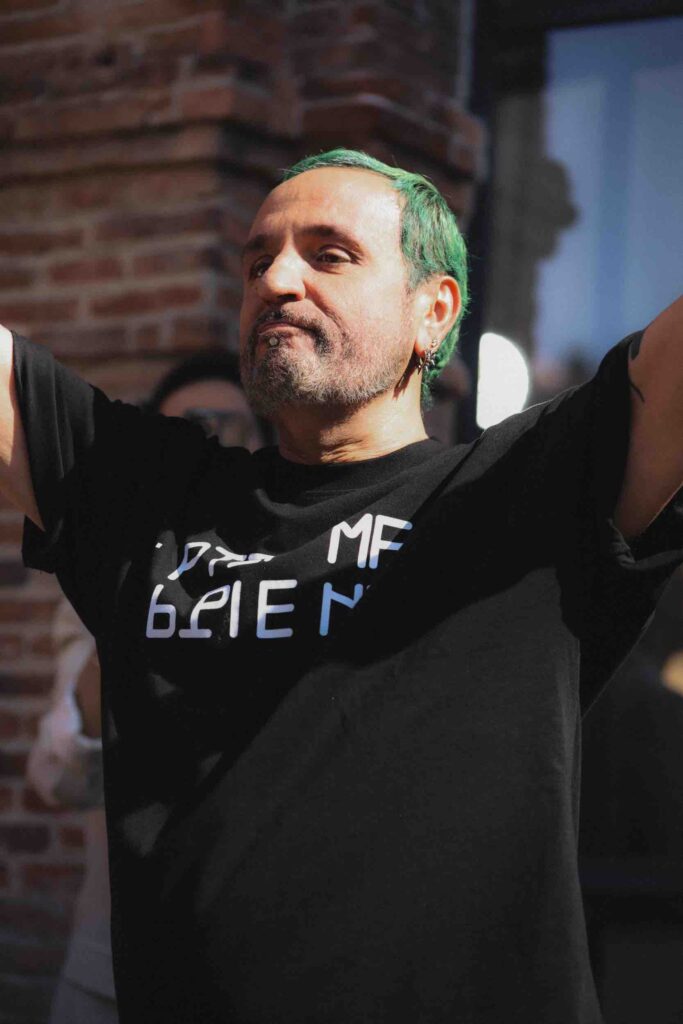
THIS
IS
OUR
HOUSE:
Inside H&M’S Iconic Collaborations
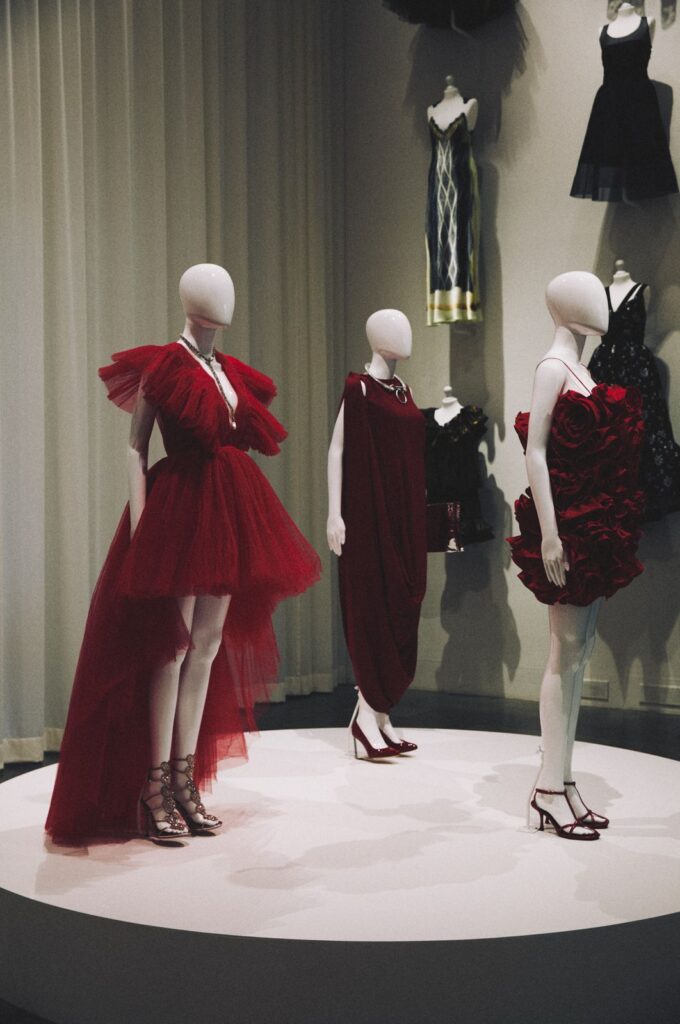
Maison Martin Margiela, 2012.
Magda Butrym, 2025.
text and photography Sandra Myhrberg / Agent Bauer
On october 15, Sven-Harry’s konstmuseum in stockholm opens iconic collaborations, tracing two decades of H&M’s designer collaborations, from Karl Lagerfeld’s landmark 2004 launch to wardrobe.nyc. Running through April 4, 2027, it’s the first time these collections, from Stella McCartney to Maison Martin Margiela, Kenzo and Sonia Rykiel, have been brought together under one roof. “It’s fashion for everyone,” Lagerfeld said back in 2004, and the exhibition is built on exactly that premise, names that once felt untouchable, made to belong in anyone’s wardrobe.
Odalisque got the chance to meet the team behind the exhibition to hear how they turned that history into a room you can actually walk through.
Vanessa Gandy, who joined Sven-Harrys Konstmuseum as Museum Director in June 2026, oversees the exhibition as a whole. She holds a business degree from Stockholm and studied Fashion Art Design at the Fashion Institute of Technology in New York. She worked as a design and PR consultant on the agency side, building international brands including Bentley Motors, Iittala and Marimekko, before curating took the upper hand, and she spent ten years at Nordiska museet in Stockholm before moving to Sven-Harrys Konstmuseum. The subject is also personal for her. “I remember in 2004 when the first collection of Karl Lagerfeld came out, it was insane. I had my eyes set on the Chanel-like sheer black dress and bought the only size I could get my hands on. Two sizes too big, it is still hanging in my wardrobe.” The story of how that collaboration began is part of the show itself. “In Iconic Collaborations we will screen several fashion documentaries. We even made one of our own about how it all started. Johan Renck, Jörgen Andersson, Susanne Ljung and of course Margareta van den Bosch all share the unique story of how Swedish H&M took a step that would change fashion history for good.”
Alexandra Olsson Lignell has been the exhibition producer and responsible for the permanent collection at Sven-Harrys Konstmuseum since 2022. She has a background in media, and previously spent 15 years in London working in TV and film production and distribution.
“In 2004 I was living in Paris, at the same time as several of the older French fashion houses had started to change, like Chanel, where Karl Lagerfeld was chief designer, but also Balenciaga, Louis Vuitton and Lanvin. I remember it as these old, established brands suddenly starting to speak to those of us who were younger, even though we couldn’t afford to buy them. With Karl Lagerfeld’s collection for H&M, that shift became even clearer.
We want the exhibition at Sven-Harrys Konstmuseum to give a strong visual experience, but through wall texts, the exhibition catalogue and public programming, there’s also a chance to learn more about the designers, their backgrounds and how the collaborations actually worked. The exhibition is both a document of its time and a chance to discover different designers’ visions and creative work, regardless of what you already know.
Above all, it’s each designer’s unique and creative expression that we want to bring forward in the exhibition. I’m very fond of Marni’s gold brocade set, the top and trousers. I remember when Marni’s H&M collection launched, and I think it so clearly reflects the Italian heritage, with craftsmanship at its centre but also bold, unexpected details that express playfulness and creativity.
For me, Marni represents a different idea of luxury than the traditional one. It’s less about exclusivity and status and more about art, craftsmanship, design, and expressing your own individual personality.”
Sandra Myhrberg: The exhibition includes work by 29 fashion designers. How did you decide where to draw the line on what could be shown?
Alexandra Olsson Lignell: We wanted to make as comprehensive an exhibition as possible, and to include every designer who has made a collection in collaboration with H&M, from the first collection with Karl Lagerfeld in 2004 to Wardrobe.NYC, which launched this year, 2026.
Of course, we’ve had to make a selection of garments from each collection, but we’re showing close to 300 pieces, so a great many of the iconic creations are represented in the exhibition.
Above all, it’s the designers’ different expressions that are at the centre of it. That’s also why we chose to present the exhibition thematically rather than chronologically.
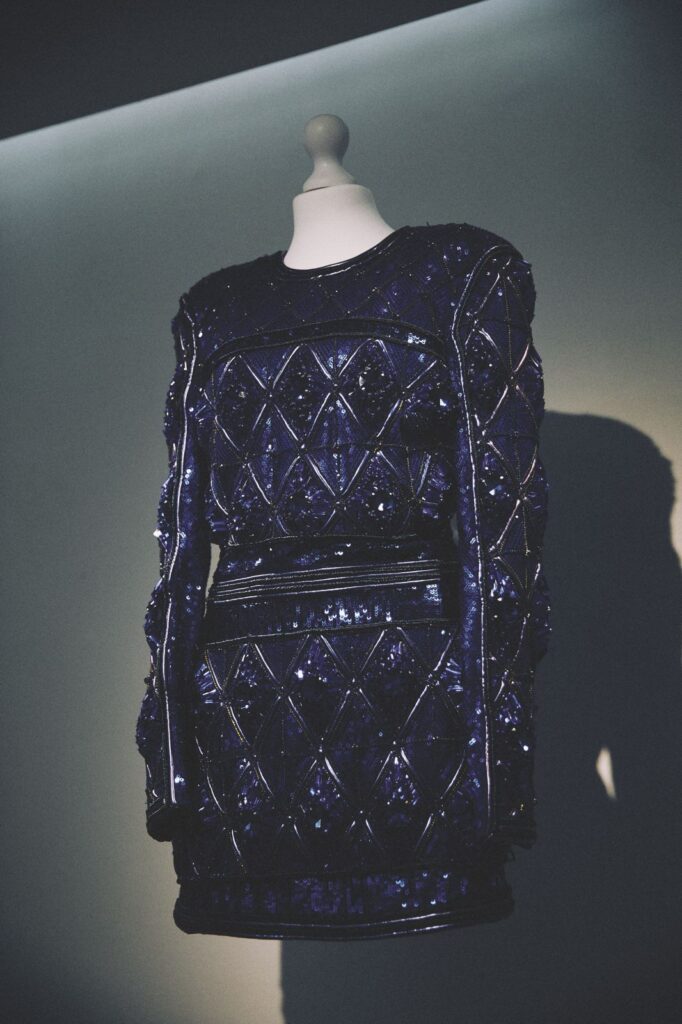
Balmain, 2018
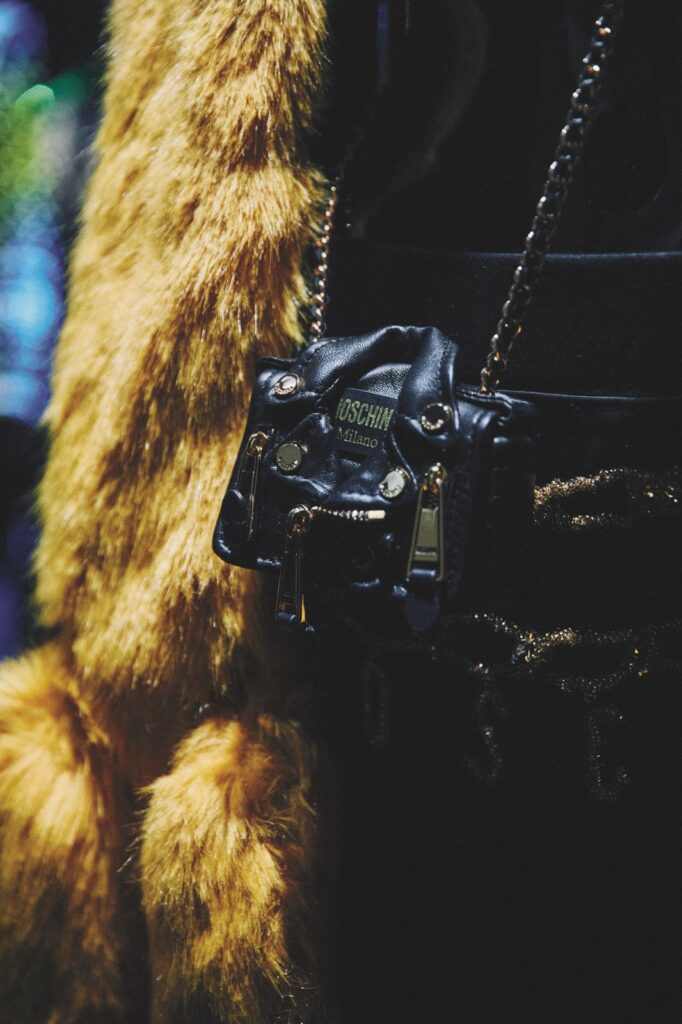
Moschino, 2018
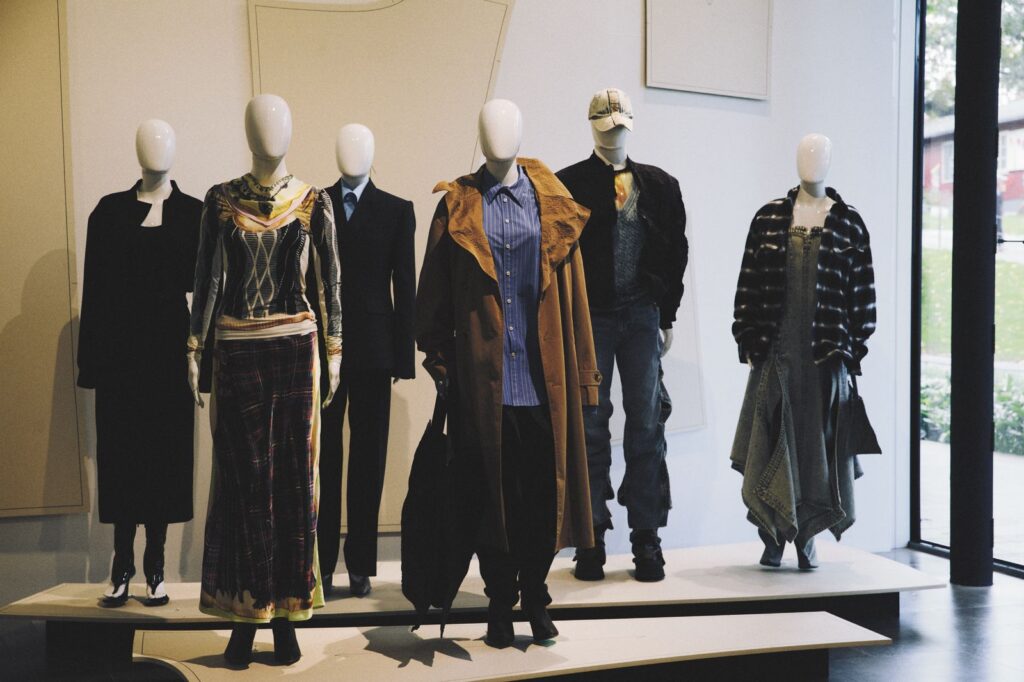
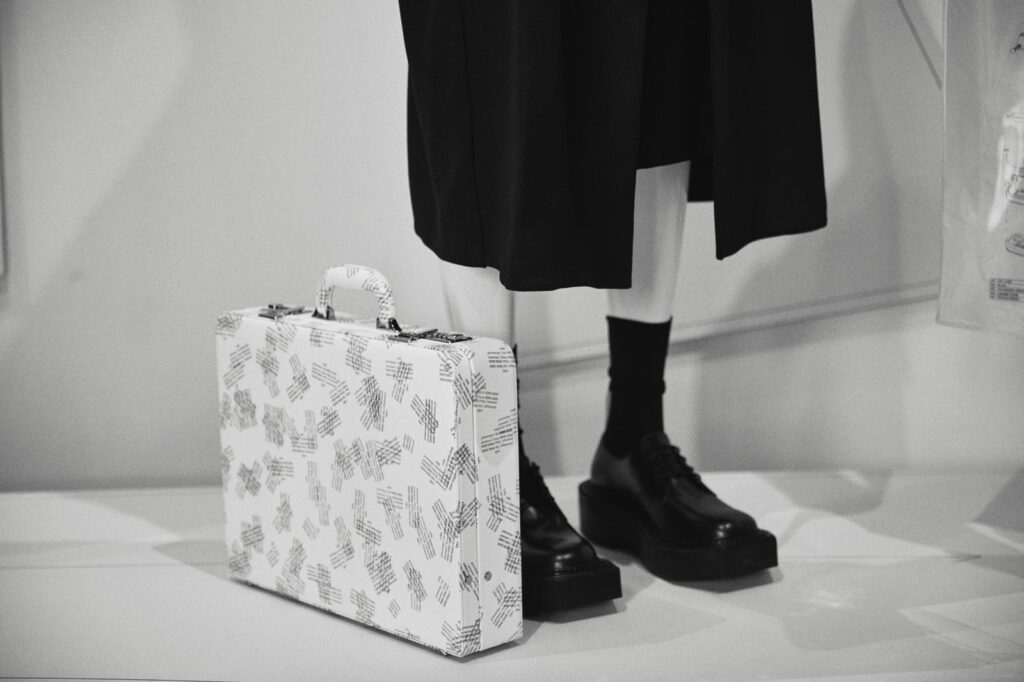
Rokh, 2024
SM: What does it take to build an exhibition with 300 garments from 29 different designers?
AOL: It’s been a huge undertaking with a strong, small team collaborating across different areas: selection, architecture, concept, themes and the visitor experience.
There are a great many working hours behind it from the whole team, but it’s also been enormously fun, and sparked a lot of discussions about what clothes and fashion mean to us, both as individuals and as a group.
It’s also been interesting to read the spirit of the times into the different collaborations. Over more than 20 years, you can sense in the collections how world events, popular culture and currents of ideas have shaped their expression.
SM: Who did you have in mind as your visitor while working on the exhibition?
AOL: We want everyone to come here. We haven’t aimed the exhibition at a specific age group or target audience, we believe it can appeal to a very broad public, both people with a strong interest in fashion and those discovering these designers for the very first time.
SM: In what way does working on a fashion exhibition differ from a more traditional art exhibition?
AOL: Honestly, it doesn’t differ all that much. The creations we’re showing have a clear artistic expression, and are built on ideas about form, material, the body and identity.
Just as when we exhibit other art forms, we want to give the visitor an experience that moves them, but also contributes deeper knowledge and raises questions.
When it comes to fashion, it’s also important to raise and interrogate questions around sustainability. Fashion is closely tied to consumption and constant renewal, which today we need to reassess in various ways.
SM: What do you hope the visitor takes with them when they leave the exhibition?
AOL: Inspiration, knowledge, and maybe recognition too. I hope the exhibition sparks curiosity in those meeting these designers for the first time, but also personal memories in those who have worn the garments themselves.
Michael Elmenbeck is a gallerist and publisher, working at the intersection of art, fashion, music and media. He was a pioneer of Stockholm’s early rave and club scene, and later founded Bon Magazine and Bon International and helped establishStockholm Fashion Week.Today he runs the gallery CFHILL, where he has curated a large number of exhibitions and introduced new artists, ideas and forms of expression. He holds several board positions, including at Sven-Harrys Konstmuseum, where he has initiated exhibitions such as Swedish Art: Now!, Swedish Fashion:2000–2015, and Iconic Collaborations.
“It was an incredibly creative time for fashion. Acne stepped things up, Cheap Monday launched, and the Swedish and international fashion scenes alike were absolutely buzzing. I was editor-in-chief of Bon Magazine, and at the same time helped start Stockholm Fashion Week in 2004/05.
The fashion magazines were extremely creative, Phoebe Philo was putting her stamp on Chloé, and Galliano and McQueen were creating shows and collections that inspired the whole world. Right in the middle of all this came H&M x Karl Lagerfeld. It felt like yet another sign that fashion’s old boundaries were dissolving. Suddenly, a previously fairly closed and exclusive fashion world opened up to a much bigger audience. It changed not just who could wear high fashion, but how we thought about fashion, and it ended up shaping the entire industry.
If you already have a relationship with and knowledge of something, you’ll always experience it differently. But what you can do is create an exhibition with both visual power and intellectual depth. That gives people several ways in: you can be overwhelmed by a garment, a silhouette or a room, or discover layers and connections you didn’t know about. When surface and depth work together, it tends to move both the initiated and someone encountering fashion for the very first time.
Everything from Margiela still gives me an enormous thrill, those are pieces I’d happily own and wear today. At the same time, I love the Versace collection, even though I’d never wear it myself. It’s almost the opposite: maximal, immediate, and full of iconic references. That’s also what’s so wonderful about fashion, you don’t need to want to wear something to be completely seduced by it.
Sandra Myhrberg: Why did you want to do an exhibition about H&M’s designer collaborations right now?
Michael Elmenbeck: I’ve worked at the intersection of fashion, media, art and culture for most of my career, and what has always interested me is when a creative expression leaves its original context and takes on new meaning. Fashion has an obvious place in museums today. Several of the designers we meet here work with an artistic ambition and a conceptual depth that reaches far beyond the garment itself. H&M’s designer collaborations add another dimension: some of our era’s most influential creative expressions have been democratised and become part of popular culture, of music, film, art, media and people’s everyday lives.
There’s also a wonderful paradox in the material. These are collections that the whole world has seen pictures of, read about, and sometimes queued for hours to buy, but that very few people have actually seen in person, and never gathered together like this. That’s where the exhibition becomes especially interesting to me. When we free the garments from the fashion houses’ original context, from the campaign and the commercial moment, and let them meet inside a museum, we can also see them anew. New relationships emerge between designers, eras and ideas. Something created for one specific moment can take on new, contemporary meaning. So more than twenty years after the first collaboration, we’re not just looking back at a phenomenon. We can use it to tell a bigger story about creativity, accessibility, and how fashion moves through our culture, and sometimes changes it
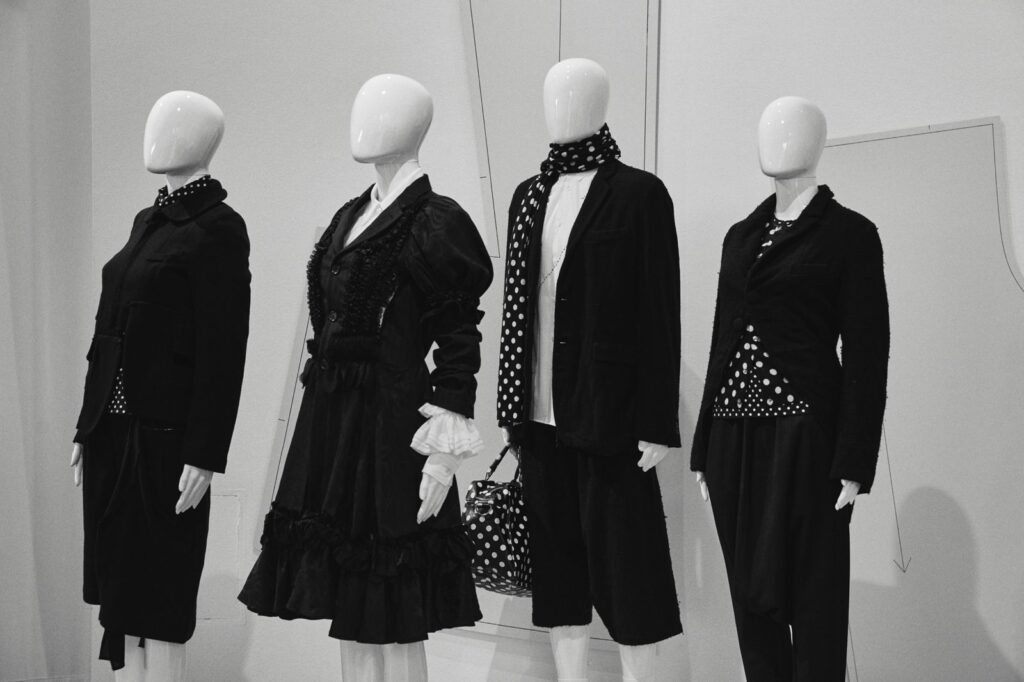
Comme des Garcons, 2008
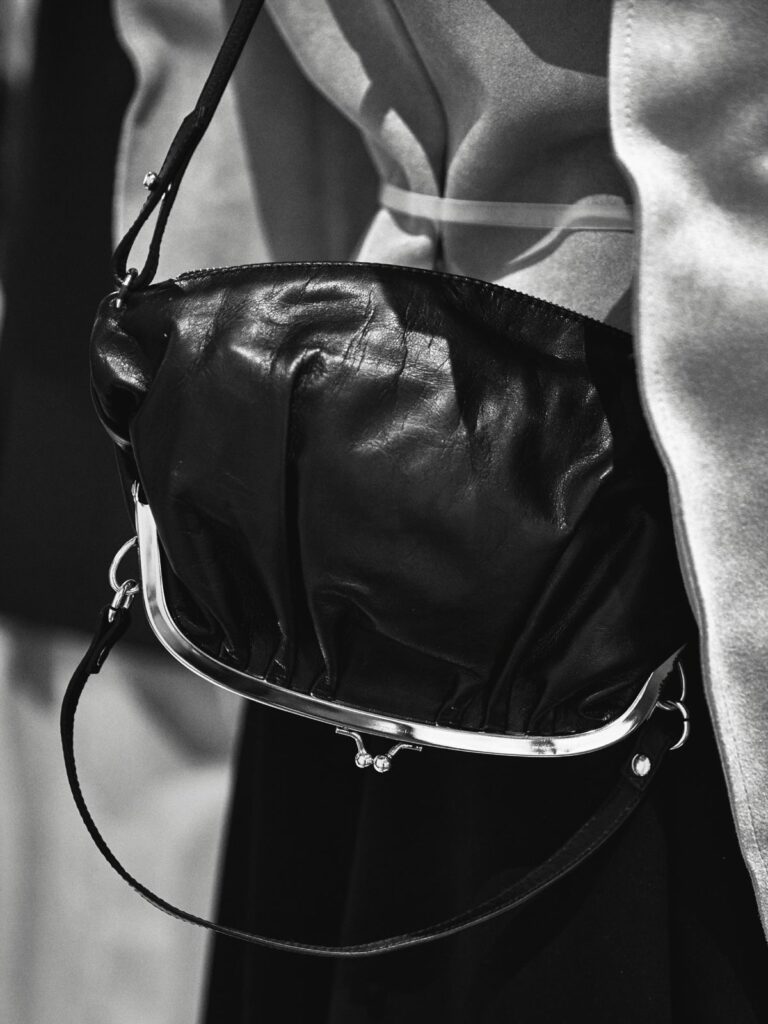
Maison Martin Margiela, 2012
SM: You’ve followed the collaborations since they began in 2004. What significance have they had for Swedish fashion history, and for the fashion industry internationally?
ME: For Swedish fashion history, the significance is huge. H&M put Sweden right at the centre of the international fashion conversation, at the same time as a new generation of Swedish designers and brands started gaining global relevance. Internationally, the Lagerfeld collaboration in 2004 became a turning point. It challenged the idea that exclusivity and accessibility were opposites, and created a model that went on to change the whole industry’s view of collaborations.
But the democratisation was about more than the price of a garment. H&M carried high fashion’s entire creative universe, designers, photographers, stylists, models and visual language, into media and public spaces where it had rarely been seen before. Comme des Garçons, Margiela or Viktor & Rolf were no longer worlds reserved for a small fashion audience. Suddenly the same visual language associated with Paris and Milan could meet people on Drottninggatan in Stockholm, or in the middle of Jönköping. You could see it, understand it and wear it. It changed not just who had access to fashion, but where fashion could exist.
SM: You were behind Swedish Fashion: 2000–2015, shown at Sven-Harrys Konstmuseum in 2014. What did you carry with you from that exhibition into the work on this one?
ME: When Cia Jansson and I did Swedish Fashion: 2000–2015, there was still a need to argue for fashion as a cultural expression, and for its place in the museum. Today that discussion feels almost distant, fashion has become a natural part of the international museum world. What I mainly took with me was how powerful it is to lift fashion out of its original context and let an audience encounter it anew.
Swedish Fashion was about capturing a creative period while it was still unfolding. This time we have more than twenty years of distance, and material that’s already part of our shared visual history. My role is different, but the drive is the same: identifying material and a moment that deserves to be seen, discussed and understood anew.
Catarina Midby has followed H&M’s designer collaborations since the very beginning. She spent many years at H&M, first as head of fashion PR and later in the White Room alongside Margareta van den Bosch, the woman behind the idea of inviting Karl Lagerfeld to H&M back in 2004. Few people know the story as well from the inside, from the early meetings in Paris to everything that happens behind a single collection: design, buying, marketing and communications.
She currently serves as an expert advisor for Sven-Harrys Konstmuseum’s exhibition Iconic Collaborations. With her unique insider’s view from the heart of H&M’s design world, Midby has helped frame the exhibition’s 30 historic designer collaborations and place them within a larger global, contemporary and pop-cultural context.
“I was working at H&M, first as head of fashion PR and later with Margareta van den Bosch in the White Room. I remember us talking about doing something new for Christmas instead of the famous underwear campaigns. Offering a collection created by an icon like Karl Lagerfeld at H&M prices felt new and exciting. Sure, the industry had done collaborations before, but not like this. The campaign turned out fantastic, and so did Johan Renck’s film. I remember Maggan’s stories about meetings with Karl and his team in Paris, and how well his staff liked him. He trusted them and respected their expertise. We liked that!
It’s fashion. And not just any fashion, but the world’s most famous fashion houses and a selection of the best of what they created specifically for the collaboration with H&M. I think that when you see the different rooms divided into themes representing different genres and periods in fashion history, you get inspired, regardless of your prior knowledge or experience. If you already know everything about fashion, it becomes recognition, and it’s still fun to enjoy all the beautiful garments and accessories with Ray Atelier’s beautiful staging in Sven-Harrys Konstmuseum’s unique building. And if you’re a novice, you might learn something new and feel a little more included in the fashion world, which hopefully leaves you wanting more.
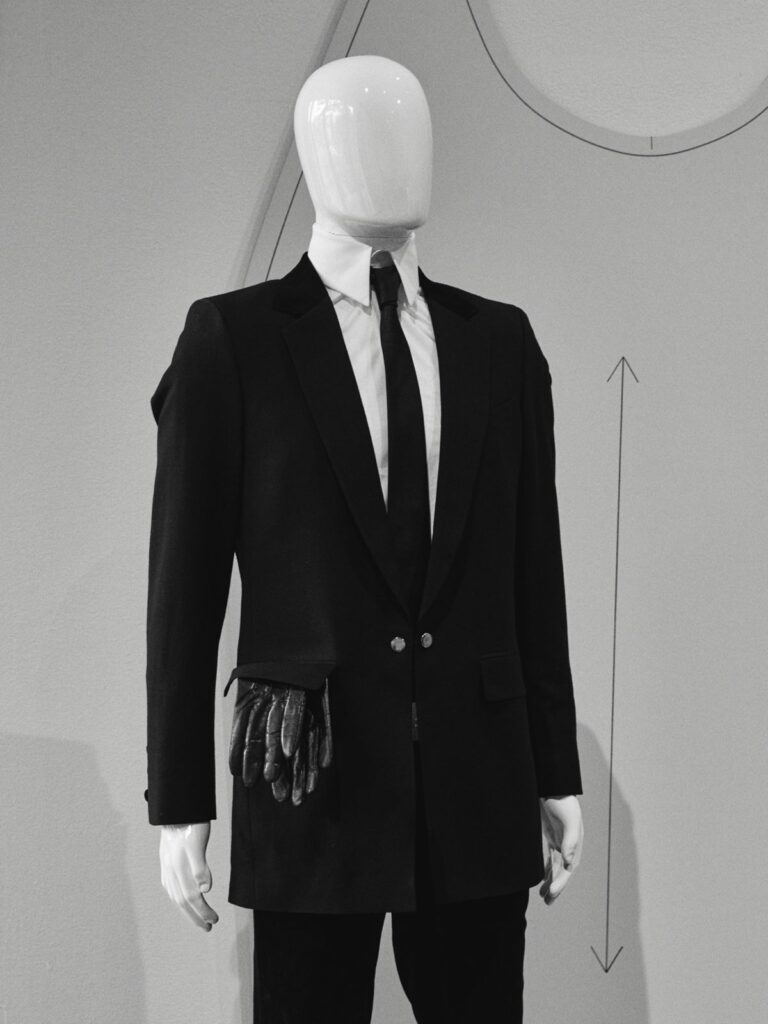
Karl Lagerfeld, 2004
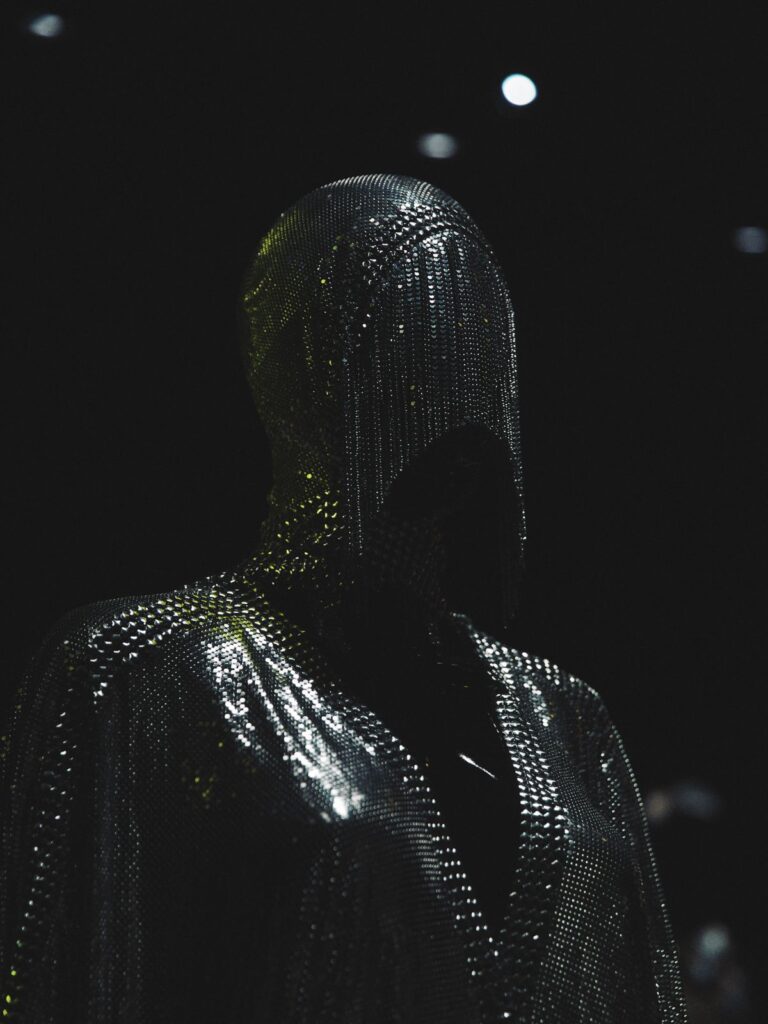
Rabanne, 2023
I’ve had a lot of fun in the leopard dress from Roberto Cavalli at H&M. I remember filming the campaign in Florence and the launch in New York, and the atmosphere was incredibly wonderful on both occasions, which is something I can still feel when I put on the dress, which is completely unlike my usual style, which is much more understated.”
Sandra Myhrberg: How have the designer collaborations changed since Lagerfeld in 2004, and what has stayed the same, 22 years on?
Catarina Midby: What’s changed the most is probably the quality, and how sustainability has been integrated into all production, although that of course isn’t unique to the designer collaborations. H&M has continuously driven sustainable development and invested major resources in the whole industry over decades. With new and upcoming sustainability legislation, working with H&M is almost like a handbook in sustainable materials and processes, circular business models, transparency and communication. At least for most fashion houses.
SM: Which collaboration has surprised you the most? In what way?
CM: I’d have to say the Lanvin collaboration. I have a few dresses that, like the Cavalli dress, really aren’t my style at all, but I always feel so lovely in them. They make me happy. Designer Alber Elbaz’s illustrations and all the accessories were also just wonderful. Surprising, because I couldn’t have imagined how much I’d enjoy his creations. There is something loving about them, like a hug. Very much like he was as a person. Sadly, he’s no longer with us.
SM: What do you think most people don’t know about how a collaboration like this actually comes together?
CM: I think people maybe don’t realise how much of a genuine collaboration it actually is, how closely H&M’s team and the designer’s team work together. And how many people are involved. There’s the design and buying team, the teams at H&M’s local buying offices in the production countries, H&M’s marketing department, which produces window and in-store displays, packaging, the ad campaign and film, images for hm.com and much more, and the communications team, which produces all the press material and is responsible for the launch, with local and global events, shows and influencers. It’s a huge operation with a great many people contributing.
SM: The exhibition brings together just over 300 garments from more than two decades. Does a common thread emerge when the collections are shown side by side?
CM: Yes, there are clear themes that unite certain designers, and that the exhibition is organised around. The Dressing room is a dress room where the most beautiful gowns are shown. The Studio room brings together the architectural, asymmetric, deconstructed and reconstructed tailoring. Most of the designers there have their own style rooted in classic tailoring. Then there’s The Club room, glamour themed, with attitude, leather, studs, lurex, lamé and sequins that belong on the dance floor, represented by an equally specific group of designers. And finally, Pattern Euphoria, which is colourful fashion with patterns, prints and lots of expressive details. Each theme brings together a group of designers who make that particular style timeless. The major fashion houses follow trends to some extent, but they all have their own distinct style that endures. That’s the big difference compared to the fashion chains, which offer a variety of trends that shift a little from season to season, even though fashion today is far more diversified and focused on personal style. But the meeting between high-end and high street remains interesting!
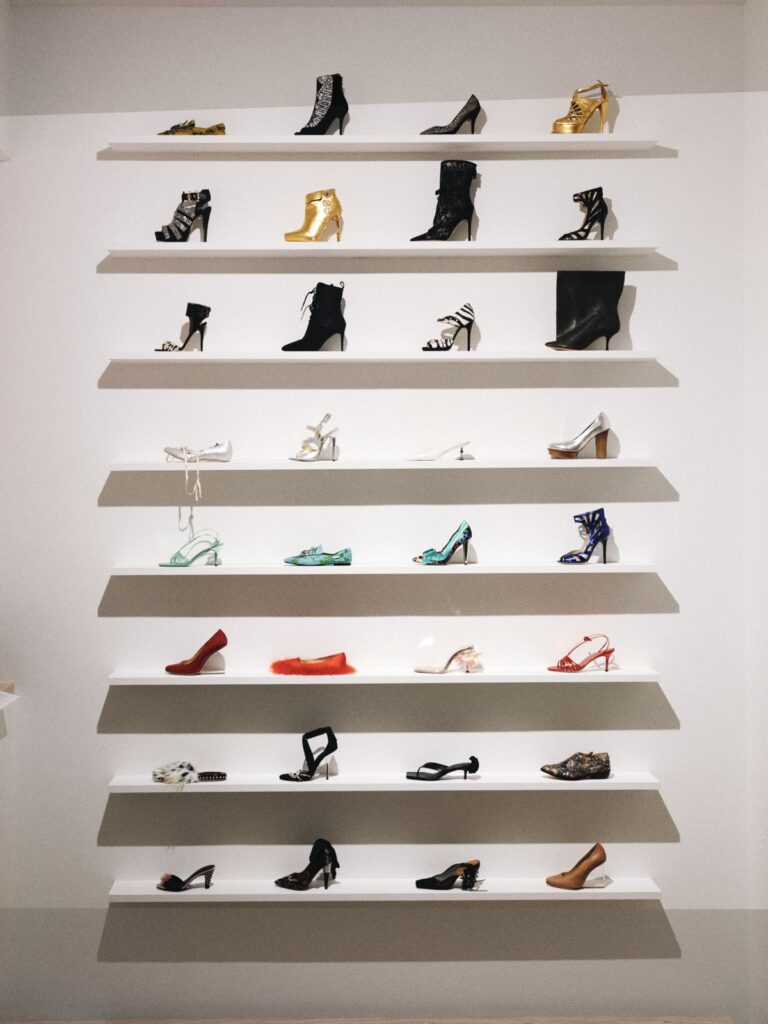
Ursula Wångander began her career as a model at just 20, before becoming a stylist and making a name for herself in the Scandinavian fashion world. In recent years, she has returned to modelling and the catwalk.
Ursula has helped select and put together the garments on display, one by one, so that every designer is shown at their very best. With a career shaped early on by inspirations like Rei Kawakubo and Comme des Garçons, she knows what makes a garment iconic.
“In 2004 I gave birth to my son Aaron, so I was in a bit of a bubble at the time, but I remember how huge it was that Karl Lagerfeld collaborated with H&M.
I think that those who haven’t followed the collaborations over the years and aren’t so familiar with the fashion world, will hopefully discover an incredible breadth of fashion and expression. Those who’ve followed every collaboration will probably find plenty of memories from that time coming back to life, and maybe, like me, think: why didn’t I buy that piece, it’s so amazing.
It’s hard to choose, but I remember when the Comme des Garçons collaboration launched, I bought a lot, and I still have a deconstructed blazer from that collaboration. Rei Kawakubo was one of my first inspirations as a stylist.”
Sandra Myhrberg: How did you think about choosing which garments to show in the exhibition?
Ursula Wångander: I’ve tried to choose the most iconic piece from each designer, and whatever best represents them.
SM: How does styling an exhibition differ from styling a photo shoot or a fashion show?
UW: This is an exhibition meant to show each designer and their expression as clearly as possible, so I don’t need to bring my own expression into it. Styling a fashion job is, for me, a way of telling a story and finding an outlet for my own artistic expression in an image. A fashion show can take on many different expressions depending on which designer you’re presenting, and things like model casting can create a strong impression, or the room, the music, there are so many ways to create.
SM: What’s the strongest look in the exhibition? What does it say about the designer collaborations as a phenomenon?
UW: I wish we could have shown more looks from Margiela, it’s a fantastic collection, so beautifully made. Glenn Martens is strong too, but that’s just from my point of view.
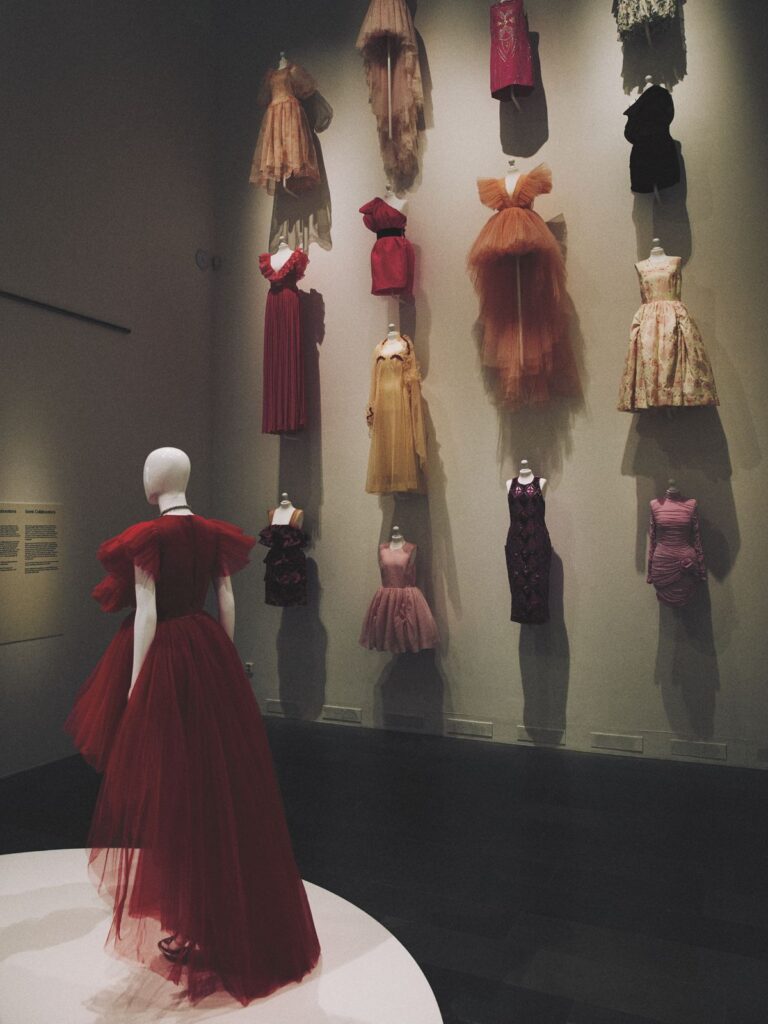
Saba Gedda Lavett is Creative Director and co-founder of RAY Atelier, a creative studio in Stockholm that creates spatial experiences through installations, brand activations, window displays and pop-ups, with a focus on the physical space around a brand and how it can live on digitally.
Over the years she has worked with brands such as Hermès, TOTEME, Svenskt Tenn, Acne Studios and H&M. An interest in art and commercialism runs through her work, and in what happens when two worlds with different drivers and conditions meet.
“I was 21 and living in London, studying at London College of Fashion. As a student in a big city, you were pretty broke and absolutely couldn’t afford to buy designer pieces. I remember being really surprised by the collaboration, and kind of proud, as a Swede. But I didn’t buy anything from the collection.
We’ve thought of the exhibition a bit like a bag of pick ‘n’ mix sweets. It’s the quantity and the variety that make it interesting, different flavours, colours and expressions that together form a whole. You don’t need to already know the collections to get drawn in, but for those who do, there are more layers and details to discover.
As a Margiela fan, I had pretty mixed feelings about that collaboration before the collection dropped, but I was genuinely pleasantly surprised and bought several pieces I still have. I’ve got a blue dress, among other things, that sort of hangs at an angle. The arms poke out through the skirt itself and the collar instead of the sleeves. It’s both strange and timeless, I’ll never get rid of it.”
Sandra Myhrberg: How do you want it to feel whenthe visitor steps into Iconic Collaborations?
Saba Gedda: I want people to feel how art and commercialism can coexist, and how both sides become something entirely new in each other’s company. I also want the sheer number and variety of the collaborations to come through clearly and create that feeling of stepping into a sweet shop as a kid.
SM: How do you fit Lagerfeld’s restraint, Mugler’s sculptural silhouettes, and everything in between, into the same exhibition?
SG: This has probably been the trickiest part of all. But we chose to see the variety and the sheer volume as the exhibition’s strength, and worked with exactly that as our starting point and throughline, for instance through repetition. We also chose to work with a clean base, to let the garments take center stage.
SM: How does designing a fashion exhibition differ from your other projects? What happens to a garment when it moves from a shop to a museum?
SG: I’d say it’s a fairly big difference. When we create installations for our clients, it’s almost always about capturing the essence of a brand spatially and adding something unexpected to catch potential customers’ attention for a few seconds amid the noise of other brands. But in this exhibition, there are several different brands involved, including H&M and Sven-Harrys Konstmuseum, which we’ve had to think about quite differently. I’d also say the product itself is much more the focus in the exhibition than in how we normally work, where it’s primarily about the feeling around a brand.
SM: Is there a detail the visitor could easily miss, but that was especially important for you to get right?
SG: Hard question, but it’s been important that the rooms feel both cohesive and connected by a throughline, while at the same time being different and surprising, from one to the next.