
Interview with Bernt Sætre, Executive Chef at Under (Lindesnes, Norway)
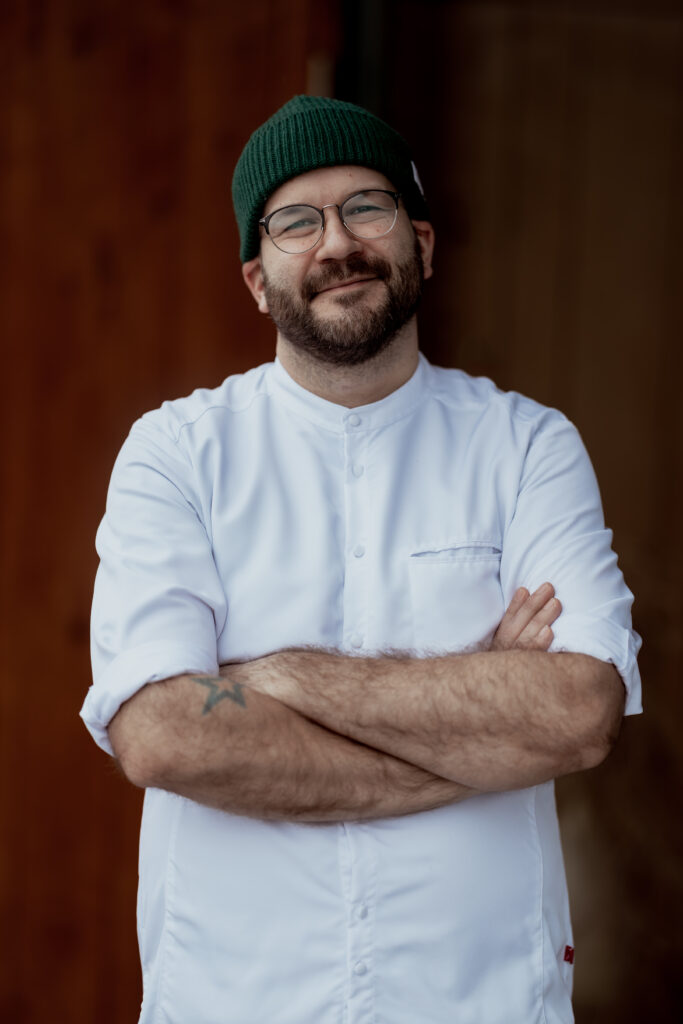
image courtesy Iselinn Andersen
Five and a half meters below the North Sea, Under has reopened with a steadier pulse and a sharper purpose. Executive Chef Bernt Sætre is not rewriting the restaurant’s identity so much as deepening its conversation with the water pressing against its panoramic window. Here, the ocean is not scenery but coauthor, its blue green light, shifting moods, and seasonal whims shaping a Michelin tight menu built on nature’s terms. Sustainability extends off the plate and into the kitchen’s invisible architecture, with fair pay, humane hours, and a culture that holds people and place with equal care. Guided by on‑site biologists and the live storyboard of the seafloor, Sætre and his team translate algae blooms, storm surges, and sudden stillness into dishes that are restrained, precise, and quietly radical. The result is a dining room that listens first and cooks second, where guests taste the coastline as it is today and, with luck, as it might endure tomorrow.
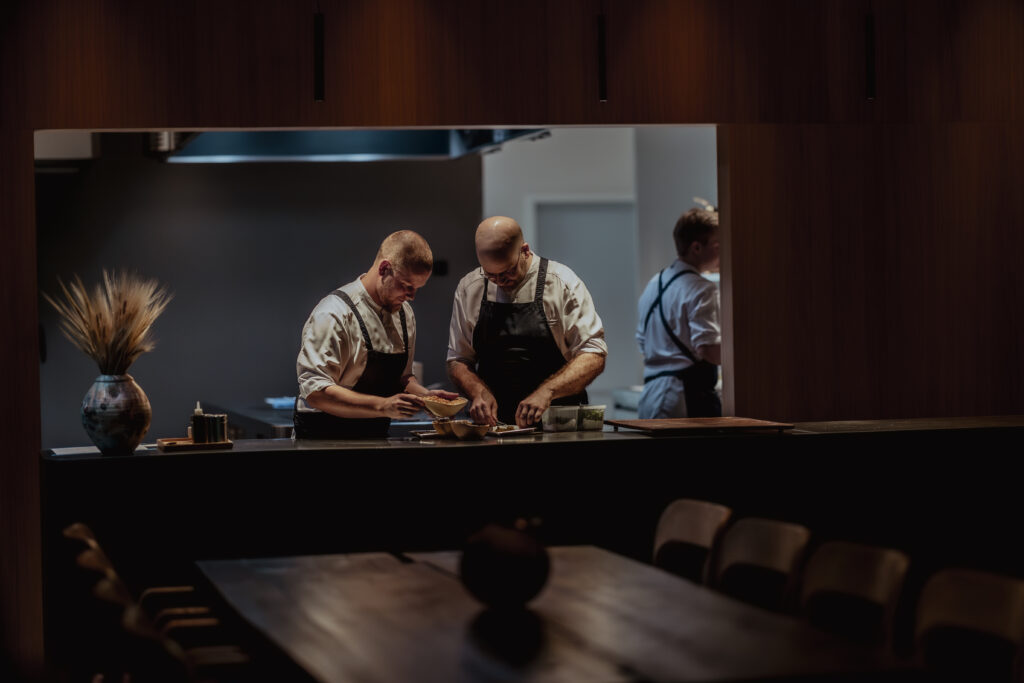
image courtesy Iselinn Andersen
Jahwanna Berglund: Under recently re-opened with a brand-new concept under your leadership. How has the transition from the original vision to your current culinary direction changed the way the restaurant “speaks” to the North Sea?
Bernt Sætre: At this point, as Head Chef, I’m focused on looking forward rather than back. What matters most is that the new team has put our own mark on the concept. Under has always had a strong identity, and now we are guiding how it evolves in our expression, our storytelling, and how we work with ingredients from the North Sea.
For us, it’s about building a closer and more honest dialogue with our surroundings. The ocean isn’t just a backdrop, it’s an active part of the experience. We aim to reflect that in everything from the menu to how we share our philosophy.
We’re especially proud to be recognized by the 360 Guide for sustainability. It shows they understand the direction we’re taking and the values behind our work.
JB: Cooking 5.5 meters below the surface is a physical and psychological feat. How does the weight of the ocean above you and the specific blue-green light of the depths influence your sensory perception when tasting and developing new dishes?
BS: Cooking 5.5 meters below the surface puts you in a different state of mind. The presence of the ocean brings a calm and clarity that’s hard to find on land.
There’s less noise both physical and mental which allows for deeper focus. The light, the slow movement of the water, and the constant connection to the sea sharpen our senses and bring us closer to the ingredients.
JB: Congratulations on the 2026 Falstaff Sustainability & Innovation Award. Beyond the plate, what is one “invisible” innovation in your kitchen operations that you believe set Under apart for this honor?
BS: Thank you, it means a lot! If I had to name one “invisible” innovation, it’s how we look after our team. For us, sustainability isn’t only about ingredients or what’s on the plate it starts behind the scenes.
We prioritize fair pay, full salaries, and normal, sustainable working hours. That creates stability, motivation, and a stronger sense of ownership. When people are well cared for, they perform better, collaborate better, and stay longer.
JB: You’ve spoken about the sea being the menu. How do you balance the unpredictability of sustainable, local sourcing with the high-precision expectations of a Michelin-starred tasting menu?
BS: It starts with accepting that we work on nature’s terms. The sea decides what’s available, and our job is to adapt, not force it.
That demands a different creative approach. Instead of fixing a menu and sourcing to match it, we build the menu around what nature offers at that moment. It brings limits and possibilities and that tension is where much of the creativity happens.
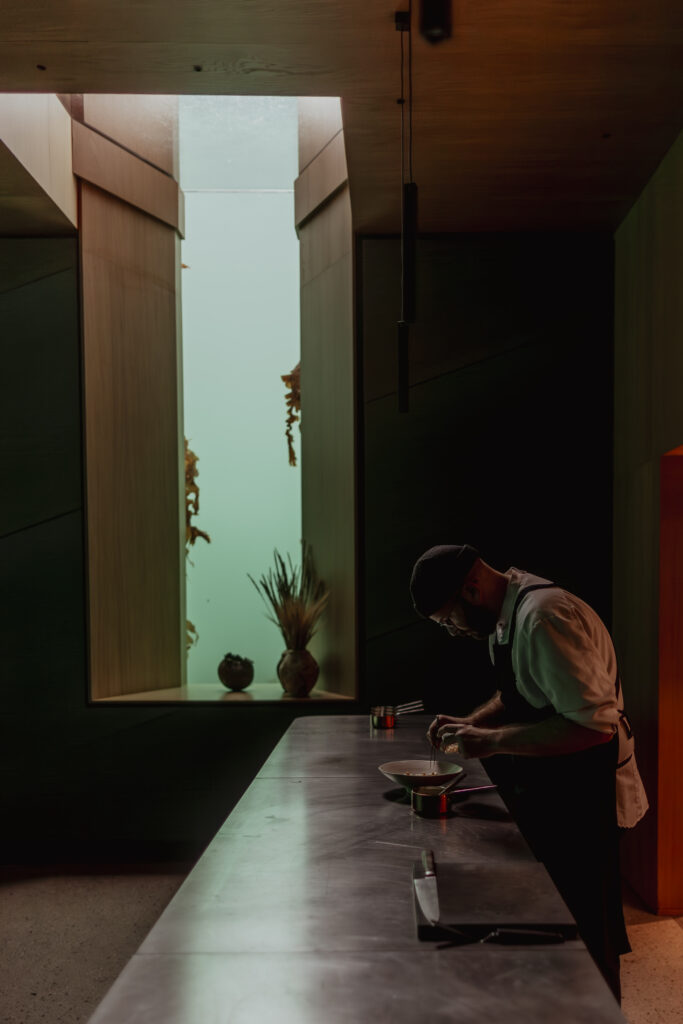
image courtesy Iselinn Andersen
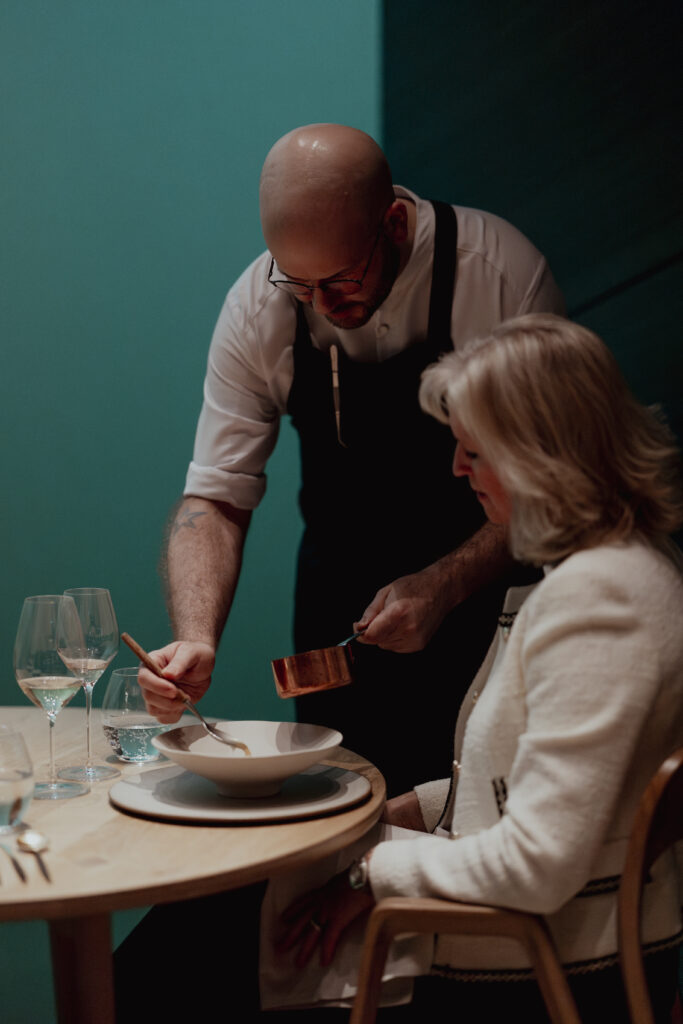
image courtesy Iselinn Andersen
JB: The building is designed to eventually become an artificial reef. Do you see your kitchen as a guest in this ecosystem, and how does that “guest” mindset guide the ingredients you highlight or avoid?
BS: Very much so. We see ourselves as guests here.
Our time is limited, and that view creates a strong sense of responsibility. We try to meet the ocean and nature in general with respect and humility, aiming to adapt and leave as little impact as possible.
That mindset shapes our ingredient choices. Being a guest means listening, observing, and adjusting. It’s an ongoing process that guides both our philosophy and our daily work.
JB: Under is unique in its dual role as a restaurant and a marine research center. How often do insights from on-site biologists or underwater cameras directly inspire a dish’s narrative or composition?
BS: We’re in active dialogue with specialists, whose insights help us understand what’s happening just outside our windows. Seasonal shifts, algae blooms, and changing visibility all inform the stories we tell. This lets us explain why the ocean looks the way it does at any given moment and why there isn’t always fish in view, even though one regular does visit by the kitchen window in almost any weather.
For us, it’s about building understanding. The more guests learn about the ocean, the more meaningful the experience becomes.
JB: Guests are literally surrounded by the ingredients they are eating. How do you use the panoramic window as a “live storyboard” to bridge the wild fauna outside and the refined presentation on the plate?
BS: That’s a key part of how we tell our story. We use the panoramic window in our conversation with guests. What happens outside becomes a natural reference when we present the dishes.
It helps bridge the wild and the refined. Guests see the environment the ingredients come from while tasting them in a crafted form on the plate.
That connection makes the story real. It’s no longer abstract, it’s right there and we use that to deepen understanding of both the food and the ocean.
JB: Do you ever adjust the color palette or texture of a dish to contrast or complement the shifting visibility and mood of the North Sea — say, on a stormy day versus a calm one?
BS: In a way, yes. We’re always developing dishes that respond to our surroundings and the room we’re in. The sea’s changing moods, calm or stormy, naturally influence how we think about color, texture, and composition. It’s not about copying what we see, but creating something that feels in harmony with it.
image courtesy Iselinn Andersen
image courtesy Iselinn Andersen
image courtesy Iselinn Andersen
JB: The Norwegian coastline is rugged and demanding. Is there a “forgotten” ingredient or traditional preservation technique from the Lindesnes region that you’ve modernized for Under?
BS: We work on nature’s terms, and that guides both ingredients and approach.
It’s not about a single “forgotten” ingredient or one unique technique. The methods we use aren’t unusual by themselves, but we adapt them to this place and its rhythms. What’s unique is how we bring it all together, building a menu that reflects this coastline and the conditions we live with.
JB: After a long service submerged in one of the world’s most avant‑garde environments, what is one simple, land-based comfort meal that brings you back to earth?
BS: My grandmother’s lammefrikassé (lamb fricassée).
Salted lamb, gently stewed with dill, and fresh potatoes. Simple, honest, and full of memory.