Peripheral emOtions: Alice Shulman on Her Exhibition for the Brixtol Textile Art Scholarship 2026
Text by Natalia Muntean
Every two years, Brixtol Textiles invites an artist to transform deadstock fabrics from its production into a new body of work through the Brixtol Textile Art Scholarship. Established in 2022, the biennial initiative seeks to support artistic experimentation while highlighting the creative potential of existing materials.
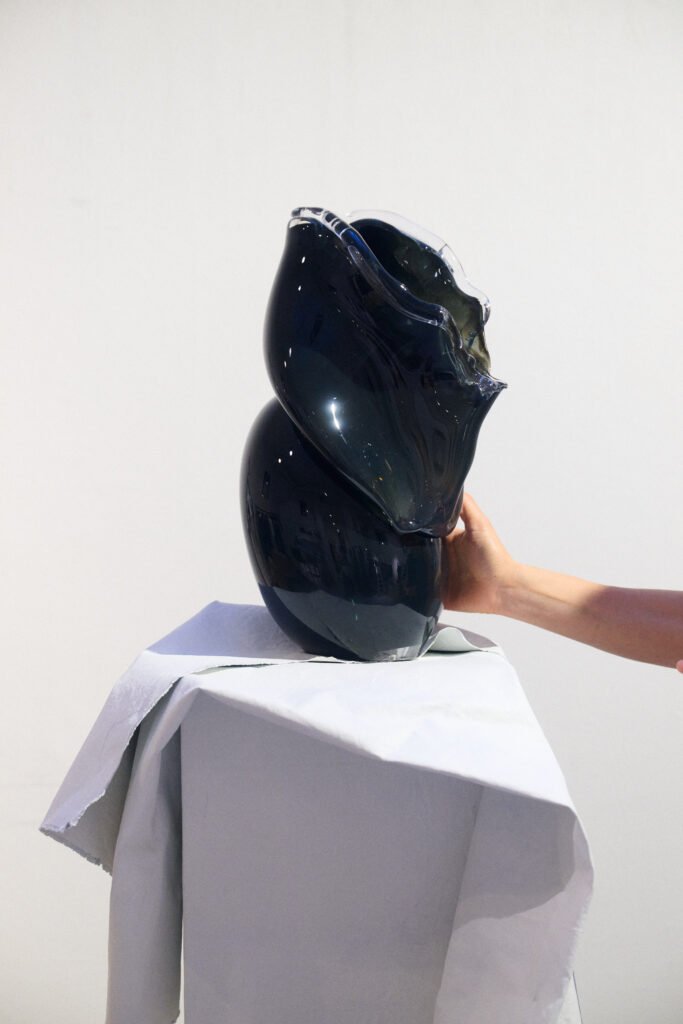
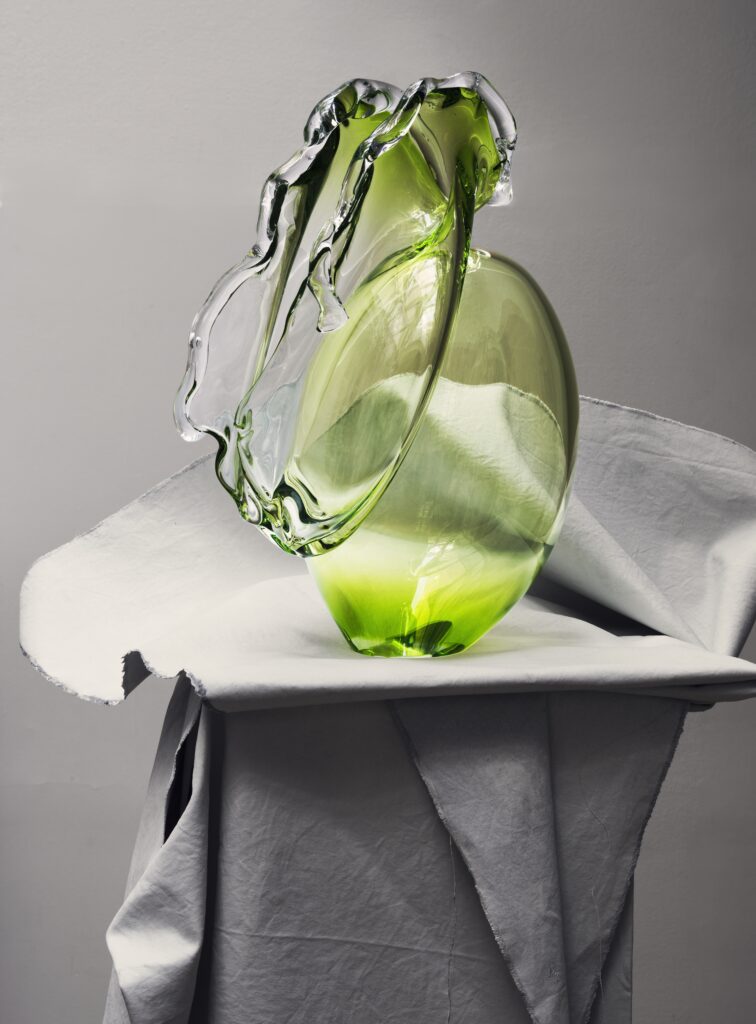
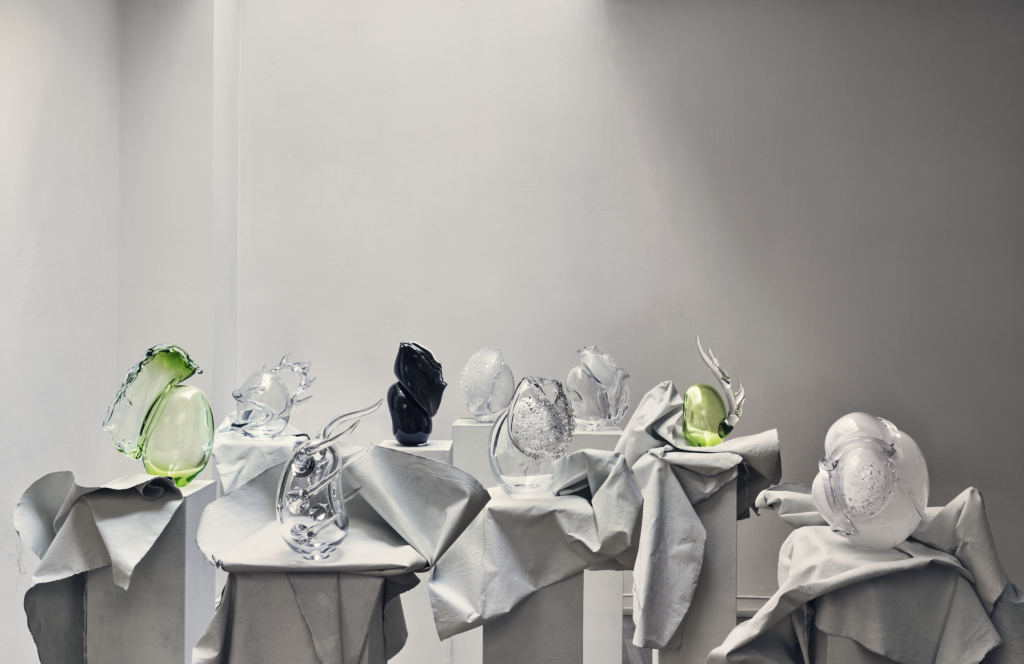
This year’s scholarship recipient is Stockholm-based artist Alice Shulman. Presented at Sven-Harrys Konstmuseum, her exhibition Peripheral emOtions features nine new sculptural installations that explore the relationship between glass and textile through waxed fabrics, frayed threads, folded surfaces and hand-blown glass. The works continue Shulman’s ongoing project Emotional Landscape, investigating how material, form and space can give shape to emotions that often remain just beyond our immediate awareness.
“Brixtol Textiles was founded from a deep appreciation for textiles and the tactile experience of exceptional materials,” says Emil Holmström, co-founder of Brixtol Textiles. “The Brixtol Textile Art Scholarship celebrates artists who share our passion for textile craftsmanship and creative expression. Through this initiative, we hope to inspire new perspectives on textiles and contribute to a more vibrant and innovative creative landscape in Sweden.”
For Holmström, the choice of Shulman as the 2026 recipient was clear. “Alice Shulman stood out this year for her unique approach to materiality and her unexpected use of our deadstock fabrics. Working from the medium of glass sculpture, she proposed a dialogue between two contrasting materials, textile and glass, that felt both innovative and poetic.”
We spoke with Alice Shulman about peripheral emotions, the conversation between glass and textile and the role of materiality in expressing what words sometimes cannot.
Natalia Muntean: What does the phrase Peripheral emOtions mean to you, and why did you choose it for this body of work?
Alice Shulman: Peripheral emotions are feelings that linger at a distance. Whether subconscious or intentionally placed in the background, they continue to shape how we experience the world. I chose the title because the work explores these quieter emotional states that often exist outside our immediate attention.
NM: What drew you to explore these quieter, less visible emotional states?
AS: In this work I”m interested in the emotions that are present but not immediate. They can be conflicting, difficult to capture or just more quiet, yet they often influence us as much as our more obvious feelings.
NM: What can glass and textiles communicate that language sometimes cannot?
AS: Materials communicate through presence and sensation rather than explanation. Together they create composition, harmony or dissonance. Sometimes it’s close to sublime, sometimes there is friction. Emotions are the starting point of language.
NM: How did these two materials begin to speak to each other during the creative process?
AS: It’s like both materials contaminate each other through the process. The fabric was made even more sturdy in order to support the glass – it stiffened in a simple motion just as glass does while fired. The glass – I always take clues from textile processes while working with it, by cutting glass while it’s hot, for instance, but in this work, it was also a matter of ornamentation.
NM: How did the collaboration with master glassblowers in the Czech Republic shape the work?
AS: The collaboration allowed me to work at a larger scale and push the material further. The final pieces emerged through a balance of artistic intention, craftsmanship, and the material’s own behaviour.
NM: How did the rooftop setting influence the exhibition?
AS: Sven Harry’s Rooftop is an iconic background. The pebbles, the golden walls and the Stockholm skyline with a striking blue sky make a perfect backdrop. It’s a manifestation of Swedish design tradition. With glass playing such a part in Swedish craft history, I think it’s wonderful to push that tradition into the future.
NM: Did working with deadstock fabrics influence the ideas behind the exhibition?
AS: Yes, through its sturdy, crispy character, it had a very sculptural structure and a natural will to shape by itself.
NM: What do you hope visitors take with them after encountering Peripheral emOtions?AS: I hope the works give the visitors some minutes to reflect on their own emotional landscape.