ENSE on its second collection: “Made to carry what matters”
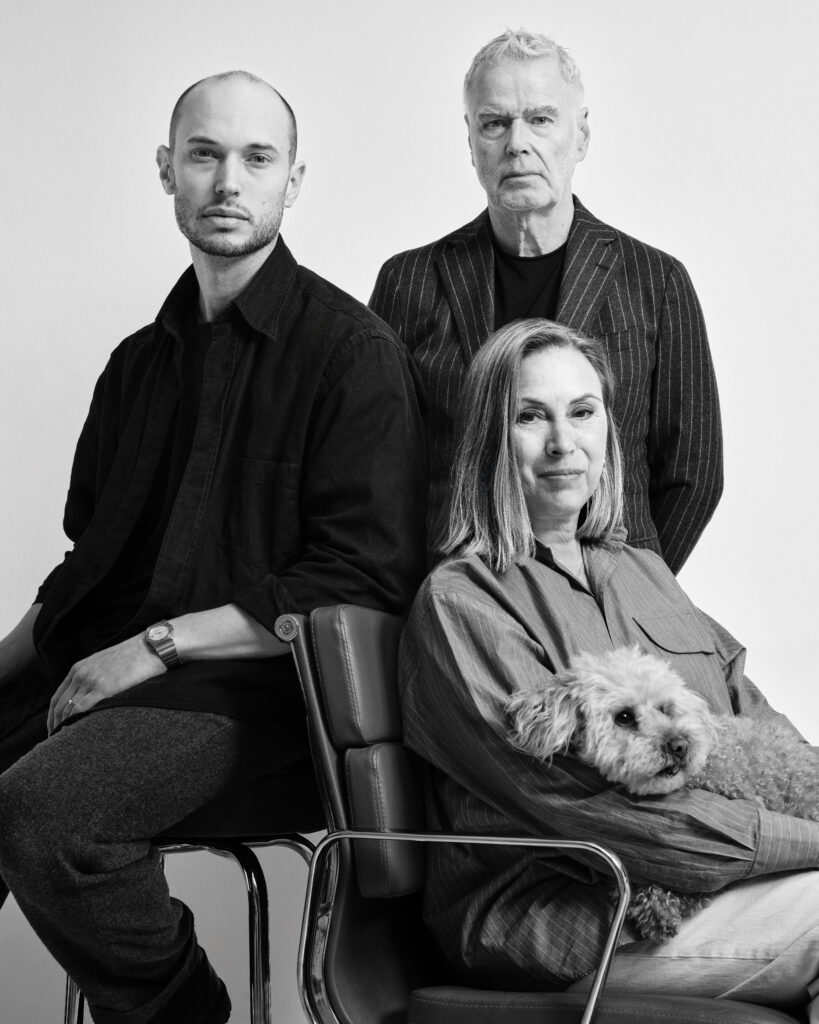
“We’re much more interested in building something slowly and thoughtfully, something with the potential to last,” say Eva, Conny and Marcus Lindström, founders of the accessories brand ENSE. For more than four decades, Eva and Conny chose brands for Stockholm through Image Group, from the first Mulberry store in Scandinavia to Gucci and Max Mara. Today, ENSE founded in 2025, launches its second collection, adding the Berry Bucket, inspired by the baskets the family uses for berry picking at their country house, the Small Zipped Sanda and its first sunglasses, Umbra.
Natalia Muntean: The Small Zipped Sanda is a new take on your first bag. What made you want to revisit the Sanda Tote, and what did the first year with it teach you?
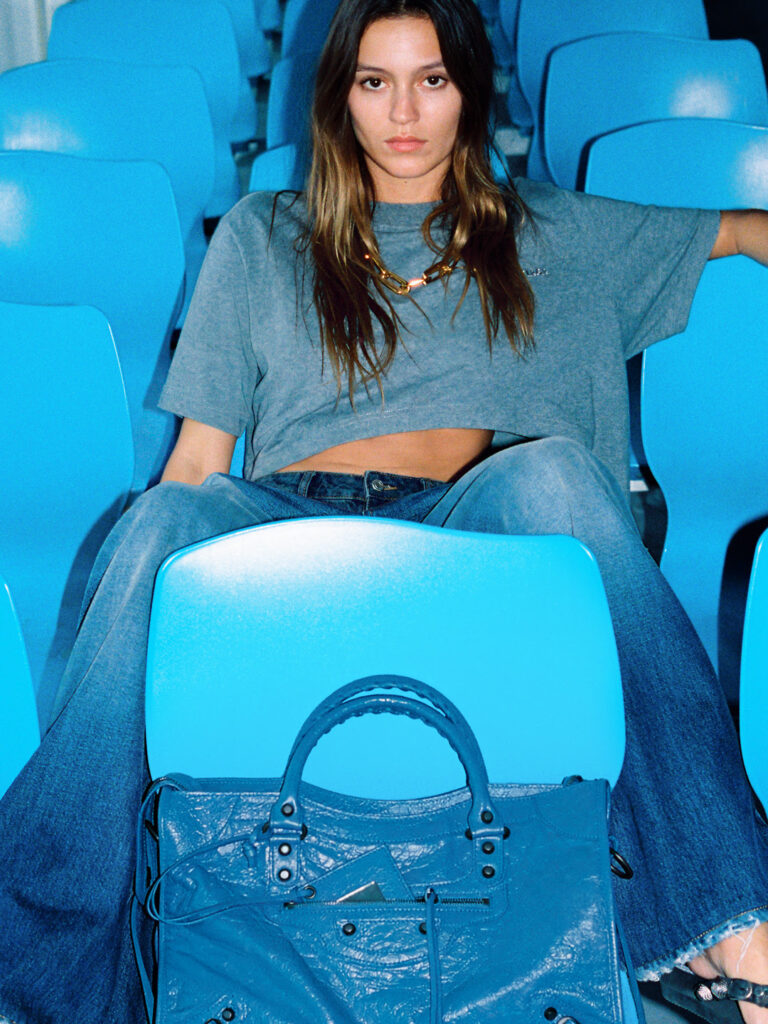
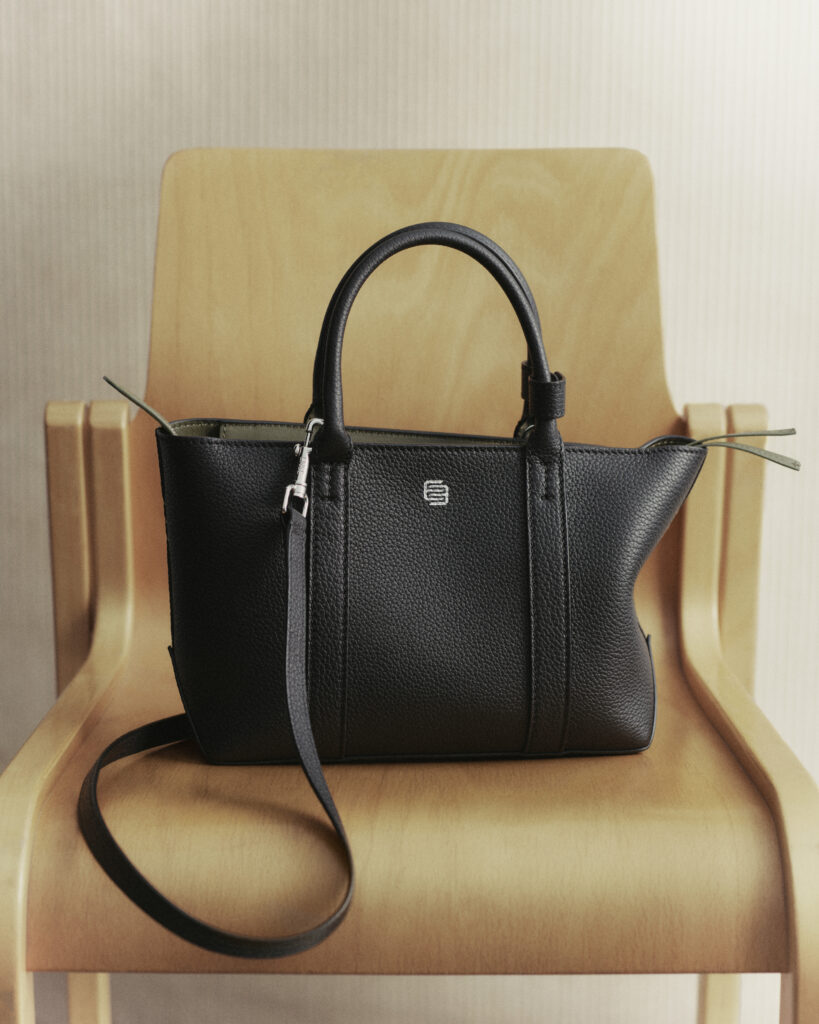
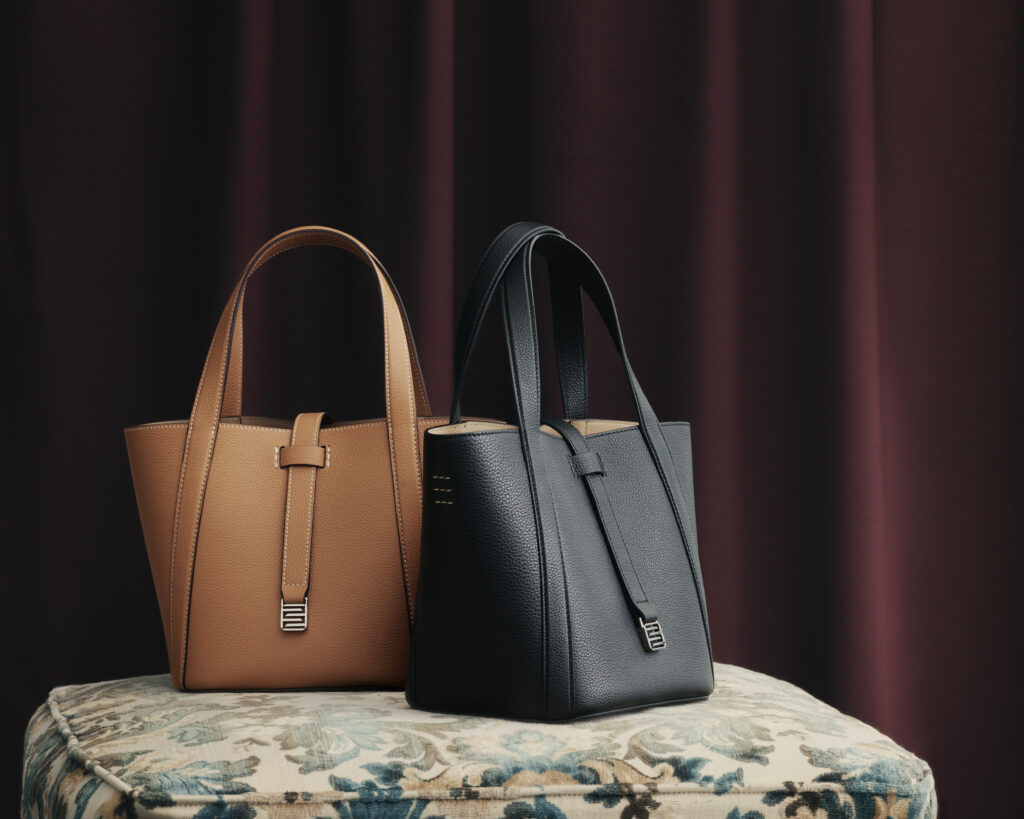
ENSE: Over the first year, we discovered a desire for something slightly smaller and more enclosed. So we revisited the original design, refining the proportions, adding a discreet zip closure, and adjusting the handles while preserving the timeless silhouette and considered functionality of the original Sanda Tote.
Even though it was our very first design, we immediately felt that the Sanda Tote established a visual identity for ENSE. A design language we could continue to explore and develop. Details like the handles extending from the base of the bag, dividing its body into distinct sections, give an otherwise simple silhouette a more interesting architectural expression. It’s a detail that has become an important part of our design DNA.
NM: What does the zip and the smaller size change about how the bag is used?
ENSE: The original Sanda Tote has naturally become something of an everyday work companion, with room for a laptop and everything else the day might require. The Small Zipped Sanda is designed for a day when you can leave the work essentials behind and carry a little less. The zip closure was actually something our customers had been asking for. With a smaller bag, particularly one designed to be worn crossbody, a closure becomes more relevant. We wanted to integrate it without disturbing the clean silhouette, so we made a dropped zip construction that elegantly disappears into the bag when opened. It’s a small detail, but one that makes a real difference to both the function and the overall expression.
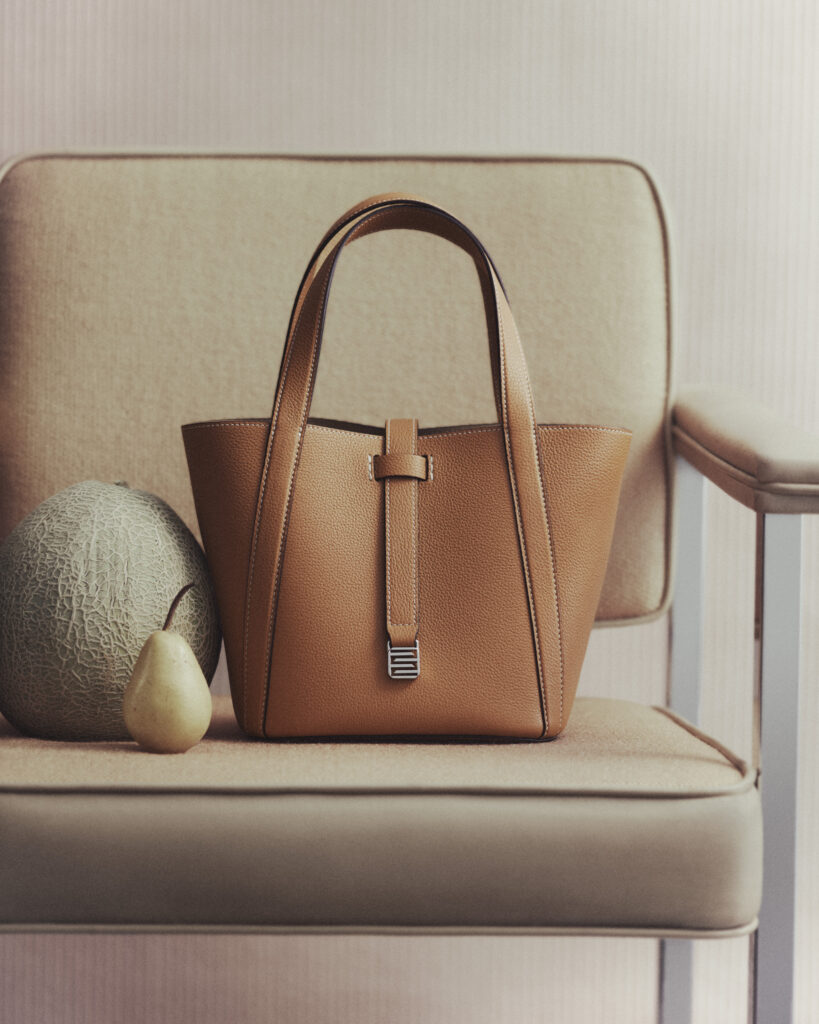
NM: Tell me about the Berry Bucket: where did the idea start, and what was the hardest part of turning a berry basket into a bag?
ENSE: As with all our designs, inspiration often comes from the most ordinary objects, things that have been created simply to carry something from one place to another. At our family’s country house, we have always used traditional buckets and baskets when picking berries, and over the years, these everyday objects have become part of the memories and character of the place. We started thinking about how interesting it would be to reinterpret the shape of a traditional berry-picking bucket as a bag. We wanted to translate that familiar form into something almost sculptural. An object with a striking, well-defined silhouette, yet surprisingly generous in volume. The challenge was finding the right balance between structure and practicality, creating something that feels like a beautifully shaped object without compromising its purpose as a bag. That contrast between everyday utility and a more refined, almost architectural elegance is really what defines the Berry Bucket.
NM: Every ENSE bag is made in double leather. Why did you choose it, and what difference does it make when you carry the bag day to day?
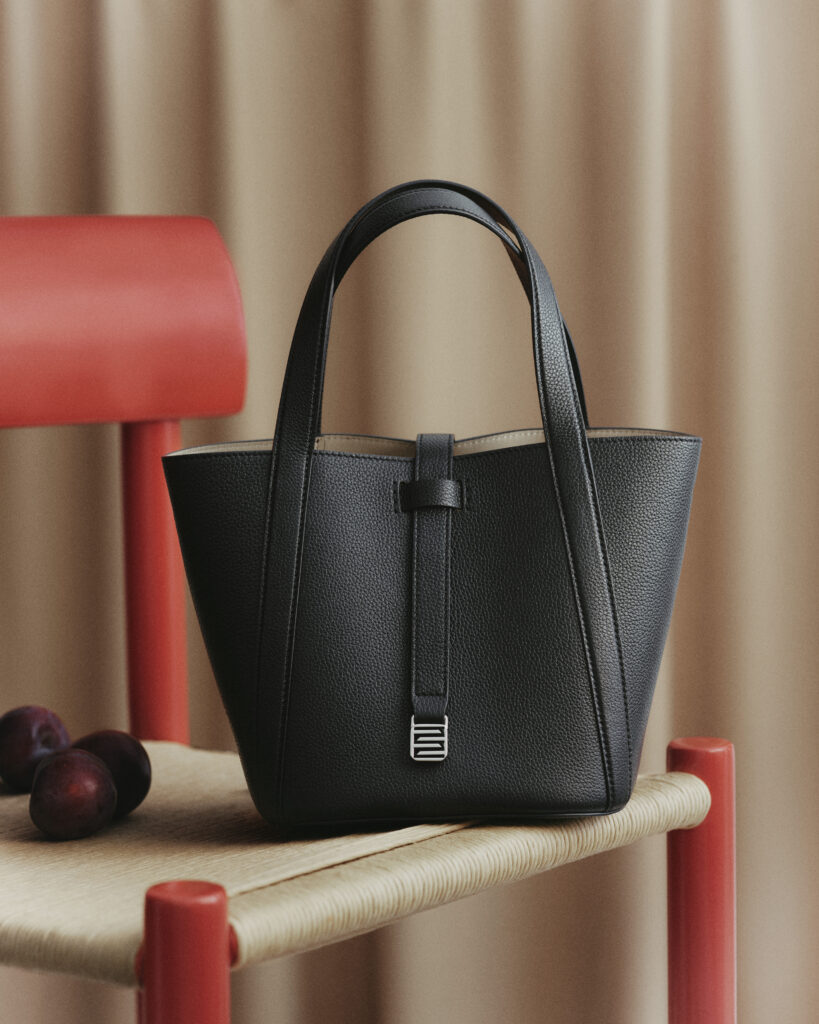
Marcus Lindström: Working with double leather gives our bags a natural structure and a sense of substance, but equally important to us is what happens on the inside. We consider the interior leather almost as carefully as the exterior. For the original Sanda Totes, we chose two grained leathers to complement their more unisex character, while the Small Zipped Sanda and Berry Bucket feature a softer, smoother leather on the inside that enhances their more feminine expression.
Technically, double leather means bonding two separate layers of leather together before constructing the bag. Unlike a traditional lined bag, there is nowhere to conceal the construction. Every stitch is visible, which demands a very high level of precision and craftsmanship. We see that as an opportunity rather than a limitation — a way of celebrating the work that goes into each piece.
NM: Your tagline is “Made to carry what matters.” What does that mean to each of you, and what do you carry yourselves?
ENSE: What matters is never really a fixed thing. It changes depending on where you are, what you’re doing and even what stage of life you’re in. When you’re travelling, it might be your passport, headphones and a good book. On a working day, it’s your laptop and perhaps your gym clothes for a quick workout at lunch. And when you’re heading to the park after picking up the kids, suddenly what matters most is a change of clothes, some snacks and a full supply of napkins. We like the idea that a bag becomes part of all these different moments. It’s not necessarily about what you carry, but about having something thoughtfully designed to accompany you through everyday life.
NM: Everything is produced in Florence. How did you find your makers there, and what do they bring to the pieces?
ENSE: Florence and the surrounding Tuscan region have been at the heart of Italian leather craftsmanship for generations. There’s an extraordinary concentration of knowledge and expertise there, so choosing the region felt quite natural to us. Finding the right manufacturing partner, however, was a much more involved process. We visited around a dozen different manufacturers before finding one that shared our expectations for quality and attention to detail. They have extensive experience producing leather goods for some of the world’s leading luxury houses, and that level of craftsmanship was essential to us.
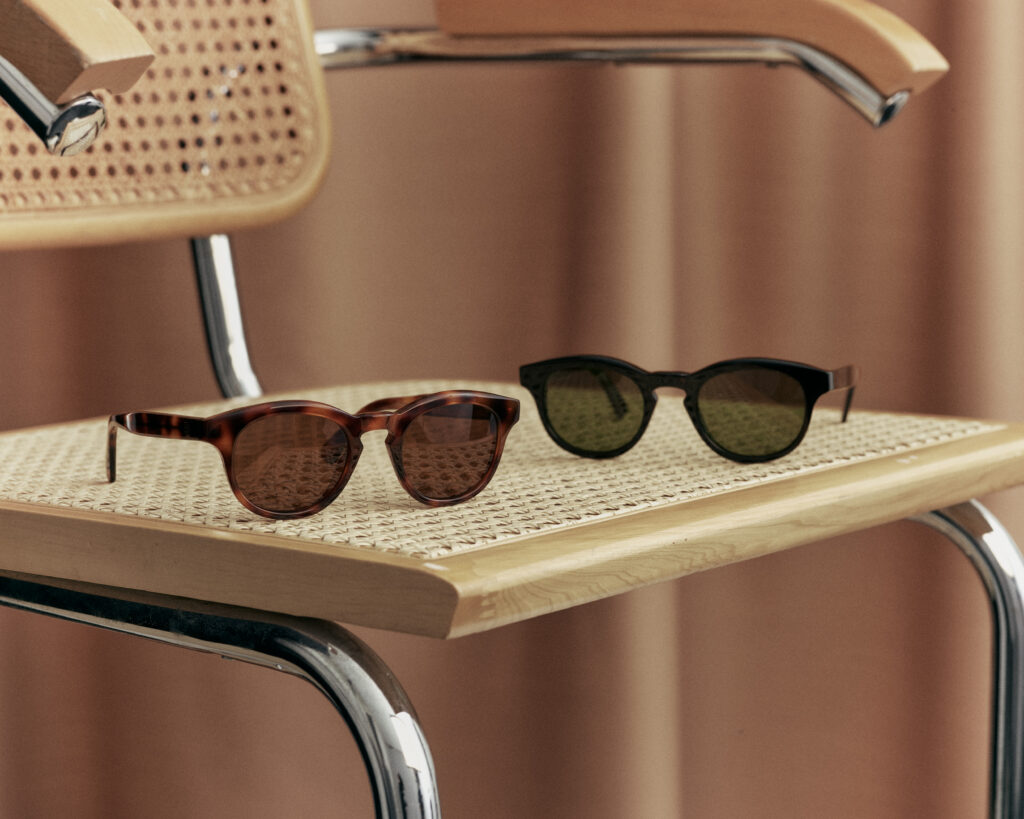
NM: Why sunglasses? Was there a moment when you thought, “we need these ourselves”?
Eva Lindström: Sunglasses have actually been part of our world, in one way or another, since the 1980s. Through our family’s retail business, we’ve worked with many fashion houses over the years, and eyewear has almost always been a natural extension of their collections. So, introducing sunglasses to ENSE was something we’d been considering from the beginning. When we found an Italian manufacturer that met our standards for quality and craftsmanship, the timing simply felt right. Our first model, Umbra (Latin for shadow) is a unisex frame handmade in the Veneto region of Italy using premium acetate. Much like our bags, the idea was to create something with a distinctive yet understated character, designed to be worn and appreciated for years.
NM: Tell me about the leather in the 20 eyewear cases. What was it originally, and what’s the story of it sitting at Sanda for 20 years?
ML: In the early 2000s, when we were refurbishing our Mulberry stores in Stockholm and Gothenburg, the interiors featured wall panels upholstered in this beautiful tan, full-grain calfskin leather. Once the renovations were completed, we were left with five unused hides. Rather than letting them go to waste, we brought them to Sanda, our family country house, where they ended up being stored in one of the old barns.
And there they stayed for more than twenty years. When we started ENSE and began experimenting with early prototypes, I remembered the leather. Remarkably, it was still in beautiful condition, so we started using it to develop our designs. Eventually, we wanted to give the remaining leather a more permanent purpose. We approached a small leather goods workshop here in Stockholm, which transformed the last of the hides into twenty eyewear cases, available for purchase alongside our Umbra sunglasses. I love the idea that something originally intended for our stores more than two decades ago has now found its way into our own collection. In a way, it connects two chapters of our family’s history.
NM: When the three of you disagree on a design, who wins?
Conny Lindström: I think we all win at different times. We each bring slightly different perspectives to the process, and that’s probably one of our strengths. Sometimes someone has a very clear vision, and other times an idea evolves through discussion until we arrive at something none of us would have come up with individually. There are certainly disagreements along the way, but we all share the same ambition for ENSE. In the end, it’s less about who wins and more about finding the solution that feels right for the brand.
NM: You spent 40 years choosing other brands for Stockholm. What’s the best and the worst part of being the brand now?
EL: The most rewarding part is certainly the creative freedom. After decades of working with other brands, there’s something incredibly satisfying about being able to build something entirely your own. To shape not only the products, but the identity, the story and the direction of the brand.
I wouldn’t necessarily say there’s a worst part, but the biggest challenge has been discovering just how complex the process behind a finished product really is. When you’re on the retail side, you see the result. When you’re creating the product yourself, you suddenly become involved in everything from sourcing individual components to navigating production timelines and coordinating all the different stages of manufacturing. It’s been a steep learning curve, but also a fascinating one. And it has given us an even greater appreciation for the work that goes into making something truly well.
NM: Which of the three new pieces is the most personal to each of you, and why?
ML: Because our collection is still so small, every new piece feels very personal. There’s something incredibly rewarding about following a design from its very first sketch, through countless adjustments, material selections and prototypes, to finally holding the finished product in your hands. By that point, you’ve developed quite a close relationship with it. For me personally, the Berry Bucket holds a special significance, particularly because of the custom hardware. The double E emblem as hardware is something I’ve wanted to explore ever since we first designed the ENSE logo two years ago. I always imagined it could become a distinctive detail, but we were waiting for the right design to introduce it. The Berry Bucket, with its sculptural silhouette and more expressive character, felt like the perfect opportunity. Seeing that small idea finally becoming a physical part of the collection is particularly satisfying.
NM: What would success look like for ENSE?
ENSE: Everything moves incredibly fast today, particularly in fashion. We’re much more interested in building something slowly and thoughtfully, something with the potential to last. For us, success is about creating a distinct identity and earning the trust of people who appreciate what we do. Ultimately, we’d like ENSE to become a brand people return to because they know they’ll find pieces that are thoughtfully designed, beautifully made and genuinely useful in their everyday lives. Something they choose to carry today and still want to carry many years from now.