Light as air: Guðrun & Guðrun’s capsule collection with Helena Christensen
Text by Natalia Muntean
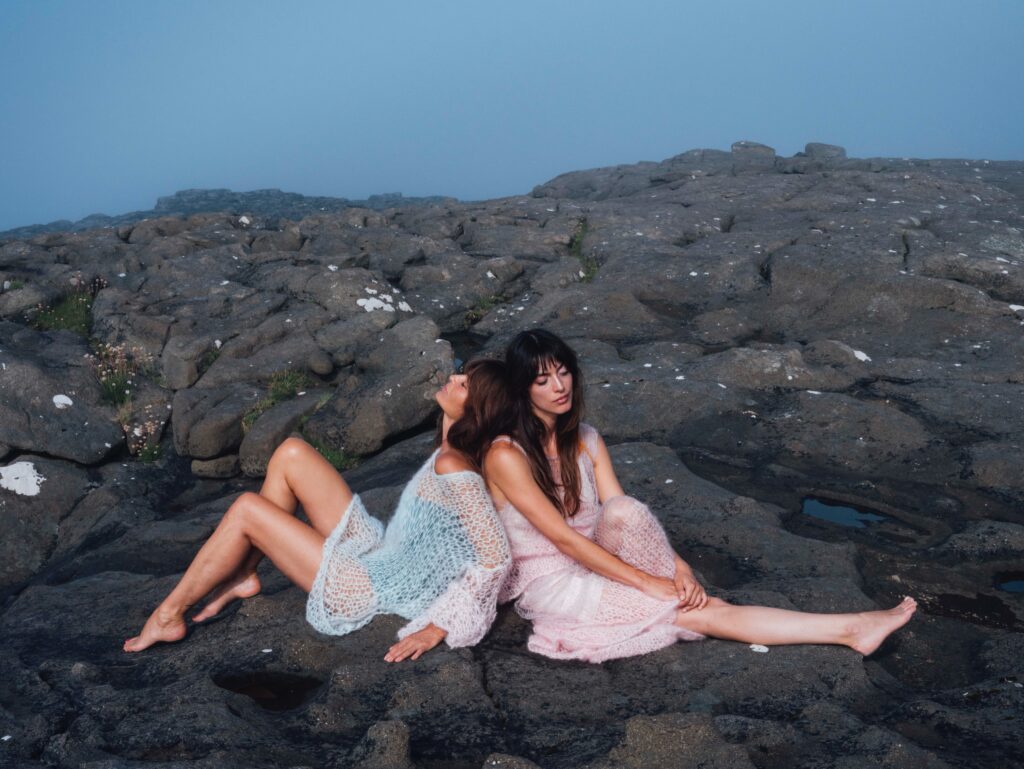
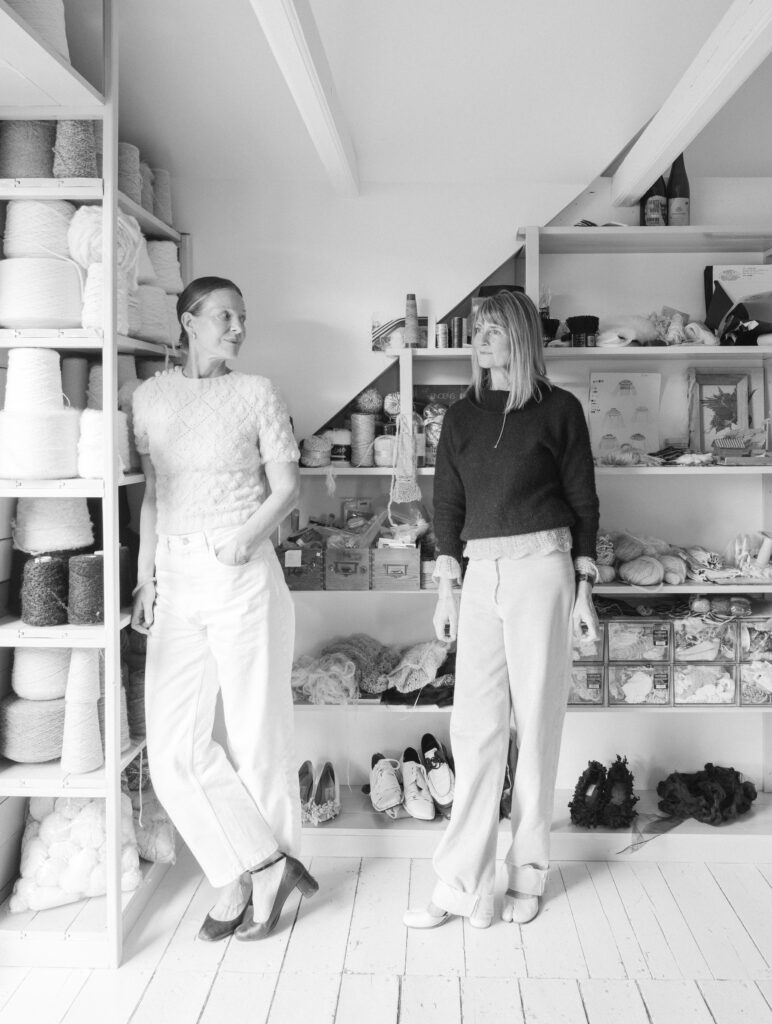
“We were born sustainable,” says Guðrun Rógvadóttir, who co-founded Guðrun & Guðrun with Guðrun Ludvig in 2002. In March, the Faroese knitwear brand launched a capsule collection with Danish model and photographer Helena Christensen, which began with pictures and mood boards sent back and forth between Ludvig and Christensen. “She was very easy to work with and we had the same vision,” says the Creative Director. The brand, recently B Corp certified and known for the star sweater worn in The Killing, turns 25 next year and is working on a photography book.
Natalia Muntean: How did the collaboration start? Who reached out to whom first?
Guðrun Rógvadóttir: We have been watching Helena from afar, like everybody else. When we started our brand almost 25 years ago, she always popped up at the fashion fairs, especially in Copenhagen, and came to have a chat and showed some interest in our things. She was spotted in our star sweater on the streets of New York. At one point she had a vintage store with a friend, and she reached out to us and we sold some of our goods there. We didn’t talk much for some years, but then she came into contact with our PR agency in Denmark, and the idea of a collaboration came up. There are some very clear common aesthetic views and visions in what she’s doing and what we are doing.
NM: How involved were you in the campaign?
GR: Before the shoot, Guðrun Ludvig, the designer, and Helena had their own way of communicating, and they didn’t want too many people involved. They just wanted a direct link to each other so they could work more creatively and freely without having to explain too much. It ended up with them sending a lot of pictures to each other.
Guðrun Ludvig: I always felt we were in the same spirit. I like colour and she does too. I found it inspiring when I saw Helena in Japanese Vogue, where they took photos of her apartment. She was wearing a lot of colour, and three of our pieces. During the collaboration process, we were sending mood boards to each other. She was very easy to work with and we had the same vision.
NM: How would you describe the aesthetic of the mood boards?
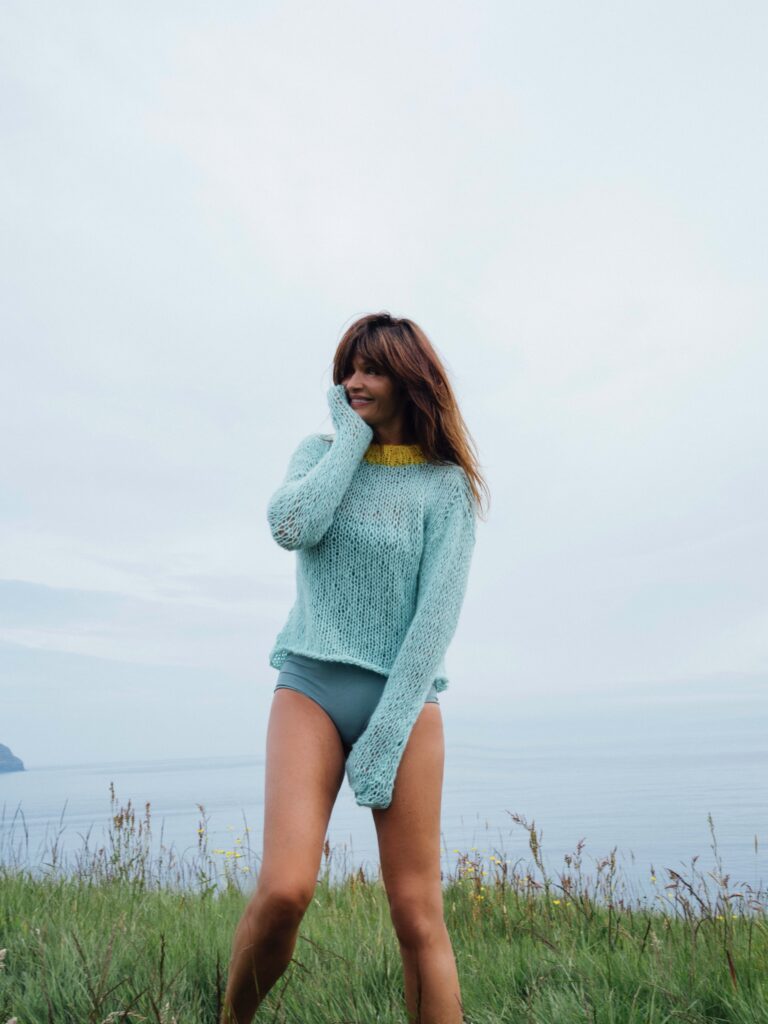
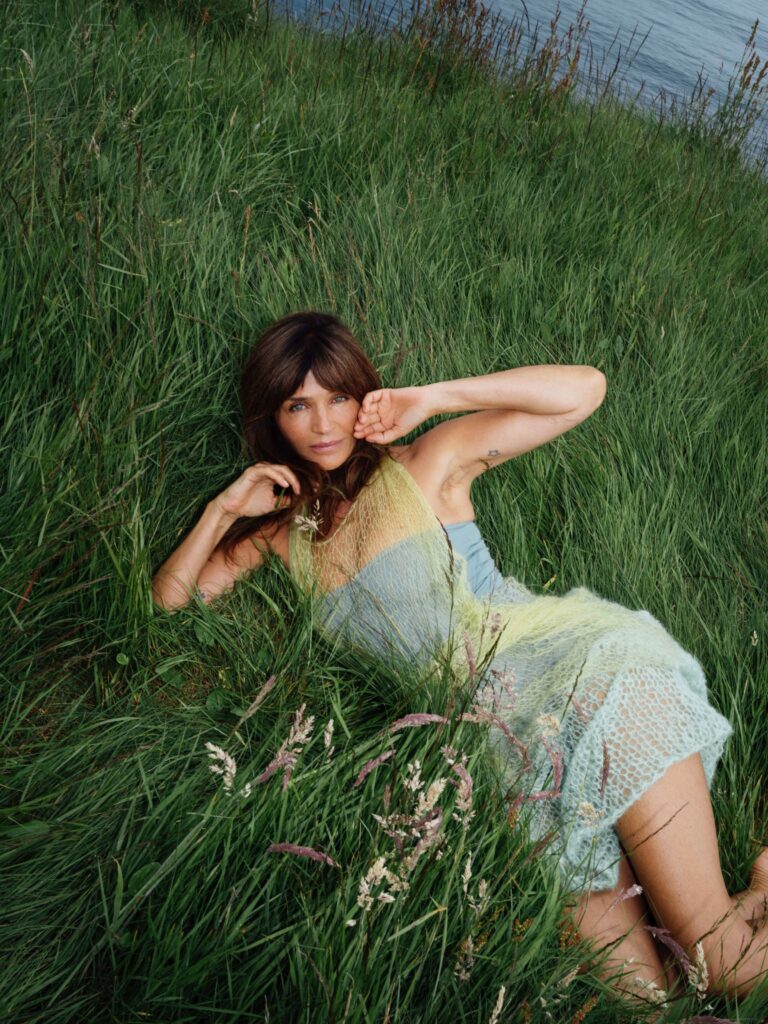
GL: We highlighted pastel colours because we both love them. We made the pieces and knitting so light that it almost feels transparent. Both of us worked in the same direction, to highlight the lightness of the knitting. Knitting can often be heavy, and if you have so much control over it, you can make it light, almost transparent.
NM: Is there a special technique?
GL: It depends on how good you are and how long you have been working with knitting. When a product is finished it seems very easy, but it’s how you touch it in your hand with all those needles to get the lightness, so the pieces are almost flying away from you. Some of the threads we used were so thin, almost like sewing thread.
NM: Where was the campaign shot?
GR: Here, in the Faroe Islands. The weather here can change so fast. You can have all the seasons in one day. One of our house photographers was with us and had made a plan with some nice places.
GL: We were very lucky. The weather was special, with the fog very low, in summertime, so it was very magical. It was inspiring to watch Helena and the model work together, and then Helena take the camera.
NM: Did some pieces not make it into the final seven?
GL: There was a coat we didn’t finish. It wouldn’t fit in.
GR: We created a short cardigan instead, with the same idea.
NM: When that happens, do you scrap the pieces or rework them?
GL: Sometimes I feel I’m not finished with a piece and need more time, so I put it aside and build a collection around it later. We have a shop here in the Faroe Islands, and I also play creatively with the windows. So I can always get pieces sold in the shop. I really like being there because when we started, knitting was not as highlighted as it is today. People bought a sweater, and that was it. We have worked a lot to make the full outfit in knitting, from top to toe, so it’s more fashionable and not so heavy. We decided to have only knitwear in our shop, and that’s become a unique store. People come from abroad because there’s only knitting there, and we don’t compromise with other things because they sell better.
NM: You also produce pieces in Peru. Why Peru?
GR: In 2007 we made the star sweater that became really famous because of The Killing. We made it in Faroese wool, and quite a lot of customers found it too hard, too itchy. So we decided to make an alpaca version as well. At the start we used alpaca that we bought from Italy, but it didn’t make sense that the Italians should earn the money for yarn made in Peru. So we wanted to go closer to the source, and we started working with a very small sourcing agency in Peru, and everything we produce there is alpaca.
NM: How did you find the balance between keeping the knitting simple and making pieces almost ethereal?
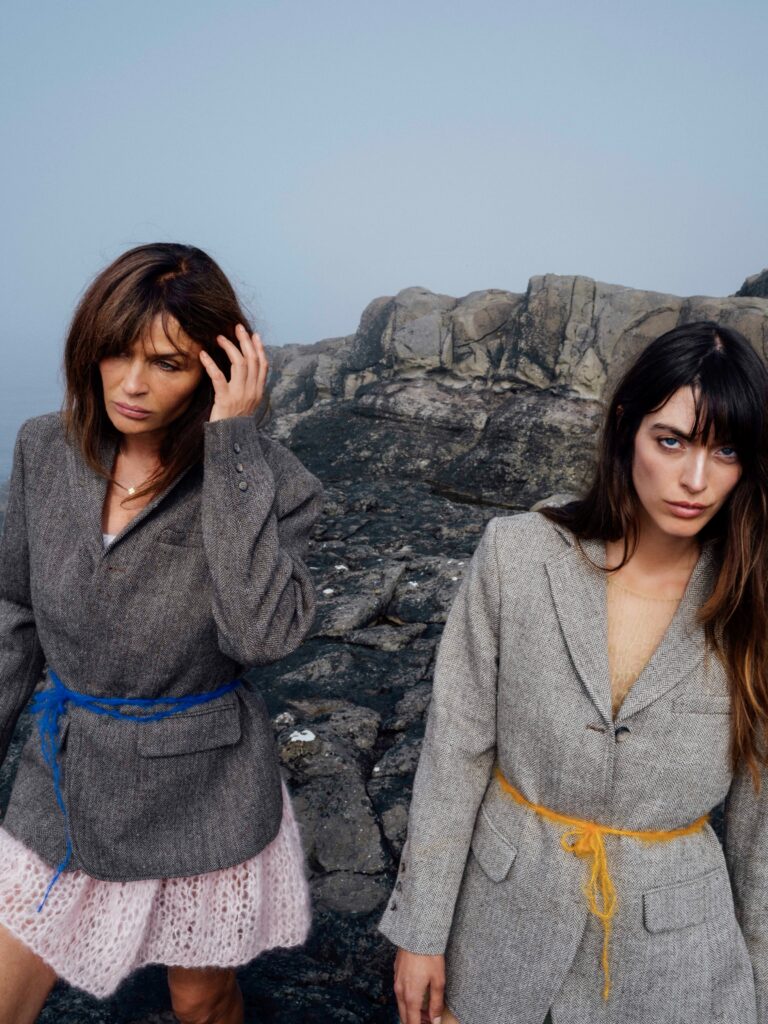
GL: It was very easy, because we have been knitting for so many years. It was a summer collection, and summer has always been difficult for us. People at the exhibitions said it was so hot outside, but here it’s so cold. So we made them very light. It works like a piece of jewellery: you put it over a bikini, or over a top in the evening if you go to a party. It works a lot with layers, and I can see in Helena’s style that she also uses a lot of layers.
NM: Any more collaborations planned?
GR: Something is being talked about, but nothing really concluded. It’s interesting, but you have to consider it really well: the timing, and what kind of story you want to tell people. If you suddenly work with somebody very different from you, people ask, why do they do that? There are a lot of factors: style, aesthetics, ethics, look, materials.
NM: How do you balance tradition with reaching new audiences?
GR: If you stay true to your original idea, and that’s what we have done all along. We started almost 25 years ago because we wanted to save the Faroese resources of wool and lambskins, and 25 years later it’s the same vision. We were born sustainable. If you work with knitters elsewhere, like in Peru, or in Jordan, which is an even older project, you want to treat them the same way as the knitters here. And we have recently become B Corp certified.
NM: Do you think you succeeded in saving those resources?
GR: Not that we can use all the wool here, but we have made people aware of its value. Now other designers and producers value the wool more. We have been pioneers in knitting, but also in doing new things with the wool. We made suits of the first Faroese tweed ever made, and that’s one of the jackets you saw Helena wearing. We have also made furniture, an acrylic chair with Faroese lambskins, which you’ll see on our website. We also made a rug. Faroese wool is often too harsh for sweaters, but in a rug the roughness is suddenly pleasing, almost therapeutic; walking on it gives some grounding.
GL: We also made a lambskin jacket, which is very popular. In the beginning, nobody wanted the wool, and there’s so much lanolin in the lambskin that burning it takes a lot of resources and causes pollution. Suddenly it works as a jacket. Each is put together from about four lambskins, so no two are equal. People are on the waiting list.
NM: You’re turning 25 next year, and I heard you’re planning a photography book.
GR: We came as far as knowing the format of the book. It’s a completely different kind of thinking, and it’s now very much about finding the team, because we are not writers. We’ve been looking through books from other artists, knitters and designers to find our way. We know a lot about what we don’t want it to be. We don’t want an anniversary book or a chronological book. We don’t want it to glorify us about sustainability, because that’s boring, and we don’t want to be that politically correct. We want it to be inspiring for others, light and modern.
GL: Something freer, less conservative, modern and light, like the product. When we started, knitting was seen as old-fashioned, almost boring. At our first exhibition, a photographer approached us and said she could see knitting in a modern way. That’s what I want.
NM: Is it where you thought you would be when you started in 2002?
GR: It’s difficult to say. You can give everything over and sell the company, or you can stay. We chose to stay very true to who we are and keep our base in the Faroe Islands. It wouldn’t be the same aesthetic or the same company if we did something else. Our company is very much linked to the Faroe Islands.
GL: I haven’t thought about it. It’s kind of my lifestyle to create, and continue to create and sell.