“Democracy as Myth”: Lebohang Kganye on Stories, Homes, and Hidden Promises
text Jeffe Lingier
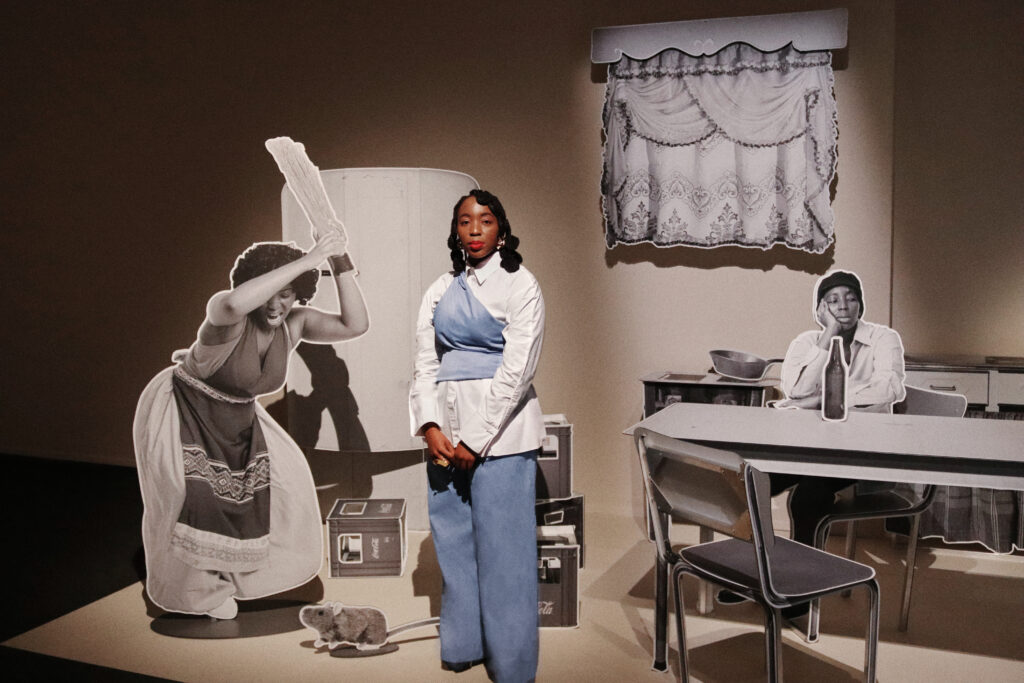
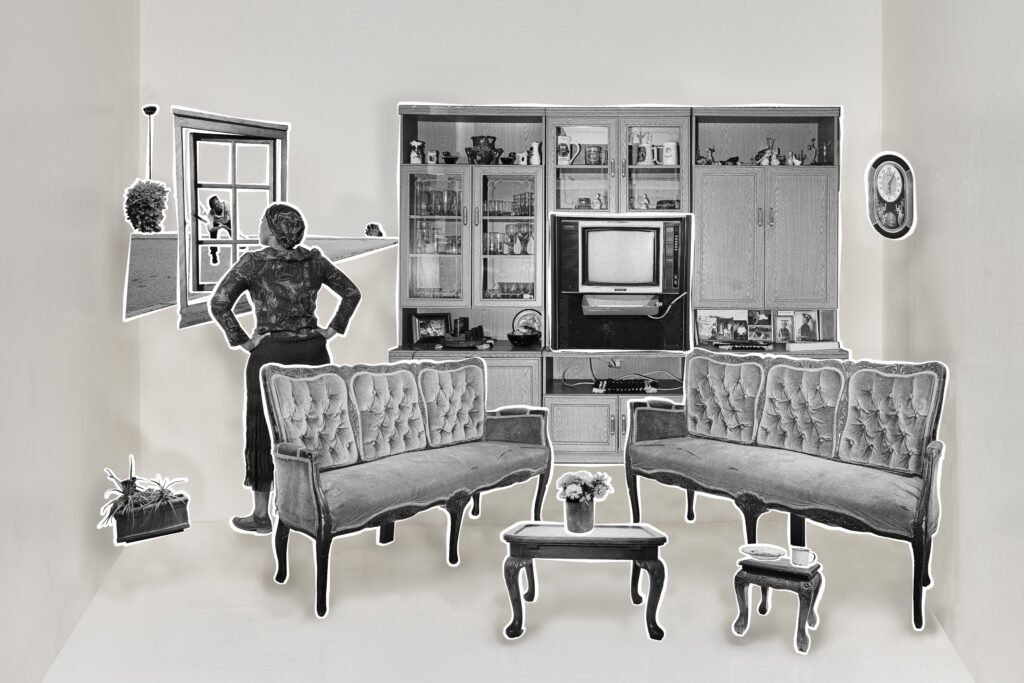
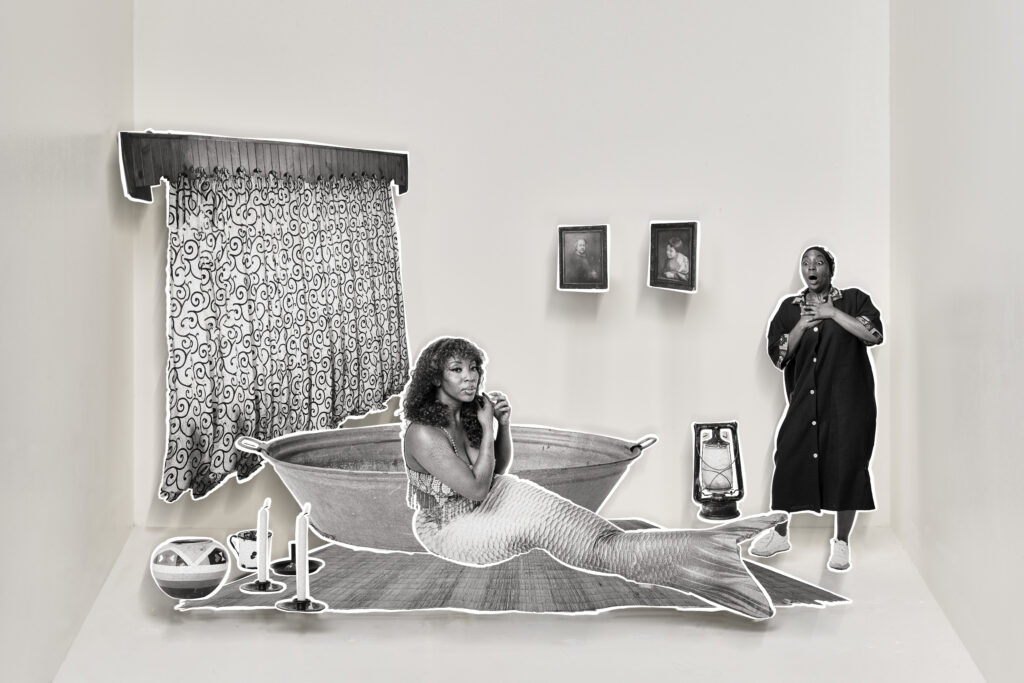
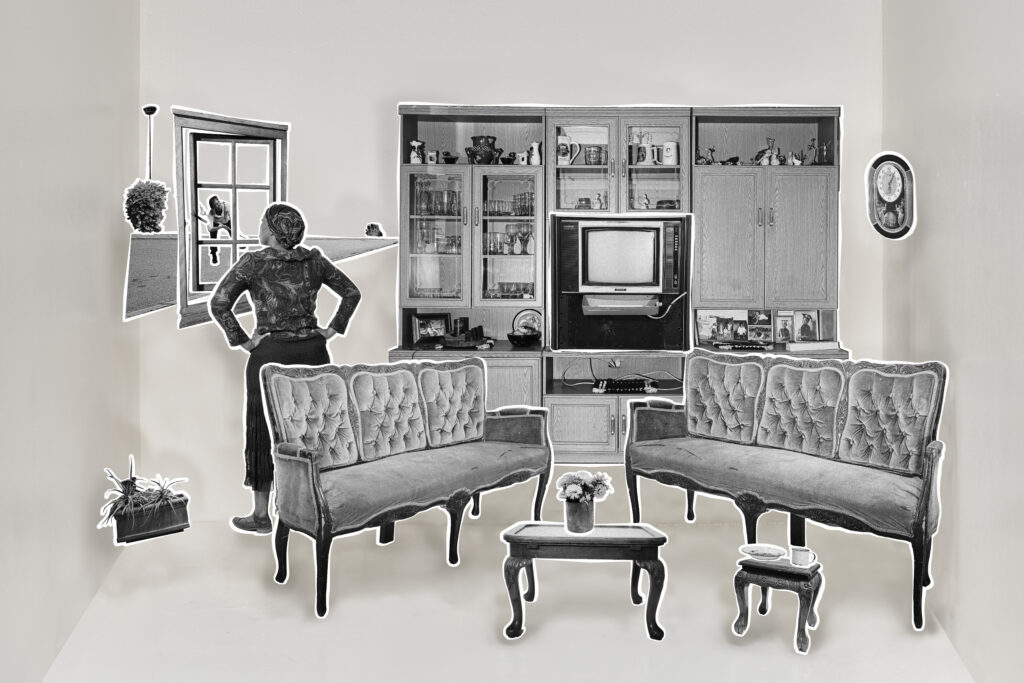
On March 6, Fotografiska Stockholm opened Le Sale ka Kgotso, a new installation created for the museum by South African artist Lebohang Kganye. The exhibition transforms the space into an immersive house-like environment where photography, sculpture, and architecture come together. At its centre are full-scale reconstructions of RDP houses, built as part of South Africa’s post-apartheid housing program introduced in 1994. For many, these homes came to symbolise hope and a new beginning. Through images, objects, oral histories, and folktales, Kganye explores the home as both a place of intimacy and a space shaped by memory and history.
photography Saskia Clarke
Jeffe Lingier : The title Le Sale ka Kgotso carries a double meaning. What does it refer to?
Lebohang Kganye : The phrase comes from Sesotho and roughly translates to “stay in peace.” Traditionally it is something people say when leaving someone’s home – almost like a farewell blessing. But I once heard a story from my aunt that completely changed how I understood the phrase. According to some beliefs, when someone says Le Sale ka Kgotso, they might actually be leaving behind an evil spirit in the house. When the person who stays replies “thank you,” they unknowingly accept it.
That idea fascinated me – how a small shift in language can completely transform meaning. It became a metaphor for the exhibition. Sometimes what appears hopeful or peaceful on the surface can hide something much more complex underneath.
Why did you choose RDP houses as the central element of the installation?
RDP houses were introduced in 1994 as part of a housing program meant to address the inequalities created by apartheid. Across South Africa they became strong symbols of hope and the promise of a new life.For me the house became a powerful metaphor. A home is a deeply personal space where memories, relationships and identities are formed. But it is also shaped by political structures and social realities. Who has access to housing and land is never neutral.
By recreating these houses in the exhibition, visitors can physically move through that environment. The house becomes a space where personal histories and national narratives meet.
photography Lebohang Kganye
JL : Why did you choose RDP houses as the central element of the installation?
LK : RDP houses were introduced in 1994 as part of a housing program meant to address the inequalities created by apartheid. Across South Africa they became strong symbols of hope and the promise of a new life.For me the house became a powerful metaphor. A home is a deeply personal space where memories, relationships and identities are formed. But it is also shaped by political structures and social realities. Who has access to housing and land is never neutral.
By recreating these houses in the exhibition, visitors can physically move through that environment. The house becomes a space where personal histories and national narratives meet.
JL : Your work often begins with family archives and photographs. How did that process start?
LK : It began after my mother passed away in 2010. A few years later, while studying photography in Johannesburg, I started looking through our family photo albums. I noticed that many photographs of my mother were taken when she was around the same age that I was at that moment.
That created a strange sense of connection across time. Many of the clothes she wore in those photographs were still in her wardrobe, so I began revisiting the places where the images had been taken and restaging them, wearing the same clothes and recreating the scenes. That personal project eventually grew into a much larger exploration of my family history. I started tracing my surname and travelled across South Africa to meet relatives I had never met before, collecting photographs and recording their stories. Through that research I also realised that many traditional family histories focus primarily on the male lineage. In South African culture, praise poetry connected to surnames often traces the line of male ancestors.
But many of the stories I was hearing came from the women in my family, especially my grandmother. They were the ones who preserved the memories, told the stories and kept the family history alive. Because of that, a large part of my work is about bringing those women back into the narrative. Their stories were often overlooked in official histories, but they are essential to understanding the past.
photography Andile Buka
JL : If you had to describe the exhibition in one sentence, what would it be?
LK : Maybe unfulfilled promises. Or perhaps democracy as myth.
For me the work reflects the tension between what societies promise and what people actually experience. After apartheid ended, South Africans were promised democracy, equality and housing. Those promises carried enormous hope, but over time people began to question whether they were truly fulfilled. The exhibition explores that gap between expectation and reality, and how those promises continue to shape the present.
JL : What do you hope visitors experience when they walk through the exhibition?
LK : I hope people take their time in the space and allow themselves to enter the world the installation creates. On one level it is simply about walking through a house and encountering images and stories. But beyond that I hope it encourages reflection about the stories we inherit, the promises societies make, and how those narratives shape the way we imagine the future.
If visitors leave the exhibition asking questions about their own homes, their histories and the narratives that shape their lives, then the work has done what it needed to do.
Le Sale ka Kgotso is on view at Fotografiska Stockholm from March 6 until October 18, 2026