In the Garden Where It All Began - Visiting Yves Rocher’s Roots in La Gacilly
text Sandra Myhrberg
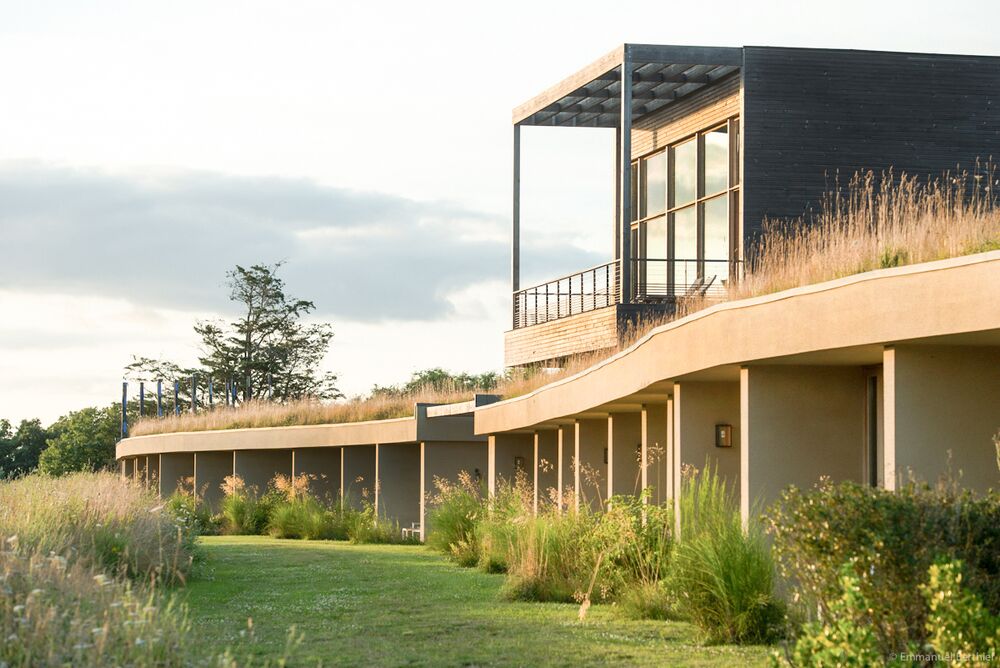
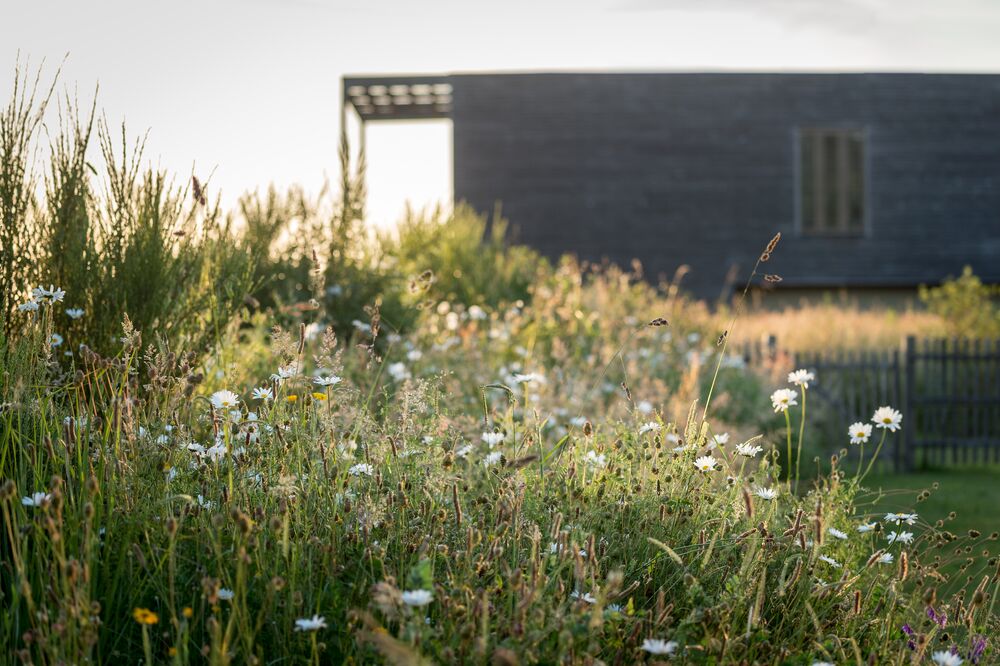
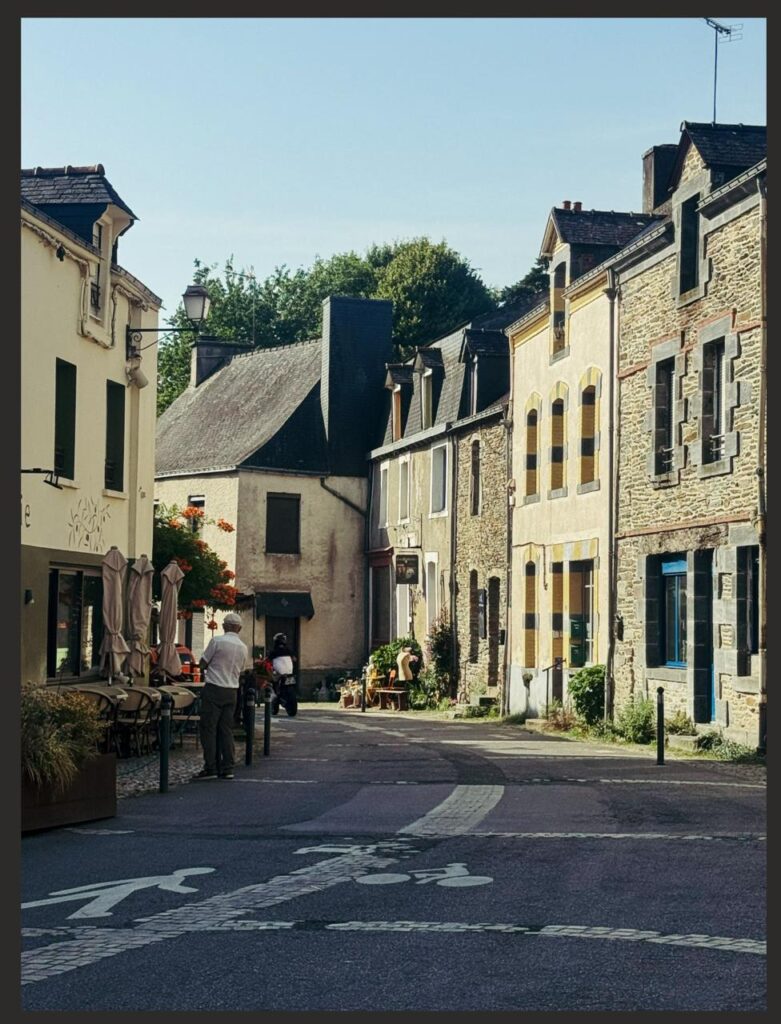
Sitting on a hillside between La Gacilly and Cournon, the La Grée des Landes Eco-Hôtel & Spa opened its doors in 2013 as Brittany’s first fully ecological hotel. I had the chance to experience its offerings while tracing Yves Rocher’s roots in La Gacilly, an area directly tied to the brand’s founder, where a young Yves Rocher once wandered, picking the wild plants and flowers that would later shape his life’s work. The hotel’s twenty-nine rooms are floored and panelled in oak from sustainably managed forests. The restaurant, Les Jardins Sauvages, grows its own organic, locavore produce. And I must mention the spa that runs entirely on Yves Rocher’s plant-based rituals.
I also visited Yves Rocher’s birthplace, where, in the 1950s, a teenage Yves Rocher, following a healer’s recipe for a hemostatic ointment made from lesser Celandine, hand-mixed his very first batches of cream after losing his father. That ointment, made and sold from his own home, was the seed of everything that followed. Yves Rocher founded his company in 1959 on an idea that ran against the grain of its time: that plant biology and dermatology could be brought together to create skincare that actually worked. To deepen the science, he partnered with dermatologists. He founded CERCO, the Centre d’Études et de Recherches Cosmétiques, laying the groundwork for what the brand now calls dermobotany, skin physiology and plant knowledge treated as a single discipline.
In the town of La Gacilly, there is also the Maison Yves Rocher, the brand’s immersive museum. Its five rooms walk visitors through the company’s story, sense by sense.
images courtesy Yves Rocher

Into the Living Laboratory
That founding conviction is easiest to see at Yves Rocher’s pilot centre in agroecology, just outside La Gacilly, a working botanical garden that doubles as a research station. The site serves three purposes, its resident agronomist and botanist, Cécile L’Haridon, explained as we walked the plots.
The first is production: growing the brand’s own plants organically, then processing them into the active ingredients that give its formulas their effect. The botanical garden itself is almost a manifesto, a visible, walkable version of the belief that plants belong in the cosmetics business, not just in its marketing.
The second is innovation. ‘We try to imagine what tomorrow’s plants inside our cosmetics will be’, L’Haridon said, not just which new actives to develop, but which plants will even be possible to grow as the climate shifts. Nothing here is irrigated. Crops are chosen for drought resistance from the outset, and water is given only in narrow windows, just before blooming, in small amounts, if a heatwave threatens the flower itself.
The third goal is harder to name in English. L’Haridon called it ‘influence’, but it’s closer to community: partnerships with local farmers, naturalists, and academic researchers, built on shared observation and shared science. Agroecology, she said, is too complex to figure out alone.
photography Sandra Myhrberg
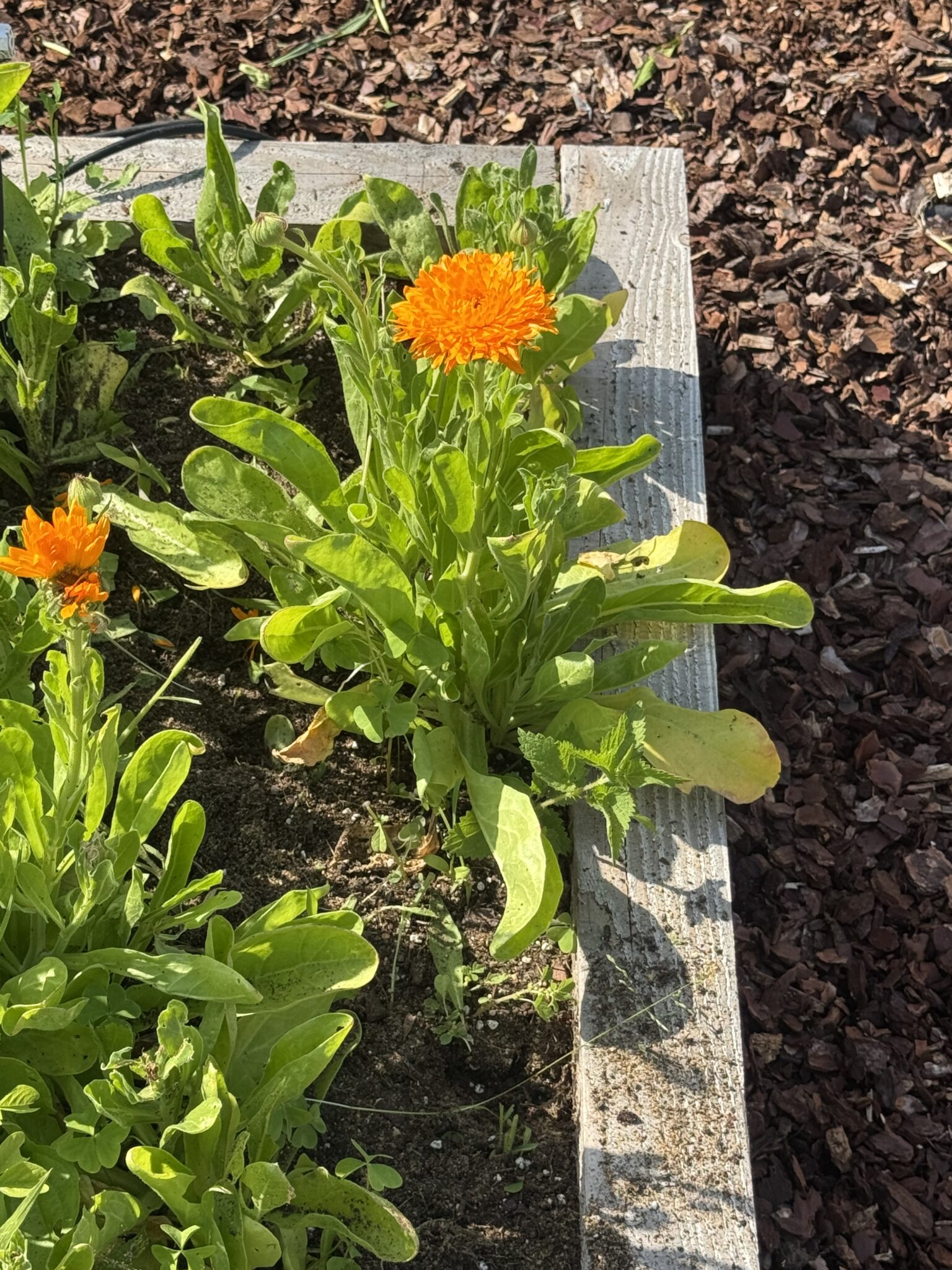
Between the rows of plants destined for cosmetics, other crops such as phacelia and buckwheat are deliberately sown as living soil cover, plants that will never end up in a bottle. They pull different nutrients from the ground and then return them, building fertile, water-retentive soil that lets the ‘real’ crops survive a dry summer. Hedgerows thick with oak are managed the same way as corridors that let biodiversity move through the farm and give beneficial insects somewhere to nest, insects that then protect flowering crops like marigold and cornflower from disease. Two colleagues were at work in one plot, marking test rows with orange stakes and recording plant behaviour that will later become the statistical case for exactly how much a cover crop helps the cash crop growing beside it.
‘When we work on a new plant’, L’Haridon said, ‘we want a strong active with strong benefits for skin, and we want the plant to be able to manage present ecological pressures. Commitment and efficacy – these are our two goals’.
A Walk Through the Garden
The garden holds surprises even for a genus as familiar as chamomile. Yves Rocher grows both German and Roman chamomile side by side – visibly different plants – and the German variety, prized as a strong soothing agent, is what goes into skincare and makeup. From a single flower, L’Haridon’s team extracts three distinct botanical actives depending on the method: oil, supercritical CO2, or a botanical water, each pulling out different compounds. ‘It’s so rich’, she said. ‘A never-ending story’.
photography Sandra Myhrberg
Nearby grows the ice plant, Mesembryanthemum crystallinum, its leaves studded with water-filled vesicles. It can survive drought, salt, and blistering sun by shifting its metabolism, synthesising energy at night and adjusting output as conditions change. ‘If you can live in the desert, you are the future plant’, L’Haridon said. It’s the base of the brand’s anti-ageing Lift range.
Its close relative, edulis, does something different: its water- and osmolyte-rich leaves make it a powerful moisturiser, the base of the Hydra range, which claims to hold skin hydration for 100 hours. The team even developed a specific cultivation method, which L’Haridon called a ‘technical itinerary’, to increase leaf surface area and boost the concentration of active compounds inside it.
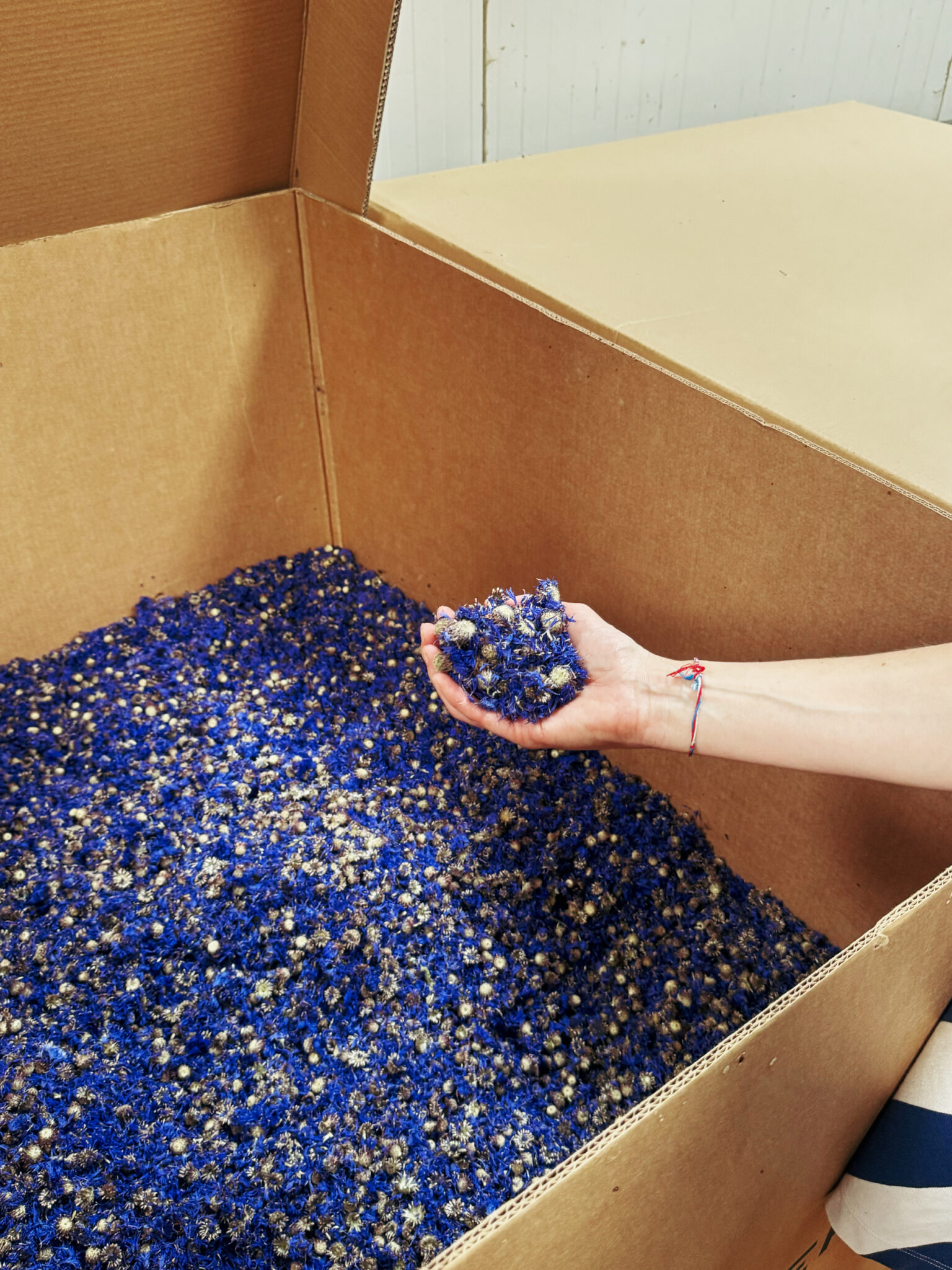
Cornflower shows how differently the same plant can be treated depending on its end use. Machine-harvested, the stem and leaves come with it; picked by hand, it’s flowers only, and it takes four hours of hand-picking to gather a single kilo, destined for the brand’s Pur Bleu cleansing range. Marigold follows a similar logic: sown after a season of soil-building cover crops specifically to concentrate its potency, with the surrounding hedgerows and plant covers studied for their direct effect on how powerful the resulting active turns out to be.
Ask L’Haridon for a favourite, though, and she doesn’t reach for any of the showier plants. ‘Have you heard of phacelia?’ Modest-looking and little known outside the industry, it’s the base of the brand’s antioxidant Radiance range.
photography Sandra Myhrberg
In the field, it’s a workhorse; its numerous flowers draw pollinators, its biomass feeds the soil, and it appears able to concentrate light for extra energy, which translates into a strong antioxidant load. It also keeps flowering and reproducing through drought. ‘For me, it’s the best’, she said.
From Field to Formula
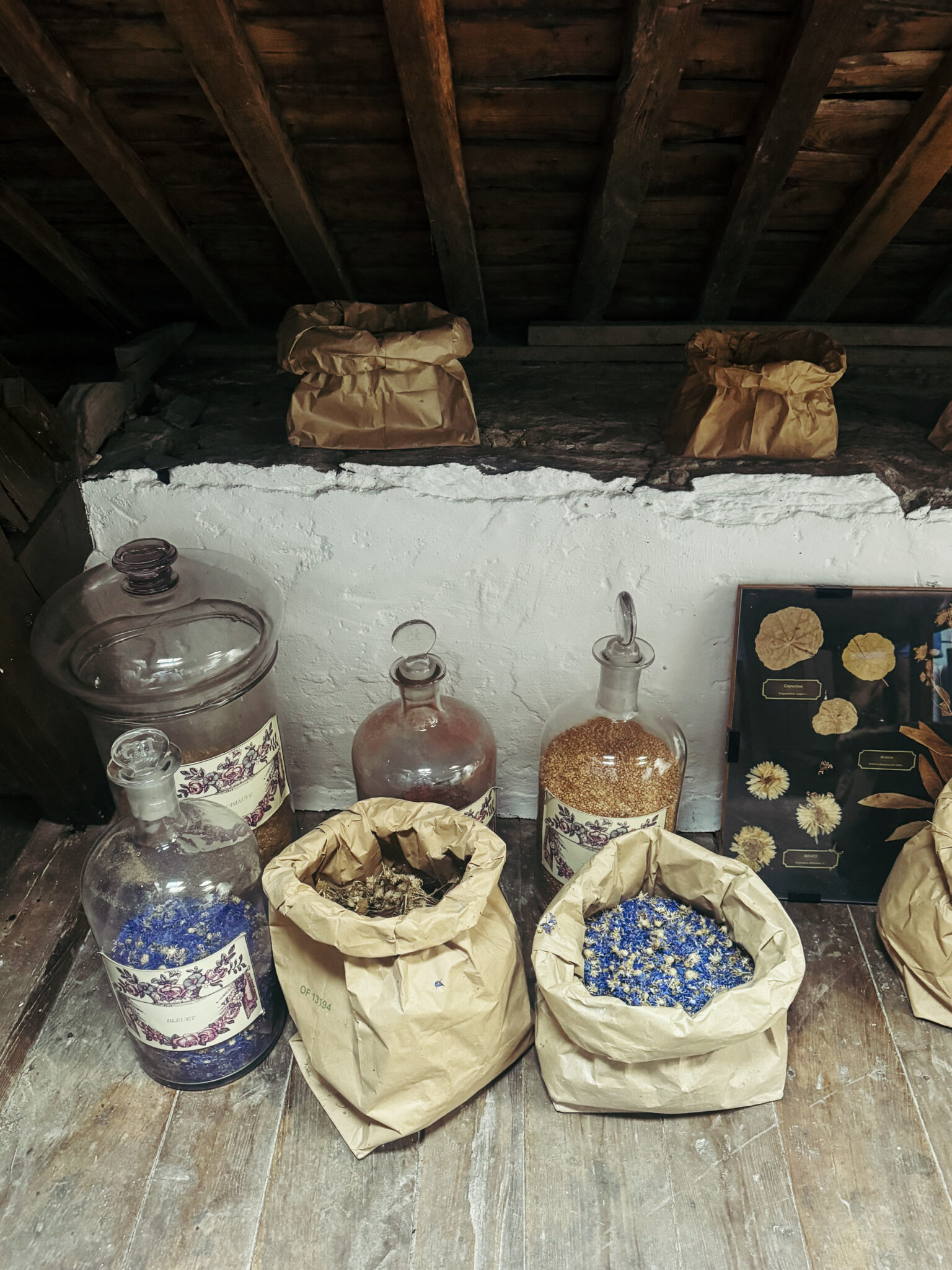
Once harvested, plants are dried and stored below 10% humidity, kept in reserve for up to three years as insurance against a bad season, drought, storm, or any of the risks that come with farming. Formulas built around a given plant are developed at the brand’s Paris labs, then scaled up with long-term processing partners across France; when a factory needs a batch of a proprietary active, the garden gets the call up to two months ahead.
Choosing whether a new plant belongs in a haircare or skincare formula, L’Haridon said, isn’t obvious at the outset. In the first year of working with any new plant, the team grows a small batch and tests different organs – root, stem, flower – against different extraction methods, then analyses the resulting composition against whatever benefit they’re chasing (an anti-dandruff active for an upcoming haircare relaunch, for instance). Only once early results confirm the plant is delivering does cultivation and extraction get refined to draw out that specific effect.
She pushed back gently on any hard line between ‘natural’ and ‘lab-made’. Most of the brand’s actives, she said, start as molecules inside a living plant and are then processed to concentrate and express their active compounds, a lab step that is part of nearly every plant-based active that exists. ‘I wouldn’t make an opposition between synthetic molecules and plants’.

photography Sandra Myhrberg
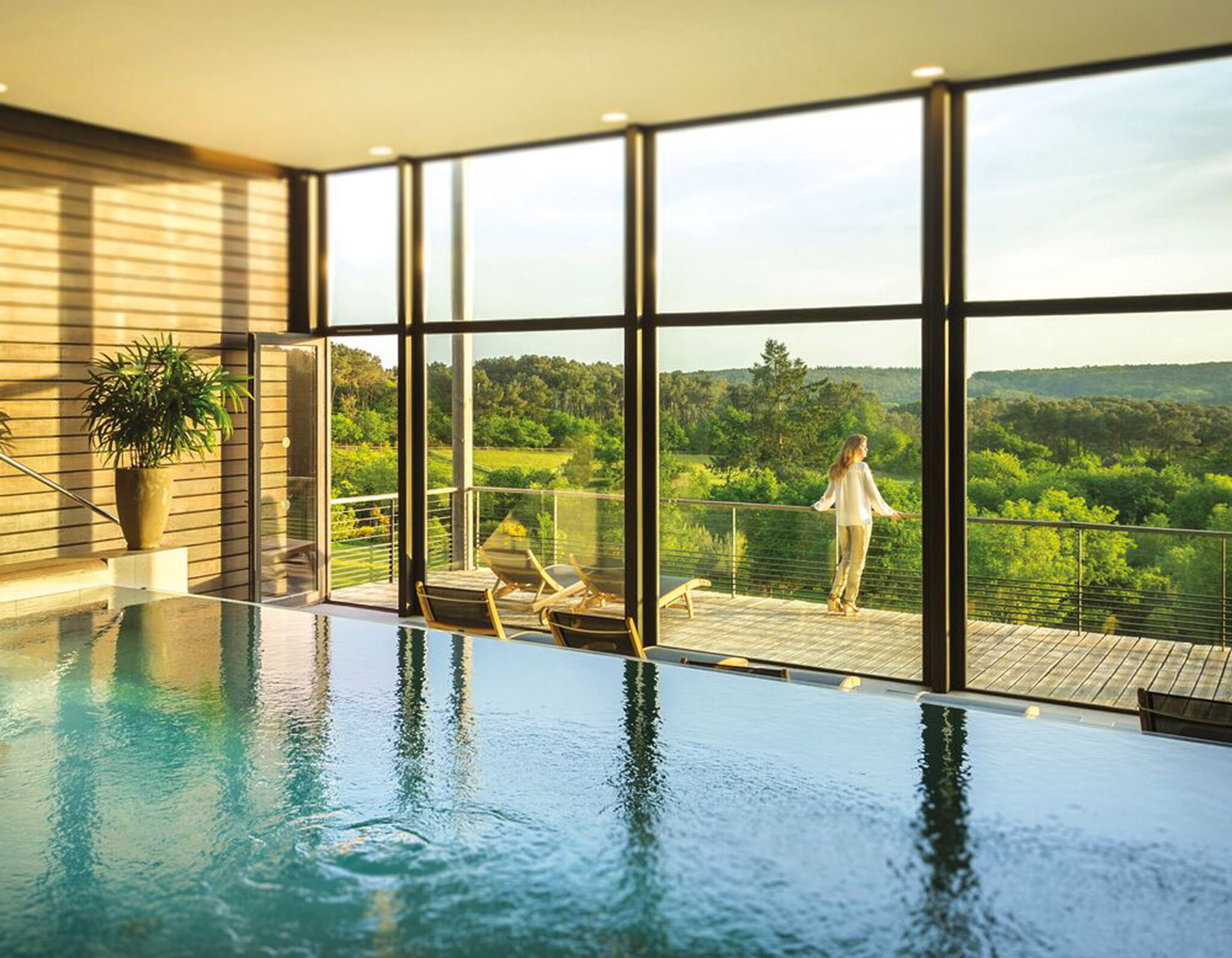
image courtesy Yves Rocher
In conversation with Cécile L’Haridon
Sandra Myhrberg: How did you find your way into beauty and fragrance?
Cécile L’Haridon: I’m an agronomist, raised on a farm, and I’ve always loved nature. I came here eleven years ago because of this environment; we work with people who are deeply committed to protecting biodiversity. That same conviction exists in the labs in Paris, too. I like working with people who share that passion, and here you can see the whole chain: from plants to active ingredients, to formulation, to the finished product. That’s satisfying.
SM: What does a botanist’s day actually look like here?
CL: About twenty-five people work on this site, five of us in the botanical garden. It’s an enormous range of topics, but everything connects back to plants, from ground-level questions like the working conditions of colleagues harvesting in extreme heat to long-term research on what plants we’ll be growing in ten or twenty years. This morning, for instance, one colleague was completing a bird-identification protocol; birds are a strong indicator of ecosystem health for us. If they’re here, it means there’s enough food and insects to support them, which tells us the ecosystem itself is strong. Earlier in my own day, I was working with Paris colleagues on our supply chain; biodiversity and sustainability requirements are central when we source any new plant or ingredient.
photography Sandra Myhrberg
SM: Is there a plant you keep returning to, almost obsessively?
CL: Phacelia. It’s not well known, but it’s the base of our Radiance range. It draws pollinators, builds soil through sheer biomass, and seems to concentrate light for extra energy, which gives it real antioxidant power. And it keeps flowering even through drought. For me, it’s the best.
SM: What’s the next plant-based ingredient that could become a star in skincare?
CL: That’s a hard one, top secret, really. It depends on what our research is focused on, because a single plant can express many different things depending on what you’re looking for. What matters to me isn’t only chasing the next hero active, though that matters. It’s thinking about every plant-based ingredient in a formula and whether we’ll be able to keep growing and processing it well, given what’s coming.
photography Sandra Myhrberg
SM: When selecting a plant, what determines whether it’s better suited to hair or skin?
CL: We don’t know at first. In the first year with any new plant, we test different organs and different extraction methods, then analyse the composition against the benefit we’re trying to strengthen. It really depends on what our marketing plans are looking for.
SM: You mentioned combining plant actives with molecules like vitamin C. What does that look like?
CL: Nasturtium, combined with vitamin C, multiplies the vitamin’s effect on skin by ten times. That kind of pairing between plant actives and dermal molecules is an area where we still have a great deal to learn.
photography Sandra Myhrberg
SM: Consumer expectations around ‘natural’ and ‘effective’ have shifted a lot. What’s the biggest misconception people still have about botanical skincare?
CL: That it lacks efficacy. We’re trying to prove, every day, that plant-based actives and plant-based cosmetics work just as well as conventional dermo-cosmetics, with the added benefit of this strong link to nature, a more sustainable way of thinking about cosmetics, and a kind of bio-inspiration that opens up so many more directions for research.
SM: With the climate changing, how are you preparing the way you grow and select plants?
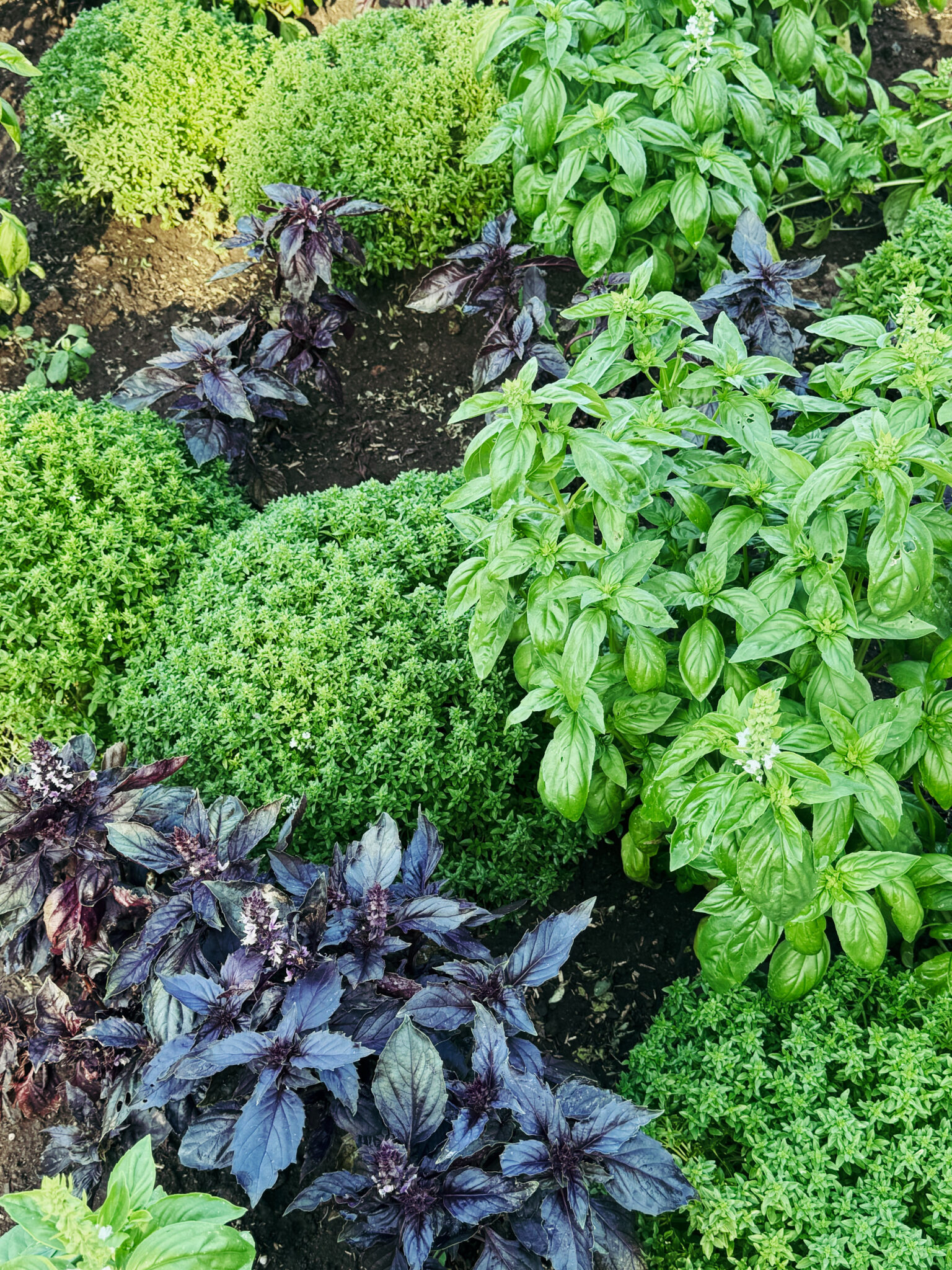
CL: Agroecology is our foundation for building a resilient system. Beyond that, we’re experimenting with what we call species migration: planting the same crops, cornflower and marigold, in southern France, to learn from conditions that are hotter and drier than those we have in Brittany today. It helps us understand whether we’ll need to change how we cultivate these plants, and whether they’ll develop different compounds under stress. We use greenhouses very sparingly; only two plants here need one, both highly drought-adapted. Everything else grows outside, and instead of climate-controlling buildings, we lean on agroforestry: hedgerows and trees for shade and for retaining humidity in the soil.
photography Sandra Myhrberg