CPHFW SS27: Inside the Mind of Legendary Hair Stylist Eugene Souleiman at Collina Strada
text Christine Deckert
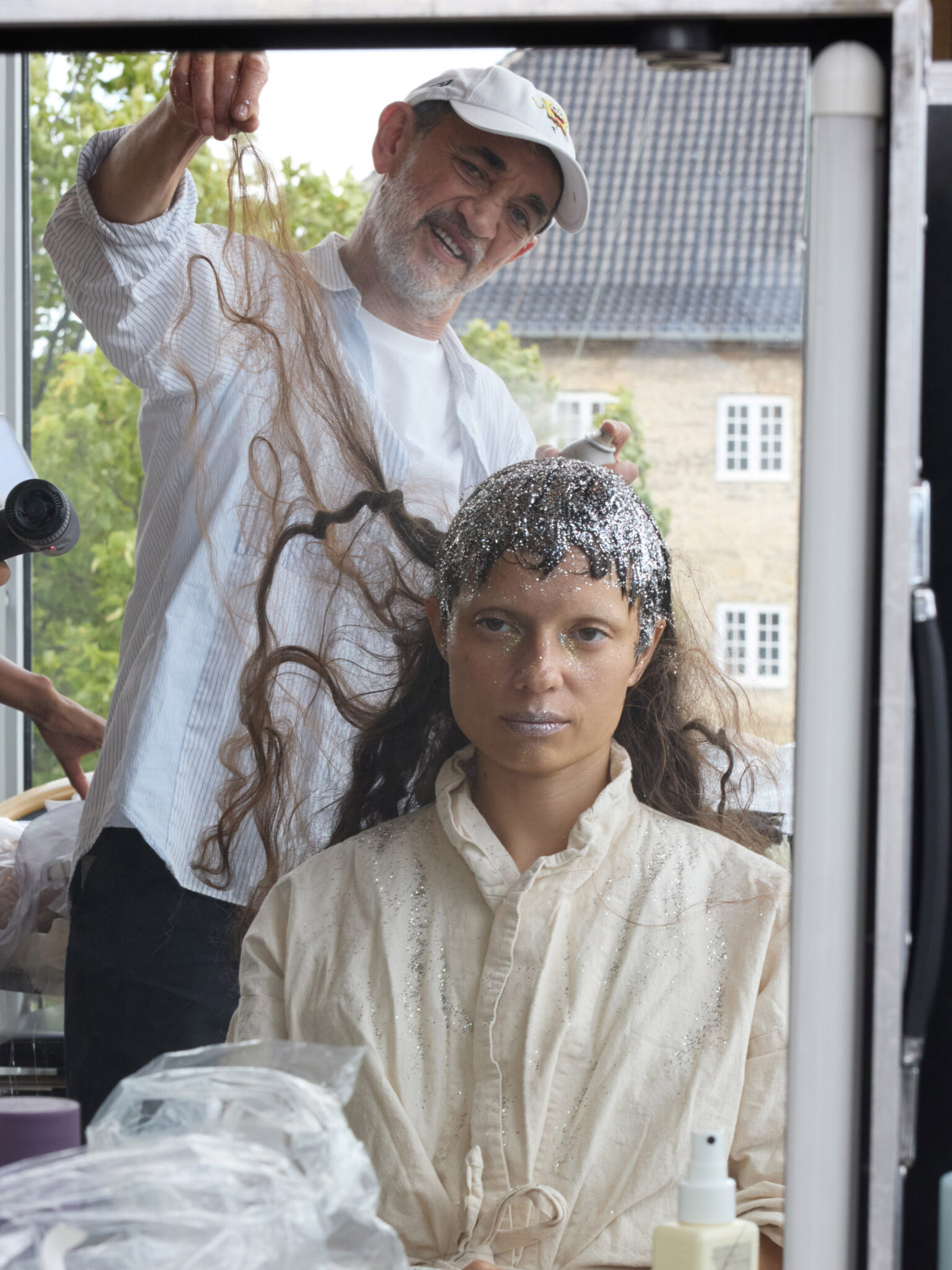
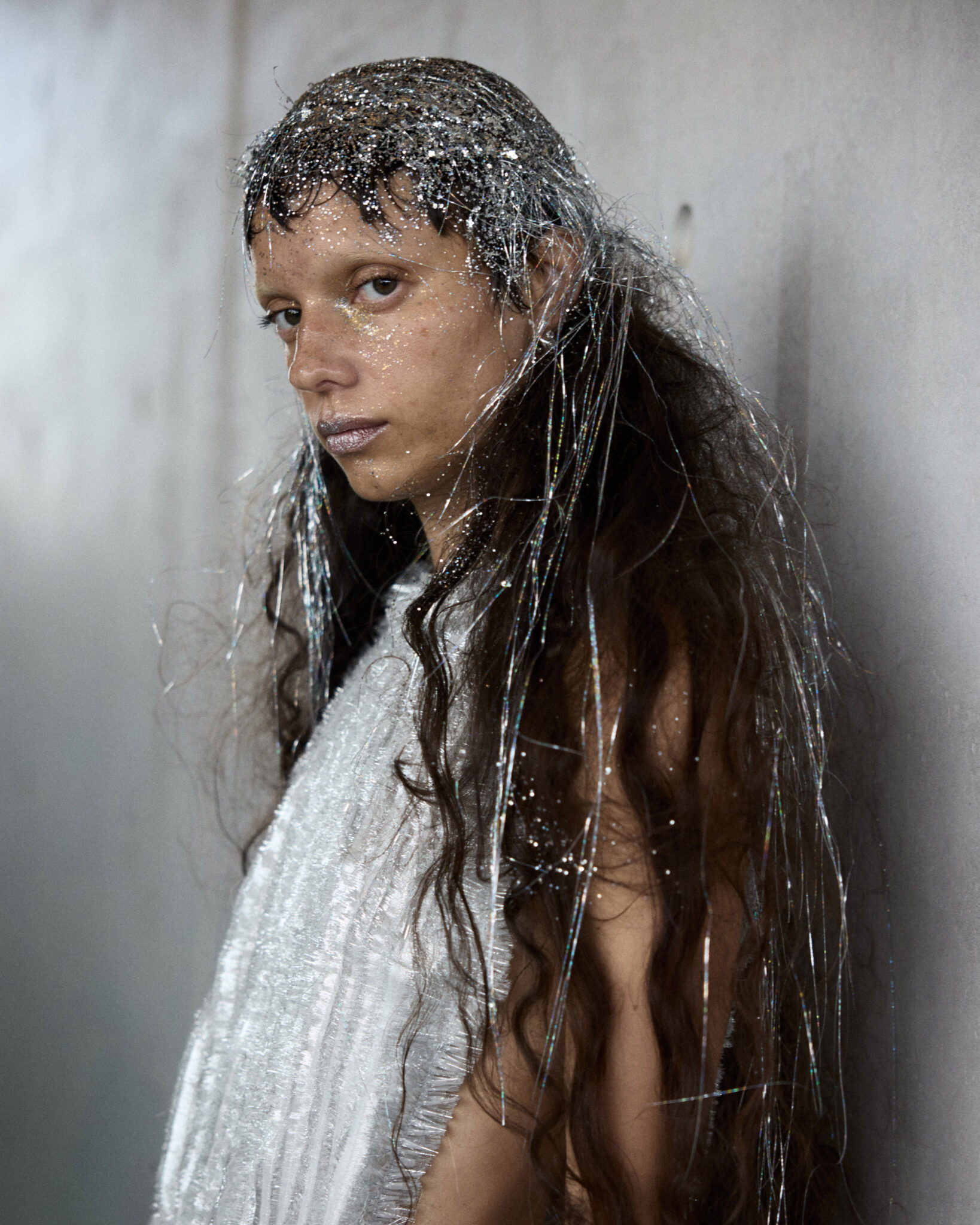
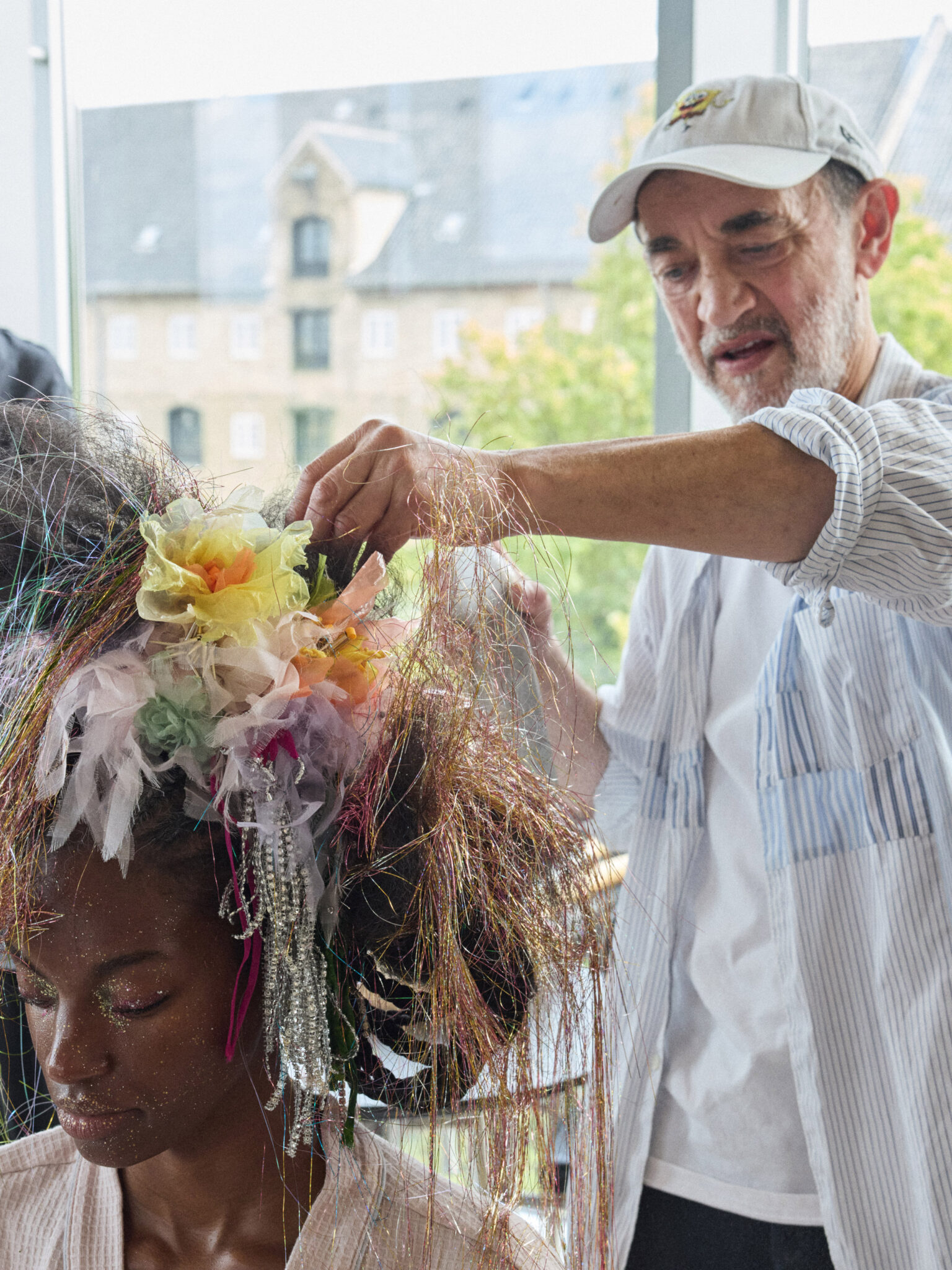
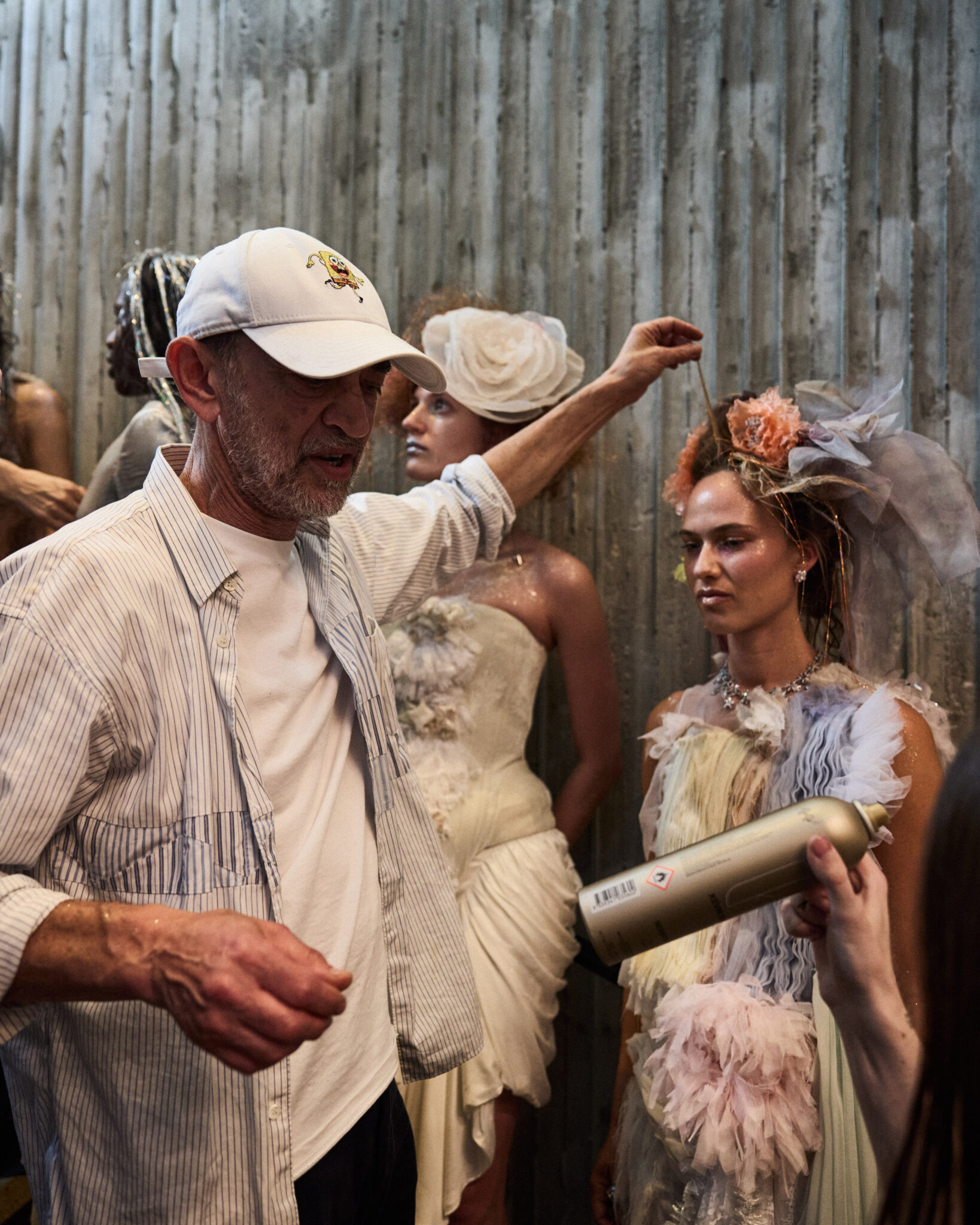
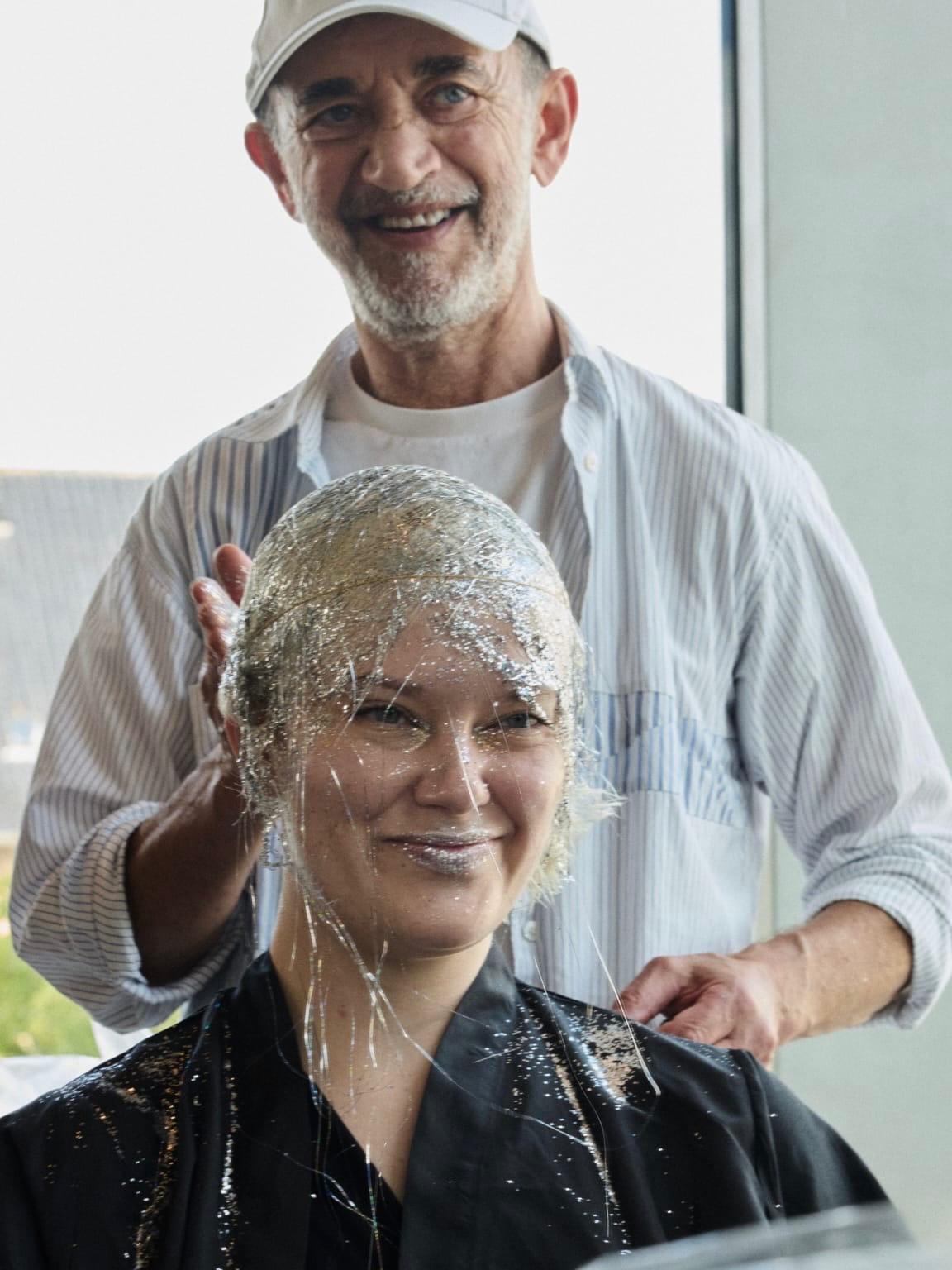
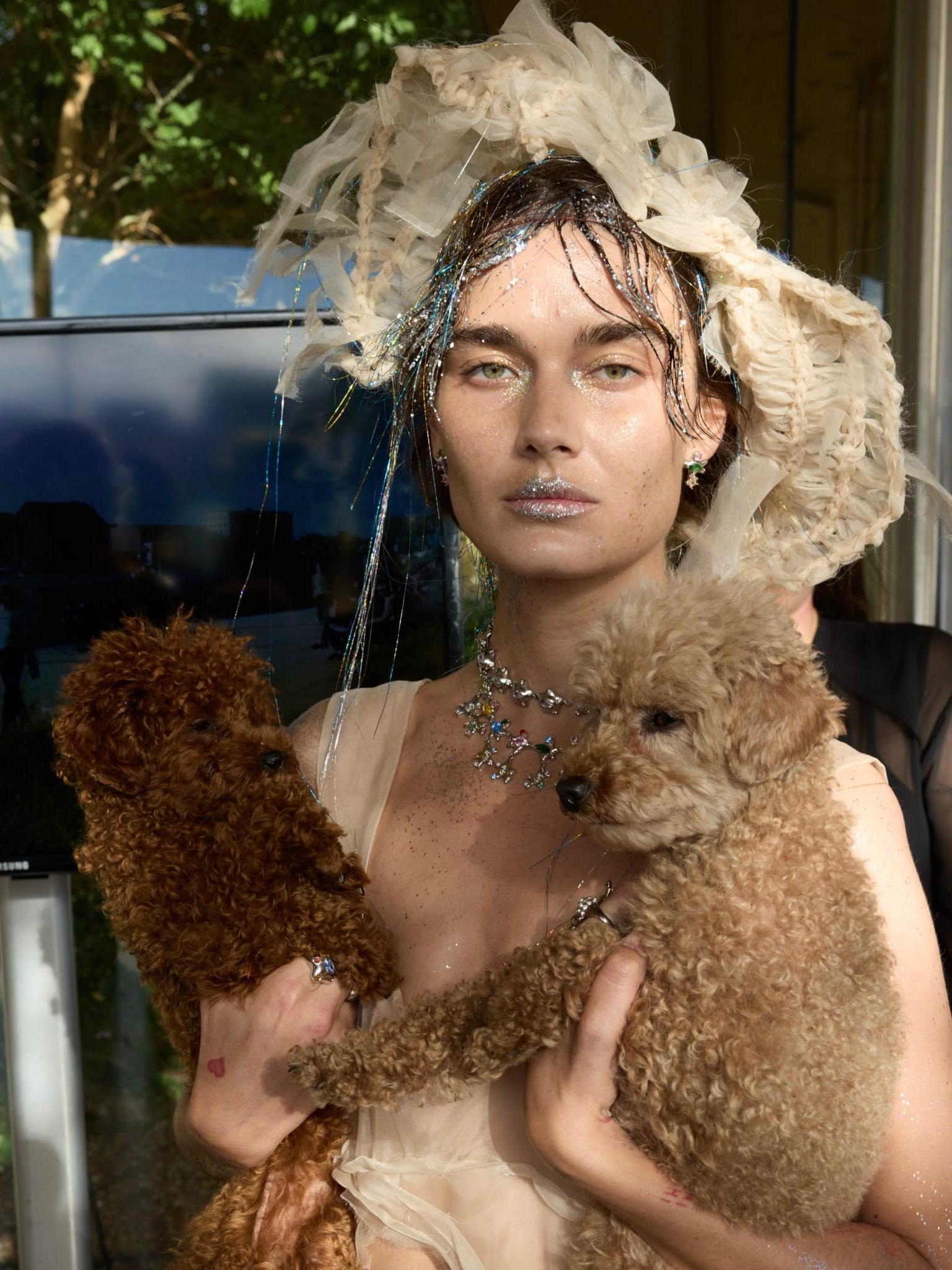
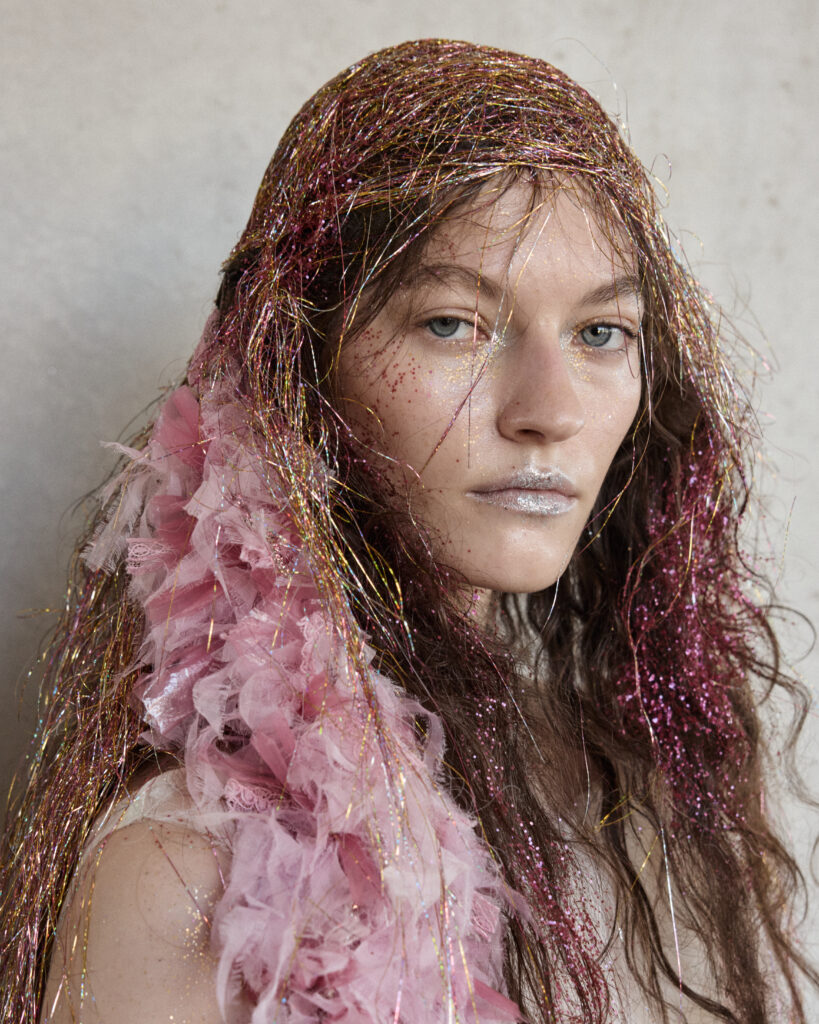
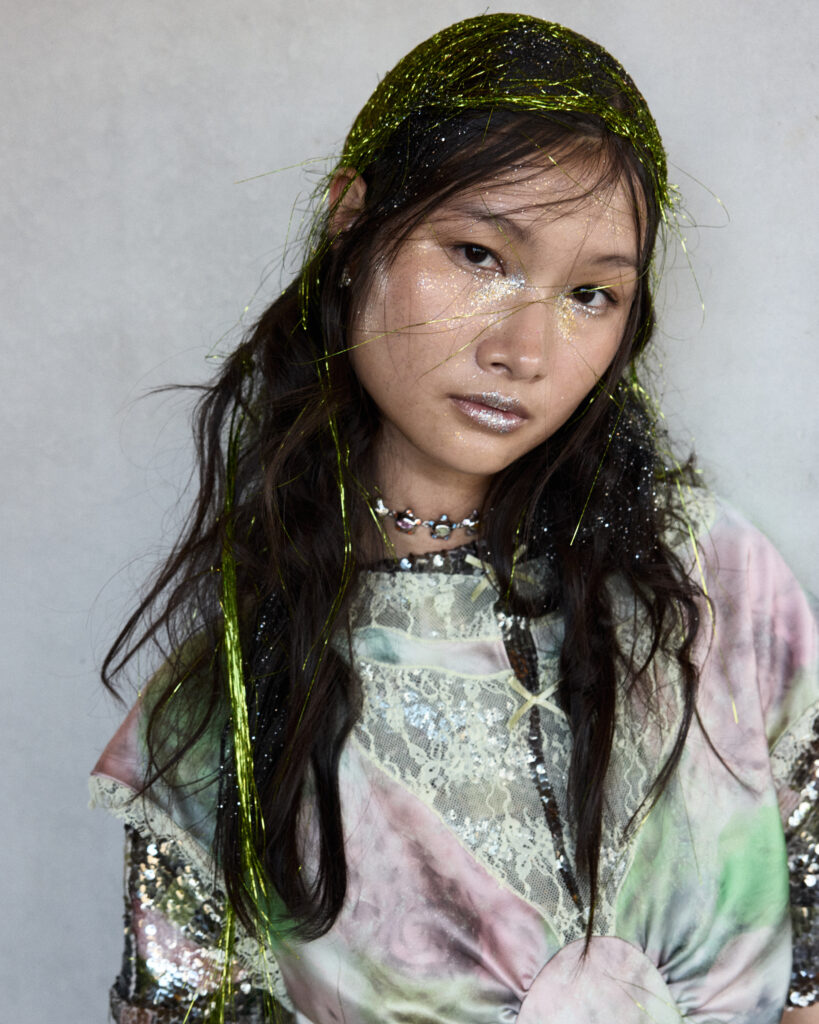
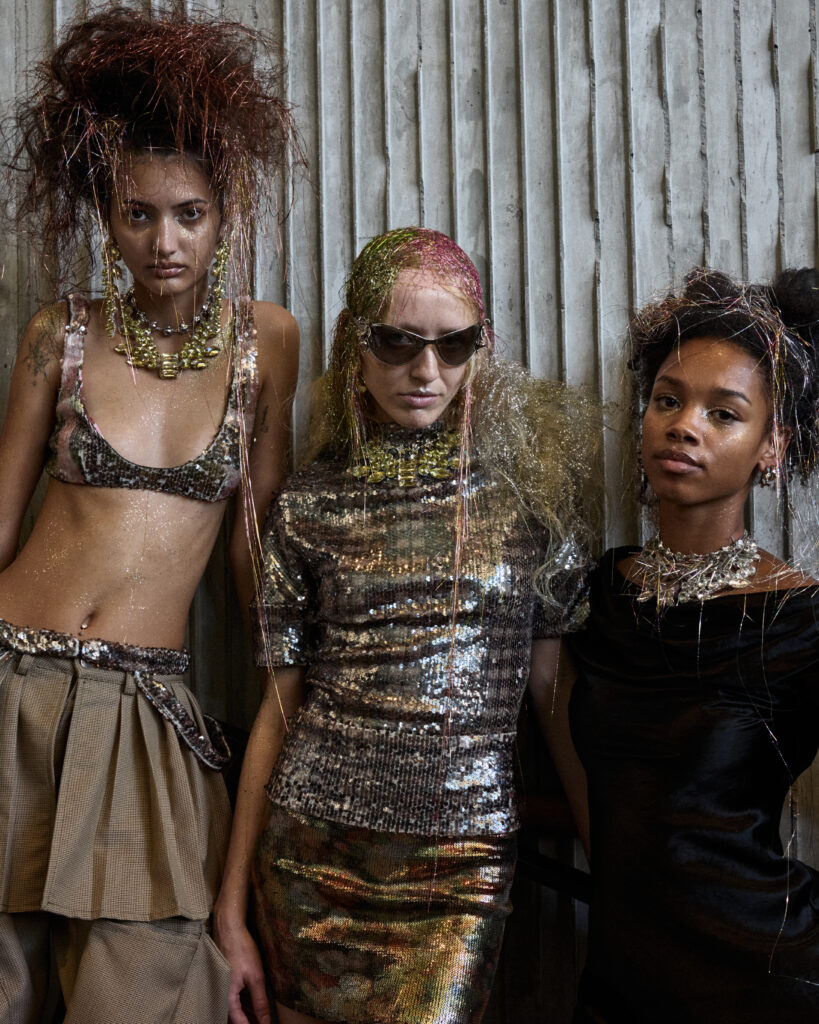
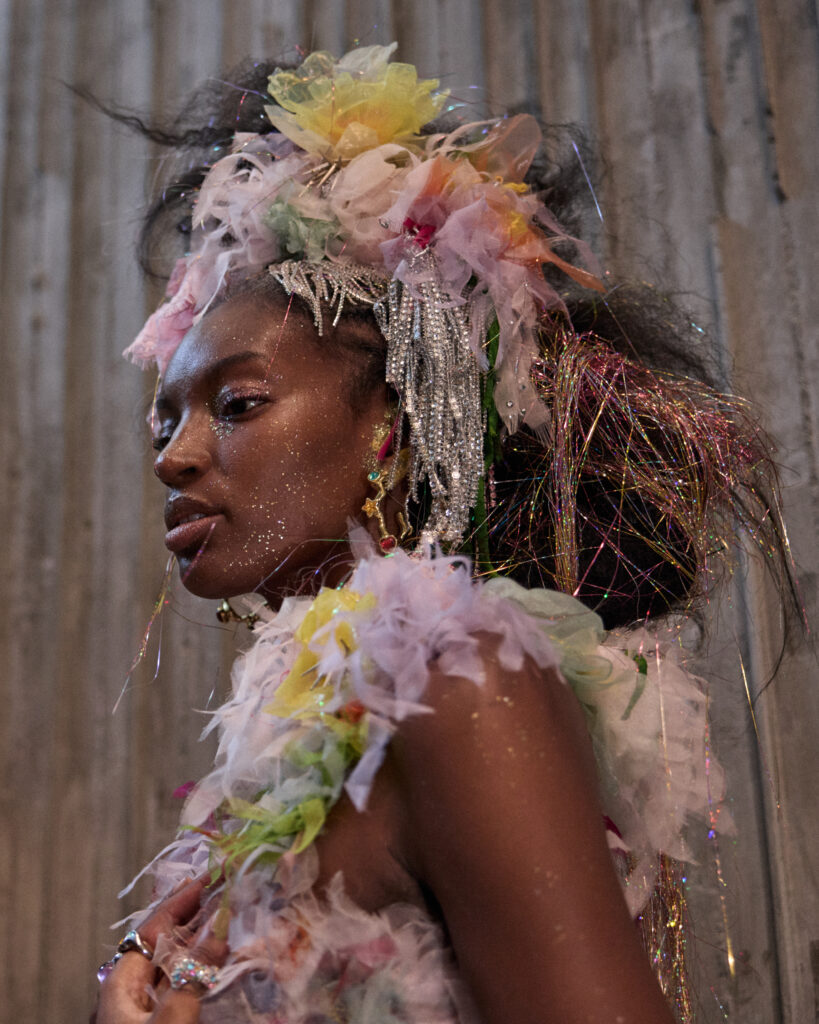
For Collina Strada’s Copenhagen Fashion Week show, Eugene Souleiman treated hair less as styling and more as material. Working with KEVIN.MURPHY, he wove in tinsel, shine and repurposed fabrics, creating looks that felt celestial, unruly and entirely deliberate. One of the most influential hairdressers working today, Souleiman’s runway work spans Prada, Alexander McQueen, Maison Margiela, Yohji Yamamoto, Celine and Chanel, alongside long-term collaborations with Madonna, Lady Gaga and, most recently, Charli XCX for British Vogue. It is a fitting collision of worlds: Collina Strada’s playful surrealism meets Souleiman’s instinct for imperfection, individuality and a quiet resistance to rules.
Backstage, Odalisque spoke with him about beauty beyond perfection, creative accidents, social media, and why curiosity still matters:
Christine Deckert: How did you translate Collina Strada’s visual language into hair for this particular collection?
Eugene Souleiman: The first thing was understanding Hillary’s world rather than thinking about a hairstyle. There is always this tension in Collina Strada between fantasy and reality, beauty and something slightly strange, nature and technology. I wanted the hair to have that same contradiction. We treated the hair almost as another textile. We brought in tinsel, shine and pieces of fabric from previous collections, so there was this idea of transformation and giving existing materials another life. It became something quite celestial and chaotic, but still very deliberate. The hair had to feel as though it could only belong to this collection.
CD: How do you create a runway hairstyle that feels conceptually strong, yet still allows each model’s individuality to remain visible?
ES: I think the mistake is believing that a strong concept means making everyone identical. For me, the concept should be strong enough to survive interpretation. I look at the person in front of me, their face, their natural texture, their proportions, their attitude, and then work out how that individual fits into the world we are creating. You establish the language of the show, but each model becomes a different character within that language. That is much more interesting to me than twenty versions of exactly the same hairstyle.
images courtesy Collina Strada
photography Vic Lentaigne
makeup Zenia Jaeger
skincare Monastery
hair Eugene Souleiman
fashion Joel Traptow
CD: This is your first time working at Copenhagen Fashion Week. Do you see a distinct creative attitude here compared with Paris, Milan, London, or New York?
ES: Yes, there is a lightness and freedom here that I really enjoy. Copenhagen feels very comfortable with individuality. There is creativity and experimentation, but it doesn’t feel burdened by having to prove itself. Every fashion city has its own rhythm. Paris has extraordinary refinement, Milan has glamour, London has always had this rebellious energy, and New York has a kind of immediacy. Copenhagen feels playful and progressive. There is also a very natural conversation here around sustainability and responsibility, rather than it feeling like something that has been added afterwards. It feels open, and creatively, that is quite liberating.
CD: After decades of shaping some of fashion’s most memorable runway images, what still excites or surprises you when developing a new hair concept backstage?
ES: The unpredictability. You can arrive with a very clear idea, but fashion is collaborative, and things change when everything comes together. You see the clothes on the person rather than on a rail; you meet the models; you see the space, the light, the movement, and suddenly you notice something you hadn’t considered. Some of the best ideas come from those moments. An accident, a material behaving differently than you expected, somebody’s natural hair doing something beautiful.
I think curiosity is what keeps the work exciting. The moment you believe you already know exactly what you’re going to do, you probably stop discovering anything new.
CD: How has your understanding of beauty changed throughout your career, and what feels beautiful to you now?
ES: I’m much more interested in character than perfection. When you’re younger, I think there can be a temptation to control everything, to make something technically perfect. Over time you realise that the imperfections are often what make somebody memorable. When you’re younger, I think there can be a temptation to control everything, to make something technically perfect. Over time you realise that the imperfections are often what make somebody memorable. Now I’m interested in finding what is already individual about somebody and amplifying that rather than correcting it. There is something incredibly beautiful about allowing people, and hair, to have their own personality.
CD: With fashion increasingly shaped by social media and instant imagery, has the way you design hair for a runway show changed?
ES: The speed has certainly changed. An image can be everywhere before the show has even finished, and naturally you are conscious that the hair will be seen from every possible angle, very close up and often completely out of the context of the show. But I don’t think you can start by designing something for Instagram. You have to begin with an idea.
A strong runway image should work in movement, from across the room, backstage, in a photograph and in detail. If you start chasing the image rather than the idea, I think the work can become quite superficial. The technology has changed enormously, but the creative question is still the same: does it say something?
CD: What part of yourself do you think appears in your work, even when you are creating someone else’s vision?
ES: Probably curiosity, and a certain resistance to rules. I’ve always been interested in taking things apart and putting them back together differently. Sometimes that means questioning what is considered beautiful; sometimes it is using a product or material in a way it was never intended to be used; and sometimes it is knowing when to leave something alone. Ultimately, you are there to serve somebody else’s vision, but you can only interpret that vision through your own instincts and experiences. I think there is probably always a little bit of rebellion in there somewhere.