The Logic of the Loom: Massproductions on Designing Their First Rug Collection
All images courtesy of Layered and Massproductions
text Ulrika Linqvist
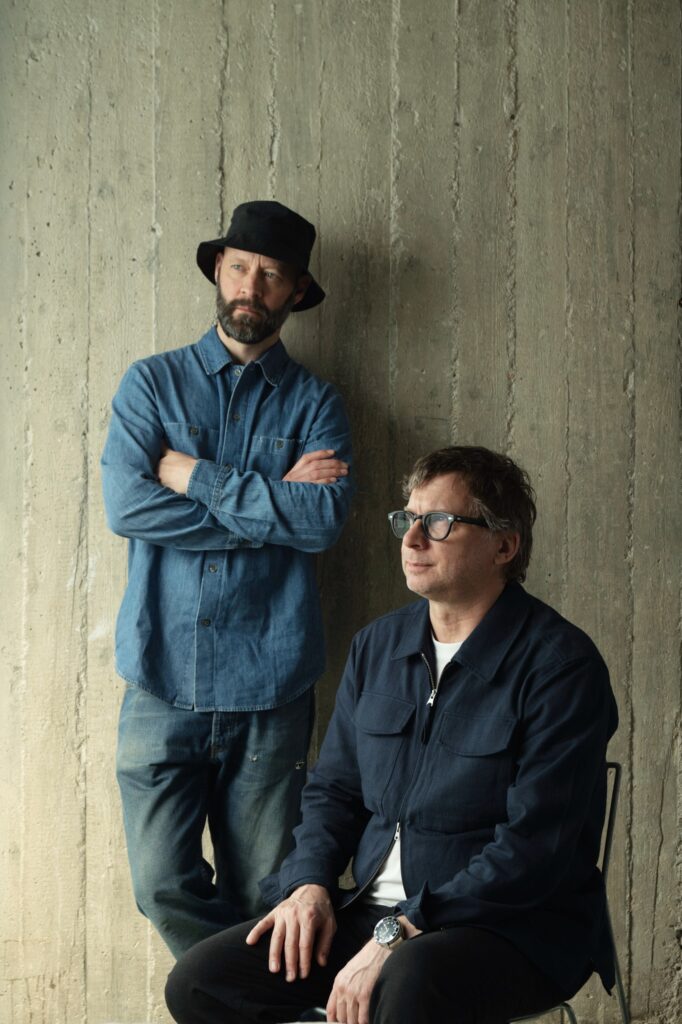
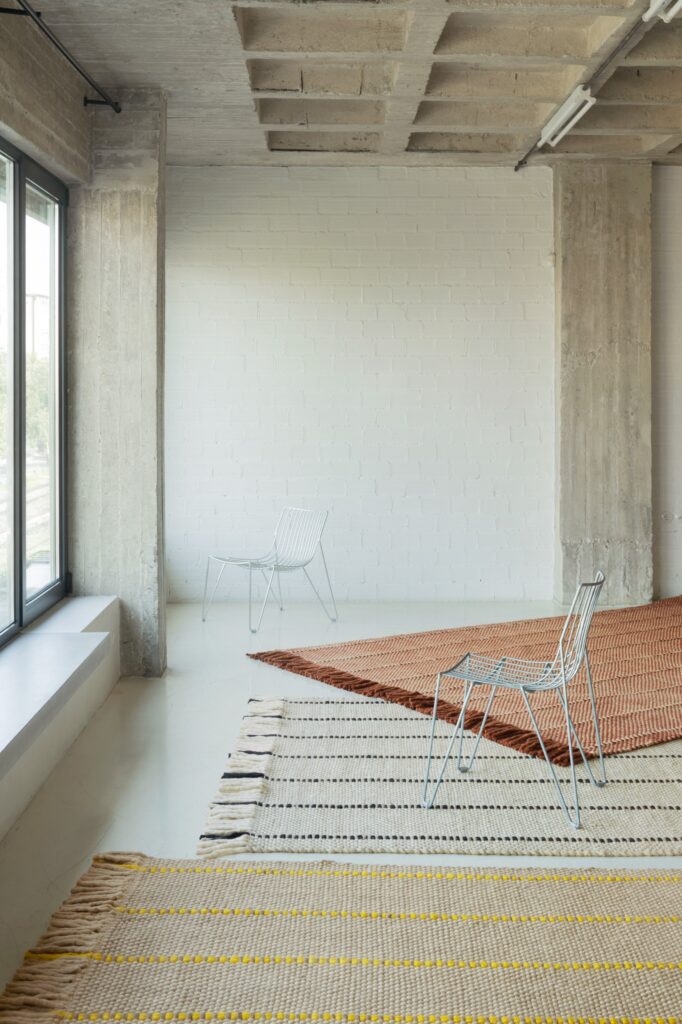
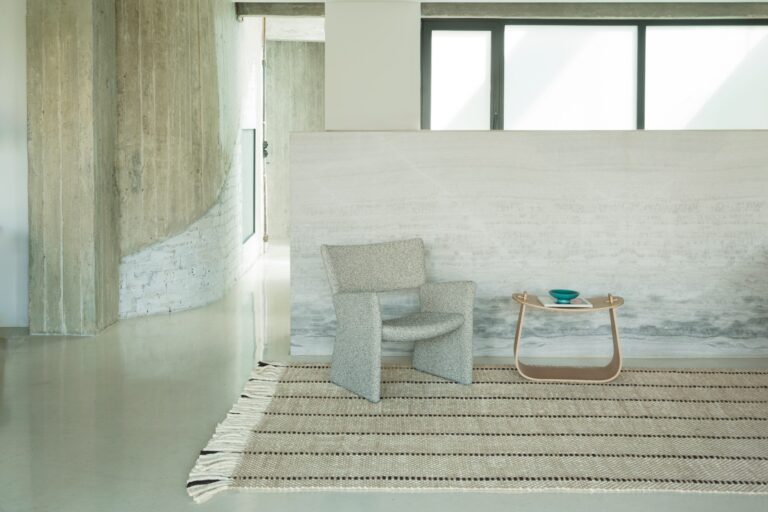
When Massproductions was invited to design a rug collection for swedish brand Layered, the Stockholm-based studio approached the task much as they do their furniture: by looking closely at how things are made. The result is Cord, a series of handwoven wool rugs in which the stripe is embedded within the structure itself. In conversation with Odalisque, founders Chris Martin and Magnus Elebäck discuss the value of industrial thinking, the challenge of designing in two dimensions, and the enduring appeal of a well-made stripe.
Ulrika Lindqvist: Could you start by telling us a bit about your company, Massproductions? What was the original idea behind founding the company?
Chris Martin: We wanted to take control of our ideas and to present them in our own way and at our own pace. It was a bit of a high-risk strategy, but we felt like we had some good products to get started with and 17 years later it seems to have paid off! Besides all of the challenges involved, there is a great sense of freedom and ownership of our ideas.
Magnus Elebäck: After working together for nine years as a design studio we came to the conclusion that something had to be done. We felt the need to create the perfect environment in which great furniture could be developed. The standard set up with freelance designers and producers didn’t seem like the perfect way forward. Instead, we wanted to control the complete process; from idea to the produced item.
UL: What would you say are the core ideas and values that define the brand today?
CM: I have quite a lot of ideas every year, most of them are unpresentable but me and Magnus pick out the good ones, the ones we find exciting and develop them into products that we hope will be strong enough to last a long time on the market. We believe that the efficiency factory production is the best way to make furniture, industrial processes are inspiring but also give better quality, better priced and more durable products.
ME: Not much has changed really. We believe in adding long-lasting cultural values to the world of furniture. If an idea does not live up to certain criteria, we do not pursue that idea. We do this because of our love for this industry and our belief that furniture can/should be a cultural expression (as well as serving its function). But we also believe that this approach is a viable business model. Surely selling the same product year after year must be a sustainable way to do business.
UL: Have you designed rugs before? How does designing rugs differ from designing furniture such as seating, storage, or tables?
CM: This was the first time designing a rug for us. Its a different medium for us and requires a different way of thinking to designing a three dimensional object. Even though the rugs are handmade, we thought of them as an industrial weave and tried to work with the structure of the rug itself, the way the war and weft interact together.
ME: This is the first time entering the world of rugs (even if I personally can’t see myself living in a house without them). The (close to) two-dimensional nature of a rug makes it quite different from the 3D world that furniture is.
UL: How did this collaboration first come about?
CM: We are neighbors here in Stockholm and had gotten to know each other over the years. Layered asked us if we would be up for a collaboration and we said yes since rugs weren’t in our plans for Massproductions.
ME: Being two progressive Stockholm based companies, our paths have crossed many times. Finally, it seemed like the right move to do a collab.
UL: What was your approach to designing the rugs? Where did the process begin?
CM: Initially, I was thinking of the rug as almost a canvas, and working with repeated shapes. It gave some success but I think mainly it inspired Magnus to think of a new direction and work with the design of the weave being the focus. It seemed to be clearly the right direction so we ran with that, refining the cord weight and spacing, colours details, etc.
ME: Stripes… People can spend their entire life dedicated to stripes. It’s such a basic pattern that still offers endless possibilities. It’s also the easiest pattern to incorporate in a woven textile. We just wanted to make the stripe in an slightly unorthodox way by letting it run lengthwise instead of across the carpet.
UL: Were there any particular challenges or unexpected discoveries during the design or production process?
CM: The main challenge was finding the right concept to start with. There’s quite a lot of freedom with a rug, but finding something that’s original but still has the right qualities is a challenge.
ME: We didn’t know of this extremely thick and rich wool yarn until later in the process. I think the way this yarn is made adds a lot of tactility to the carpet.
UL: Could you tell us a bit about the color palette and how you developed it?
CM: Colour combinations should delight. They should surprise. And they should still feel right even after many years. We chose our colour palette for Cord with these thoughts in mind.
ME: Something happens when you mix the very natural hues from the wool with a more vivid (almost artificial) colour. Initially we wanted the effect of a nylon strap wrapped around a hay bale but decided to tone it down slightly to be more pleasing to the eye.
UL: Looking back on your careers, are there any projects or moments that stand out as especially memorable or formative?
CM: Our first product was a chair in metal wires named “Tio”. I designed it for a German company who later dropped out. I put a lot of thought into it and came up with a solution where every wire was necessary for its structure and also for its comfort. It also stacked very neatly. I had the feeling that no matter what I did the with the design, be that find a producer, or a factory to make it or use it to start a furniture company with Magnus, that it would be an important piece.
ME: A few years ago, we launched a piece named the 4PM Chaise. At the same time, we released the drawings for the prototype so that people were able to make a nice chaise all by themselves. This concept really took off, and we have since then organised workshops all around the world, building these “prototypes”.
UL: Looking ahead, what’s next for you? Are there any upcoming projects or ideas you’re especially excited about?
CM: We have been discussing pub culture with a friend of ours who is an architect. We talk about what makes a good pub, the atmosphere, the location, all of the details. I have now designed a wooden chair for this imaginary pub and couldn’t be more excited to develop it into a product.
ME: We have a smaller collaboration coming up for the London Design Festival in September. Stay tuned.