On Building Better Beauty: A Conversation with Andrea Rudolph
text Natalia Muntean
Rudolph Care has always moved at its own pace. Since the beginning, the vision has been clear and uncompromising, even as the beauty industry around it has accelerated at lightning speed. “Our vision remains the same,” Andrea Rudolph says. “To demonstrate that it’s possible to create something truly effective and sensorial, while also taking care of your health, nature and the future. But it is a very long and difficult journey.”
Founded in 2009, Rudolph Care was built on the conviction that luxurious skincare does not have to come at the expense of responsibility. The Danish journalist set out to prove that quality, safety and respect for life could coexist with high performance and pleasure. That conviction still guides the brand today. “Rudolph Care has never been about rushing or launching countless new products,” she explains. “From the very beginning, we chose to do things properly.”
Looking out at the wider landscape, Andrea Rudolph notes how quickly the beauty industry continues to expand, with an ever-growing flow of new products and trends. Against that backdrop, Rudolph Care has remained committed to its original principles, focusing on depth rather than speed, and on long-term responsibility rather than rapid growth.
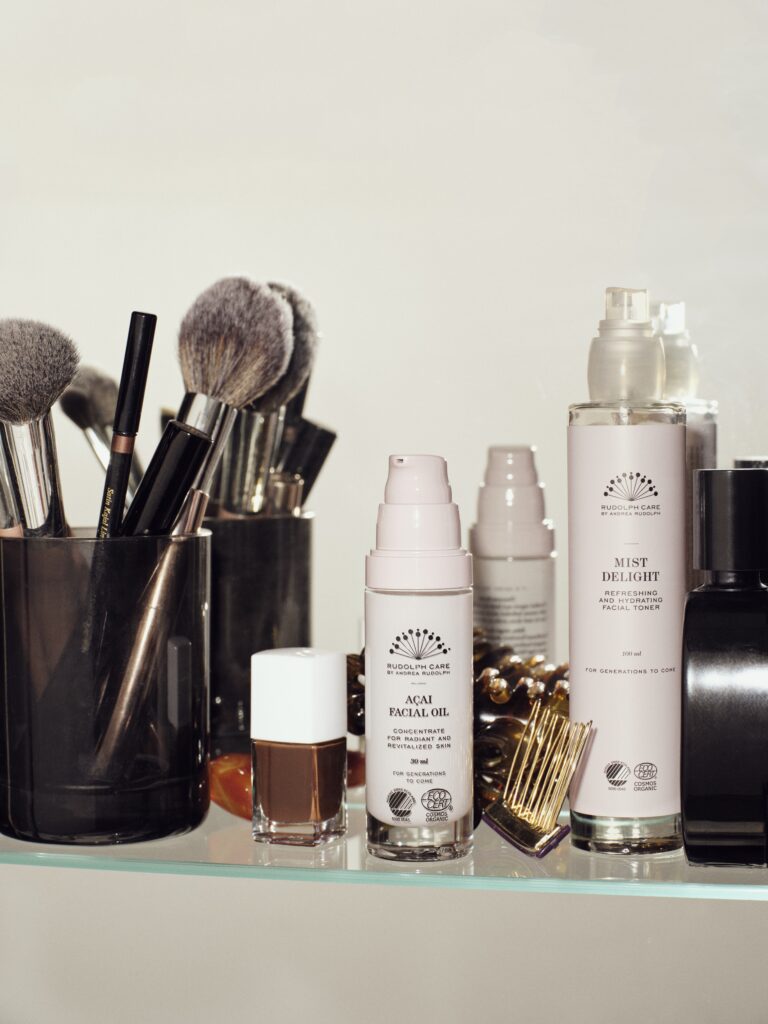
That long-term thinking has shaped every aspect of the brand – from its deliberately slow international expansion to its lasting relationship with the Amazon. The discovery of the açai berry came during a trip to Brazil while Rudolph was pregnant with her first daughter, a moment she remembers as almost serendipitous. “Everything was just falling into place,” she recalls. The ingredient’s powerful properties, combined with visual inspiration drawn from the violet and matte colours of a nocturnal moth, formed the foundation for what would grow into one of the most recognisable Danish brands. “That just became kind of meaningful.”
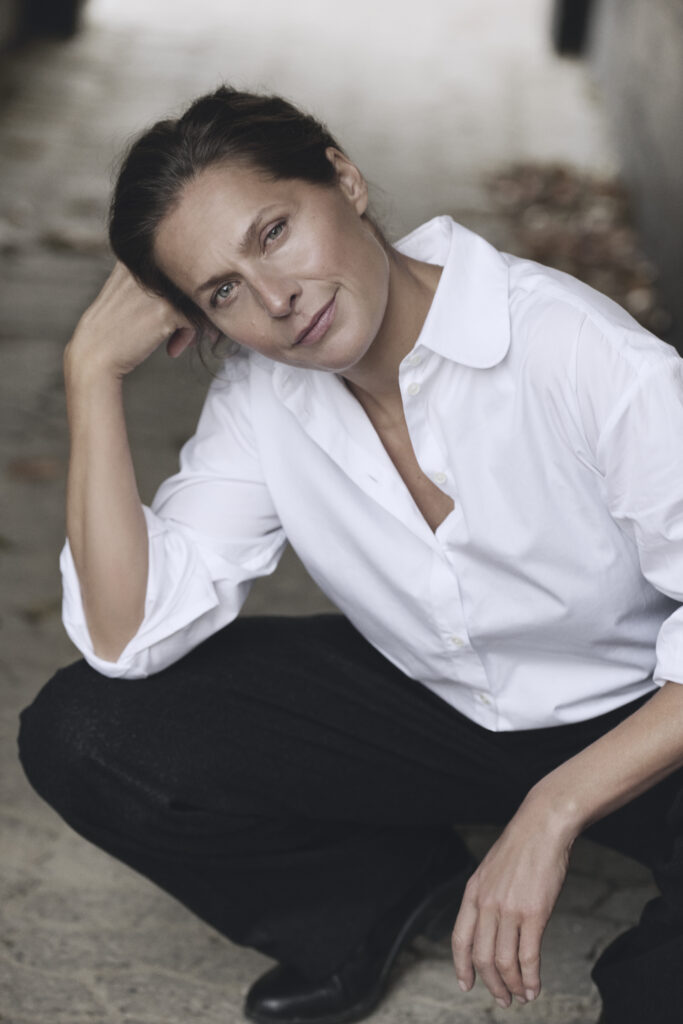
Nearly two decades later, açai remains central, not only as an ingredient, but as a philosophy. Rudolph Care continues to collaborate with around 200 local families in the Amazon, supporting education and protecting the wild forest land. “The more we sell, the more we protect,” Rudolph says. “Harvesting the berries is a way to give peace to this place and not cut down the trees.”
Today, nearly 20 years after Andrea Rudolph had the idea for Rudolph Care, she remains both pragmatic and hopeful. “I really hope there will be more brands like ours so we can lift together,” she says. “We need an international voice when it comes to responsibility.” And despite the frustrations, giving up has never been an option. “I cannot stop,” she admits.
Natalia Muntean: You launched Rudolph Care in 2009. How has your vision of the brand evolved since then?
Andrea Rudolph: Actually, the vision hasn’t changed much. Rudolph Care’s vision has never been about rushing or launching countless new products, we chose to do things properly from the very beginning. There is a constant stream of new products and trends entering the market, especially targeting children and young people. Products filled with plastic, chemicals and lacking proper certification.
Our vision remains the same. To demonstrate that it’s possible to create something truly effective and sensorial, while also taking care of your health, nature and the future. It is a long and challenging journey, and it has never been about quick money.
NM: Tell me a little bit about the focus or the star of your brand, the açai berry.
AR: It was a long time ago. I was pregnant with my daughter, and we were in Brazil. Around that time, Greenpeace had asked me to join a campaign where they tested people’s blood, and I thought I would do very well because I felt healthy and grew up with organic food. I was shocked because it turned out that I was the one with the most chemicals in my blood, and far more of the harmful ones. I realised then that so much of it comes from beauty products, and I started looking for the right ingredients because I wanted something that truly works, but at the same time, I wanted it to be safe.
We were sitting on the beach in Brazil, eating açai ice cream – a frozen blend of the açai berry that is really tasty. As we talked about the berry, someone said, “Oh yeah, this fruit is so amazing. It has these benefits and so many antioxidants.” I began exploring the berry more deeply, discovering the documented effects of its unique properties on the skin, results that can be seen and felt. And then, everything was just falling into place. We had another magical moment where we saw a beautiful moth, like a butterfly that is awake at night, and its colours became an inspiration for how the product packaging was going to look; the violet, rose and grey – and the matte finish.
NM: That just became kind of meaningful.
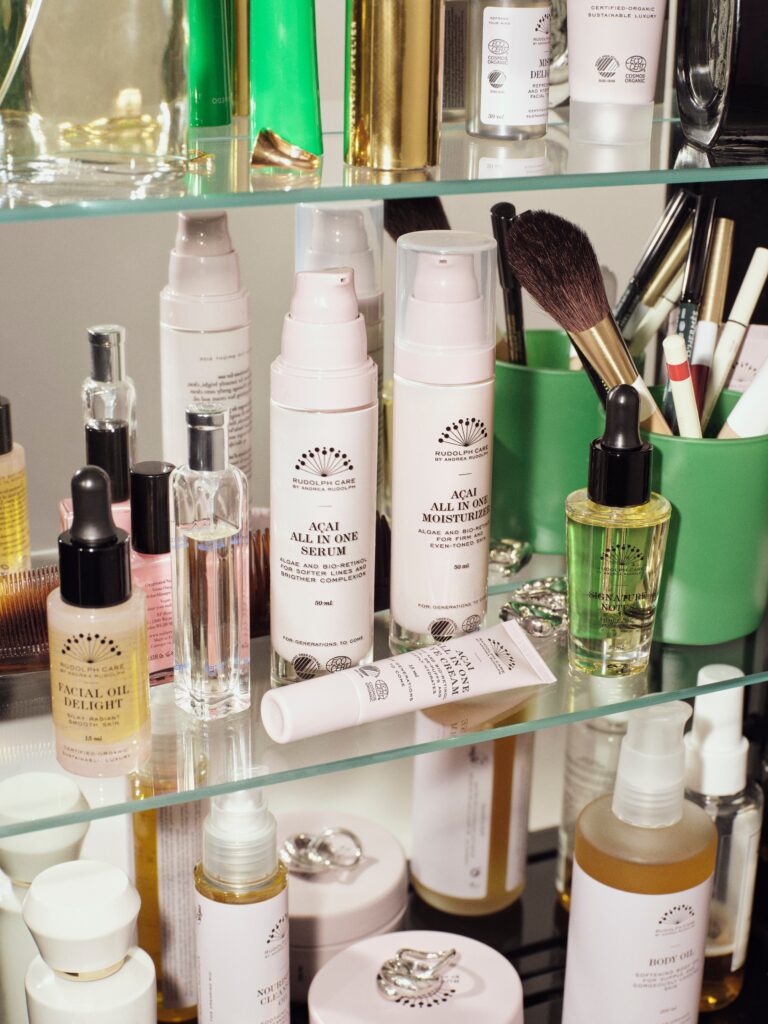
AR: Exactly. And the açai is really powerful. What we have now is a collaboration for almost 20 years with 200 local families in the Amazon. It’s a community out in the Amazon wild; it’s not harvested from a plantation. Harvesting the açai berries every year is a way to bring peace to this place and not cut down the trees and the forest. The more we sell, the more we protect. We protect quite a big area. We produce the açai oil close to its source and then bring it to Denmark. All our products are made in Denmark, and all packaging is sourced from Europe.
We work closely and do a lot of things with this community. We support the local school for the kids, we made a new roof, bought new furniture and books. We really want the girls and all the kids to go to school.
NM: You mentioned expanding into several markets. Were there some markets more difficult to convince about your vision?
AR: I think for me, it’s been important that we grow in a slow, natural way so we have a good, strong foundation financially. Markets are very different.
I’ve said no to some markets because I was not interested. We waited to go into the French market, for example, even though they really wanted the products, because I was a bit afraid that we were not strong enough and big enough, that we didn’t really have the resources to make that push. We waited until we felt, “now we are ready, and now we can do the job really well.” It’s difficult to make a relaunch in a market, so you must do it the right way.
NM: But expansion can come with compromises. How do you maintain the brand’s DNA while growing?
AR: I think it comes very naturally to me because I practice what I preach. I live the brand. Of course, I want to be successful. I want to make a good business, a strong, healthy business financially, because without the finances, we cannot ‘change the world’. But the goal is always to give nature back to nature. It’s about our health. It’s about producing responsibly. This responsibility is just the groundwork we can never compromise.
A personal compromise for me is time. I wish I could be there more, physically in all our markets, because the best way to grow is through relations and communities. That’s some of the most valuable things.
NM: Where do you see the brand? Where would you like to take the brand in the next five to 10 years?
AR: I really hope there will be more brands like ours, so we can lift together. I really hope our journey can inspire others within our industry to try to create a safer world, for our health and for the future we share. I know this may sound ambitious, but I set very high standards for Rudolph Care, and I won’t compromise on them. If those standards can inspire others to follow, then together we can create real, collective impact.
Our mission is to take deeper action for progress. We hope to reach more countries, of course, but just as importantly, we want to have a strong international voice when it comes to responsibility, because this industry truly needs it.
NM: And what do you think the future of sustainable beauty is? And what do you think consumers will ask for next?
AR: I think it will be split. I hope that there will be a bigger demand for products that are both responsible, highly effective and deliver results for the skin. But I also think that we will see growth in the whole AI and chemical industry. I hope that natural beauty will grow, and also that we will somehow see ageing as something very valuable instead of that constant search for youth.
NM: You started as a journalist. How has that shaped your outlook when it comes to storytelling and brand building?
AR: That has helped me in many ways. My curiosity and stubbornness are what led me to begin Rudolph Care, coming from a completely different career. I always knew my own strengths, but I also knew where I was more challenged, so I always hired people who were a lot better than myself and who complemented me. I love the idea of teamwork, when one plus one will give you not only two, but three.
I love storytelling. Rudolph Care is an authentic story about discovering that something was wrong and wanting to make a difference. We’re not just another beauty brand. But at the same time, we love to tell the story behind our products, our ingredients, and how they truly perform.
NM: If you’re okay to talk about it, you overcame cancer a couple of years ago. How has that changed your outlook on life and on your work?
AR: Yes, of course. It changed everything. I was diagnosed with breast cancer in 2021, and throughout 2022, I was still very weak, not from the cancer itself, but from the treatments. For a year and a half, I didn’t work a single day or step into the company. I simply couldn’t.
What happened inside the company during that time was extraordinary. The whole team stepped up – every single one of them. It was as if they suddenly had to steer a ship through a huge storm, and they took that responsibility so seriously. Their biggest mission became: How do we protect Andrea? At the very least, they wanted me not to worry about the business, and they managed that beautifully. It was incredibly touching.
The illness changed me deeply. But because I survived, it also changed me in a good way. I realised very clearly that the most valuable thing in life is community, whether it’s family, friends, or the community we have inside Rudolph Care. The conversations we have, the atmosphere we create, the energy between us – it all has to matter. It doesn’t always have to be easy, but it has to bring something meaningful.
My purpose became stronger, too. Everything I experienced with the harmful chemicals, everything that triggered the start of Rudolph Care 20 years ago, all of that now feels even more important. But the experience also softened me. Before cancer, I had endless energy; I did ten things at once and always moved fast. Afterwards, my capacity changed. I had to accept that I’m not capable of everything anymore, and that it’s okay.
Now I’m more focused and much calmer. I’ve cut away a lot of unnecessary things so I can use the energy I do have on what truly matters. One of the biggest realisations I had during my recovery was that I need to be outside in nature much more. I need to play, laugh, breathe, move, not just work. That’s actually how I found my way back to the company again, through our sunscreen universe. It felt natural because being outside is where I feel free, light, joyful, and that matches the part of the business that relates to protecting the skin outdoors.
Around that time, I also stepped down as CEO. It was a decision I made even before getting sick. I had been CEO for all those years, and I realised I’m more of a creative, someone who thrives in innovation and development. So, hiring a new CEO was the right thing. It allowed me to return in a way that makes sense for who I am now – more creative, less operational, more focused on purpose and ideas. And that has been a real gift.
NM: Were there moments when you wanted to give up in these 20 years of building Rudolph Care, and what kept you going?
AR: No, I never wanted to give up, but it has been very difficult, and it’s been so unfair sometimes. In the beginning, in Denmark, people knew me from something else, and it took quite a while to build trust that this wasn’t just another brand from some famous TV host trying to make quick money with a cream, but that there were actually a lot of values behind it.
But I never wanted to give it up. It takes such a long time. You really, really need to be persistent, and you must find things where you can find new energy, because you need new energy sometimes to continue when it’s difficult.
NM: My last question: what advice would you give women who want to start a value-driven business?
AR: Collaboration, collaboration, collaboration. Collaboration over competition every single time. Create communities with other women. Help each other instead of comparing or competing. A strong sisterhood is incredibly powerful. And don’t accept gossip or negativity; it destroys energy.
Also, be honest. Be vulnerable. There’s so much strength in vulnerability. Find teammates who complement you, who challenge you in good ways. If you have a fire inside you, share it with your team and build something together. You cannot do this alone, woman or man, it doesn’t matter. You need people to play with, to spar with, to lift each other. Community is where things explode in the best way.
And ask for help. If you read about someone you admire, reach out. Write to them. Ask if they have time for a coffee. You’ll be surprised how many people say yes. Most people want to help if someone approaches them sincerely. Don’t be too proud. Use your network. Create new connections. Keep going.