interview

Cinema

Fabian Penje X Odalisque

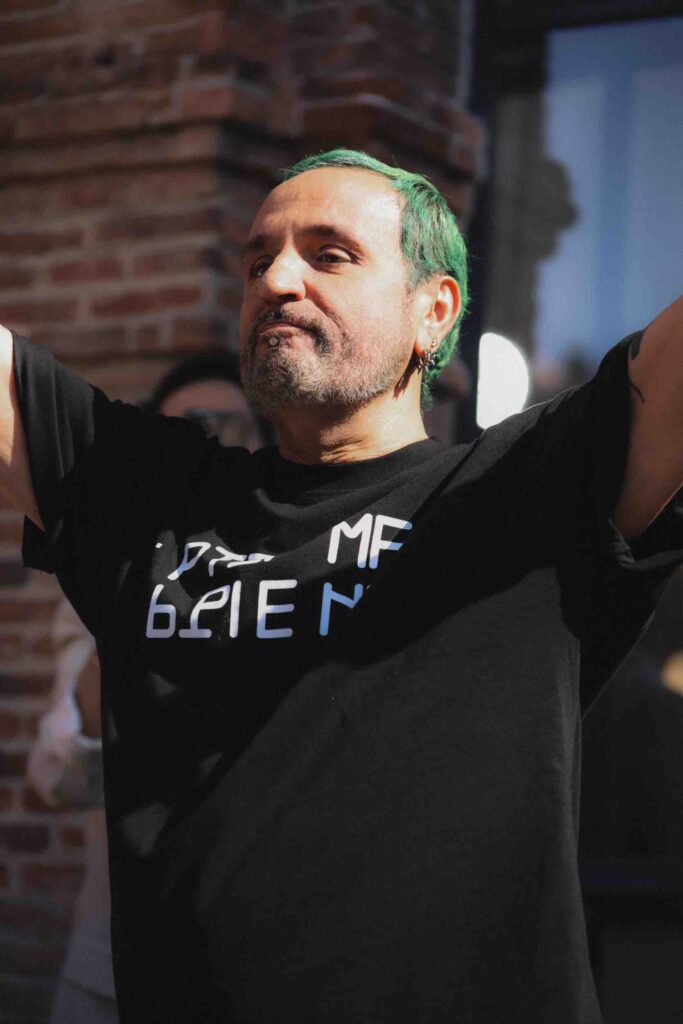
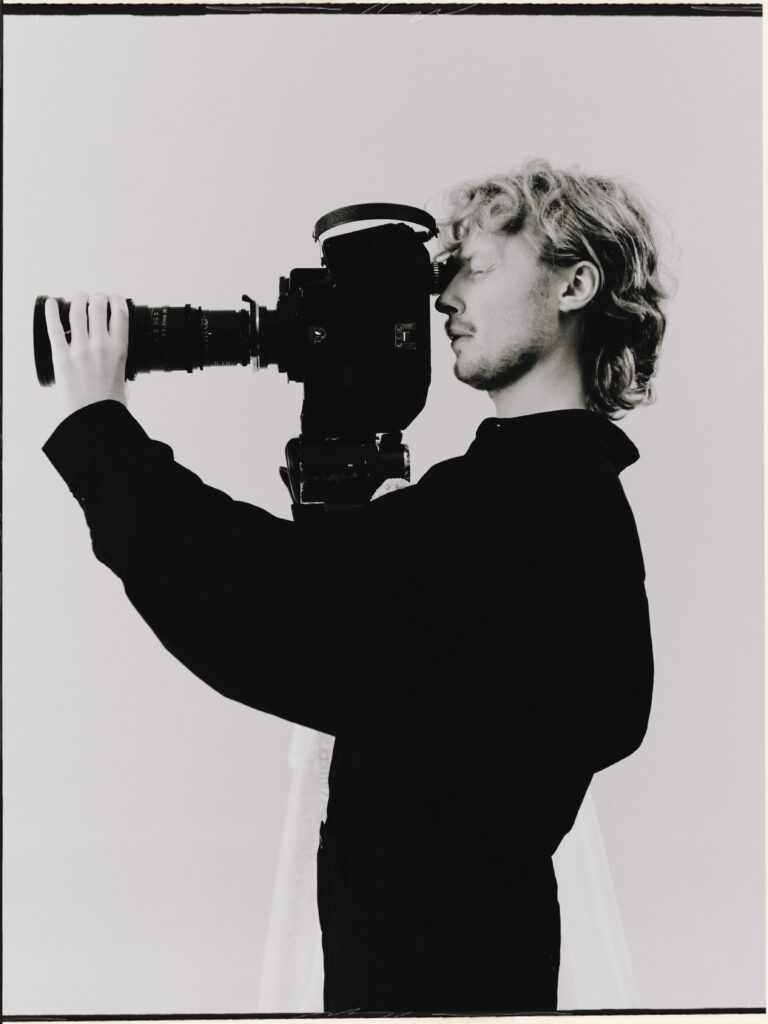
Fabian Penje X Odalisque I want to have that feeling of being way in over my head! I feel like you need that to move forward. photography Gustav Svante Larsson fashion & text Lejla Plima knitted sweater & shirt HOPE jeans ADNYM hat Helly Hansen shirt ADNYM pants Beyond Retro Stockholm shoes Vagabond jewelry OCC knit cardigan Core Rd Knitting Co jeans MADH   During my conversation with Fabian Penje, several things seemed to linger, but this sentence has stayed with me ever since we met at the small café Beck on Tjärhovsgatan in Stockholm. Fabian, best known for his roles in Young Royals and Blindspår, sips carefully on a decaf coffee as I open my laptop on the small café table. We take a moment to laugh about something trivial before diving straight in. After all, we’re here to talk about his career, his style, and his dream of directing. L: I want to start at the beginning! Your career started on the stage at Dramaten, tell me about that. F: Yeah, I was really young when I was thrown into life at Dramaten. It was a big role in a big production, as Alexander in Fanny & Alexander. We rehearsed for a year before theproduction began, and in many ways I grew up in the corners of that theater. I came to know that building over time, and eventually I grew really fond of the stage and all my memories there. I’m really happy that I got that traditional theater-schooling, it still shapes me as an actor today. knit cardigan Core Rd Knitting Co jeans MADH shoes Vagabond shirt ADNYM pants Core Rd Knitting Co shoes Vagabond jewelry OCC rings OCC L: What was that like, being so young and working while your classmates weren’t? F: I definitely had a lot of social anxiety about school, and acting became a kind of escape from that. I’ve always gravitated more toward adults, and Dramaten was probably the first place where I felt understood. It all kind of happened at once, I found myself in theatre, while losing myself a little in school. L: How would you say you “found yourself”? F: Dramaten opened the doors to the art world for me, and very quickly Ingmar Bergman became a huge inspiration. It was through his world that I discovered what theatre could really be. L: How would you describe your relationship to fashion back then, as a kid? F: I grew up in Sollentuna outside of Stockholm, where the aesthetic was pretty posh. Fashion to me then was just guys walking around in polos and chinos haha. It wasn’t until theatre, when I got to dress up for roles, that I understood clothing as an expression. That’s when it became something meaningful to me. L: And how did that interest in fashion evolve after your Fanny & Alexander-days? F: The big shift came when I started school at Södra Latin. That place was like a hub, the students had this unique sense of style I hadn’t really been involved in before. It was an immediate hard switch for me. Within six months, I went from a regular guy to a poster child for the Södermalm, theatre-kid aesthetic knit cardigan Core Rd Knitting Co jeans MADH shoes Vagabond shirt ADNYM pants Beyond Retro Stockholm shoes Vagabond jewelry OCC L: How would you describe that “theatre style”? F: I think the style in our circles at Södra Latin was a little try-hard at first. You kind of wanted to dress as a french philosopher so it was a lot of black. But eventually it became more ironic and I started mixing in street-style. I drew a lot of inspiration from Frank Ocean, Kendrick Lamar and Tyler the Creator. And I still do! I think that fashion is the purest form of expression, you can change how people see you when you walk into a room with a good outfit. L:Do you have an outfit like that? One that lets you take the room! F: (Laughs) I like that philosophy. It varies, of course, but my statement pieces are a vintage black leather jacket, a vintage Helly Hansen cap, and an orange beanie that somehow has become a symbol that my friends recognize me by. I think it’s important to have those you know? Statement pieces for your own character in life. L: Do you notice a difference in how you dress depending on whether you walk into a room as an actor or as a director? F: I always want to feel confident and strong, since both roles are very exposing. As a director, I think I lean towards comfort. Everything moves really fast and it makes it easier tostay focused on what’s in front of you! I would never wear anything that feels overstimulating. As an actor, I think I get there in my usual pieces, and then the stylist’s work becomes the most important! The clothes they choose help me find the character, so it means a lot.   L: How does it feel to explore directing at such a young age? F: I think that to be a director, you need a deep understanding of people. It takes experience and a good sense of why people think and act the way they do. At the end of the day it’s pure psychology and in turn dramaturgy. So in theory, it’s something that would make more sense to do later in life. But directing is also about our present moment as a society. About reflecting the times we live in. So in that way I think it’s important for young people to step in and show our perspective. Our generation is shaping pop culture, and everything we do leaves a mark. We have to make space for that, even if it means taking on a big labour of work like directing. And honestly no generation has as many opinions as we do. So I think we need to express
Fashion Articles

Bringing the Catwalk to the Slopes, an Interview with Sportalm Creative Director Ulli Ehrlich

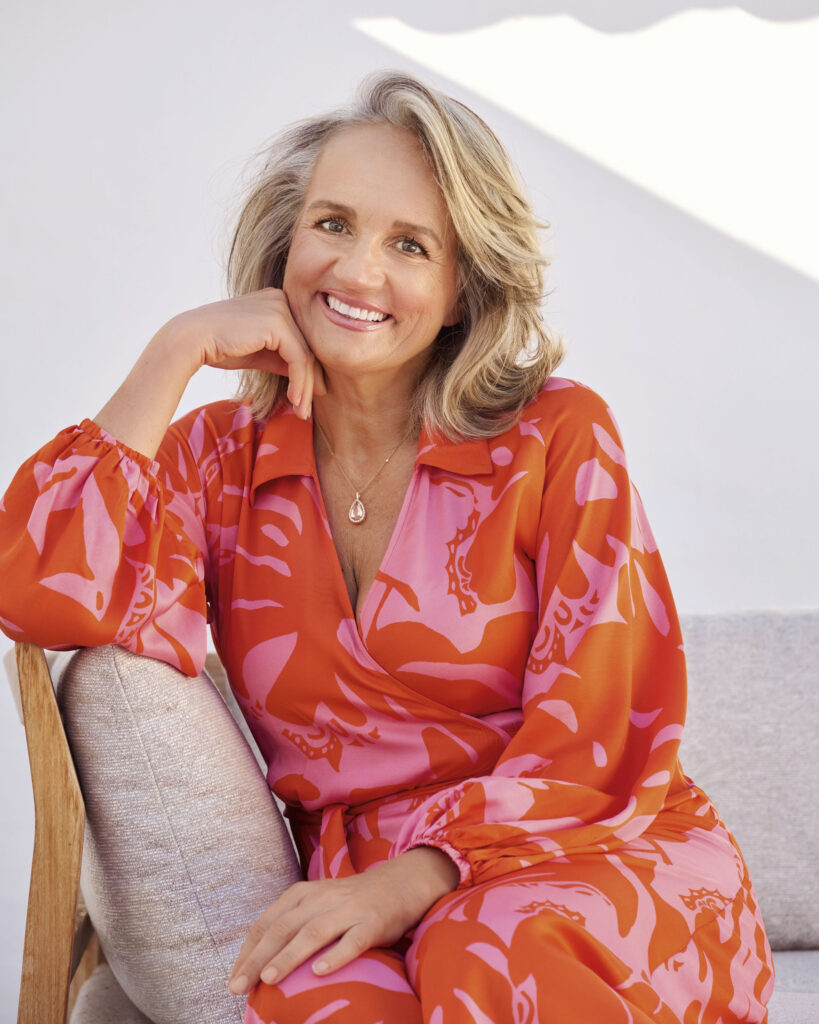
Bringing the Catwalk to the Slopes, an Interview with Sportalm Creative Director Ulli Ehrlich text Sandra Myhrberg images courtesy of Sportalm Nestled at the foot of the Kitzbühel Alps, Sportalm’s headquarters does not feel like a corporate hub; it feels like a living archive. Bolts of fabric, sketches from past decades, and the hum of a team that has worked together for generations tell a story that began long before contemporary sports luxury had a name. Visiting the brand on its home turf, it becomes clear that Sportalm is not merely a fashion company; it is a family legacy woven into the rhythm of the town itself. At the centre of this legacy stands Ulli Ehrlich, Creative Director and member of the founding family, whose journey with Sportalm began long before she ever held a title. Growing up next door to the factory, the brand was not something she joined; it was something she lived. From sewing clothes for her dolls as a child to shaping Sportalm’s modern fashion identity and its global presence, her perspective is uniquely intertwined with the brand’s evolution. Our conversation unfolds between the past and the future, the craft traditions upheld by a family-run business, the joyful and expressive codes that define Sportalm’s style, and the brand’s ambitions to inspire the next generation of skiers and fashion lovers. Q: You studied fashion formally and were also trained in Paris. How did your education and early professional experiences shape the designer you are today, and how did it prepare you for your role at Sportalm? U: Studying fashion gave me a solid foundation. I studied in Austria and then spent time in Paris, where I trained at Daniel Hechter, which was quite influential at the time. That was where I learned proper pattern making, and that technical knowledge has helped me so much throughout my career. When I returned to Sportalm, I started by working on the craft collection, then on the ski line, and eventually I developed our fashion line, which we launched around twenty-two years ago. My education, combined with growing up so close to the company, gave me both the creative understanding and the technical confidence to move the brand forward. Q: Sportalm has evolved over more than 70 years with deep roots in Alpine and ski culture. As Creative Director, how do you describe the brand’s stylistic journey from its origins to today, and what creative or strategic challenges do you face in keeping such a specialised heritage both innovative and relevant? U: Sportalm has evolved significantly in its product portfolio. Founded originally as a knitwear manufacturer, the brand later expanded into traditional Alpine attire, then into ski apparel, and since the 2000s into fashion and golf collections. Yet throughout this journey, the brand’s distinctive signature has remained intact. Sportalm is known for its vibrant, expressive collections, always with that certain special touch, a deep love for detail, and an uncompromising commitment to quality. The great challenge is to stay true to our roots and remain unmistakably ourselves, while at the same time staying in tune with the spirit of the times.Today, anything is possible — there is no longer just one single trend. As a brand, you have to seek out what is authentic and credible, while still giving customers the feeling of being absolutely en vogue. This also reflects the character of our hometown. Kitzbühel has constantly transformed itself, yet has remained an authentic place, even as glamour has become part of its identity. This blend of glamour and down-to-earthness is undoubtedly one of the secrets of our success. Q: Sportalm describes their own work by being characterised by sustainability (cited from your website). How would you, as CEO and Creative Director, define the brand as being characterised by sustainability? U: Family-run businesses have always operated sustainably, because we think in generations, not in quarterly reports. We feel a responsibility toward our values and toward people. Our commitment to maintaining our own production site within the EU is a clear expression of this value-driven mindset. Sustainability is also reflected in our dedication to quality, creating products that last for generations. The most beautiful moments are when we receive photos of styles that are 40 years old, or when young people write to tell us they are now skiing in the overalls of their grandparents. That is sustainability in its truest, most lived form. Q: Tell us about your upcoming fashion show! Are you the sole designer of the collection, or did you have any special collaborators? Are there any specific pieces or details one should pay extra attention to?  U: We have an excellent in-house team, some of whom have been with us for over 20 years and have played a decisive role in shaping Sportalm’s development. Our creativity truly comes from within the company. The collection is so diverse that it’s difficult to highlight one specific detail. What was especially important to us this year was the multifunctionality of the collection. Almost all pieces can be worn beyond the slopes — whether it’s the fashionable down jackets, the elegant mid-layers, or the beautiful knitwear. They can be worn for skiing, but they don’t have to be. Q: My mom (in Sweden) had one of your iconic jackets in the 70s. How do you view the potential of re-engaging the Nordic audience? U: In the past, Scandinavian style was often described as minimal and dark, but that is no longer the case. Today, Scandinavian brands are bold, colourful, and truly unique. Even on the slopes, people embrace a lot of colour. So perhaps this is the right moment to rethink our distribution in the region. Q: Looking back across the decades, is there a particular era of Sportalm’s archives that you find yourself returning to most for inspiration today? U: We’re keeping a strong eye on the fashion industry because what we do is ski fashion we are not like some of the really functional hardcore technical brands where

Scroll to Top