Nicole Sabouné on Music, Liberation and Kismet
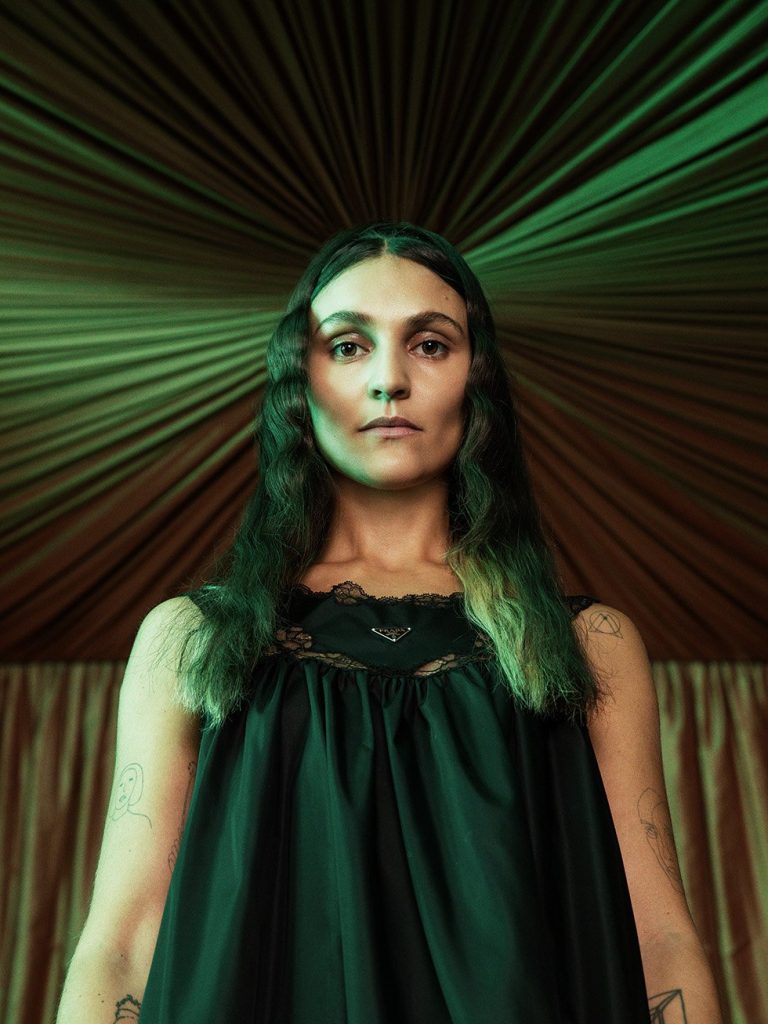
Nicole Sabouné on Music, Liberation and Kismet text Natalia Muntean photography Sandra Myhrbergfashion Rebecca Cohen / xo.studiodress Prada How does music and neuroscience coexist within the same person? “The passion to do both things comes from the same drive and the same kind of place,” says Nicole Sabouné, one of the most interesting voices on the Swedish music scene, adding that she will probably live for the rest of her life balancing these two paths. After having recently graduated with a master’s degree in neuroscience, the 32-year-old artist released her fourth album titled Kismet at the beginning of October. “I always get into this fragile state, when opening up and releasing new music, of course. But it is also a relief, because it’s not mine anymore. And that is liberating,“ she tells me days ahead of the release. Kismet has been in the works for more than a year and a half, working in the lab during the day and spending her evenings in the studio. “I had a couple of hours every evening to get things done. So it’s been both good and bad. I think you get very effective and you don’t go back and forth a hundred times until you don’t know what’s good anymore,” she continues. Influenced by artists such as PJ Harvey, Air or Joy Division, Sabouné dug into herself and her own experiences for Kismet, a record that explores love, fate, liberation and acceptance. “Music has always been my output, especially when I feel something strongly and cannot express it in a good way.” Natalia Muntean: I can imagine you get very surprised reactions from people when you tell them about your two career choices, but when did you know you wanted to become an artist? Or would you define yourself as an artist?Nicole Sabouné: Yes, I would define myself as an artist. And it has been there since I was a kid. I don’t remember not thinking that I would like to pursue some kind of career in music. From the start, it was only about getting some kind of output because I was quiet. So I found music to be it for me, which was really important. I think that has been there with me as a tool to be a part of something bigger. NM: When you were little do you remember listening to music and singing? Or were you writing? Were you composing?NS: I did everything. And my interest or passion comes from what happened to me when I listened to music when I was a kid. And I still have that – there’s nothing that I can compare with that feeling of really listening to music that you enjoy, and that you feel, “Oh, this is my space”. And then I have been singing since I was… well, always. NM: Do you have any memory of a song? Like maybe, your first ever memory of a song that you were listening to? NS: Oh, I think there was a mix between like Spice Girls, Radiohead and Nirvana. body and corsett Julia Weström NM: A pretty wide range for a five year old!NS: I think it’s my brother’s fault, to be honest (laughs). And then I went into Swedish punk, so I just came in contact with the punk scene. And then I started to move over to everything that came from the UK. And then it was just like spinning. I went into post punk and I’ve been there since. NM: You explored different genres…NS: I think I did. But I always kept in the darker space. When it comes to music, it has to have some kind of melancholic vibe in it for me to be interested. Otherwise, it passes through me. With some kind of music, I can tell that it might be good, but something has to happen; it has to grab something in me, and I think it’s the dark vibes that work for me. NM: I wanted to touch upon this, actually, because I saw your music being described as “between darkness and romance”. And I’m just curious, how do you resonate with this, you know, description, and why do you think it encapsulates the essence of your music?NS: Of course it has something to do with references, the music world I come from, and what I like. Producing my own music is about wanting songs to evoke that specific feeling. With my voice as the main instrument, I always start by considering how I want to sing the song, how it suits my voice, and how I want it to appear. But it’s a nice description, though, to be romantic and dark. NM: Why did you name the album Kismet and how was the process of working on it?NS: So kismet comes from the word fate or destiny, it has an Arabic origin and I’m half Lebanese, so I wanted a word that felt substantial, almost like a movie title because the album was inspired by Sofia Coppola. And then I saw this interview with Michael Stipe from REM, and he mentioned it was kismet that all of them in the band met. I had heard it before as qisma from Arabic, but didn’t realise you can say kismet in English. And then, when I started writing the songs, I felt like it suited really well into the concept of what I wanted to write about. Working with two of my best friends, Billy Cervin and Jon Bordon, with Billy and I co-writing a couple of songs and all three of us producing the album, has been the main experience of creating this album. It was a close collaboration, a dream team, everyone open-minded with good taste in music. We built this universe together, referencing songs I had in mind. I wrote some songs myself, picked up others from the past that I co-wrote with a friend and finished them, and the producing part of the album has been the most important, to be honest. Having the word kismet to be the title for this