Design

Design

The Design Interview: Vincent Laine

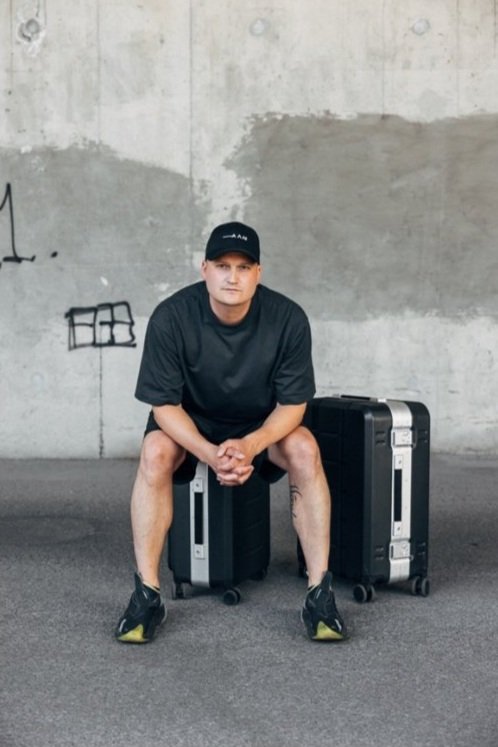
The Design Interview: Vincent Laine text Yasmine M For the design enthusiasts within photography and lifestyle, you may have come across this designer’s work. Vincent Laine is the award-winning designer, behind products such as the Leica Q and Q2, Hasselblad CFV-50c and lately the Db Ramverk Pro Luggage collection. Today, as the creative director at Db, he still is focused on his minimalistic yet powerful designs. Odalisque Magazine, got a sit down with the designer to talk about his journey, aspirations for his upcoming work and thoughts on Japanese Kansei Design. Y: When did your passion for design start? Tell us a bit about your journey within design.V:  Most of my family members had a medium for creative output whether it was painting, garments or woodwork. With that said I do not believe that this kind of upbringing validates your creative capabilities by any means, or is a prerequisite in order to pursue a creative career – it is just my story and thinking about about makes me feel grateful. When thinking about the range of creative mediums that I work with from product design, photography, physical installations, video, copy and so on – I can certainly reference the openness to any medium or creative field through my childhood. You have designed everything from Leica cameras to luggage. How did that happen and what has been most fun and inspiring?As a teenager I started searching for “my” creative field, and later ended up in design school. During studies me and some classmates won a local design contest and I bought a camera for the money – only to end up extremely dissatisfied with the product because of how poor the user experience was, of crafting an image with that camera was. I was already 3-4 years into design school and so I decided to design my own camera (as a fake 3D concept) to provoke and channel my frustration, but I wanted this to feel and look real, so I picked Leica as the brand for this concept and studied their design language and brand assets to include that into my work. A couple of weeks later I received a phone call from the director of product management at the time, the call started with a firm explanation of how I had vialated the right to use their brand in my work – but towards the end of the call the tone shifted ending up with an internship at Leica. A year later (2014) I had dropped out of the university and landed my dream job as product designer at Leica. How was it to start at Leica?The first project on my table was the Leica Q. Over the following years I got the opportunity to also design the Leica Q2, before leaving Germany and going back home to Sweden, more precisely Gothenburg where the camera brand Hasselblad is located. A great brand dedicating their craft to design and photographic excellence – but I wouldn’t help but noticing a pattern of repetition. Not just by designing camera bodies and lenses but also through celebration of historical brand milestones. Leica had celebrated their 100 year anniversary when I joined and at Hasselblad the celebration was 50 years on the moon and it got me thinking “Id like to be a part of making those milestones instead looking back. ”I was already 3-4 years into design school and so I decided to design my own camera…” Tell me a bit more about your design journey for DB? How did you start out at DB?As a camera designer I traveled to see the world through my viewfinder and ultimately improve them – but instead something else caught my attention. Luggage. Hard case luggage in particular. I had a hard time finding a brand that spoke to me as a young creative. When I looked at the market I saw many luggage companies producing luggage – but very few brands with a belief and a perspective on the world. So, I started looking for up and coming brands and came across Db – contacted them and pitched hard case the same way as I did a few years back at Leica. A couple months later (October 2019) I moved to Oslo to design the hard case collection today known as the Ramverk Pro. Everything originated from the Ramverk Front Access Carry-on which was designed to host a professional camera insert if you are a photographer. The only way to create this spacious carry-on hard case was to connect the shells together somehow and our solution to that was the aluminum frame. The frame was then carried over to the other sizes of the collection – but instead of connecting the shells together – it works as a closure mechanism replacing the weakest component of conventional luggage, the zipper. As the appointed Creative Director, what are your aspirations and hopes for the brand, especially the travel pieces? What is important for you to focus on?My hope is that Db as a brand continues to push the envelope of creative thinking, through both design and marketing at the intersection of our subcultures where we enable these journeys and stories to happen all over the world. I genuinely believe that mixing genres of creativity is the future. Look at music 100 years ago, “featuring XYZ” between artists was unheard of, mixing genres even more so – now it’s the norm and new subcategories are created every day. That’s the vibe and spirit that I see for Db in the future just through product and culture. Db has an inherent duality that speaks evolution to me, designing so-called “spearhead” products in core communities and subcultures like skate, snow surf and photo. But instead of trying adapt to each activity or community, we believe in a more holistic approach where our perspective on design is the constant – essentially what it comes down to is the juxtaposition of two components – Rugged and Refined. A layering that we call Capable Elegance. Capable enough to be thrown

Design

Interview TAF Studio x Odalisque

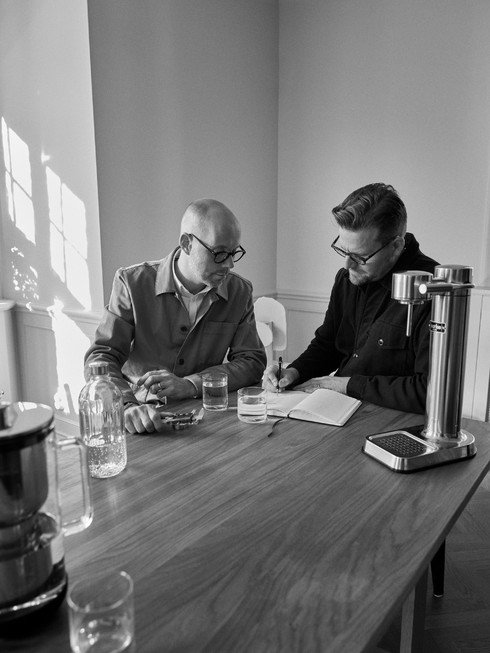
Interview TAF Studio x Odalisque text Jahwanna Berglund   When two design geniuses put their heads together, the outcome resulted in a new timeless and functional at home classic. TAF Studio was founded in 2002 by Gabriella Lenke and Mattias Ståhlbom after graduating from the Department of Interior Architecture and Furniture Design at Konstfack.Their design is recognized for its minimalist yet functional approach to design, creating pieces that blend simplicity with a touch of whimsy. They work across various disciplines, including interior design, product design, architecture, and furniture design. The studio’s portfolio boasts collaborations with numerous well-known brands like Muuto, Hay, Design House Stockholm, and now String Furniture. Their designs often showcase a balance between form and function, with an emphasis on clean lines, thoughtful details, and a Scandinavian aesthetic. Their work has been exhibited internationally and has received several prestigious awards, cementing TAF Studio’s position as a prominent design studio within the global design community. Throughout their journey, they’ve maintained a commitment to creating innovative, sustainable, and visually striking designs, leaving a mark on the world of contemporary design. String Furniture is a Swedish design icon that emerged in the mid-20th century and has since become synonymous with Scandinavian design. It was created by Swedish architect and designer Nils Strinning and his wife, Kajsa Strinning. The history of String furniture dates back to 1949 when Nils Strinning entered a design competition organized by Bonnier’s Book Club. His submission was a shelving system that consisted of simple side panels and shelves supported by thin wires. This innovative design allowed for customization and flexibility, enabling users to adjust the shelves to their liking without the need for tools. The winning design, known as the “String System,” became an instant success and was launched into production by the manufacturer, String Furniture AB. Over the years, String Furniture has maintained its timeless appeal and relevance in the design world. The original String System continues to be manufactured and sold, while the brand has introduced new variations, colors, and materials to adapt to contemporary design trends and technological advancements. Nils and Kajsa Strinning’s legacy lives on through the enduring popularity and influence of String furniture, which remains an emblem of functional and elegant Scandinavian design. How did the collaboration between TAF Studio and String Furniture come about, considering both entities’ rich design legacies?We started our collaboration when designing a wall shelf for the Nationalmuseum of Stockholm. The Museum collection is since then available in the String Furniture range What unique elements or insights did each partner bring to the table during the creation process?It is of course a great pleasure working with a producer that has such specific knowledge when it comes to shelves and storage. String Furniture knows everything about wall shelves and we brought our knowledge as designers and interior architects when it comes to a free standing piece. Relief is designed to be as nice from the back as from the front to be able to position in the middle of room and double as a room divider. TAF Studio is known for its minimalist yet functional approach, while String Furniture embodies timeless Scandinavian design. How did these philosophies converge in your collaborative project?For us it is like working with a good friend – someone that you have a lot of things in common with. String Furniture works with a strong legacy and with their classics and we, even though it is very hard, try to achieve new things that can age as well and live as long as the classics. That meeting ends up in a natural dialogue on what we can do together. Could you tell us about the specific design principles that guided the creation of this new furniture classic?We think of the Relief as a basic background piece with a reduced expression. Almost like a podium under a sculpture. Something that can store and carry other objects rather than “objectify” itself. String Furniture has a longstanding history, while TAF Studio represents a more contemporary design approach. How did you balance honouring the heritage of String Furniture while injecting modern elements into the new design?Despite the reduced aesthetics we also believe that an object designed today needs to be a footprint from our time. We used modern and contemporary techniques in our design process, as does String Furniture when it comes to the actual production. We hope that gives a contemporary expression in a subtle way. What were some of the key challenges faced during the design process, considering the rich legacy and expectations associated with both TAF Studio and String Furniture?We have worked very much with the detailing and proportions in order to be able to transport the system in a more sustainable way/knock down and to store it in an efficient way. All the dimensions have their origin in an ambition to fit on a EU pallet. The true challenge was to make them also work for all the different functions when assembled. Can you elaborate on any innovative techniques or materials used in the creation of this furniture piece?We have looked at many new materials and techniques and made tryouts and mock-ups but found no advantages. In the end we have been using wood, mdf and cast aluminium. How did you prioritise functionality without compromising on the aesthetic appeal of the furniture piece?The visual appearance is very boxy and we have had pixels as a reference but there are a lot of hidden functionality. For example with all the fittings – there is an invisible connection bracket to connect more than one part. Under the squarish handle there is a soft curve that you do not see but feel when opening the drawers. A row of hooks in the same widths could also be added to take care of things you do not want to keep in the drawers. Both TAF Studio and String Furniture have made significant impacts on the design world. How do you envision this collaboration contributing to your respective legacies?We hope of course that the reception of the new collection will be good and used in a way that we were aiming for – a background piece focusing on storage,

Design

Fogia Art Selection: Where Design Meets Art

Fogia Art Selection: Where Design Meets Art text Natalia Muntean Swedish design brand Fogia unveils the second edition of its initiative, Fogia Art Selection. The project marries the worlds of art and design, showcasing how art can blend into living spaces and also offering artists and creators a platform to express themselves. The Fogia Art Selection initiative, introduced in 2023, is based on the belief that art and space are interconnected. By curating and integrating the artists’ work with Fogia’s range of designer furniture, the initiative highlights the impact of textiles, silhouettes, materials, colors, and shapes on our emotional landscape. This year’s lineup features three Swedish artists: John Artur, Malou Palmqvist, and Micael de Leeuw, each selected for their ability to echo Fogia’s design philosophy through their respective mediums. Transitioning from music and fashion to the art world, Artur’s creations are a study in contrasts, blending organic with synthetic, and encompassing a diverse range of mediums from paint to pixels. Micael de Leeuw’s artistic evolution has led him from traditional painting to the sculptural realm, experimenting with various techniques and mediums, including yarn, to create pieces that straddle the line between the real and the abstract. With a focus on stoneware ceramics and textile sculptures, Palmqvist’s work captures the surreal nature of human forms, portraying a delicate balance between movement and disintegration. Fogia Art Selection is now on display in the brand’s Concept Store in Stockholm.

Scroll to Top