“To paint is to make choices”: Josephine Thorsby on Potential, her first solo show
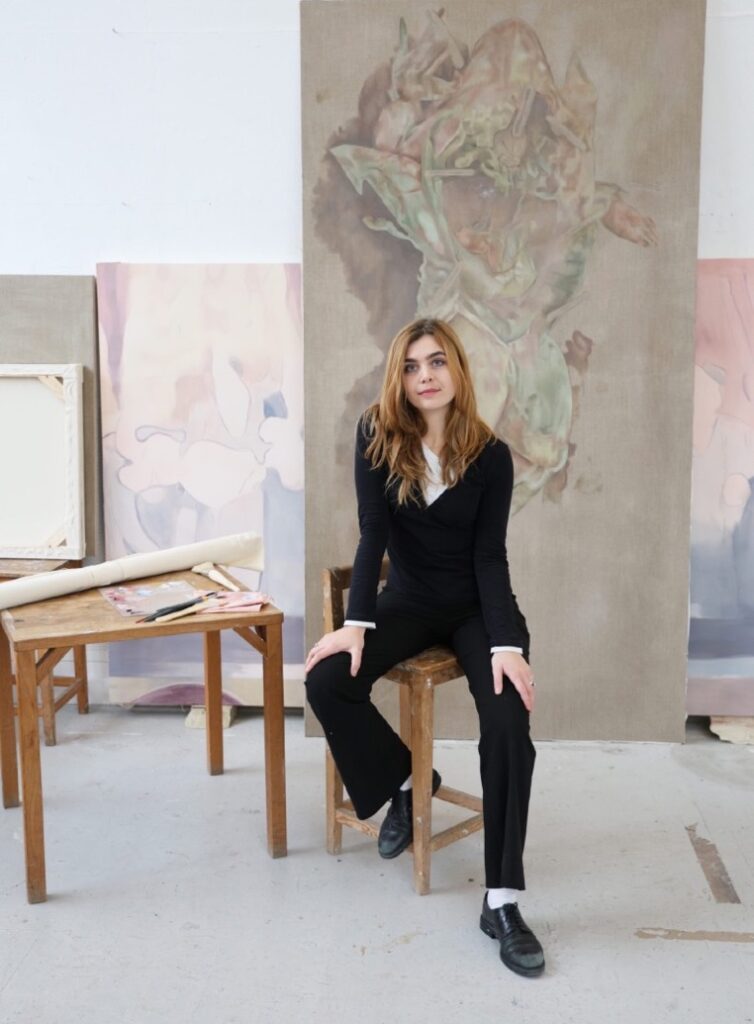
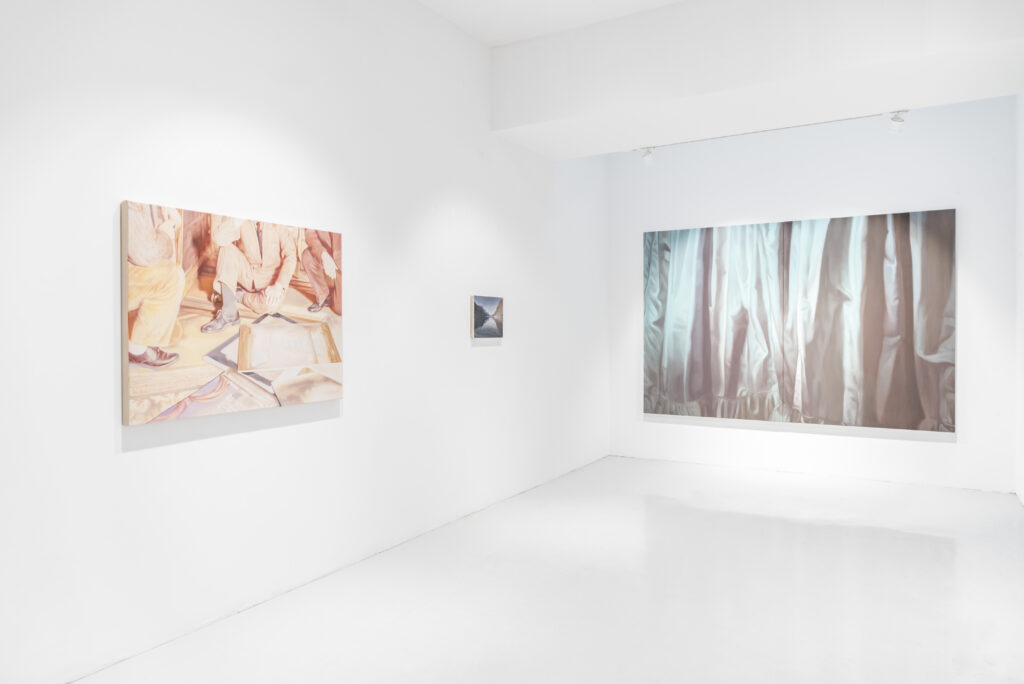
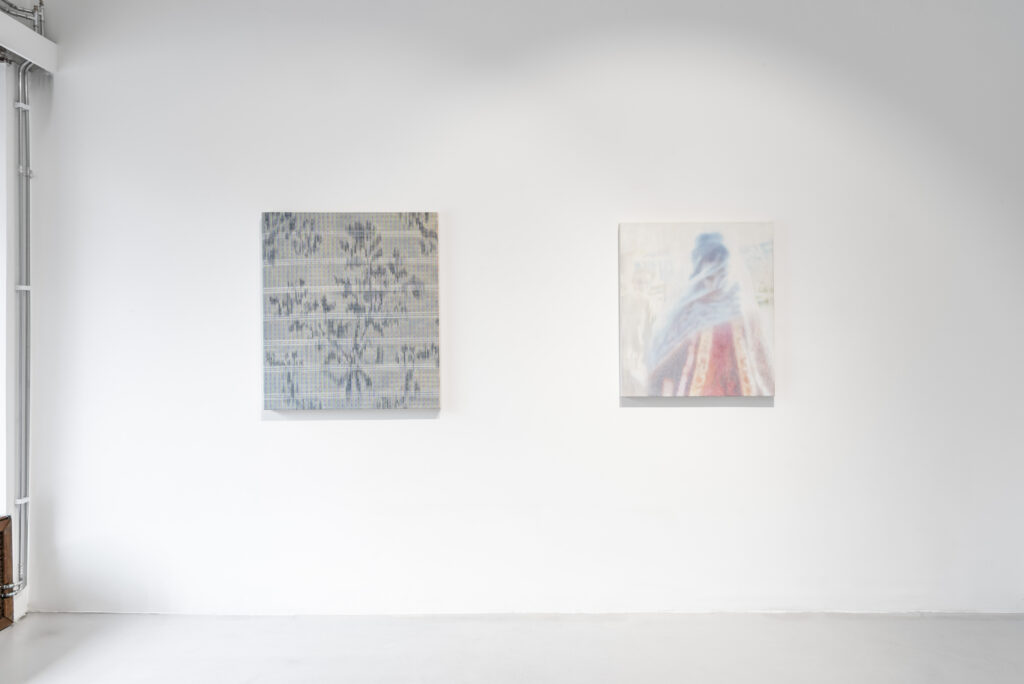
“Sitting in front of a blank canvas – there’s this extreme sensation of anticipation, almost like sitting in the cinema before the movie begins. So there’s a lot of excitement. It becomes very existential. It feels like it could also be about life, about what will happen in the future,” Josephine Thorsby tells me at the opening of her first solo exhibition at Gerdman Gallery in Stockholm. The Danish-born painter, who graduated from the Royal Institute of Art this summer, draws inspiration from the cinematic and digital world, with some works depicting opening scenes from films such as The Shining and Apocalypse Now, as well as production vignettes from companies like Netflix and DreamWorks, among others, painted with the logos removed. Potential, on display until December 18, brings to the forefront the tension between having a world of possibilities in front of you and becoming numbed by the idea of “what could be.”
Natalia Muntean: What does the word Potential mean to you in the context of this exhibition? And why did it feel like the right title?
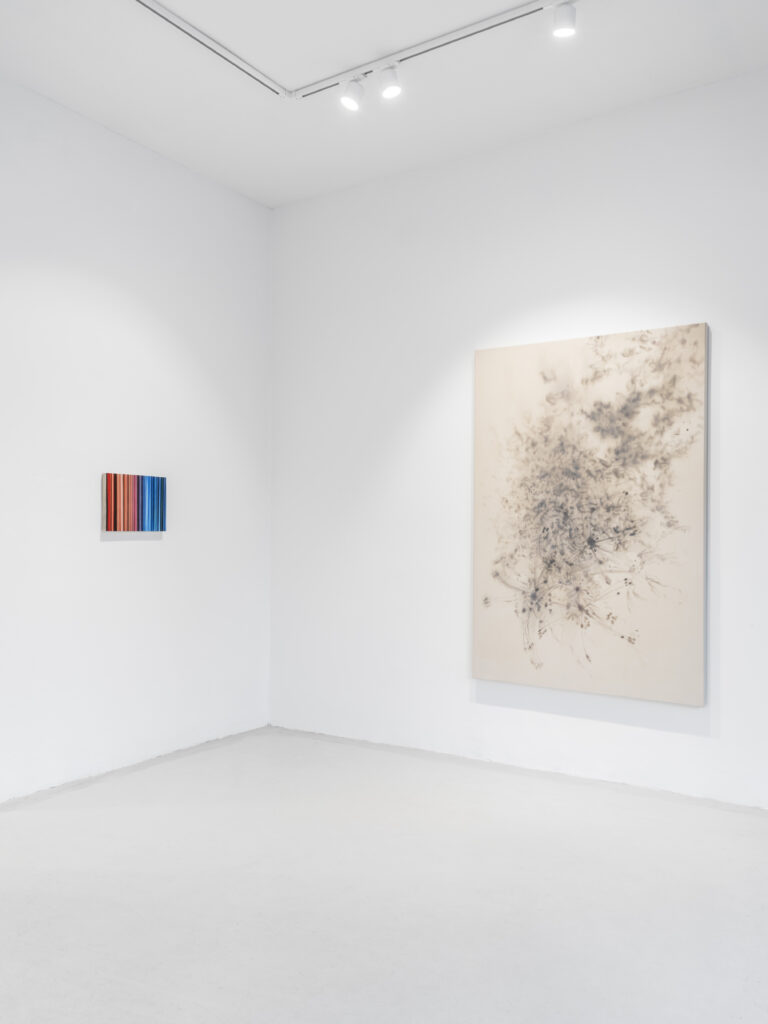
Josephine Thorsby: I like its open and dreamy notion pointing into the hopeful unknown, which I found fitting for the exhibition’s conceptual purpose: Creating a dreamy, illusive and somehow digital atmosphere by showing works that individually reveal themselves as more critical comments on the very same desirable aesthetics once one gets closer. For example, many of the paintings in the show are inspired by collective embedded digital imagery that some probably don’t recognise at first but still find themselves curious about. When we meet potential in life it can feel like a great discovery – as something that is not yet fulfilled, but rather a space we can insert ourselves in.
Personally, I have experienced this state as very desirable, but also found it tricky; if I keep striving towards living in the “comfortable” desire of what could be instead of acting on the motivation, (with the possibility of not living up to the initial potential) I would get numb, passive and the initial potential could then in the end ruin stronger possibilities in life. I find this state very interesting overall, both as a common human condition, an inspiration for image-making and as an ongoing investigation in my artistic practice.
NM: You mentioned in our conversation that potential has two sides: the freedom to become anything and the paralysis that can come with it. Where have you felt that most in your own life?
JT: My interest in working within this double-sided state of potential/anticipation in my practice comes from a very personal starting point, and I have felt it most myself going from being a young teenager into adulthood, becoming a woman.
Especially growing up with social media and the feeling of having 100 times more possibilities than my parents’ generation had in their youth somehow felt like a pressure to me. Though I acknowledge what a big privilege it is to feel endless possibilities of what one could become, like a pick-and-mix future, the only thing I really could not control back then was the physical transformation that happened going from a child to a woman. That combined with the overwhelm of choices, paralysed me back then, I admit. I do not think this is a story merely belonging to me, but a bigger phenomenon that a lot of younger adults, maybe especially girls, have felt, also now that it is easier than ever to compare ourselves to others, being somehow absorbed into a digital world of curated lifestyles and fed with even more possibilities and things to desire.
NM: What does it feel like to stand in front of a blank canvas?
JT: When I started painting at the Royal Institute of Art I noticed how similar this feeling of potential was to me in the studio: standing in front of a blank canvas the possibilities seem endless in the beginning. It can be a terrifying feeling to start a painting, because to paint is to make choices. All the choices you then make on the canvas become visible immediately and they will always show. In the studio I still feel that I constantly break with my “passiveness” when I paint. Starting with my desires and ideas for a painting and materialising them onto something physical, the paintings become something on their own, not always what I initiated at first but thank god for that – it keeps the process alive and adventurous.
I therefore see my work’s visual world as very connected to their physical process and I strive to keep the studio an open space for experimentation and new ideas while trusting that my own interest in what I am working on leads the way.
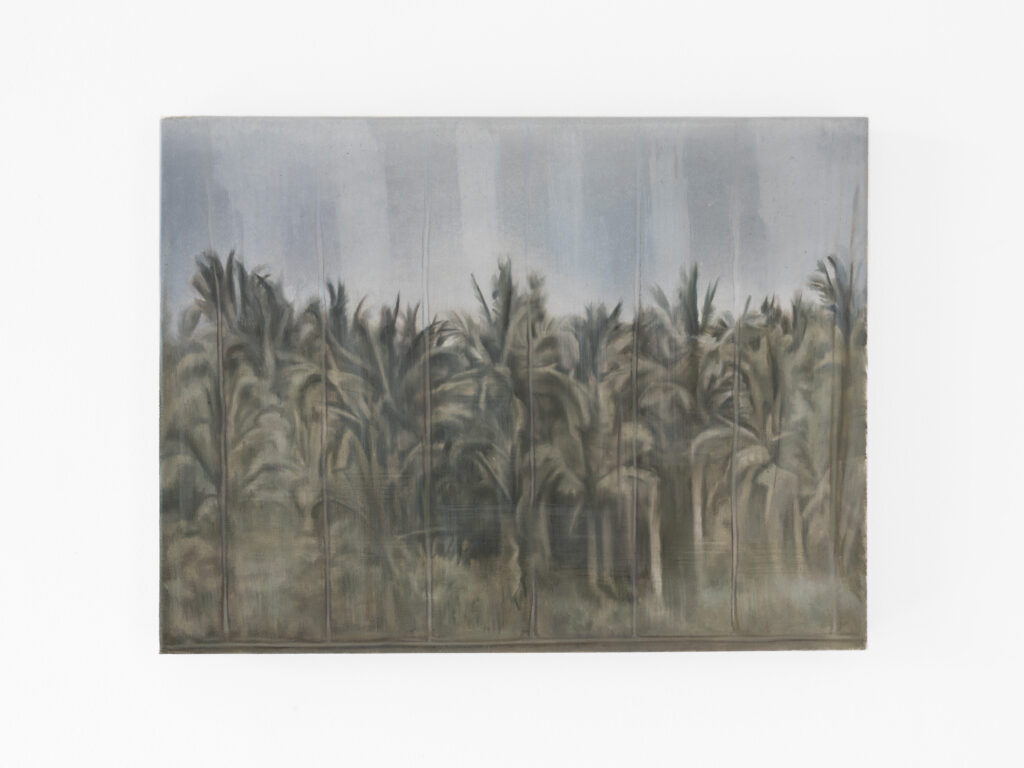
NM: What drew you to the landscapes and moments that come from opening scenes of films?
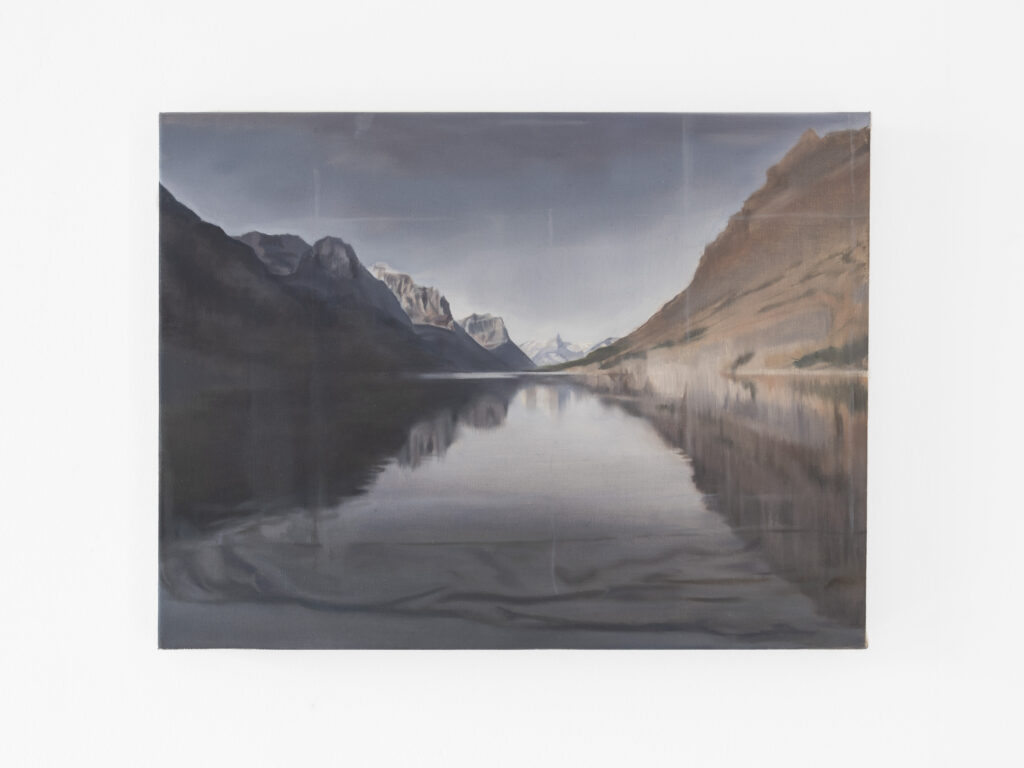
JT: Scenario I, II and III are all paintings referencing three different opening scenes of films, that I watched and first read as beautiful and idealistic landscapes, not knowing that the narratives of these films are quite brutal later on. An opening scene in a film serves as the appetiser and sets the scenery but not the story just yet, and therefore it was fun to play with them as open possibilities as paintings as well: Whether the viewer looking at the paintings would recognise them from having watched the film themselves, read them as an homage to classic landscape painting or just insert themselves in them for a second.
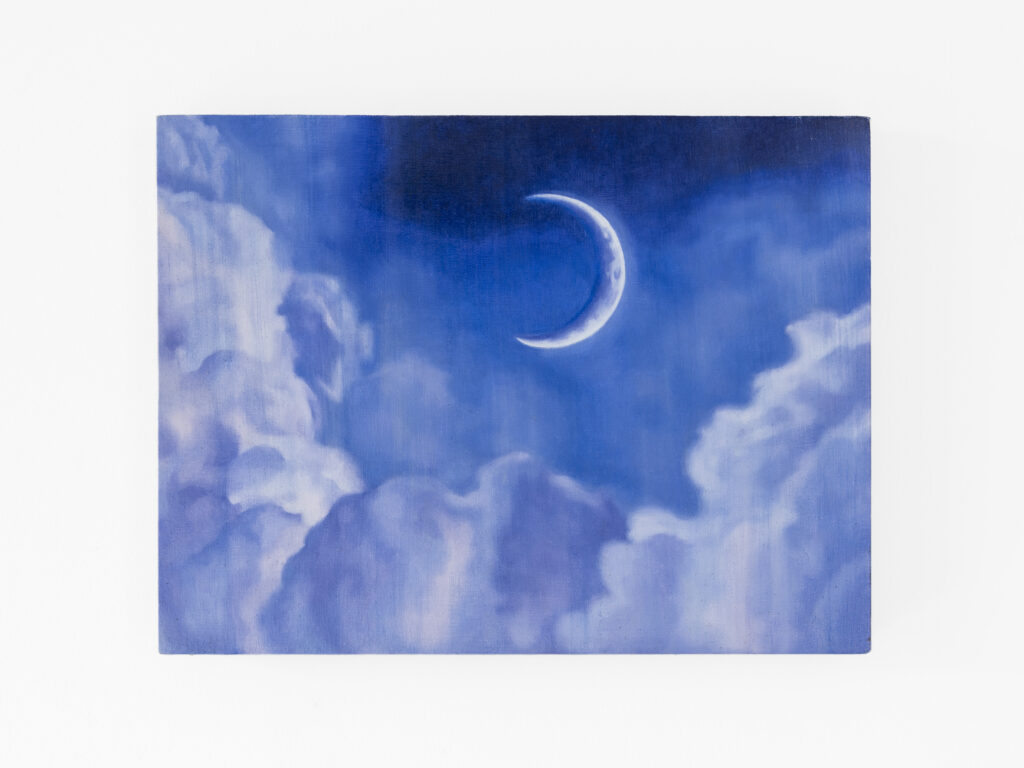
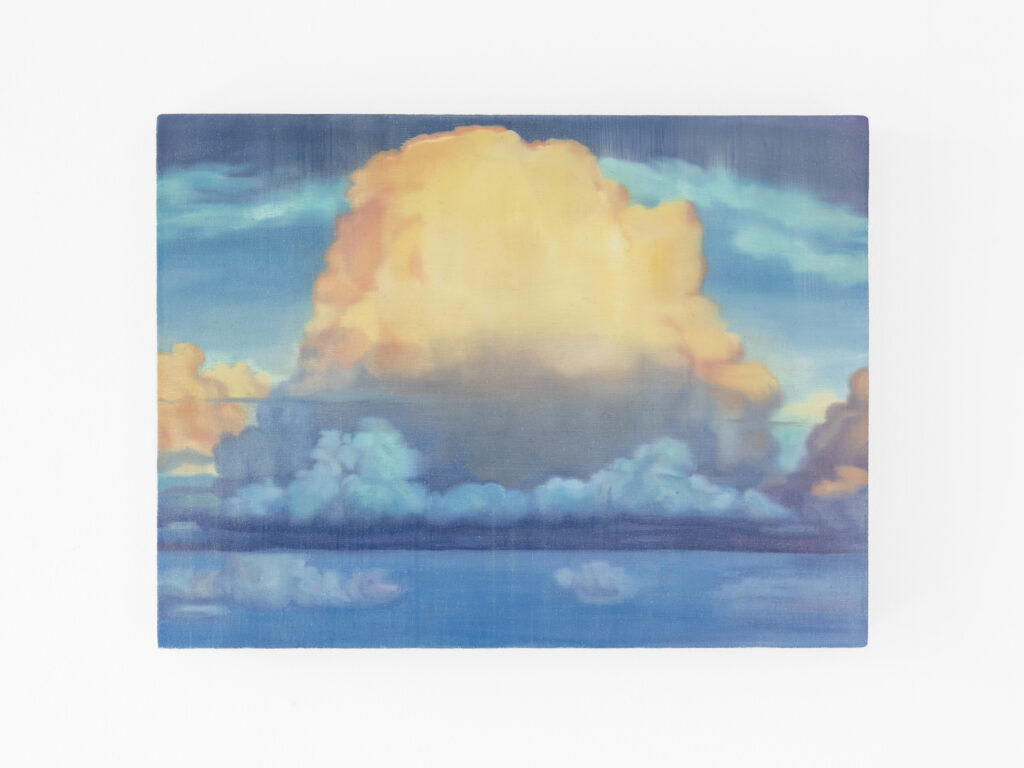
NM: For the Landscape series of paintings, you removed the logos so the images appear as landscapes first. What did you notice about them once the branding was gone?
JT: Just as with the paintings of opening scenes from films the Landscapes series are paintings inspired by another cinematic aesthetic: Here, I worked with film production vignettes shown before a film begins. I actually first started with the idea of the series for my Master Exhibition last year, where I wondered how I could paint the ultimate feeling of anticipation and the sensation of sitting in the theatre before the curtain unfolds. I realised that the vignettes from big film productions always played a big part when watching films – that they were the digital curtain unfolding and presenting, but never seen as pieces of art themselves. Once I decided to paint them and leave out their name and recognisable logos, their original purpose kind of switched: they became somehow unrevealing. Another thing I noticed was how explosive they were in their colorworld and composition, probably because of their original commercial purpose wanting to be remembered by their audience. In the exhibition space at Gerdman Gallery, the idea was to place them at the beginning of the show like small “fireworks” hanging next to each other serving as big worlds in small formats, playing with the viewers’ own embedded image-knowledge. Yet again, some will probably recognise them from memory when seeing the paintings in the show; some will not right away, but I believe that we often know more unconsciously than we think we do when looking at art.
NM: For your graduation show, you painted the myth of Orpheus and Eurydice from her point of view. Why did you want to tell it from her side?
JT: I have always been very drawn to the myth of Orpheus and Eurydice as it not only serves as a love story but also works as an allegory for inspiration in the arts.
As with all myths, there are different versions of the same story, but I never found one from Eurydice’s point of view until I read Rainer Maria Rilke’s sonnets. It inspired me somehow thinking of Eurydice being freed from her given role when dissolving from Orpheus’ gaze, not being his anymore but becoming her own. It was very clear to me then that it was a motive I had to paint, but also that I had to do it in three different stages, letting Eurydice be the main character and Orpheus the object for once. It was a way to un-paralyse Eurydice in a sense, by flipping the POV and giving my version of the myth a new context. It became a series of three paintings that both investigated a story I connected to and played with the possibilities of the different techniques with oil paint.
NM: Your sources range from digital images and film stills to historical textiles. How do you decide which medium suits which source?
JT: I am interested in a lot of different sources, and they can be anything from historical objects I find online, to films I watch, personal starting points I link to a certain image or simply a visit to a museum; the list goes on – I try to create folders and archive all the different pictures and references I have collected throughout the years.
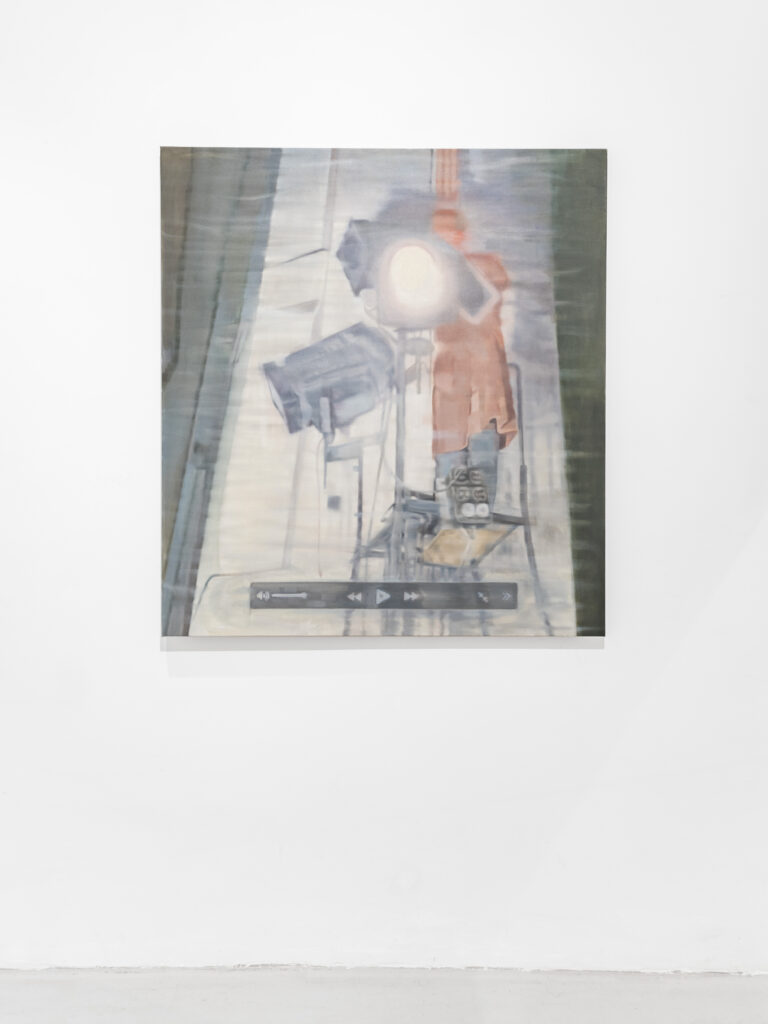
Then I go through them, always adding new stuff to the bunch and whenever I see a connection I did not notice at first I react to it – sometimes it ends up being a quick sketch and sometimes it will make it into a painting. I always try to connect the image with its materials, thinking of how I could depict this. Sometimes I know from the beginning which direction or “style” would serve the work the most; other times it takes some tries, but it is important to me that the craft and the hands are part of the artwork, somehow undigitalizing the initial reference, finding a balance between what feels distanced through a screen/veil and what feels tangible in a painting or a sketch. I strive to arrive at a point where the work has both, as that is how I experience the world around me.
NM: Since this is your first show since graduating from the Royal Institute of Art, what are you carrying forward from art school?
JT: The most important thing I carry with me from art school is the importance of taking care of my personal artistic language. It might sound quite banal, but once an artist finds that nerve that keeps feeding the joy of creating, I think it is important to nurture it, take it seriously and believe in its potential.
Spending five years at the Royal Institute of Art is not about learning how to paint technically or developing a specific style. It is much more about understanding that creating is a way of thinking, and that becoming oneself as an artist sometimes takes a lot of paintings and a couple of years. I have just graduated, so I expect to keep discovering and developing throughout my career. But I believe it is important to have built a certain solid spine – something that can sustain and feed your artistic practice going forward. For me, that is also when you begin to feel ready to leave school and take on new opportunities.
NM: And what is next?
JT: Since I graduated this summer I just recently moved into a new studio in the southern part of Stockholm, where I also worked on my latest pieces for the exhibition. I knew that I wanted to stay in Stockholm and be based here before the school ended, as I find Stockholm’s art scene super exciting and also had the privilege of gaining meaningful connections with friends and people throughout the years. So therefore, I have also been really excited about the exhibition at Gerdman Gallery as it has been such a joy working together!
I always have new ideas for projects and paintings that I am excited to unravel in the studio as soon as I get in there again; there’s luckily so much on my mind that I have to let out, and the studio is where I love spending my time the most. Then we will see what the future brings. I have some catching up to do after a busy fall, and soon again I will feel the desire of potential creeping under my skin anew.