What We Choose to Reveal: An Interview with Antonio Del Canto
Getting dressed is one of the most ordinary rituals in our daily life, yet it is also one of the first ways we decide how we want the world to see us. In between the privacy of the dressing room and the moment we step outside, clothes begin building the image of us we present to the world. It is in this private and transformational ritual that the designer Antonio Del Canto finds the starting point for his latest collection.
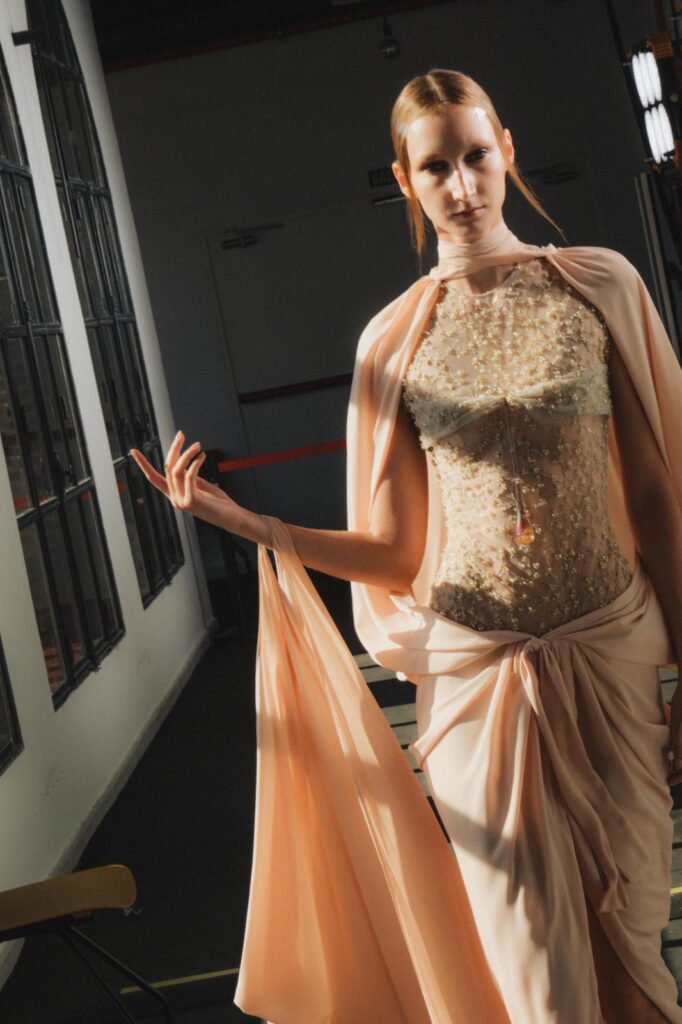
By drawing inspiration from the intimacy of the dressing table, del Canto investigates the parts that we keep hidden from others. Delicate transparencies reveal the underneath construction in a garment, while meticulous tailoring adds structure to the fragile aesthetic of the pieces. It is the result of del Canto’s experience both in tailoring and Parisian haute couture, where he translates the rigor of the former and the freedom of the latter into his own version of beauty. In our talk, the designer discussed the meaning behind the rituals of dress code, the duality of fragility and strength, and the freedom of fashion to embrace both.
Sandra Myhrberg: The collection explores the space between our private self and the image we choose to present to others. What interested you about that moment of transformation?
Antonio del Canto: I’m fascinated by that very brief moment when you are still yourself, privately, but you are already beginning to construct the person the world is going to see. Getting dressed can seem like something very ordinary, but there is a lot happening in that gesture. We make decisions about what to reveal, what to protect, what to exaggerate. I wanted the collection to exist in that transition, before the image feels completely finished.
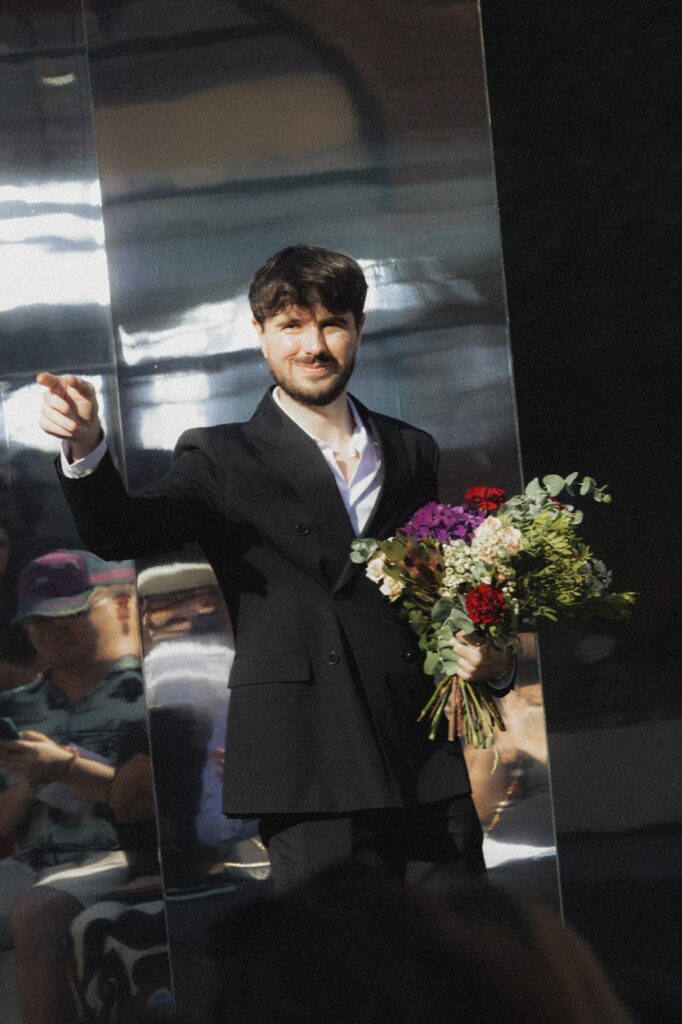
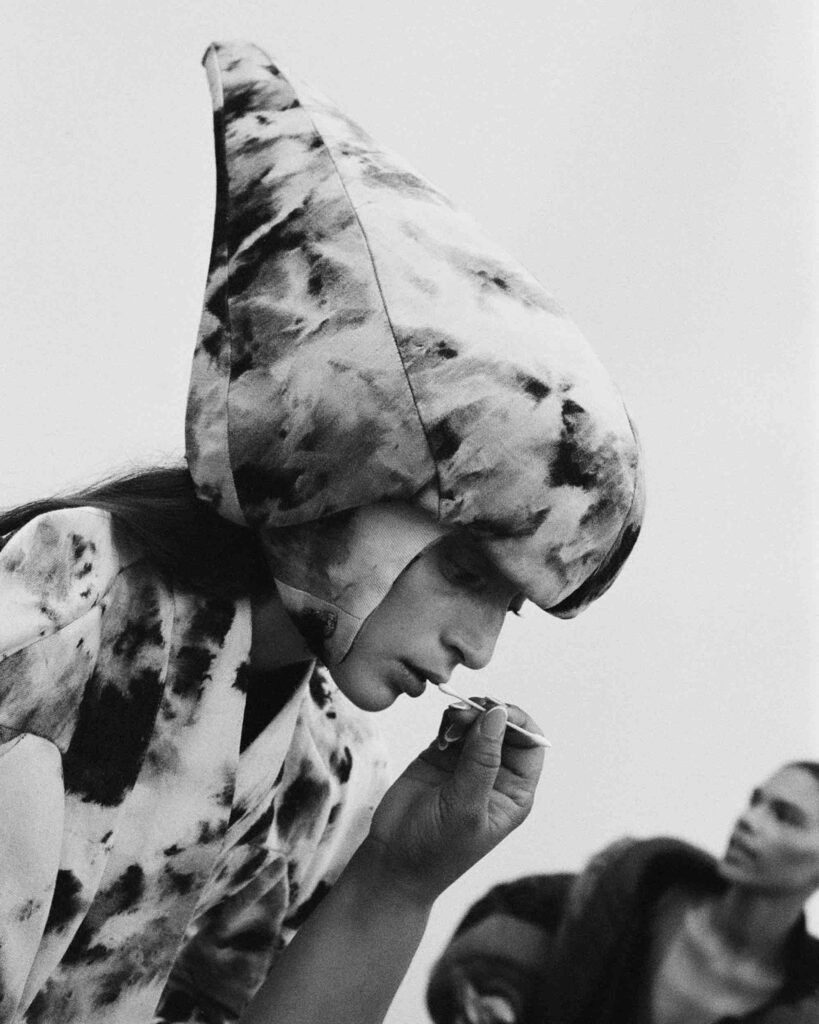
photography Framae Studios
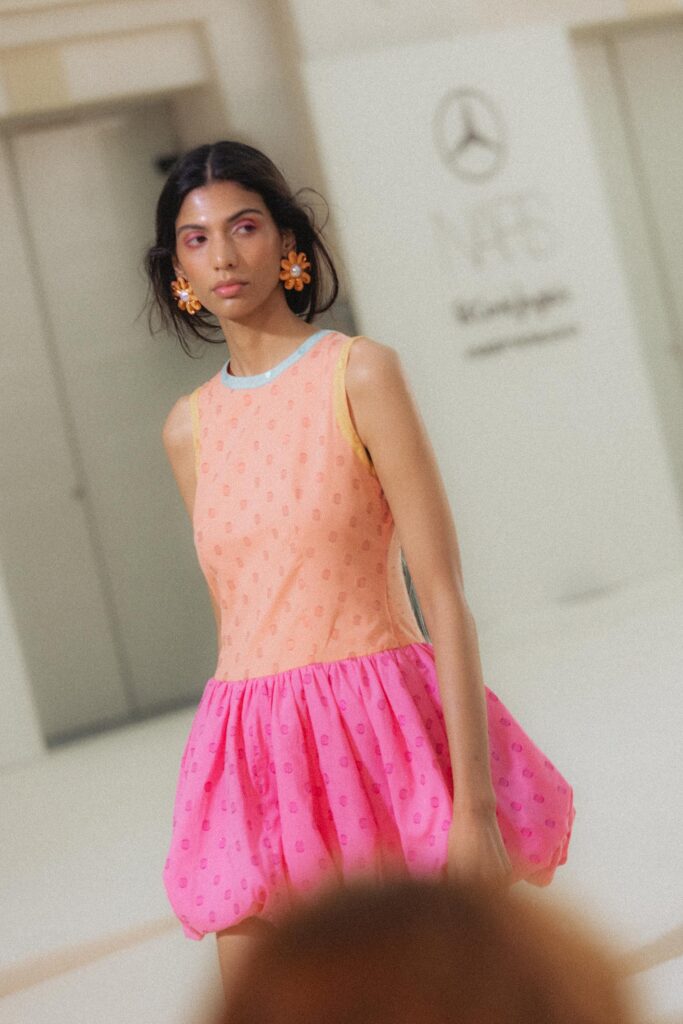
image courtesy Madrid Fashion Week
SM: The dressing table becomes an important symbol in the collection. Why did you choose such an intimate, everyday ritual as your starting point?
ADC: The dressing table is a very private place. It is where you prepare yourself, but also where you observe yourself. There is something almost theatrical about it, the mirror, the objects, the repetition of gestures, the clothes waiting nearby. I liked the idea of taking something so familiar and domestic and bringing it into the collection. For me, it represents that conversation we have with ourselves before we step outside.
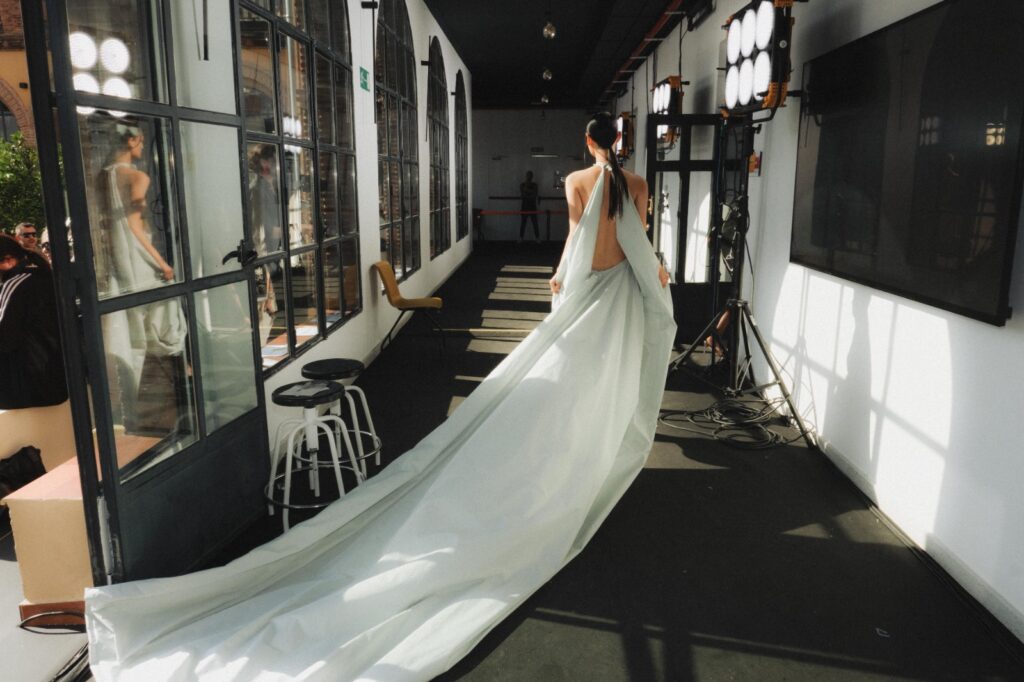
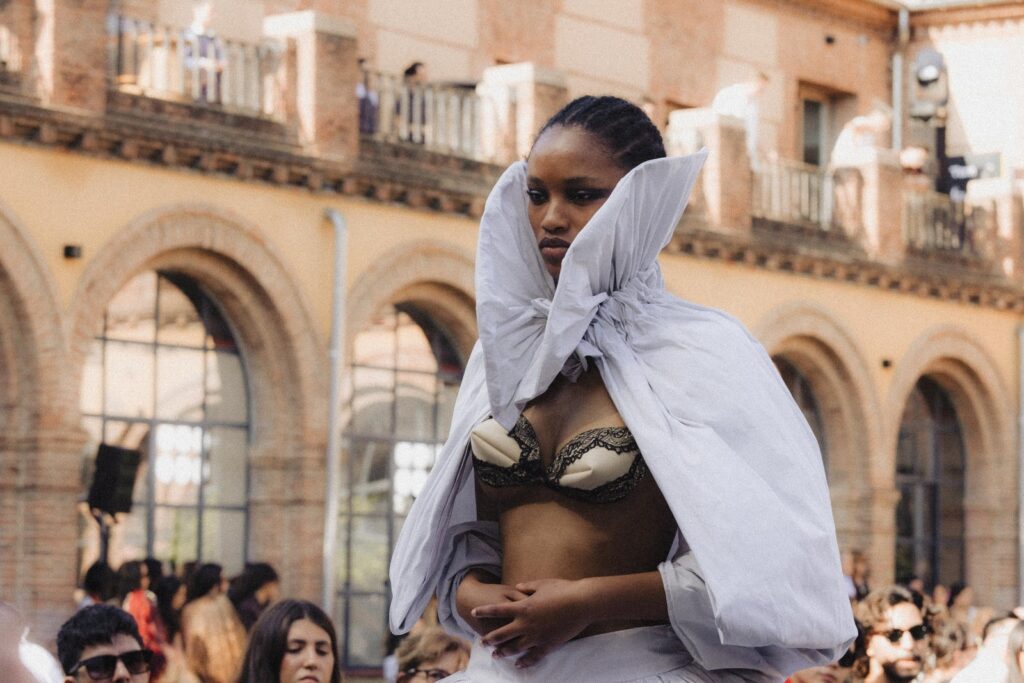
SM: Some of the pieces reveal their construction through layers and transparency. What did you want to express by showing what would normally remain hidden?
ADC: I’ve always been interested in the inside of clothes, the seams, the structure, the layers that give a garment its shape. Usually, all of that work disappears once a piece is finished. Here, I wanted some of it to remain visible. Transparency allowed me to play with that idea of exposure without making it completely literal. You see the construction, but you also see the body, and then another layer changes your perception again. There is a tension between vulnerability and control that I find very beautiful.
SM: Your background began in tailoring before you worked in Paris. How does that training continue to influence the way you approach a collection today?
ADC: Tailoring taught me discipline. Before thinking about an image, I think about how a garment is built and how it sits on the body. I’m still very attached to that way of working. Even when a piece looks delicate or spontaneous, there has to be a strong construction underneath it. Paris expanded my visual language and my understanding of fashion, but tailoring gave me the foundation. I think the dialogue between those two experiences is still present in everything I do.
SM: What do you hope people feel when they see the collection for the first time?
ADC: I hope there is a sense of intimacy, almost as though they have entered a space they weren’t necessarily supposed to see. I don’t want everything to be understood immediately. I would rather someone feels curious and wants to look closer, to discover the layers, the construction and the small details. Ultimately, I hope the collection feels personal but still leaves enough space for people to recognise something of themselves in it.