Kate the Great and the Great British Wellington Boot
To mark 170 years of British craftsmanship, Hunter reunites with the woman who transformed the Wellington boot from countryside necessity into a festival fashion essential.
text Jahwanna Berglund
I still have the image imprinted in my mind: Kate Moss at Glastonbury, walking through the mud with Pete Doherty in a waistcoat, impossibly short shorts and a pair of black Hunter boots.
The look appeared almost accidental, because it was. Moss had reportedly heard how muddy the festival grounds had become and reached for the most practical shoes in her wardrobe. Yet practicality has rarely looked so good. The combination became part of fashion history and, almost overnight, the humble Wellington boot found itself recast as a festival essential.
For me, that was the moment.
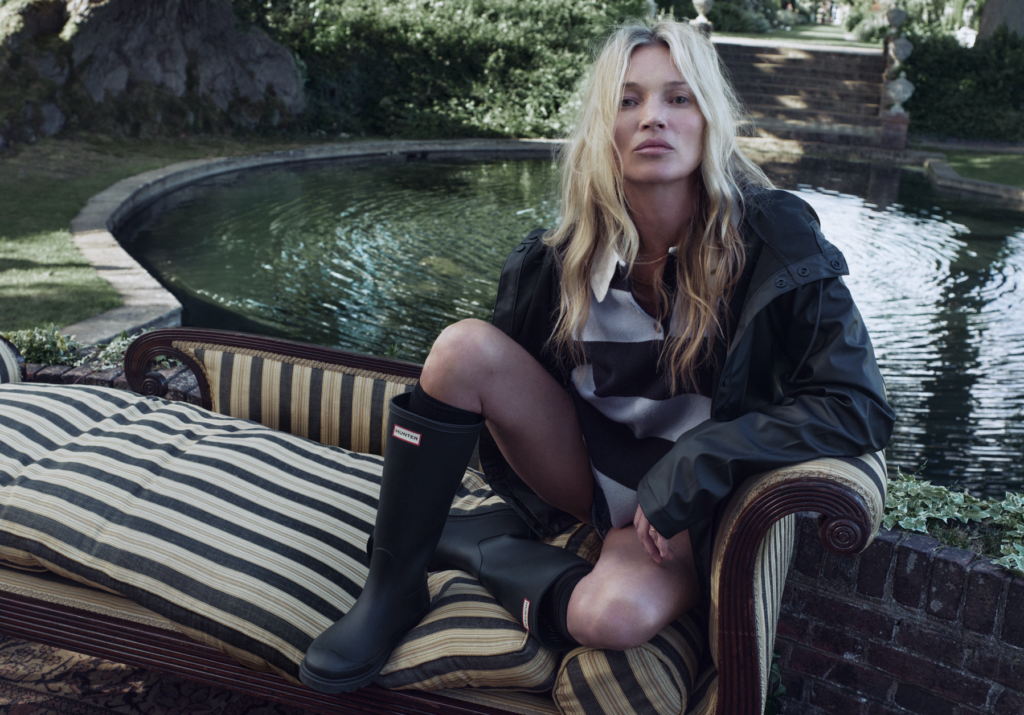
image courtesy Hunter 170
I went straight to the Mathilde store in Stockholm and bought my first pair of Hunters: black, with a snakeskin pattern. I was not going to Glastonbury, nor was I expecting particularly dramatic weather. I simply wanted a little of whatever Kate had managed to give those boots.
Now, Hunter is celebrating its remarkable 170 year history with the woman who arguably became its greatest unofficial ambassador.
The new global campaign, titled Iconic by Nature, brings together two British icons whose relationship began organically more than two decades ago. Long before Moss officially appeared in a Hunter campaign, she had already changed the way a generation saw the brand.
“I’ve been a loyal fan of Hunter for years, ever since the festival where I wore them with way too short shorts and a waistcoat,” Moss recalls. After hearing that the fields were already knee deep in mud, she turned to the trusted black Hunters in her wardrobe. “They were waterproof. Bingo!”
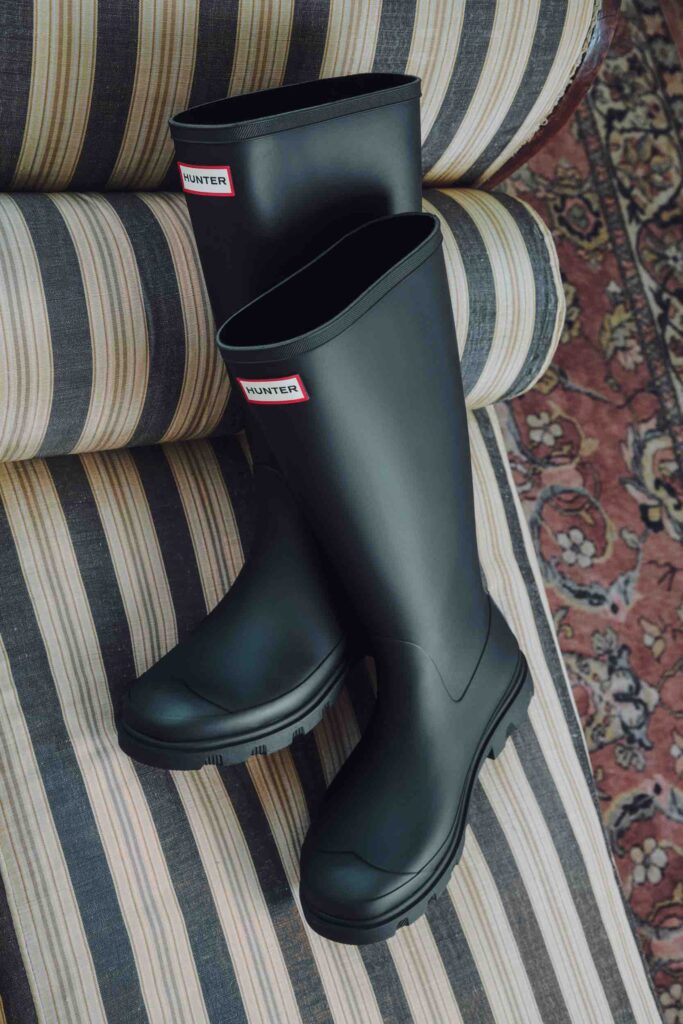
Founded in 1856, Hunter built its name on function, durability and life outdoors. Its Original Tall Wellington Boot was designed with a practical purpose, but gradually moved beyond fields, farms and rainy walks. In the hands, or rather on the feet, of Moss, it became something else entirely: nonchalant, rebellious and unmistakably British.
Photographed against a landscape by the British countryside, the images combine Hunter’s utilitarian roots with Moss’s particular brand of undone glamour. She does not make the boots feel newly fashionable. She reminds us that they never really stopped being so.
The anniversary also looks back to the beginning. In Europe, Hunter is releasing a commemorative Original Tall Wellington Boot in the brand’s earliest shade of green, complete with gold hardware and a heritage badge bearing the words “Since 1856”. The wider Autumn/Winter 2026 collection stretches beyond traditional rubber boots into outerwear and contemporary weatherproof styles, organised around three ideas: heritage, modernity and innovation.
Fashion has a habit of declaring things iconic before they have earned the title. Hunter and Kate Moss are different. Both have survived changing tastes without losing the character that made them recognisable in the first place.
One made a boot capable of withstanding British weather. The other made us want to wear it. Kate the Great and the great British Wellington boot. Still standing, 170 years on.