Enter Art Fair Copenhagen: At the Eyecandy Shop
text Jens Bülskämper
Everything looks great here, even the art.
Anyone wandering through the Enter Art Fair in Copenhagen this weekend can only come to one conclusion: Mission accomplished, Julie Leopold – it’s done. Copenhagen now has the international art hub it was clearly missing. It all started at her kitchen table in 2019, and today some 90 galleries from around the world are eager to come to Copenhagen; the Enter Art Fair, conceived by Leopold, has firmly established itself. Spontaneously, one is tempted to attribute every artistic merit to the Danish metropolis and its creative figures; strolling through the city, everyone and everything looks so good – is there really anything left to push forward? But a look at the Chart art fair, taking place simultaneously in Copenhagen, at the Kunsthal Charlottenborg, reveals that while the Nordic scene gathers here, it tends to keep to itself, a gathering of Scandinavian galleries.
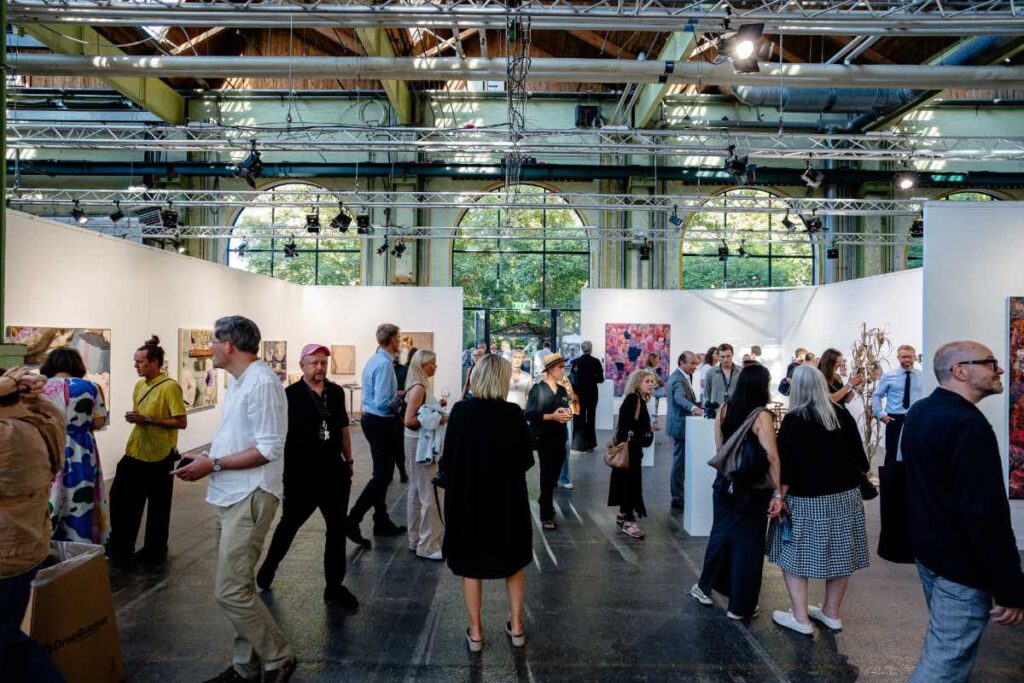
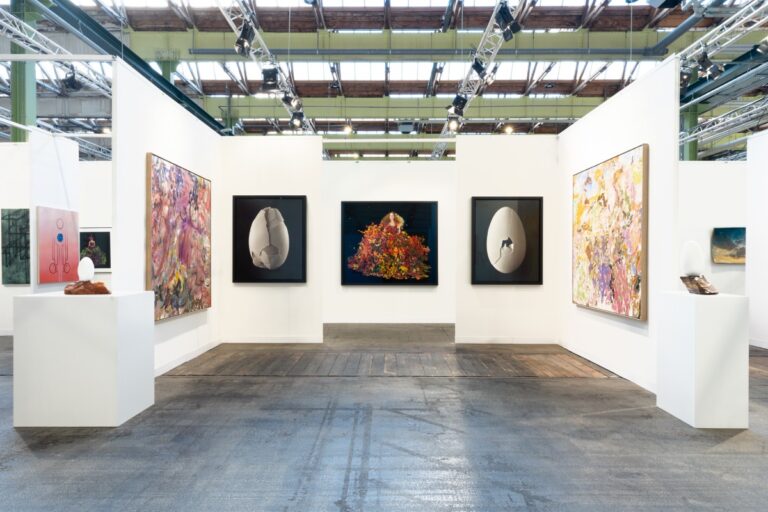
“I’m happy to go over there,” says Robert Morat from Berlin, who is exhibiting at Enter for the first time with his gallery. He’s just as curious about Chart as he is about Enter, since there he can discover artists from the North who he might otherwise miss, but he believes that Enter is more exciting for the Copenhagen audience. Here, in an intimate setting, you can get to know galleries from New York to Tokyo. Morat is happy, things went great right from the preview, which is no surprise given his perfectly staged one-woman booth with Jessica Backhaus.
photography Tim Sonntag
Backhaus’s images openly flirt with the audience, triggering an immediate desire to possess them. Under the radiant sun of Nice, Morat explains, the artist arranges, collages, and composes colorful papers, which she then photographs. The result is exceptionally delightful color palettes and sophisticated compositions, and it doesn’t take much imagination to picture how these candy-like works are capable of transforming even the most reluctant observers into collectors. Small-format paintings are still available and can be taken home for a pickup price of 4,000 euros, frames included.
Karlijn Bozon from the Amsterdam gallery Homecoming is also in good spirits. This is her first time on board as well, and she admits that she still finds the Danes hard to read. Yet her eyes sparkle tellingly, she, too, seems rather optimistic that she’ll figure them out. That shouldn’t really be a problem with Sophie Crichton: The young painter, barely 30, comes across as the wild, emotional granddaughter of Cy Twombly. She lets a gestural power play of unrestrained brushstrokes sweep across the canvas in a style all her own. Backhaus and Crichton are prime examples of the art at the fair: Enter is the ultimate eye-candy fair. It showcases what people actually want to see on their walls at home. And before the perennial mockers and skeptics chime in: Art can take many forms, manifest itself in various ways, and that’s a good thing. It’s also allowed to provide a sense of well-being and comfort, to be a form of wellness for the eye. As a school of sensitivity, art is political by its very nature, even if it doesn’t explicitly say “war is evil.”
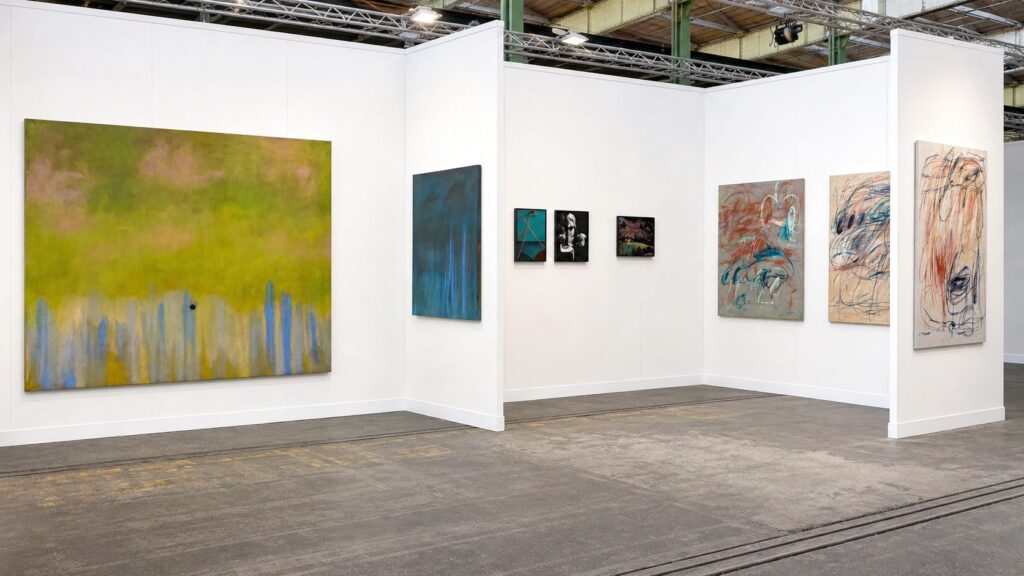
Those willing to dig deeper into their pockets can pick up a piece of Larry Poons’ intuitive abstraction at the Wetterling Gallery from Stockholm, though that’ll set you back 180,000 euros. I ask founder Björn Wetterling whether paintings in this price range are actually harder to sell. “Good heavens, no,” is his reply. That painting over there, the gallerist points to a small-format piece that’s relatively affordable by his standards, is much harder to sell than his two large Poons, which are already drawing a crowd of interested viewers. He doesn’t even have that many of them left, even though the artist, though advanced in age, is still producing work.
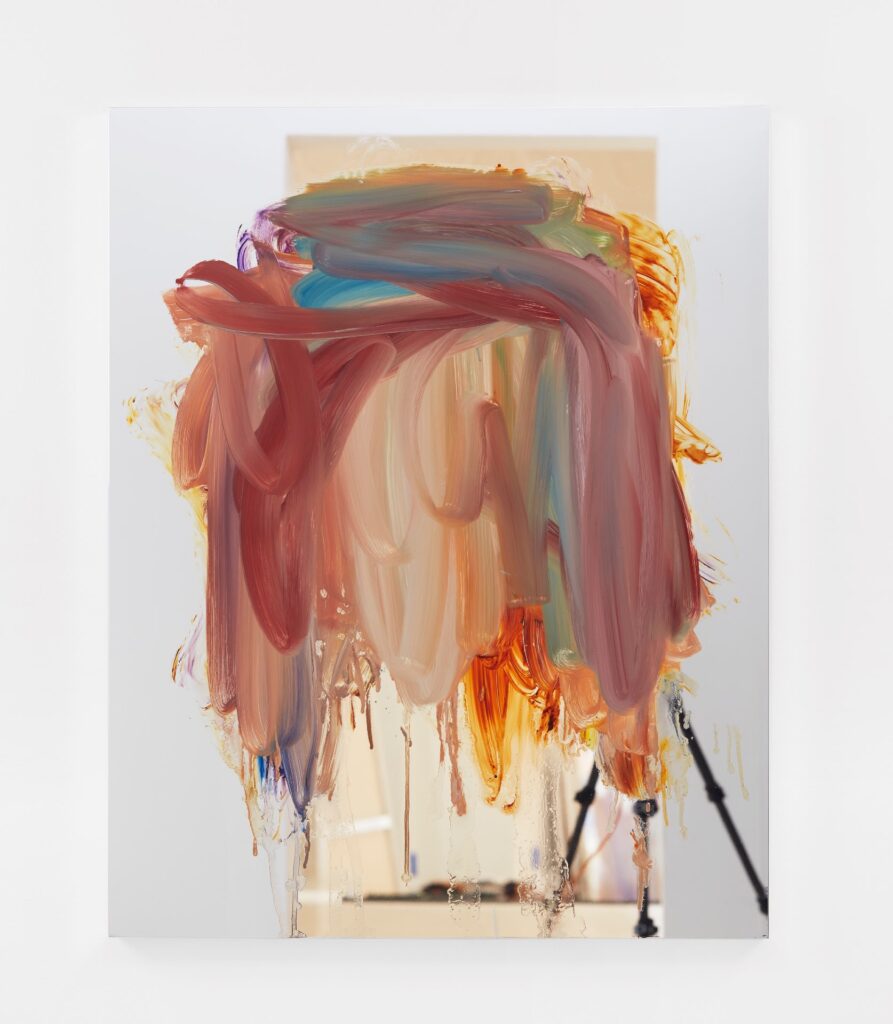
Those looking for quality art in the mid-price range may find what they’re seeking at Martin Asbæk from Copenhagen. Among other works, the gallery features Peter Bondes’s wild, gestural paintings on mirror foil. It’s wonderful how these paintings offer a razor-sharp reflection of the fair’s atmosphere, how the colorful hustle and bustle of the art world is revealed in front of the paintings, only to be crisscrossed and painted over by powerful brushstrokes, before suddenly flashing back into view. Priced at around 13,000 euros.
And then, at the Ruttkowski Gallery, there he is, just sitting there: Henrik Vibskov. Musician, fashion designer, artist, and who knows what else. How is it possible to be so prolific, to work in so many disciplines and media? On the table in front of him lie three hefty publications: all about his work. The exhibition at Ruttkowski: all by him. The sofa he’s sitting on: also his work, a one-of-a-kind piece, still available for 16,000 euros. The table the books are on: also by him. Plus sculptures, drawings, tapestries for 8,000 euros, all the rugs have been sold. So that’s what Enter can also be: chilling with Henrik Vibskov.
photography Morten Kamper Jacobsen
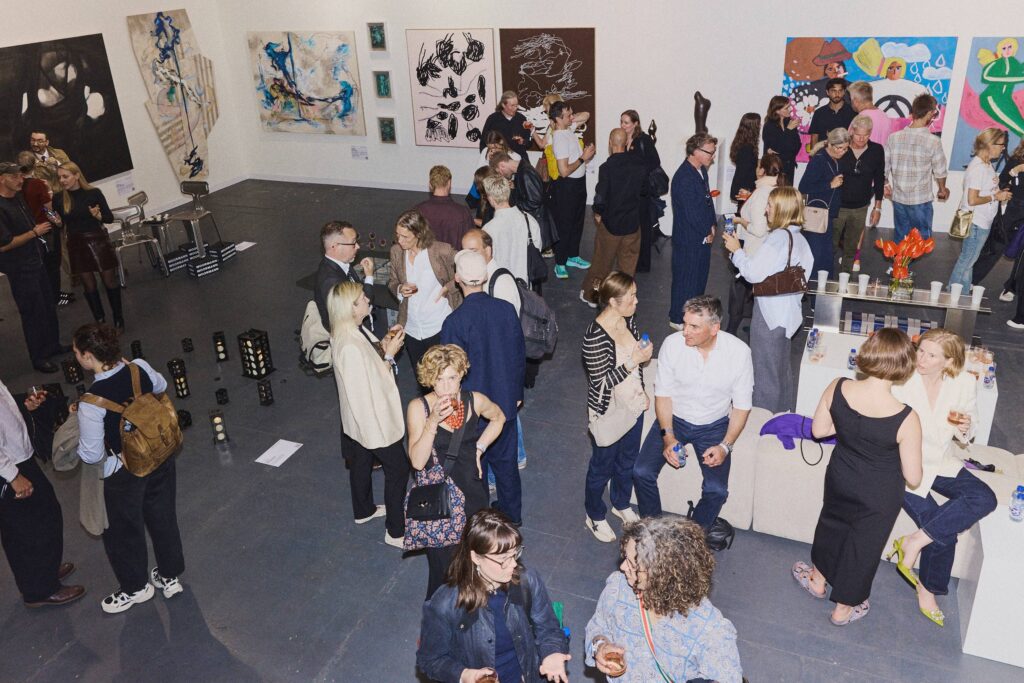
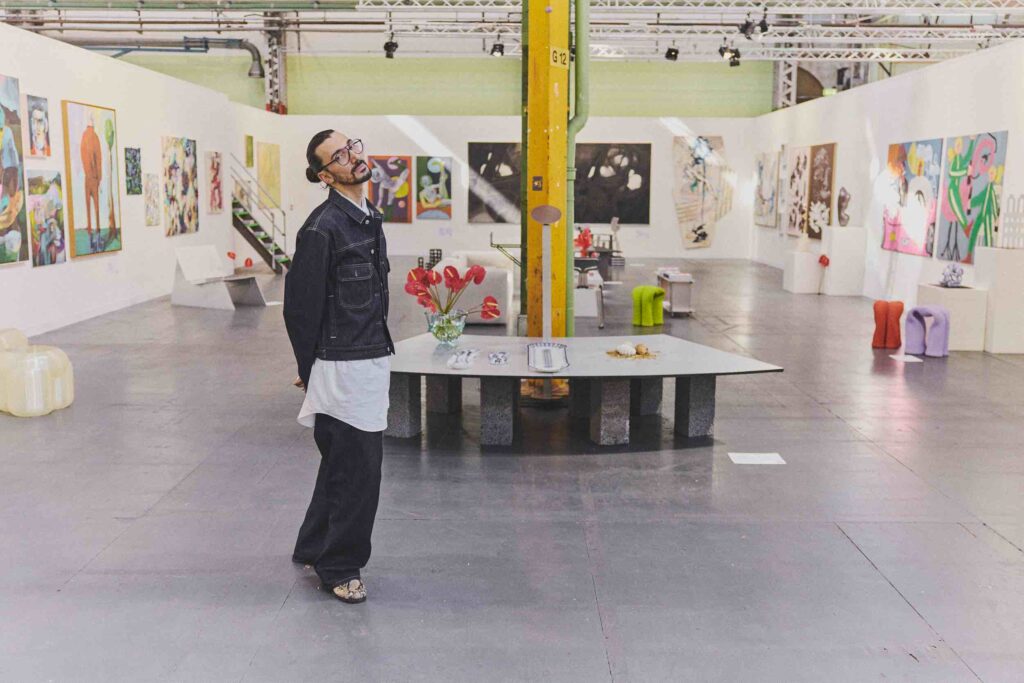
The unofficial center of gravity, however, is the “Neudeutsch” project by trend scout, curator, and jack-of-all-trades Julian Daynov. Anyone who hasn’t fallen for his charm needs to see a doctor right away: Julian Daynov is a powerhouse of a communicator, somehow able to hug ten people at once, greet them, introduce them to one another, familiarize them with his various collaborations, hand out goodies, and whirl through his booth, the largest at the fair – while everyone is thrilled. His “Neudeutsch” concept, and it’s absolutely spot-on and important, is to thoroughly dust off the image of contemporary German design and give a platform to the many fresh voices. Daynov’s credo is also to let the disciplines flow into one another: art, design, fashion – for him, it’s all a mutually inspiring cosmos, mix-and-match; he can’t stand academic highbrow pretentiousness. Art is for everyone – and now: drinks!
Accordingly, he displays design objects alongside paintings and sculptures alongside furniture throughout the space, all set to soft beats – a lifestyle universe in the style of a concept store. It’s no surprise that Enter CEO Julie Leopold loves it. Daynov is fully in line with her vision of an open approach to art that constantly seeks to appeal to new audiences and is always on a growth trajectory.
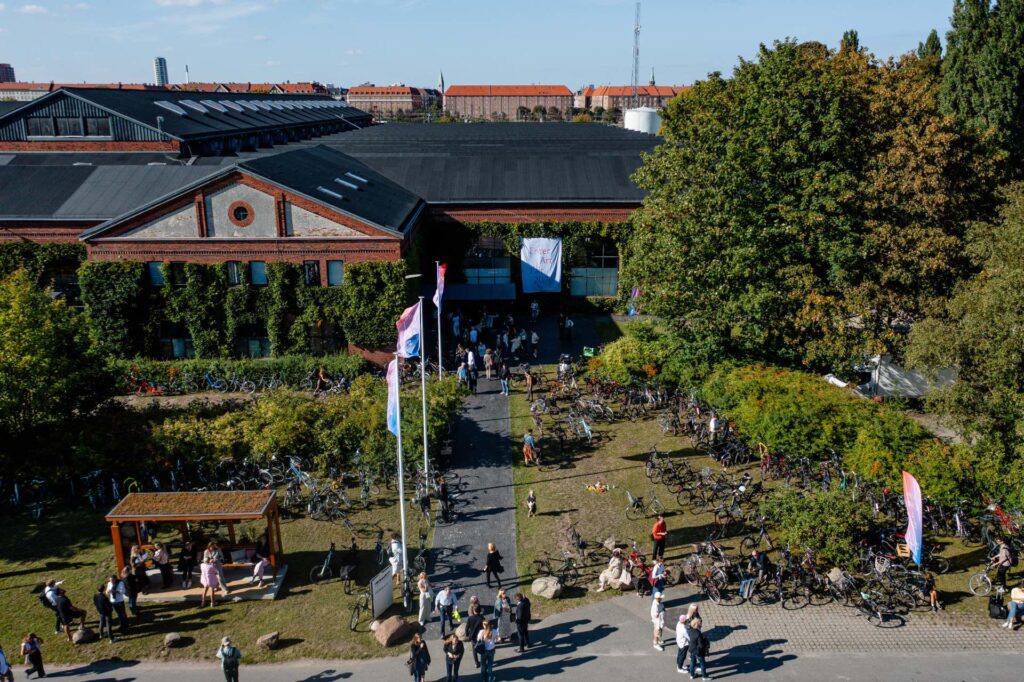
Once you’ve seen enough, it’s time to let the impressions sink in and there’s no better place to do that than at the cozy Josephine’s Bar at Henrik’s Hotel, perhaps over a Negroni. Then all that’s left is to decide exactly when to sink into the pillows of this family-run 4-star hotel. The next day, just hop on one of the hotel’s bikes and set off – for a second round of exploring Enter – which is ideal in a bike-friendly city like Copenhagen, where the wide bike lanes make it perfect for cycling like few other major cities.
Back at the fair, you can immerse yourself in the talk program, but be warned: it’s in Danish, or check out the sculpture garden. There’s also a lavish VIP program: collectors open their homes, top-tier museums extend invitations, and there’s dining, networking, and partying to your heart’s content – all in true Danish style: laid-back, casual, and extremely good-looking. And once again, a cork pops somewhere.
photography Tim Sonntag