“I’m very involved in my studio work. The studio is my lab, so to speak.” Lynda Benglis
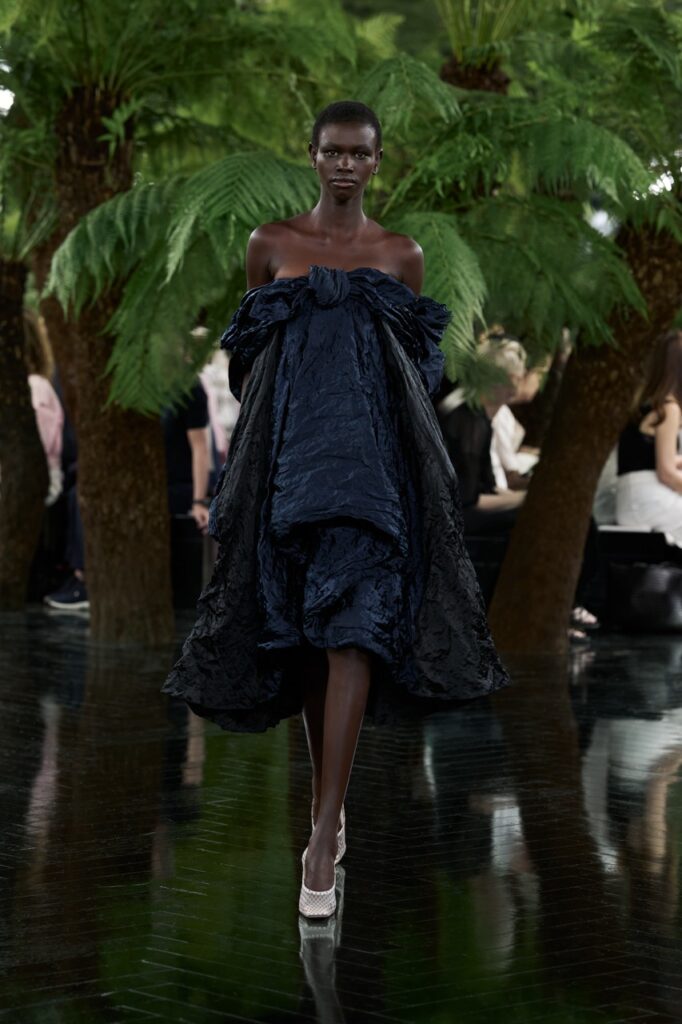
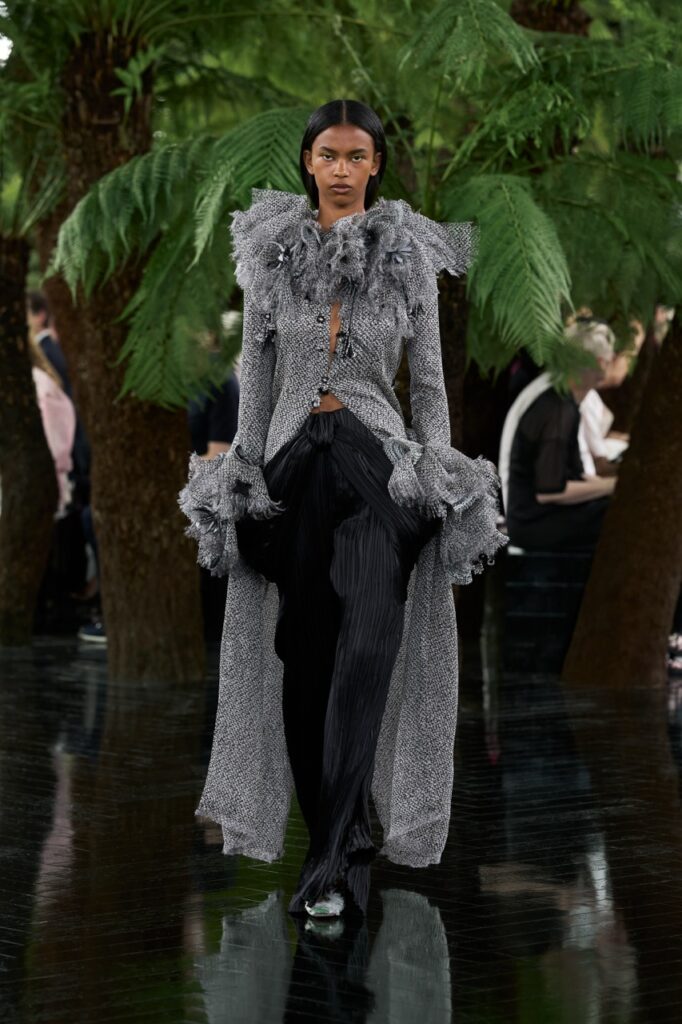
The collection is a response, in the language of couture, to the work of American sculptor Lynda Benglis.
Many of the artist’s works begin in two-dimensional materials that are transformed, through knotting, pleating or moulding, into three. The art of couture enacts a similar shift: fabric is given sculptural form, accentuated when worn. Jonathan Anderson takes this connection as a starting point, elaborating on the physical gestures of hand-plissé, knotting and draping. The surfaces of Benglis’s works also come into play: simulated by the ateliers in metallic, iridescent, encrusted or paper-like fabrics. The illusion of chicken wire is created in soft silver netting.
The artist’s longstanding relationship with Ahmedabad in Gujarat, India, informs specific pieces. Her Peacock series, begun in the late 1970s and inspired by the birds she saw whilst staying at the Sarabhai family estate in Ahmedabad, are interpreted in brightly-coloured floral and beaded embellishments.
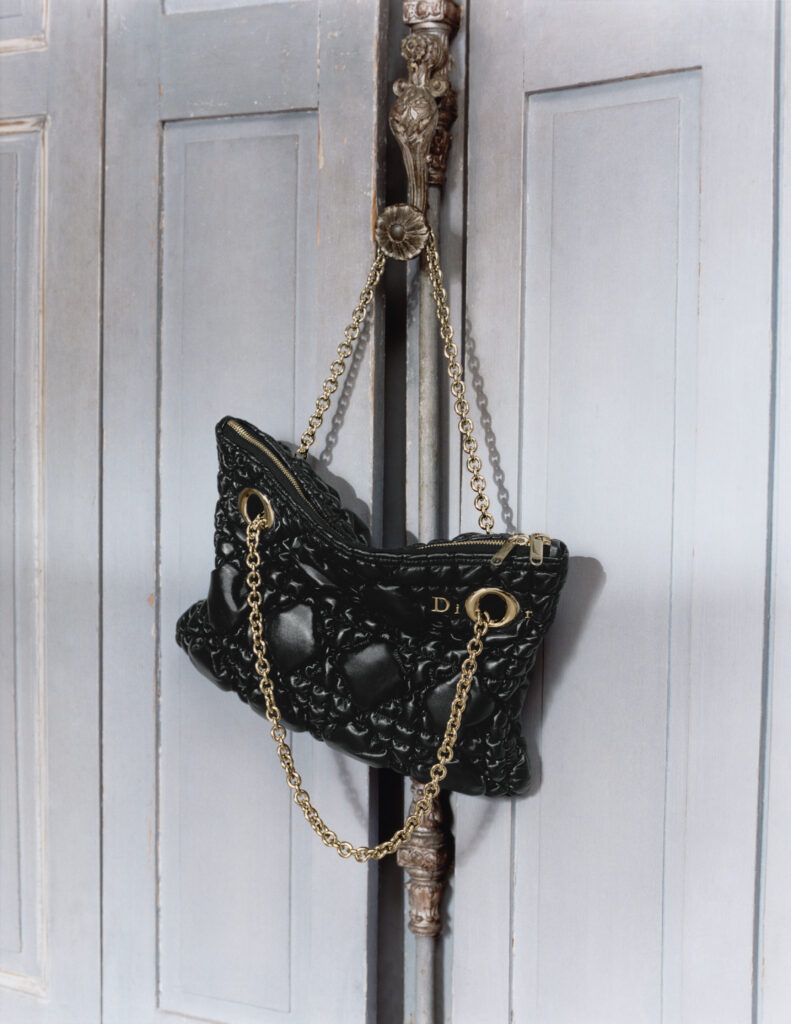
Anderson’s research into this body of work led him to focus on Indian craft itself: specifically, the 18th-century tradition of chintz. These finely-woven cottons, that were typically hand-painted or block-printed, had a profound and lasting impact on European decorative arts. Antique fragments of chintz and indiennes, sourced from a specialist dealer, adorn Petit Dîner and mini Lady Dior bags.
The Ahmedabad landscape prompts a new line of enquiry for Anderson’s lab-as-couture: interested in the idea of contrasting environments, he juxtaposes its relative abundance with the arid climate and crystalline air of Santa Fe, New Mexico, where Benglis keeps a home and studio. The floral aspects of the collection, as well as its chromatic articulation, evoke these two landscapes.