Jenny Kaiser wants to bring back the punk at Fotografiska
Text by Natalia Muntean
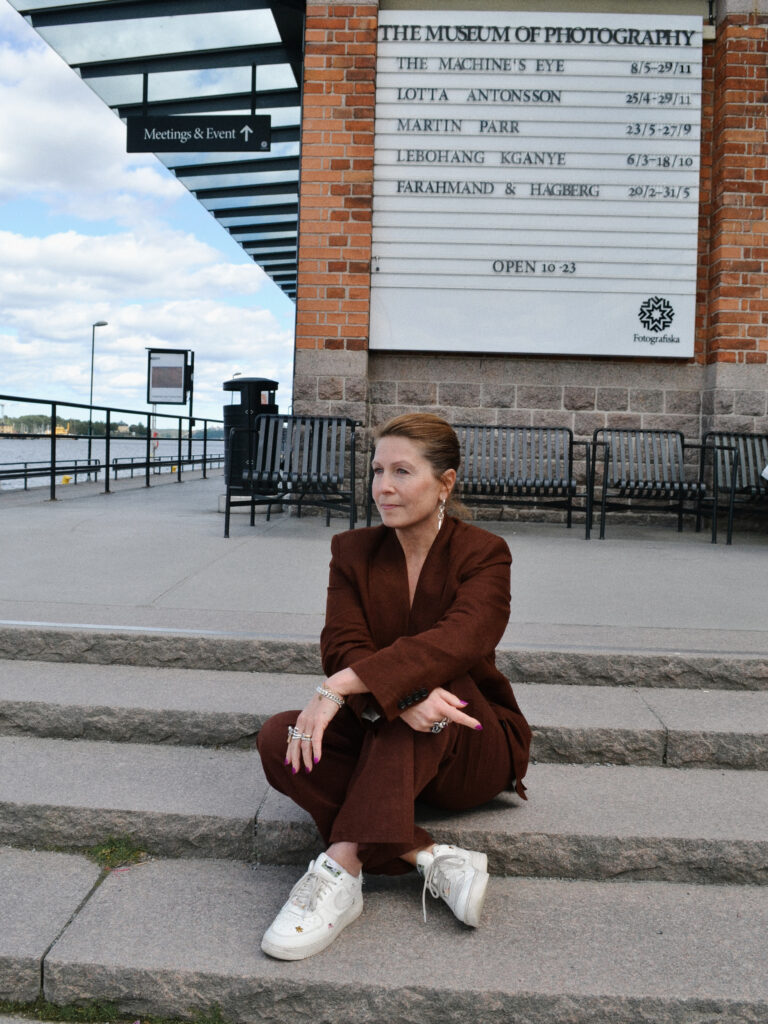
“People have never been more alone than we are today. That’s a huge strain on society,” says Jenny Kaiser, newly appointed Director of Fotografiska Museum in Stockholm. Kaiser didn’t come from the art world. She came from advertising, from one of Sweden’s largest agencies, and she arrived at Fotografiska with a clear-eyed diagnosis: that in an era of endless images, the experience of actually standing in front of one has never mattered more. Located on the edge of Södermalm, on the shore of the Baltic Sea, Fotografiska has just celebrated its 16th year. Kaiser is now steering it into the next chapter with a mandate to sharpen, provoke and, in her own words, get the punk back.
Natalia Muntean: In these seven months, what was one achievement you’re proud of or that surprised you in how things turned out?
Jenny Kaiser: One thing I’m very proud of, and that was also a key reason I came here, was getting the team aligned on a joint direction for the future. We’ve actually just celebrated our 16th birthday. One of the tasks I was given was to define what Fotografiska will become in the next 15 years. What was quite evident to me was that we have a fantastic base to build from, from a branding perspective, a destination perspective, and a photography perspective, but we lacked a clear direction. Where are we heading? Why? Who are we here for? What kind of experience do we want to offer? That’s something we’ve worked on together, not just in the management team but across the entire organisation. We’ve only just gotten started, but I’m proud that we’re already here, because a lot has been happening in terms of getting to know the company, the brand, the culture, the people, the business, the guests, the art, the exhibitions and the artists.
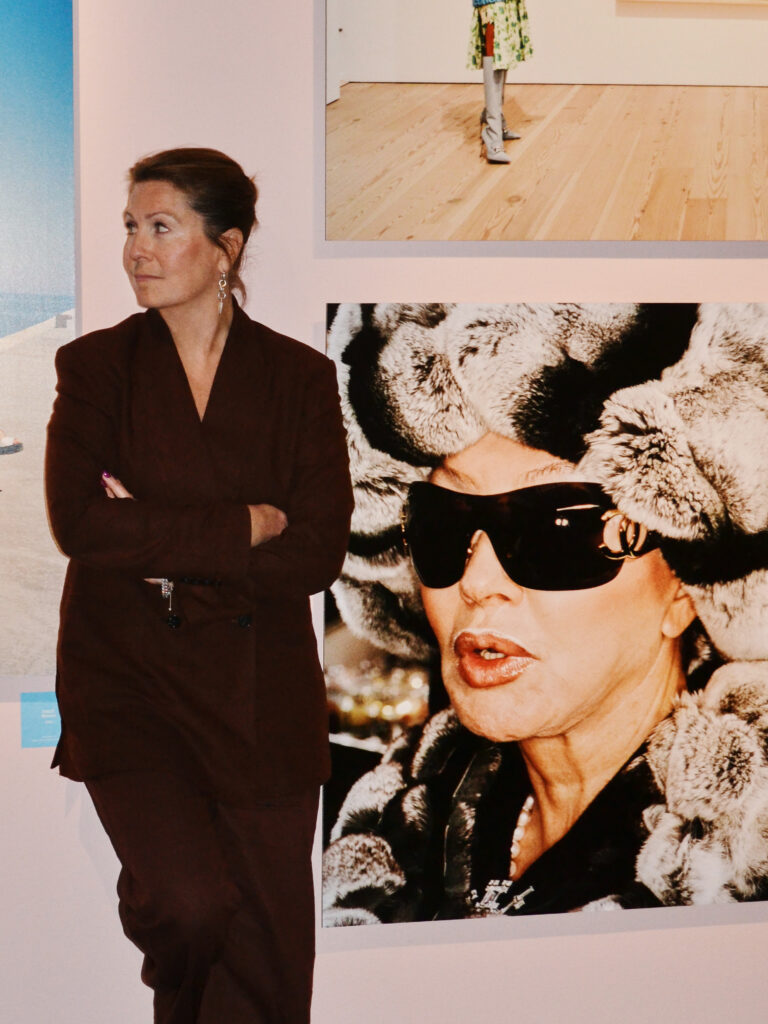
NM: You come from the advertising world, so you have a bit of an outsider perspective. What has that allowed you to see when it comes to leading Fotografiska?
JK: Having worked as a consultant for many years, I was trained to ask questions before giving answers. I’m very curious about what’s working, what isn’t, what we’ve done before, what we’ve learned, and what happens if we approach things differently. Not coming from the art world, but from business, leadership, and the creative sector, gives me a clear path in what I see and acknowledge. I also believe in organisations that dare to bring in new people who break convention, because that’s crucial for any industry today. Everything moves so quickly, and with that, you need to adapt, while also protecting what’s really the strength of your business, your model, and your brand.
NM: It sounds like a tricky task – progressing while maintaining the core and the essence. You don’t come from the art world and now you work with a museum. Is that ever intimidating?
JK: Not intimidating. I have huge respect for those who work with exhibitions, both strategically and from a curatorial knowledge perspective; that’s their real expertise. But running a museum goes beyond that. We’re not just a museum; we’re a destination where photography, art, and culture come together. I’m also, in some ways, a member of the general audience. I don’t know as much as our curators and experts about art of course, but I really love and appreciate art. I think culture and art are really important for people, especially now, when we need to come together, reflect, get inspired, have conversations, and meet each other in person. That’s what matters when it comes to what we offer through exhibitions, but we are much more than a museum, and we need to secure that going forward.
NM: You mentioned the next 15 years. What do you have in mind, and what would success look like?
JK: Success goes way beyond growing in the number of guests. It’s about humanity and emotions. It’s about being a place where people come together: companies, individuals, cultures, opinions. It’s important that we continue to be a force in Stockholm’s cultural life, and that the city acknowledges what culture adds to the broader perspective of Stockholm. Culture has always been important here, but it becomes even more important now, in the context of transformation. Another aspect: sometimes a museum is perceived as being in contradiction with having a financially healthy business and I don’t think that’s a contradiction at all. You need financial stability to be able to progress and continue to invest in what you’re doing. That’s also something we need to secure going forward.
Fotografiska has always been a societal brand that hasn’t been afraid of going into subjects that are sensitive or that raise big questions. That’s a force we need to continue to be, not for its own sake, but because that’s the role of art, storytelling, and creativity: to share a perspective, a view of the world today, what we see in the future, what’s happening in a contemporary context. When we use art and culture to nurture those conversations, the world becomes a better place.
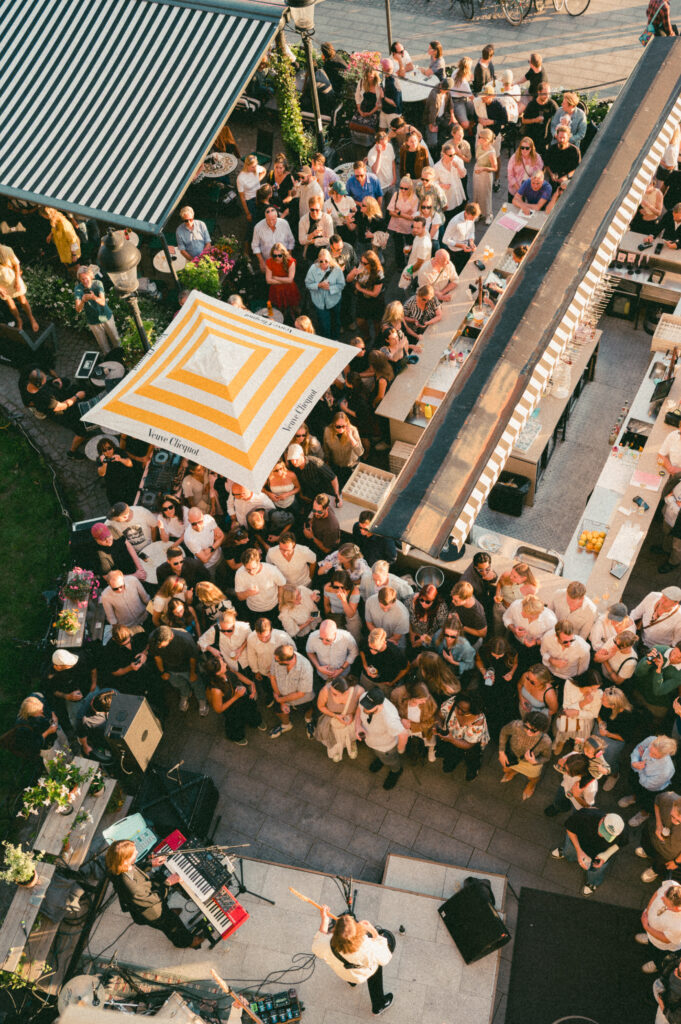
What Fotografiska does, and will continue to do, is bring different perspectives under one roof. Regardless of why you’re here, you might visit the restaurant and unexpectedly experience an exhibition you never would have sought out, or come for one exhibition and be surprised by another. That’s what it’s all about: perspective, storytelling, different viewpoints coming together. Inclusiveness is essential.
NM: We’re living in an era of extreme image saturation. What does that mean for a place like Fotografiska?
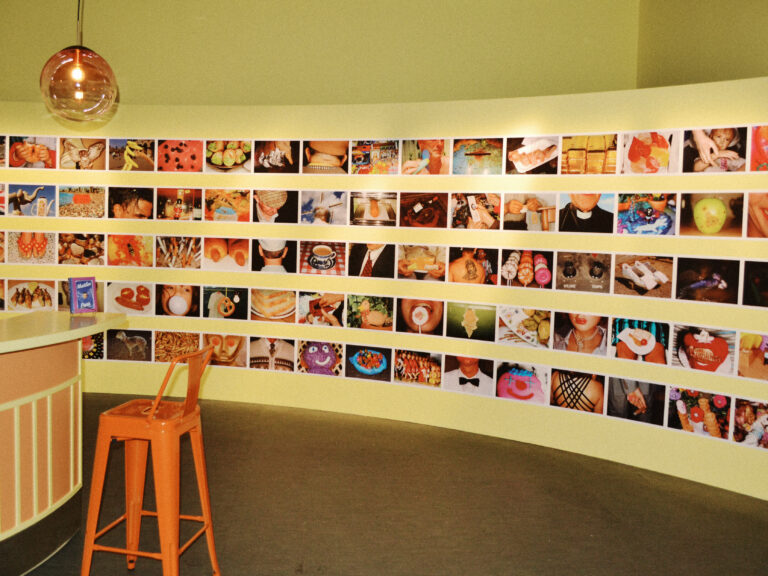
JK: We’re almost fed up with images. If you go into social media and all the different digital spaces, I think it’s made us numb. The role we play, which is so important, is the emotional part. A small image of Martin Parr on a mobile phone for half a second in a tiny format, compared to going into an exhibition hall and seeing it in a large printed format, together with other people having a dialogue, those two experiences are not comparable.
From a behavioural perspective, we’re seeing people seek out experiences that matter, experiences that make them feel something, that remind them they’re human and that means moving away from being stuck in your own bubble. That’s where culture, museums, and photography play a crucial role. Otherwise, we risk losing that, and I think that’s a genuine threat to society.
NM: What’s your plan for pulling people out of their bubbles and bringing them here?
JK: The foundation that Fotografiska has had since 2010 is still valid and relevant. We just need to evolve and strengthen the understanding that we’re much more than a museum. The culinary offering, for example, the restaurant is superb, but like many others, we operate in a restaurant scene where competition for customers is extremely fierce and the selection in Stockholm is vast. The quality and the sustainability perspective are still top-notch. We need to make people aware of that and position ourselves as a destination in Stockholm’s restaurant landscape. We need to make this a social destination.
You don’t have to come here for a particular reason. Come and relax, look out over Stockholm with a coffee or a glass of wine. We need to get our confidence back, raise our voice, and show that we’re relevant and interesting. But doing it not just for the sake of it, because it genuinely matters to people, and we can deliver that seven days a week, 365 days a year.
NM: Tell me about the summer programme – Lotta Antonsson, Martin Parr, Lebohang Kganye, Martin Sköld and Joakim Berg. What’s the red thread?
JK: What I see uniting them is emotion and a perspective on society. Martin Parr – when you first see his work, you laugh. It’s colourful, bright and fun. But when you go deeper into what he’s actually observing and shooting, it’s about mass consumption and mass tourism, and a side of humanity that makes you ask: Are we really like this? Lotta is about gender, identity, and objectification. Her work is extraordinary, the way she combines beautiful female imagery with the harder, rougher textures of shells and stones. It makes you think about how we treat each other and the inequality that has existed for so long. Lebohang talks about history and mythology, and the space matches her storytelling so beautifully. And then the AI exhibition is a kind of contradiction to everything else. It’s still about humanity, about our fear of technology and what it means folr us. And the photo and music installation with Martin Sköld and Joakim Berg is about relationships, love, friendship, how we are, or aren’t connected.
NM: I wanted to dig into the AI exhibition specifically. AI is such a present topic, and also quite polarising. How did you decide to bring an AI element into a museum that’s fundamentally about photography, the human eye and human presence?
JK: Fotografiska has always been a voice on what’s happening in the world, and I think that’s an important part of our DNA. AI isn’t new, it’s been around for a long time, but it’s exploded now that it’s accessible to the general public. From a creative perspective, we need to talk about it because it exists, and it’s been shaping the field for a while. It’s fundamentally about authenticity. Technology has shifted throughout history. When photography arrived, painters were upset; then came the digital camera; now AI. The important thing is to remain humble, curious, questioning, to understand it’s a tool you can choose to use, choose not to, or choose to combine with other approaches, as many artists do.
But we also have a responsibility: property rights, transparency about what you’re looking at, what’s behind it. We’ve thought carefully about how to approach this respectfully, not avoiding it, because it’s part of the photography world, but engaging with it carefully.
NM: Will you continue with AI as a theme going forward?
JK: It’s not something we’ve formally decided on. There could be another technology we choose to engage with as a tool or as a discussion point. But we’re not chasing topics for the sake of it. We’re engaging because this one is genuinely here, affecting photography, art, and broader society. The standing point for us is: let’s create a platform to ask what AI means for us, for the industry, for someone looking at an image. I walk around the house a lot, just to sense the feeling in the rooms and listen to what guests are talking about.
NM: Was there a specific conversation or response that stayed with you?
JK: There was an older man in the room. When I first saw him, I wondered what he was thinking. I sat down beside him and asked. He said, “I thought I would hate this, but I can’t leave the room. I’m just filled with this emotion. I’m so happy to be alive at this time, to be able to experience this.” That stayed with me.
NM: What about the other exhibition – Joakim Berg and Martin Sköld’s show, Framtiden som aldrig blev av?
JK: Joakim Berg is one of Sweden’s most loved artists — and he’s also a composer, songwriter, musician, designer, a genuinely multi-disciplinary artist. Together with his former band member, Martin Sköld, who is a phenomenal photographer, they’ve created something that invites people to interpret his new album in their own way. It’s about awareness. Actually, all the exhibitions we’re showing are about awareness, noticing what’s going on in the world. And it connects to something we keep coming back to: people have never been more alone than we are today. That’s a huge strain on society. Just making eye contact, saying hi to someone on the street – the meaning of that is crucial. That’s why having a physical place where you come to meet people, where you’re never really alone, matters so much. This house has a very strong human feeling. It embraces you when you walk in. Whether you come alone, with someone, or in a large group, the house meets you warmly.
NM: Fotografiska sits at the intersection of art and hospitality. How do you lead that combination, and where do the tensions show up?
JK: This is not an ordinary museum. It’s a destination where photography and art are the baseline, and programming is how we bring that art to life, through conversations, artist talks, music, culinary experiences, stand-up, book releases, album releases. Programming is what brings people together, what brings this place to life. Without that, Fotografiska would not be what it is today.
NM: How would you attract a tourist who has limited time in the city?
JK: What we offer is world-class photography and art, combined with one of the best views in Stockholm. You can sit here for hours watching the boats and the city outside. Add food and drink, even in their simplest form, and be very clear about who you are, who you’re here for, and what you’re offering. That clarity – that’s where my advertising background genuinely helps.
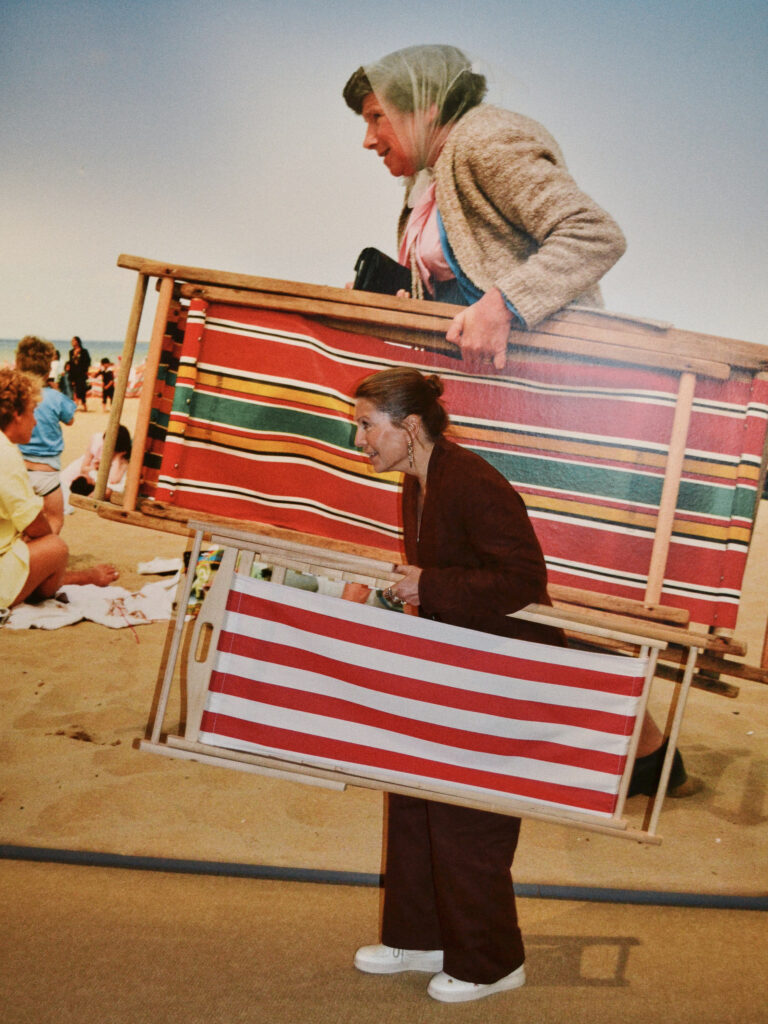
NM: What was the best day of the seven months?
JK: The opening of Martin Parr: Short & Sweet. It was a brilliant first proof point of everything we’ve been working toward: the clearer direction, the positioning, why we exist, who we’re here for. The feedback, the energy, the joy, the mix of people. The audience throughout the whole evening didn’t want to go home. That made me really proud and very, very happy for the entire team. They worked incredibly hard, and we got that satisfaction back from the guests.
NM: Can you tell me about what comes after the summer programme?
JK: Some things I can’t speak about yet. But one that’s public: Women Behind the Camera, the Hasselblad exhibition that’s just opened in Gothenburg, is touring to us and opens in November. We have a big exhibition opening in October that I can’t fully speak to yet, but it taps into a societal issue that is challenging in a number of ways and really invites a conversation we need to have. And then we have Diana Markosian opening later in the fall, and another exhibition coming in February that I’m very excited about.
A lot of the programming has a strong female orientation, which is something close to my heart. We need to support women more, in all aspects, and I think that’s a role Fotografiska needs to continue to push, not just internally, but in how we show work and which artists we platform. That’s actually one of the reasons I chose to join.