The Fairies Among Us - An Interview with Joakim Ojanen
text Maura Van den Borre
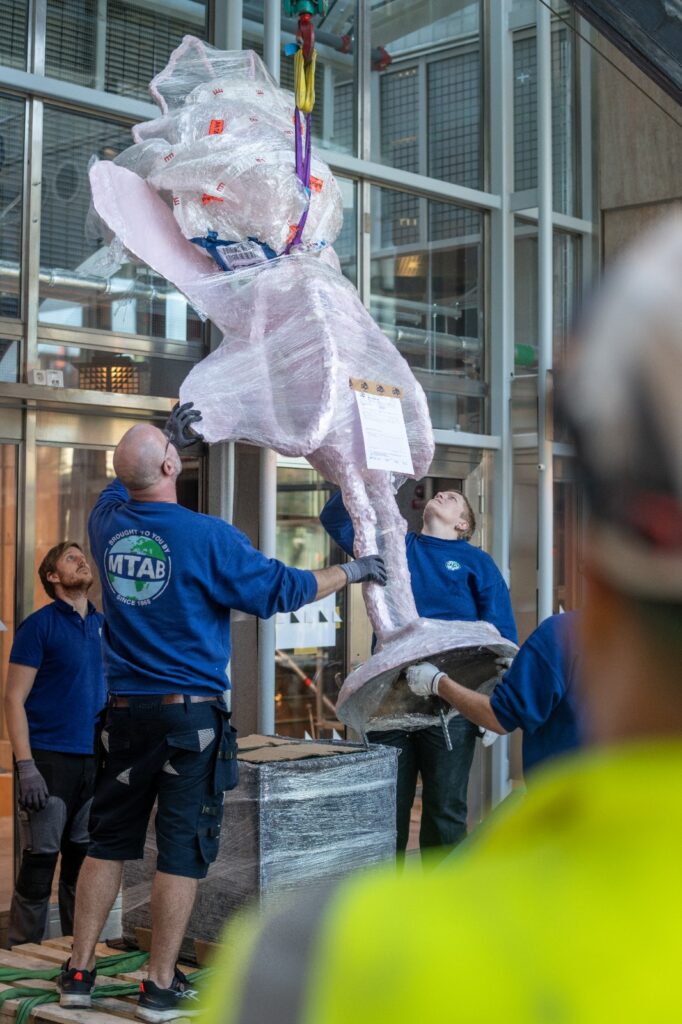
A tree can hold more than its branches. In Björkhallen, it holds the beginnings of an imagined world, one that Joakim Ojanen has given form through three pink bronze fairies. Created for Stockholm’s Söderhallarna, they bring a little of that world into the everyday, waiting to be noticed among the movements of people passing through.
There is a quiet intimacy in placing such personal characters in a shared space. Ojanen describes his practice as a kind of diary, with each figure carrying traces of his mood and the moment in which it was made. Here, those private impressions become public companions. Their humour comes with sensitivity, their playful appearance with an emotional complexity that the artist recognises in himself.
The fairies’ story also lies in their surfaces. Beneath the light pink colour is bronze; within it, the small details of the sculpting process remain. Ojanen hopes these will reveal themselves gradually, as an unfamiliar figure becomes a familiar presence and a passing glance turns into a closer look.
We spoke with the artist about finding a mythology within Söderhallarna’s architecture, protecting intuition when working at scale, and giving his characters room to become part of other people’s routines.
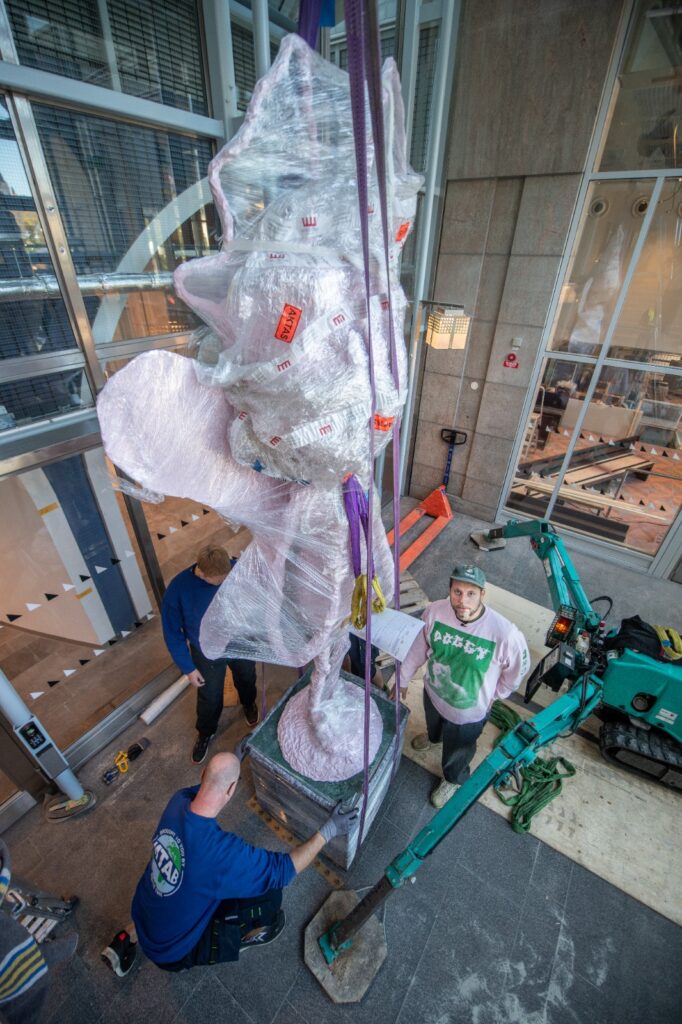
image courtesy A World Beneath
Maura Van den Borre: You’ve described your characters as a kind of diary. How does that private emotional world change when you create figures for a space shared by so many people?
Joakim Ojanen: Since I work very intuitively when creating new pieces, I believe my mood and the moment leave their mark on the artwork, which is why I often liken my art practice to a diary. When working site-specifically, as I have done for Söderhallarna now, I have a more structured idea for the pieces compared to when I start working on exhibition art. However, it is important for me not to think about the fact that many people will see the works, so that I don’t get influenced by it and start adapting to what I think people want. I have to try to solely create something that I want to make and that I would want to see in that specific place. Otherwise, I think it’s easy for the public pieces I create to become blander, and that is truly not what I want.
MVDB: The fairies were inspired by the tree-like structure in Björkhallen. What interested you about introducing an imagined mythology into a place shaped by everyday routines?
JO: One of the things that makes working site-specifically extra rewarding is having something more than just a white cube to relate to. Also, knowing that the pieces will always remain in the same spot and won’t change environments makes it easier to build a story around the location and the characters.The tree in Björkhallen is incredibly majestic when you look up at it, and it felt as though there was a story to be told there, so I realized quite quickly that I wanted to use that as my starting point when I began sketching.
MVDB: Söderhallarna’s architecture already has a strong, playful identity. Where did you want your sculptures to echo that character, and where did you want to challenge it?
JO: Since there is so much happening visually in Söderhallarna, along with a vast array of different materials, it felt like a form of freedom in itself. You can’t really try too hard to fit in; I think my approach was simply to go for it, knowing that the pieces had to be visually strong anyway. What I have drawn from the idea of the fairies living in the tree is the green marble plinth that Älvan is standing on. The pink color that reappears in all three pieces contrasts beautifully with the green, and it ties all the fairies together since they are so spread out across Söderhallarna.
MVDB: Your characters often hold humour and vulnerability in the same expression. How did creating figures intended to welcome people influence that emotional balance?
JO: I think it’s important to me that there are two different ‘forces’ pulling in opposite directions within a piece. Humor and sensitivity are elements I often work with, and it’s a combination I think works really well. I can also recognize my own personality in that. I like to joke around and have fun, while at the same time, I’m probably quite a sensitive soul. I think it would feel a bit creepy too if there were three overjoyed sculptures standing by the entrances with no depth to their personalities—very dystopian.
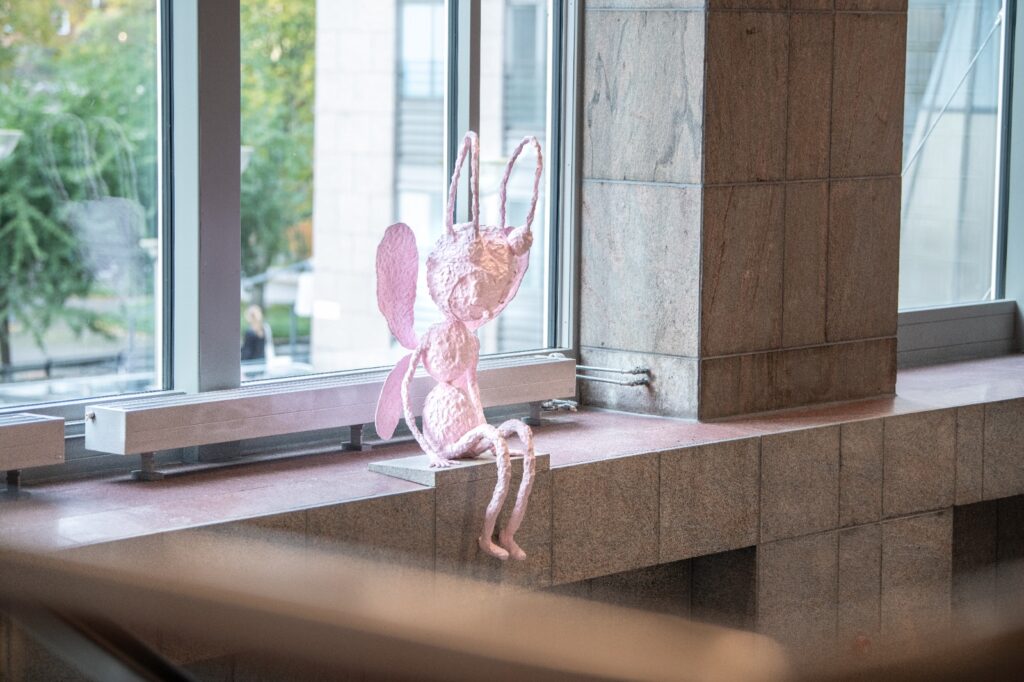
MVDB: Bronze carries associations of weight and permanence, while fairies suggest lightness and movement. How did you work with that tension?
JO: Since the fairies are painted light pink, you don’t realize they are cast in bronze until you touch them. The pink color makes them feel very light, just like fairies. So, using bronze in this case is actually because it’s the best method for durability, but also because it’s the best way to retain as much detail as possible in the casting.
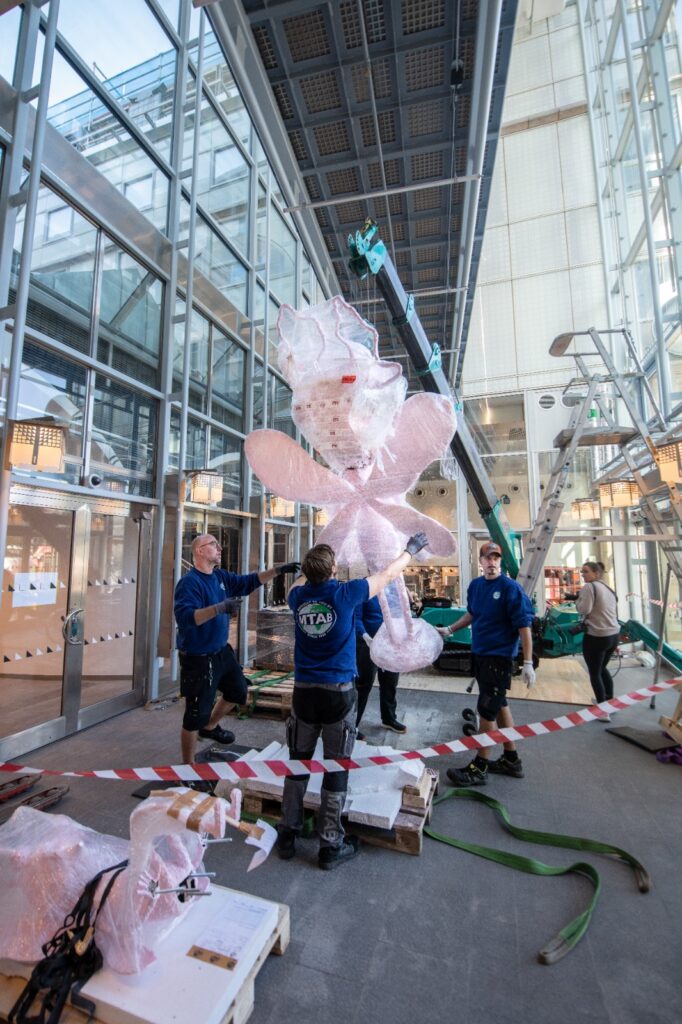
MVDB: Your process often involves discovering a character as you work. How did you preserve that spontaneity within the practical demands of an architectural commission?
JO: When I was sketching out the large standing Älvan, I sculpted a smaller model first to present. When creating it, I worked intuitively, just as I usually do when sculpting. Once I was awarded the commission, the challenge was to scale it up while retaining that spontaneity; it can be a bit tricky, and I try to enter a state that you could perhaps liken to a trance while working. I listen to music that gives me the right energy, and the sculpting becomes like a dance between me and the material.
For the other two sculptures, I didn’t make any models beforehand; they were just simple two-dimensional drawings that I used as my starting point when I began sculpting.
MVDB: Over time, these figures may become familiar companions for people passing through Söderhallarna. What do you hope repeated encounters will reveal that a first impression might miss?
JO: I think and hope that, at first, people will see them for the fairies they are and connect with their personalities. Once you’ve gotten to know them that way, I hope people will feel encouraged to take a closer look; there are so many fine, small details that perhaps tell a story about the material itself, the sculpting process, and the act of creation.
At least, those are the kinds of things I appreciate when looking at sculpture, but then again, I’m a bit of a nerd when it comes to this stuff.