The Art of Staying Grand
Inside Grand Hôtel Stockholm’s “soft renovation”, where cinematic turquoise, royal blue and fragments of the past reveal a more personal idea of modern luxury.
Guests expect historic hotels to evolve, but rarely want them to change. The rooms must function for the present while retaining the atmosphere that made people return in the first place.
Grand Hôtel has never been simply a place to sleep. Since opening in 1874, royalty, diplomats, film stars and Nobel laureates have crossed its floors. For some, it has been a room for the night; for others, a temporary home.
For Stockholmers, it has also long been a setting for occasions that call for somewhere special: dinners, meetings, birthdays, first dates and evenings that continue long after the final glass has been cleared from the table.
Interior designer Sanna Nathanson describes the work she has carried out with Studio Ramson as a “soft renovation”. The phrase makes sense as we walk through the hotel. Her approach is not built around a dramatic reveal or a single visual concept imposed on every room. It is about knowing what should feel new, what can be reinterpreted and what is better left alone.
We begin with an alcohol free cocktail named Postcard from the Riviera before heading upstairs.
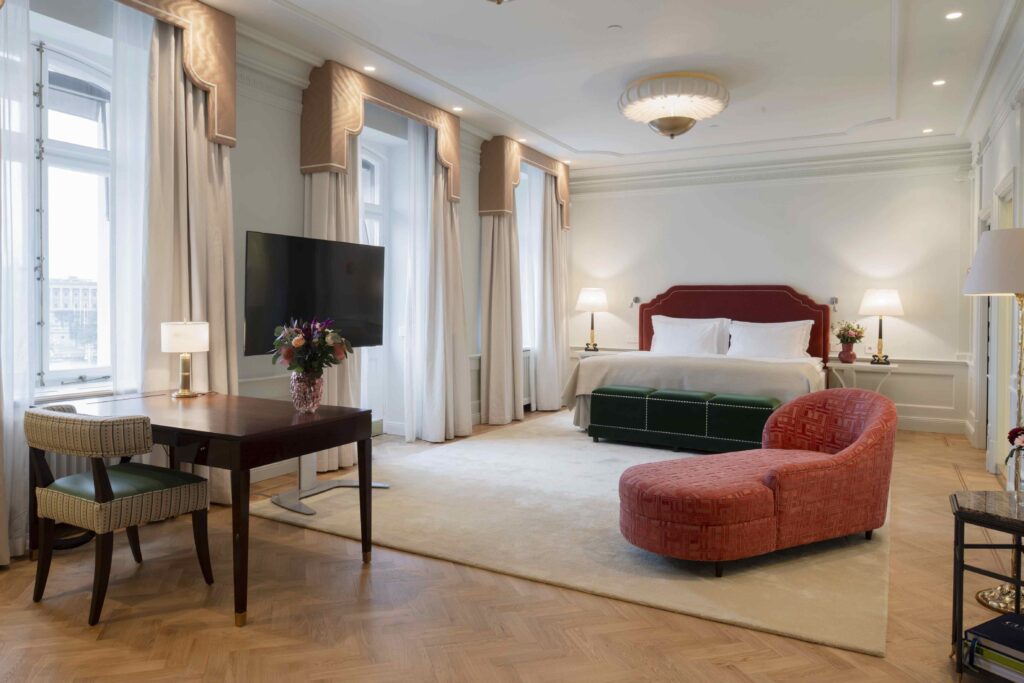
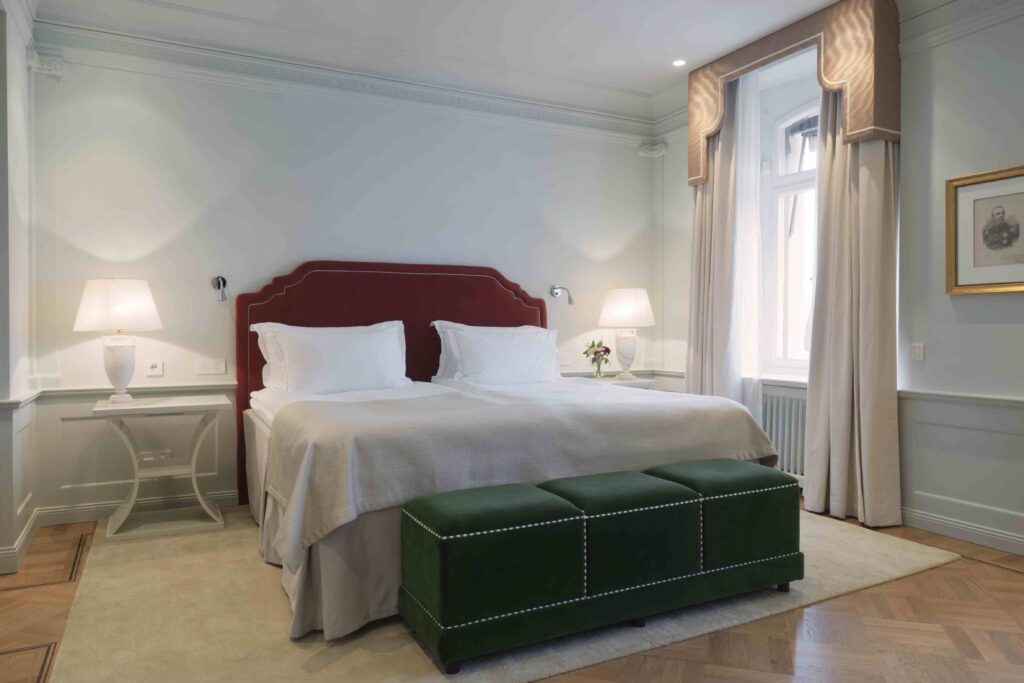
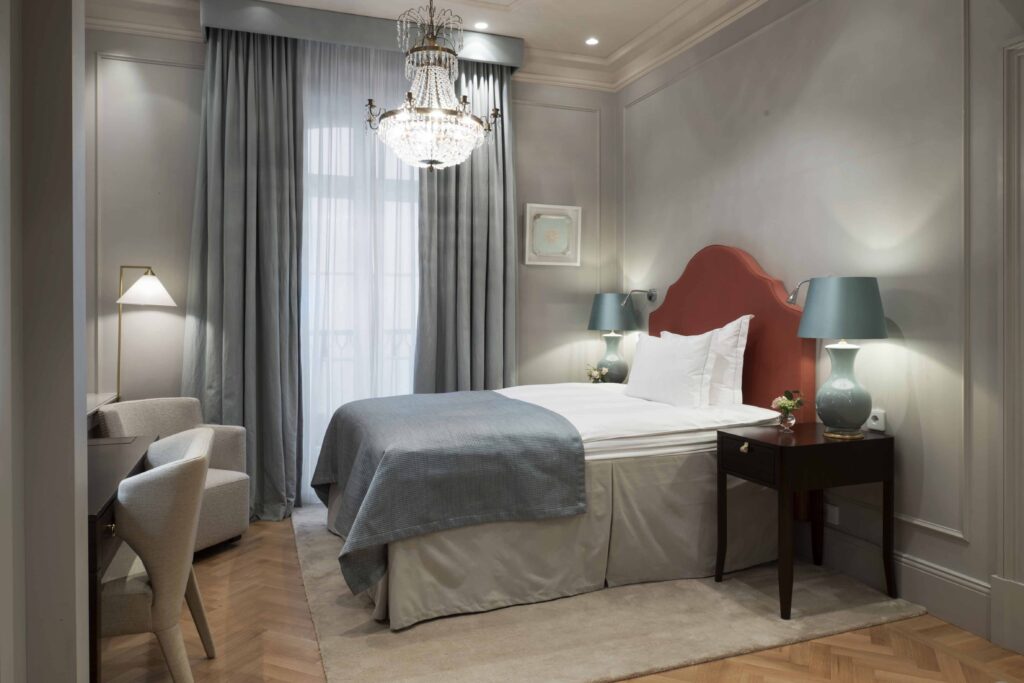
Behind each door, the atmosphere shifts. One room is calm and almost monochrome, with soft grey walls and a graphic carpet. Another has bespoke headboards upholstered in patterned Le Manach textiles. In Room 448, the original wallpaper remains, its age treated as character rather than something to correct.
There is no single contemporary identity repeated throughout the hotel. Even the ceilings have been painted in shades chosen to correspond with the palette below, bringing warmth and completeness to the rooms.
Guests can even request a preferred colour. Almost. For those whose hotel preferences already extend beyond the choice of pillow, blue, green or something more neutral can now be added to the conversation.
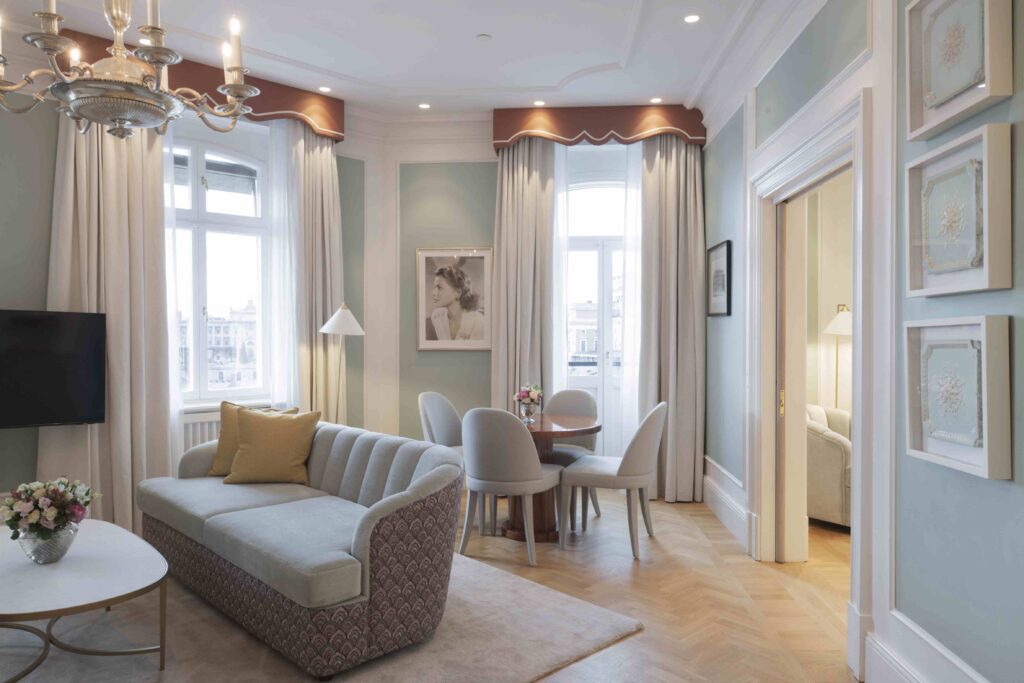
In the Ingrid Bergman Suite, colour takes centre stage. The corner suite spans 76 square metres and is defined by a shade I immediately think of as “Grand Turquoise”. It recalls Tiffany blue, but is richer and pulled further towards turquoise.
The colour gives the room a glamorous, slightly unexpected energy. A portrait of Ingrid Bergman hangs beside the windows, while references to cinema appear throughout the suite. Tiles dating back to 1874 bring a fragment of the hotel’s earliest history into the room without turning it into a museum.
From film history, we move to royal history.
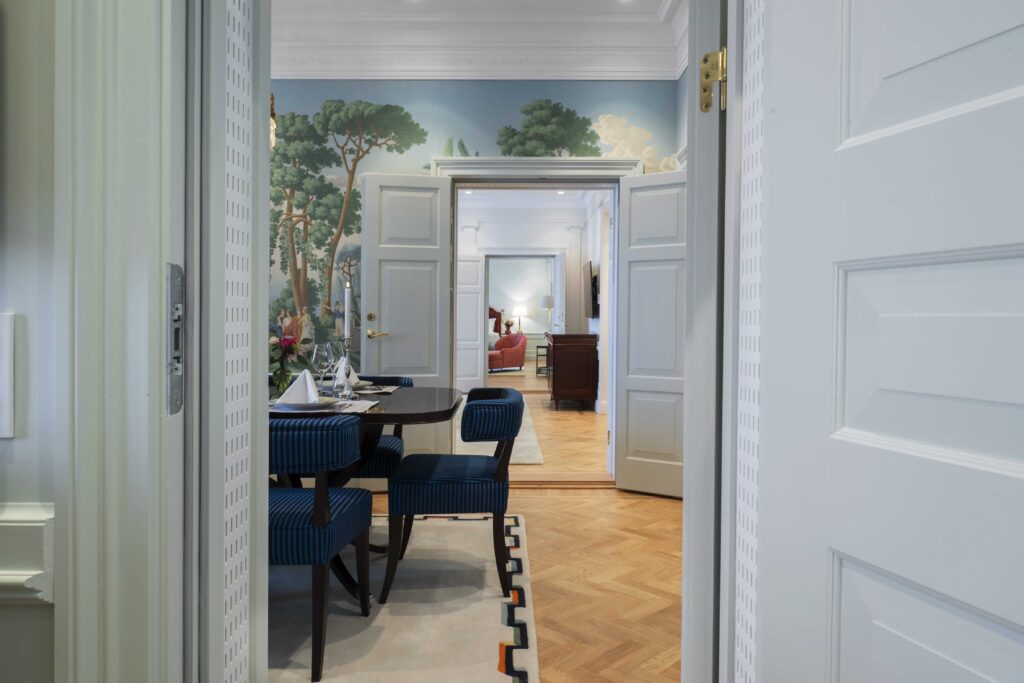
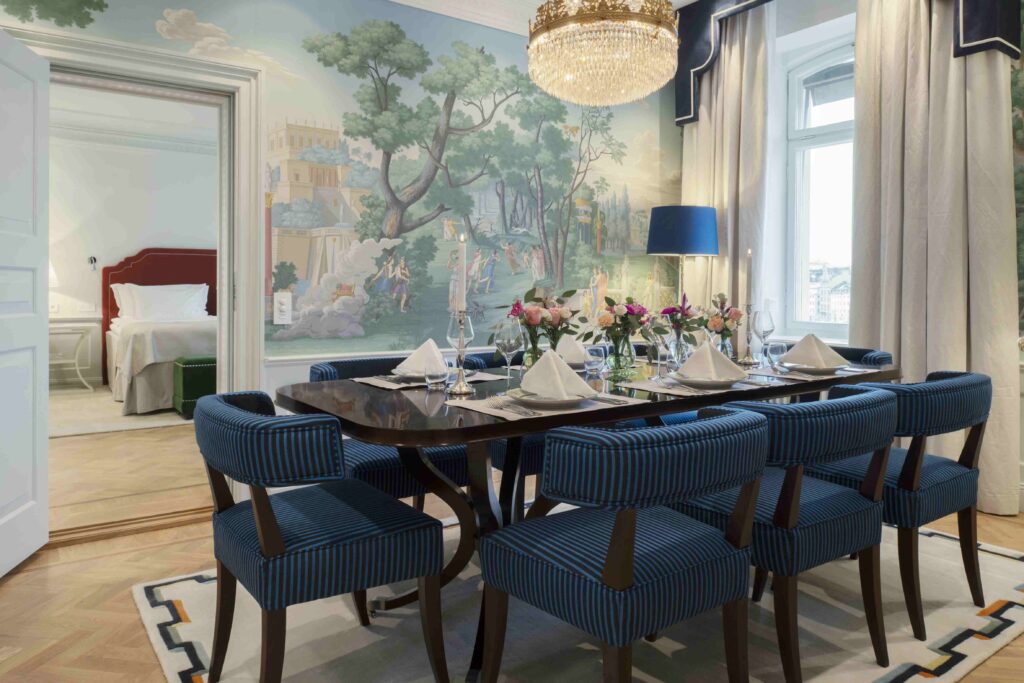
The Bernadotte Suite is named after Prince Sigvard Bernadotte, who decorated the hotel’s third floor in collaboration with Svenskt Tenn. Across its 165 square metres, classical mouldings and pale walls are interrupted by deep green, rust red and blue.
The dining room is the suite’s centrepiece. A landscape unfolds across wallpaper painted by hand, surrounding a table set for eight. Blue striped chairs and a graphic rug keep the room from feeling overly ceremonial. It is unquestionably grand, but still feels ready to be used.
This is Grand Hôtel’s interpretation of Swedish design. Not the bare minimalism with which Scandinavia is so often associated, but restraint combined with colour, texture and a taste for ceremony. Luxury is communicated through proportion, materials and the confidence to let an unexpected colour take up space.
Beyond the suites, a deep royal blue carpet now runs along the staircase. It changes the mood without changing the architecture and seems destined to become the backdrop for many photographs to come.
The practical updates are quieter. Every room now has a coffee machine by the Swedish company Sjöstrand. This leads to one unexpectedly useful lesson: coffee with milk is among the worst things you can spill on a hotel carpet. If it happens, call the front desk immediately. Who knew?
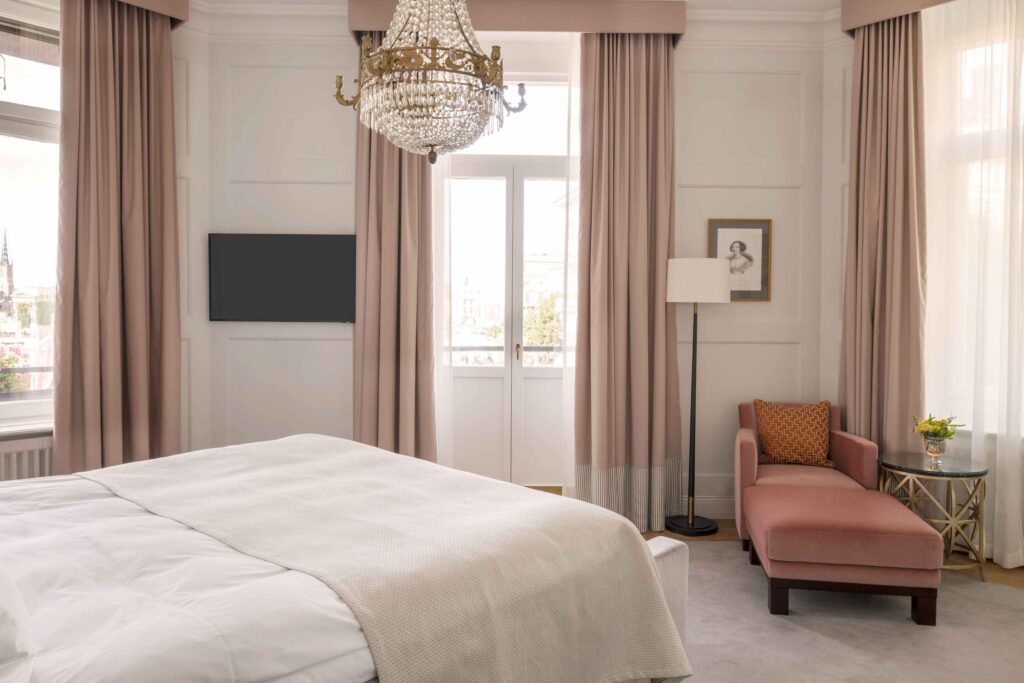
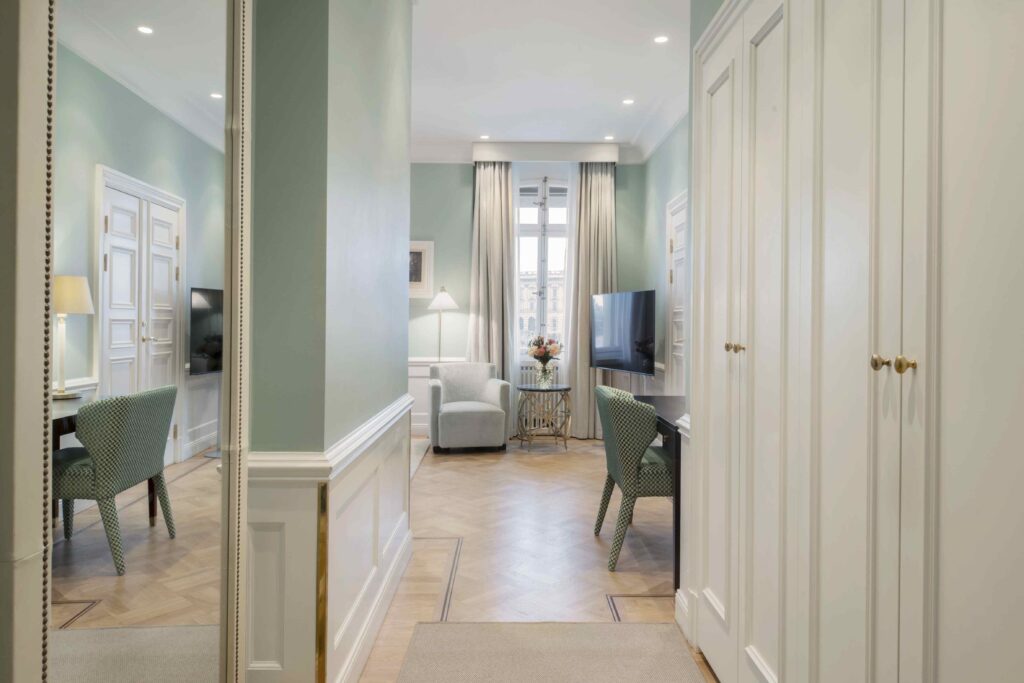
These interiors may be carefully composed, but they are still made to be lived in.
Perhaps that is what it means for a hotel to remain grand today. It is less about marble, chandeliers or square metres than continuity: allowing new stories to enter without losing those already held within the walls.
The renovation is gentle, and that is precisely the point. The art lies in knowing what to touch, what to leave alone and how to make history feel alive.
text Jahwanna Berglund