Shared Realities: CHART Art Fair Looks Outward for 2026
Now in its twelfth year, CHART Art Fair continues to redefine what a Nordic art fair can be. Since the final edition of CHART Architecture, a ten-year collaboration that invited young architects to create pavilions in the Charlottenborg courtyard, the Copenhagen-based fair has shifted its public programme outward: into metro stations, onto running routes through the city, and toward a new total installation format under the banner CHART Public. In 2026, the theme is Shared Realities.
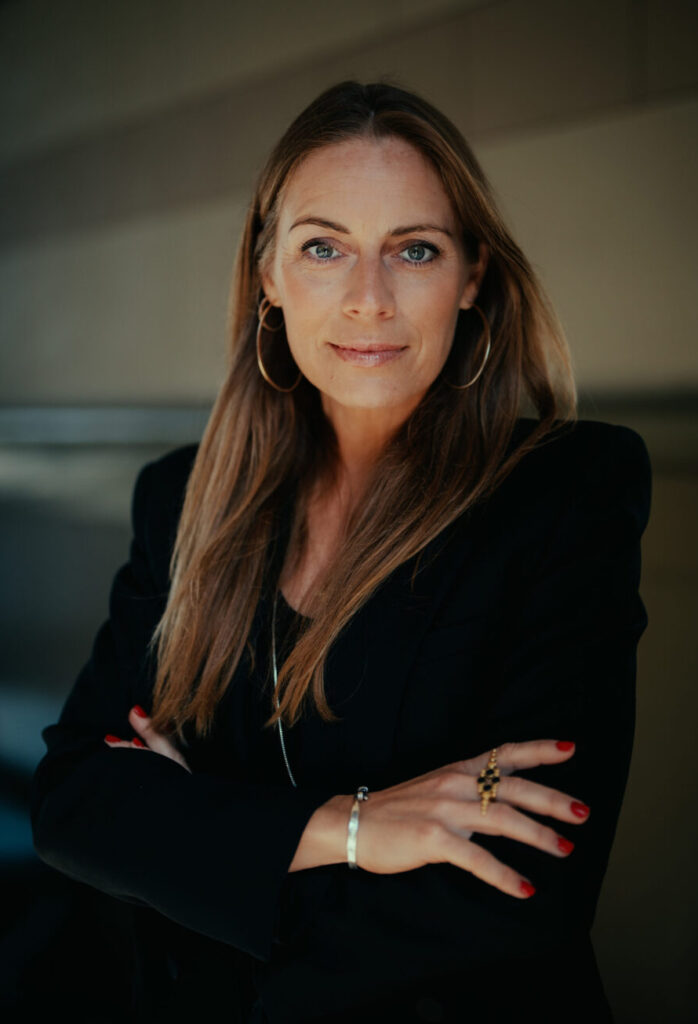
Julie Quottrup Silbermann, Director of CHART Art Fair, describes the shift as a response to something urgent. “We’re in a time of so many crises, with everyone attached to their phones and living in an AI-mediated world. We want to create an environment where people actually want to come together and interact with one another – to share a moment, listen to music, talk about art. That’s what Shared Reality is about.”
Alongside the new courtyard installation, the 2026 edition will expand its performance programme beyond Charlottenborg, deepen its collaboration with the Copenhagen Metro, and build on the Start Collecting initiative now entering its fourth year. Meanwhile, plans for an independently published art book fair in November signal CHART’s ambition to remain active and visible throughout the year, not only during the four days each August.
Natalia Muntean: Last year marked the end of CHART Architecture and the introduction of CHART Public. What was the thinking behind that transition?
Julie Quottrup Silbermann: After ten years of inviting young architects to create pavilions, we felt it was time for something new. CHART Public came out of that – an open call for a total installation in the courtyard, open to architects, designers, and artists. We were looking for something that could frame the entire public programme, serve as a kind of wayfinding through the spaces at Charlottenborg, and leave no waste. Sustainability was a hard requirement from the start.
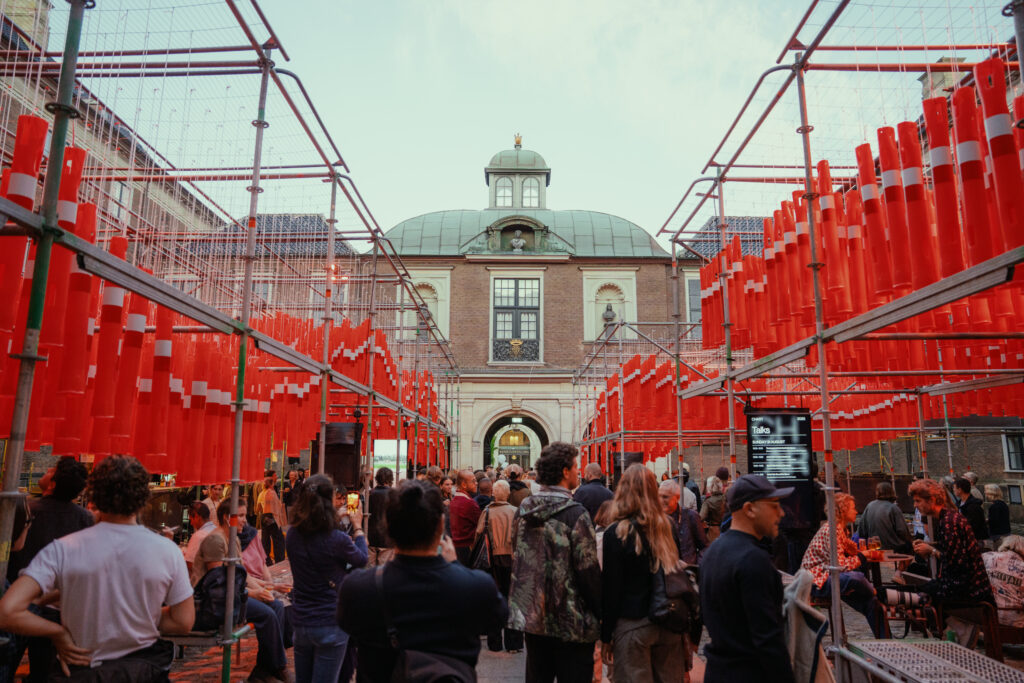
We received an impressive number of proposals very quickly. An external jury of architects, a designer, and a theatre director with a background in scenography selected British architect Samuel Charles Barratt. His installation, Re-Route, drew on the visual language of the surrounding streets: scaffolding systems and traffic cones brought into the two courtyards, creating a wave of cones hanging from the entrance toward Kongens Nytorv and through to the second courtyard. Everything was rented and returned to the municipality. There was no waste at all.
NM: And the 2026 installation – what can you share about it?
JQS: We’re continuing with the same format: an open call for a total installation in both courtyards. The theme this year is Shared Reality. We want to create a room, or really a set of rooms, where people genuinely want to linger, talk, listen to music, and be present. We’re also encouraging applicants to work across disciplines, bringing together designers, architects, and artists in a single proposal.
NM: You’re not on the selection jury yourself. Why not?
JQS: I don’t want to be the one making the final call. Last year’s jury was deliberately diverse – people who understand how things are actually built and who can support the winning team through the process. I want external eyes that can assess what would genuinely work in those two courtyards, rather than just what I find beautiful. The jury can also see the sustainability question from a practical angle: what can actually be built, used, and returned.
NM: The Nordics have strong ties to design, film, and performance. How is CHART pushing the boundaries of the fair format itself?
JQS: Performance is going to be a much larger part of the public programme this year, and we want to move it beyond the walls of Charlottenborg, into Kongens Nytorv and, importantly, into the Copenhagen Metro.
We started working with the Metro last year: during CHART, video works ran on screens across all stations between the regular commercial content, and we had one performance take place inside a station. It generated a lot of interest. So now we’re in dialogue about how to develop that further. Bringing art into the commute rather than waiting for people to come to us.
We are also expanding the running tours we launched last year. Three routes, between five and twelve kilometres, are mapped on Google with notes on every artwork you pass. We want to extend these to other Nordic capitals; we are a Nordic art fair, and there’s so much public art across those cities. And this year we’re adding a strand to the programme called ‘Wellness in Art’, drawing on research around how art affects wellbeing. It gives all of this, the runs, the performances, the public programme, a shared conceptual thread.
NM: What’s the current status of the Tivoli collaboration?
JQS: We are exploring something more focused than before: rather than placing works across the whole of Tivoli, the idea is a dedicated sculpture garden near the lake, working with the garden itself as the context. If it comes together, it would again extend beyond the four days of the fair. The Tivoli exhibition last year ran for a month afterwards, which creates a real difference. August is so dense with openings and events, and having something that continues into September, when things quiet down, has its own value.
NM: The Start Collecting initiative is now entering its fourth year. What impact have you seen?
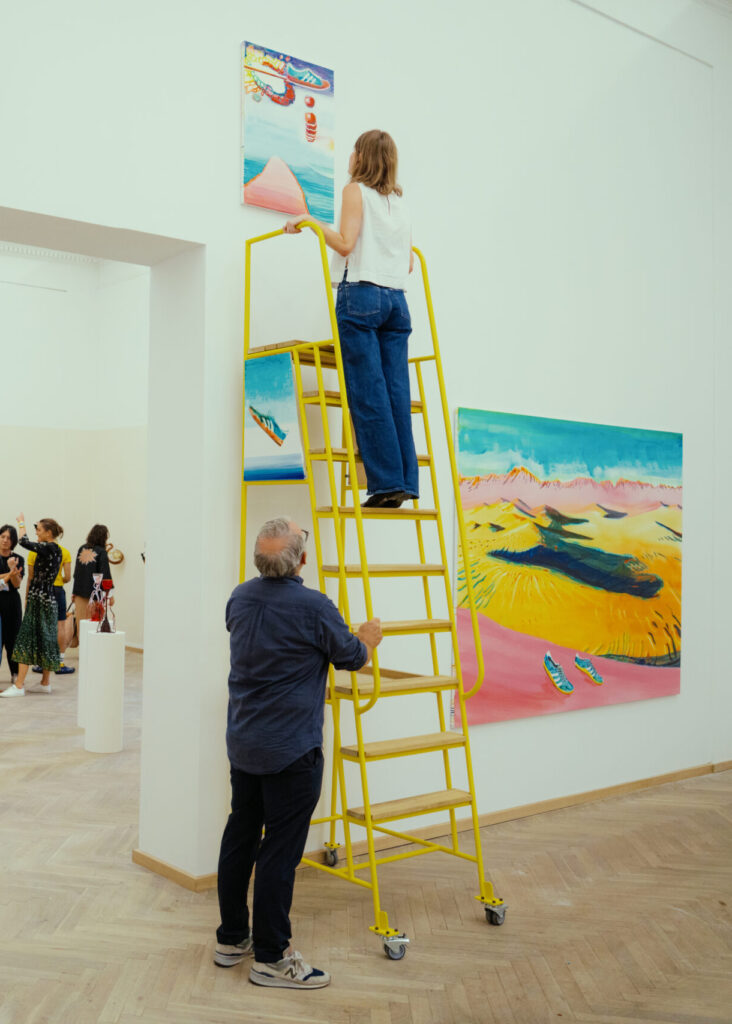
JQS: The galleries report more sales from that section each year, which is the clearest measure. Last year, we moved it into the chapel, The room between the two courtyards, and created a more considered environment with seating, so people could actually sit with the works. It’s become a recognised part of the fair; people come back to it specifically, and they know it as the place where unique art is available at more accessible price points.
There’s also a broader shift happening. You can see more media coverage of collections starting, not just private buyers, but also companies building corporate collections. We’ve been tracking this through our talks programme: we went from conversations about established philanthropic collecting, to advice for first-time collectors, to last year’s focus on how a company builds a collection that reflects its mission. This year, the conversation moves to the next generation, inspired in part by Georgina Adam’s recent book: ‘NextGen Collectors and the Art Market’. Younger collectors follow artists rather than galleries, seek out independent spaces and pop-ups, and tend to be more interested in supporting their own generation. They collect differently, but they still come to art fairs.
NM: Is the profile of the CHART visitor and collector changing?
JQS: Yes, in a few visible ways. We see more younger collectors, more emerging buyers, and more corporate collecting. You see it reflected in our partners, too. UBS, our key partner, has one of the largest corporate art collections in the world. HAY has been collaborating with artists for years; their recent project with Emma Kohlmann brought her drawings onto plates, bowls, and cutlery. These are companies that understand what a sustained creative relationship can produce.
What strikes me most is that the four days of CHART have become something people return to as a ritual. A moment to meet, be inspired, buy art, share the experience. It feels like a genuine community now.
NM: If we have this conversation again in 2027, what’s one goal you hope to have achieved?
JQS: A stronger presence in the Nordic countries throughout the year. Last year, we went to Finland to meet our galleries and visit Helsinki. This year we’re going to Iceland for the Reykjavík Arts Festival. We’re a Nordic art fair, and CHART should be the entry point to what’s happening across the region. But to really mean that, you have to be present during the year, not just in August. You have to go, see the different art scenes, and keep those relationships alive.
NM: Is there anything else you’d like to add about the 2026 edition?
JQS: In November this year, we’re doing a book and print fair for the second time; the first was in November 2025. It’s a two-day event in collaboration with Charlottenborg and the Royal Danish Academy of Fine Arts, focused on artist-run and independently published work: talks, readings, and book signings. We had a few thousand visitors for what was essentially a pilot. It’s much smaller than CHART, but it matters. It gives independent publishing within the art ecosystem a proper stage, and it keeps us visible and active outside of August.