Benjamine Cadette - An Interview With The Designer
text Elsa Chagot
photography Viktor Tägt Ring
images courtesy of Benjamine Cadette
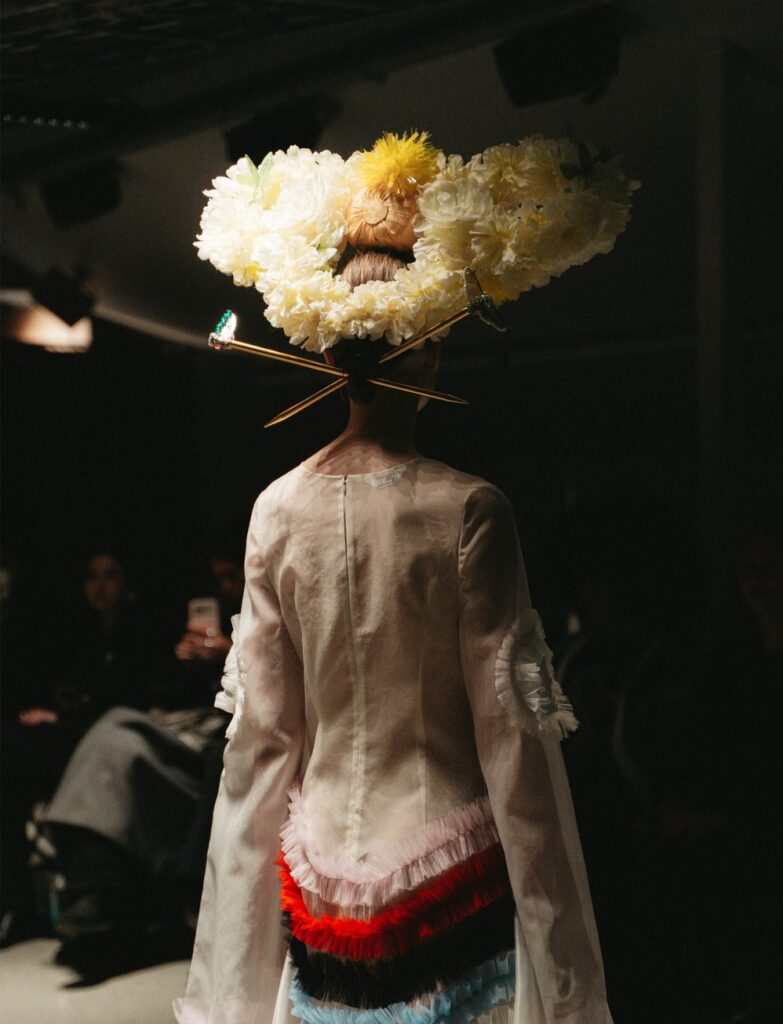
Moving between Seoul, Paris, Seattle and now Stockholm, designer Hyoung Ook Choi has shaped his brand, Benjamine Cadette, as a world built on dualities; organic emotion and architectural structure, instinctive expression and refined restraint. His practice is guided not by trend or reference, but by observation: the behaviour of plants, the rhythm of cultural landscapes, and the subtle ways a garment can align with its wearer rather than impose upon them.
In conversation with Odalisque Magazine, Choi reflects on the evolution of his aesthetic, the layered meanings behind his two collections, and the philosophy that anchors his approach to design.
Elsa Chagot: Tell us about your journey toward becoming a designer – how that path began and evolved for you. And following that, how did Benjamine Cadette come to life and develop into the brand it is today?
Hyoung Ook (Benjamin) Choi: I grew up in the countryside, where I spent much of my childhood with plant and animal encyclopedias open in front of me, observing nature closely. I was fascinated by why certain plants grew only in specific environments and how small living organisms negotiated space with one another. These early observations shaped my eye for structure and planted a deep sense of sensory curiosity.
My years in Paris expanded that sensitivity in a new direction. Realizing that what I found beautiful could evoke the same emotion in others was a quiet but important confirmation. For the first time, I felt that the way I see the world could become more than personal taste — it could evolve into a kind of language.
When I returned to Korea, I wanted to bring together the sensibilities and experiences I had accumulated over the years. From that flow, Benjamine Cadette was born.
Later, when I moved to the United States, my work shifted once again. Living closer to nature and collaborating frequently with local creatives, I often found moments where my clothing blended effortlessly into the surrounding landscape. This harmony gave me confidence that my aesthetic was not tied to a single place — it could find its place naturally in new environments.
Looking back, becoming a designer was never the result of a single decision. It was built from layers of observation nurtured by nature, sensibilities gifted by different cities, and the traces left by moving through cultures and environments. All of these accumulated to form who I am today.
Benjamine Cadette continues to grow through understated emotion and restrained beauty. The layers of time I have lived — the nature, the cities, the people — remain quietly embedded in the shapes and textures of the clothes.
E: What specific experiences or influences have most profoundly shaped your personal aesthetic or the way you perceive fashion?
B: No, I didn’t get inspired by other designers or whatever, just my lifestyle. And yeah, I think a lot of myself, what I want.
E: Your journey spans Seoul, Paris, Seattle, and now Stockholm. How have these diverse cultural environments shaped not only your aesthetic, but also the way you understand fashion as a cultural language?
B: Experiencing life across Seoul, Paris, Seattle, and now Stockholm has given me one clear understanding: the more diverse the cultural landscape becomes, the more fashion — as a cultural language — demands a pure form of expression. Just as people can misunderstand each other even while speaking the same verbal language, fashion can also be misread within the same culture. These experiences taught me that sincerity, emotional honesty, and expressing what feels truly ‘mine’ are what allow fashion to communicate clearly across cultural boundaries.
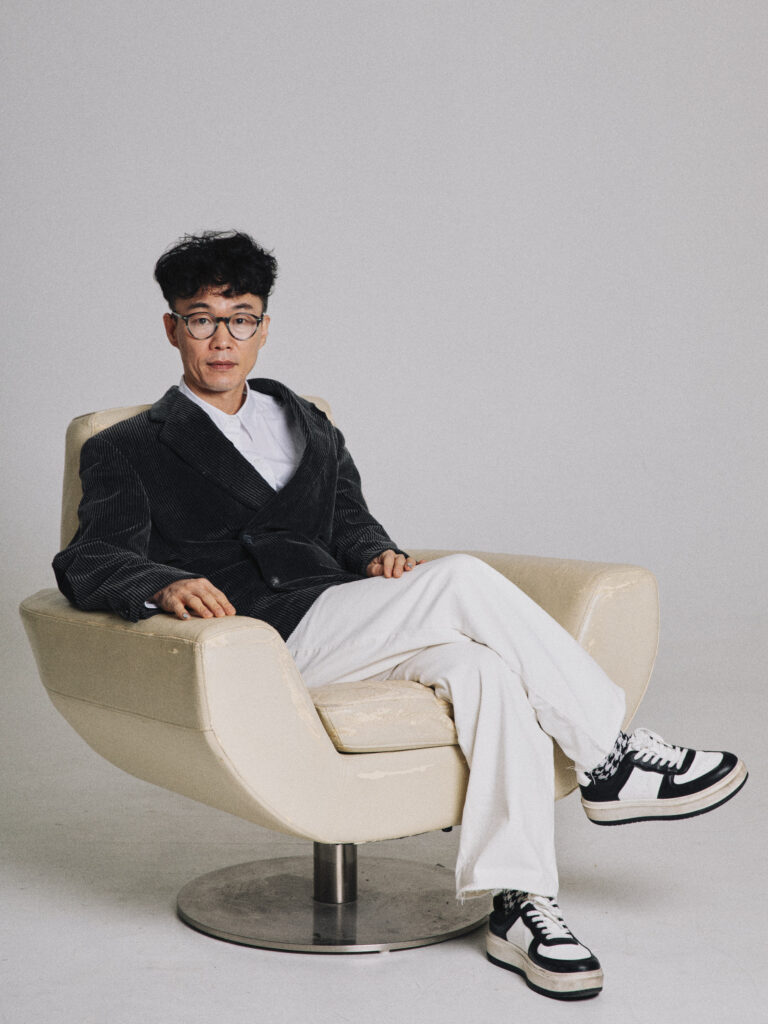
portrait photography Sandra Myhrberg
métier
moment
moment
The more I moved between cultures, the more external decoration and explanation lost their power. Instead, I learned that raw, instinctive, and original expression carries a deeper resonance. Whenever I worked from that place of honesty, the reactions to my clothes felt warmer, more human, and more profound. Ultimately, this journey made one direction very clear to me: to express myself more purely, more truthfully, and more in alignment with who I am. I believe that is the cultural language of fashion that remains authentic, even when the culture shifts.
E: How do you balance individual creativity and expression with the practical, commercial realities of building a collection?
B: In the early stages of running my brand, I naturally adapted to the commercial realities of the business. However, as time went by, I realized that if my personal creativity is not fully expressed, the brand’s character and identity can begin to fade. That is why I actively propose and pursue various collaborations, and especially through the Métier line, I am able to express my creativity in a deeper and more meaningful way. By finding this balance between practical considerations and creative expression, I ensure that the brand continues to grow without losing its essence.
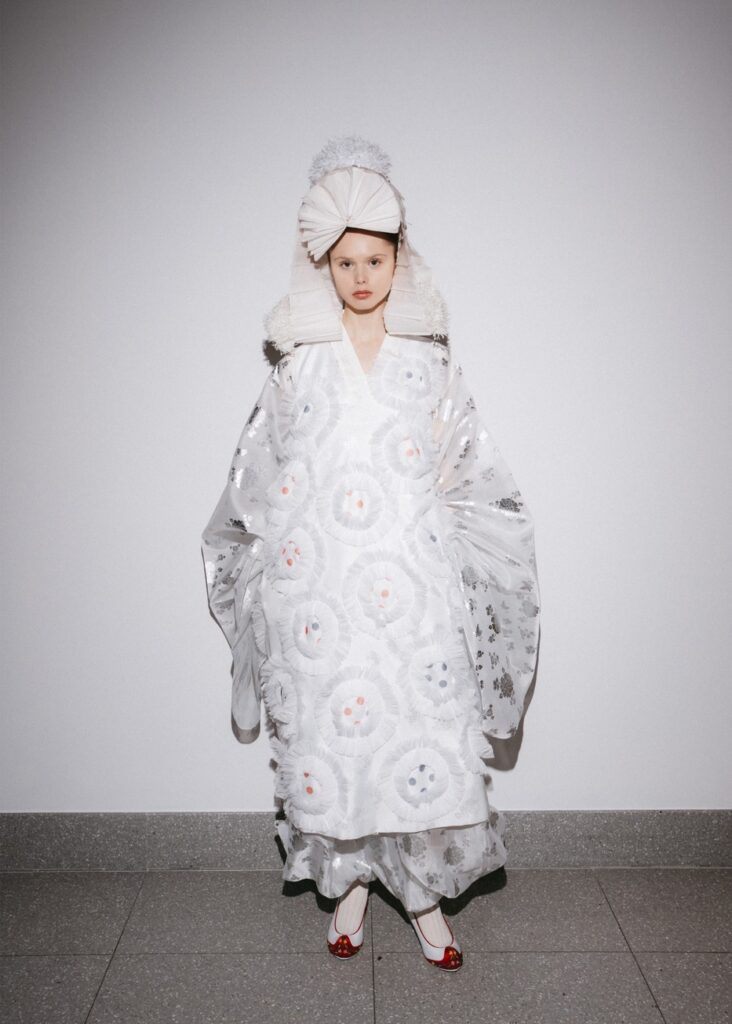
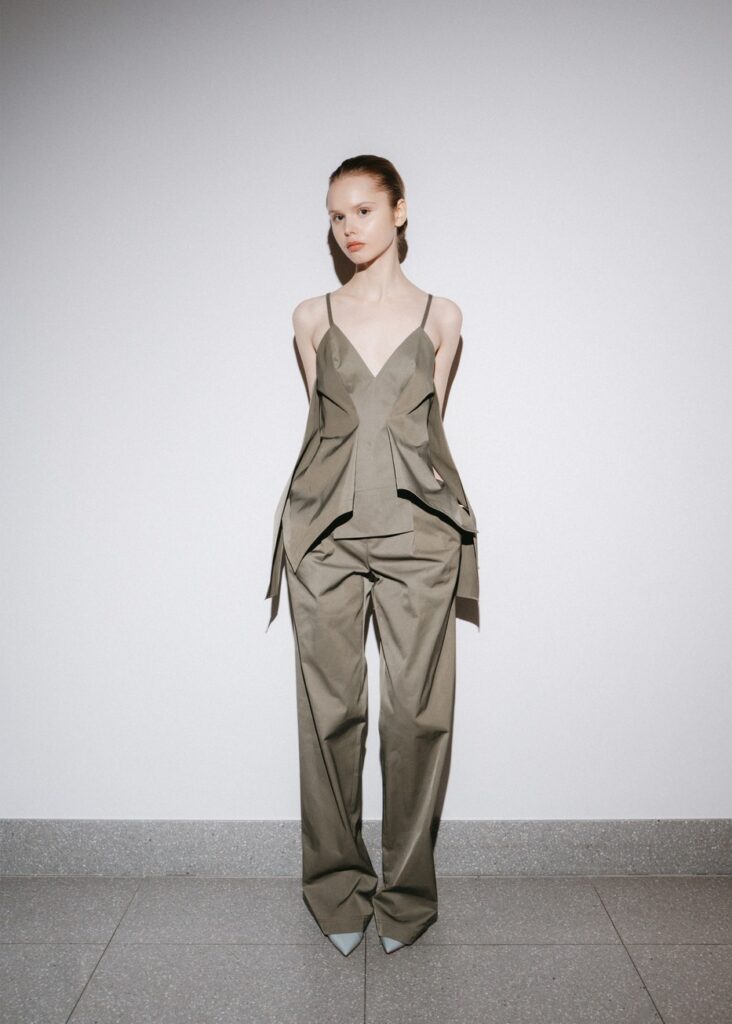
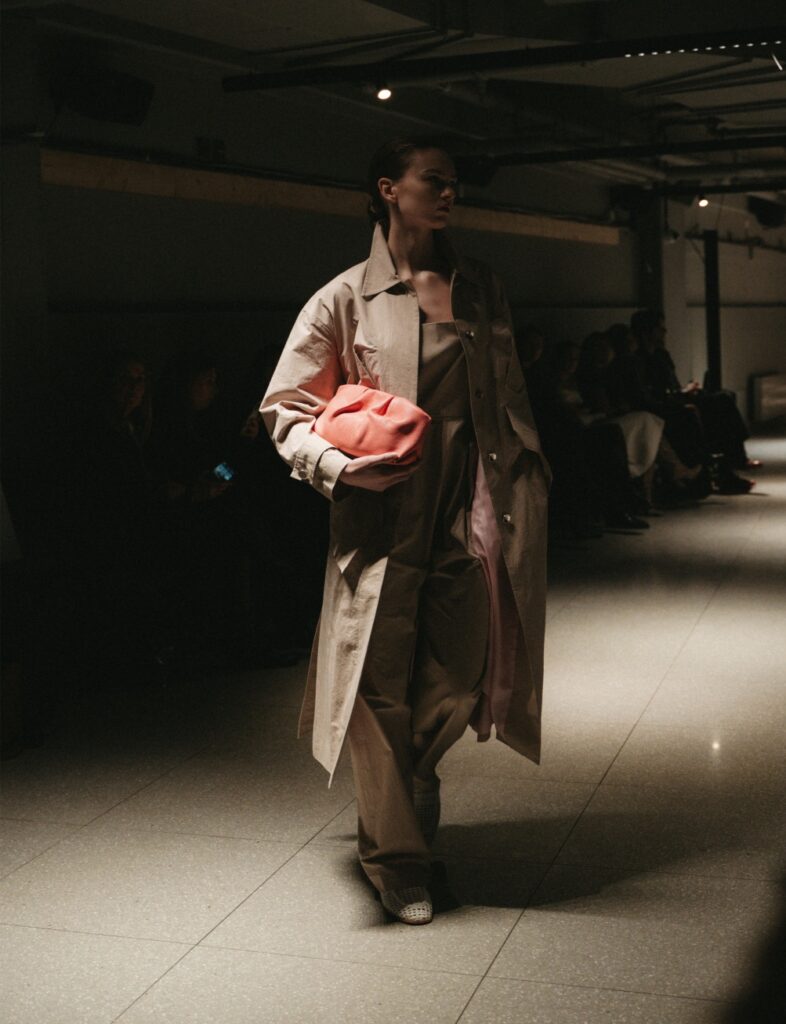
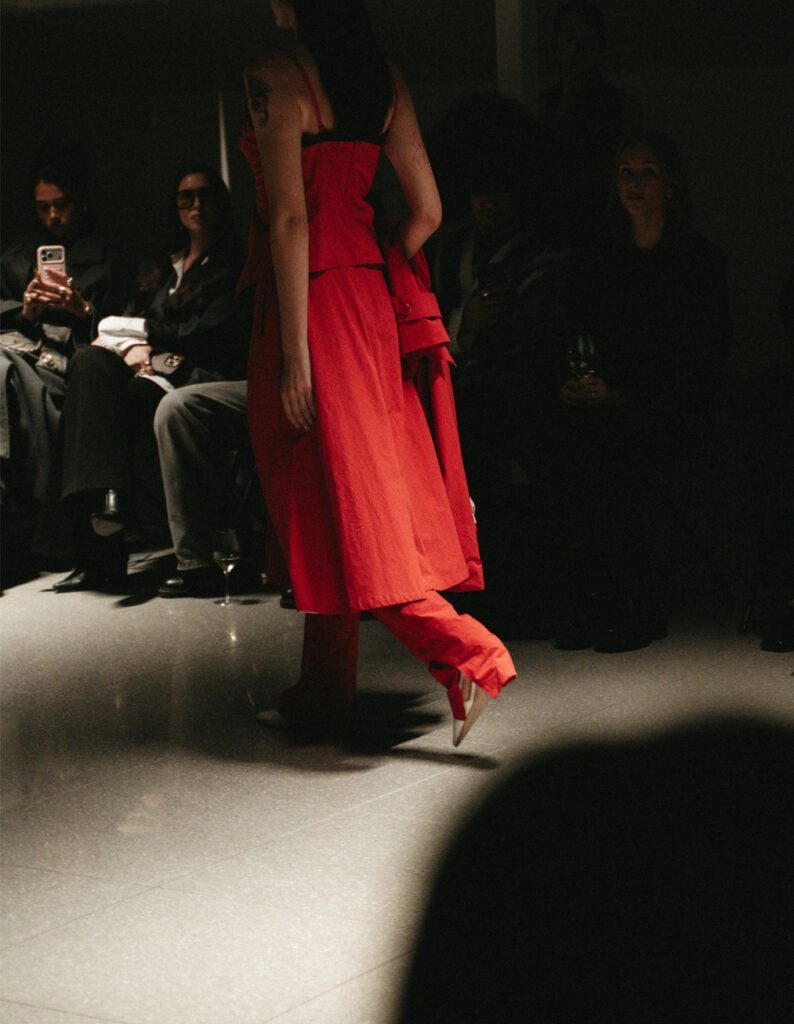
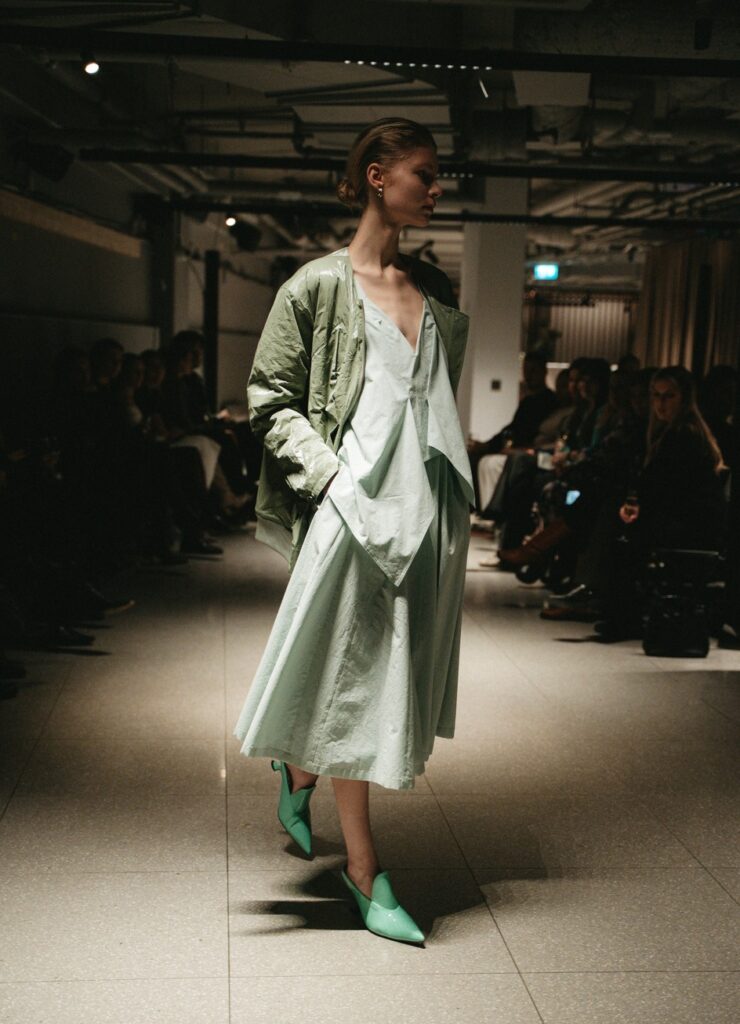
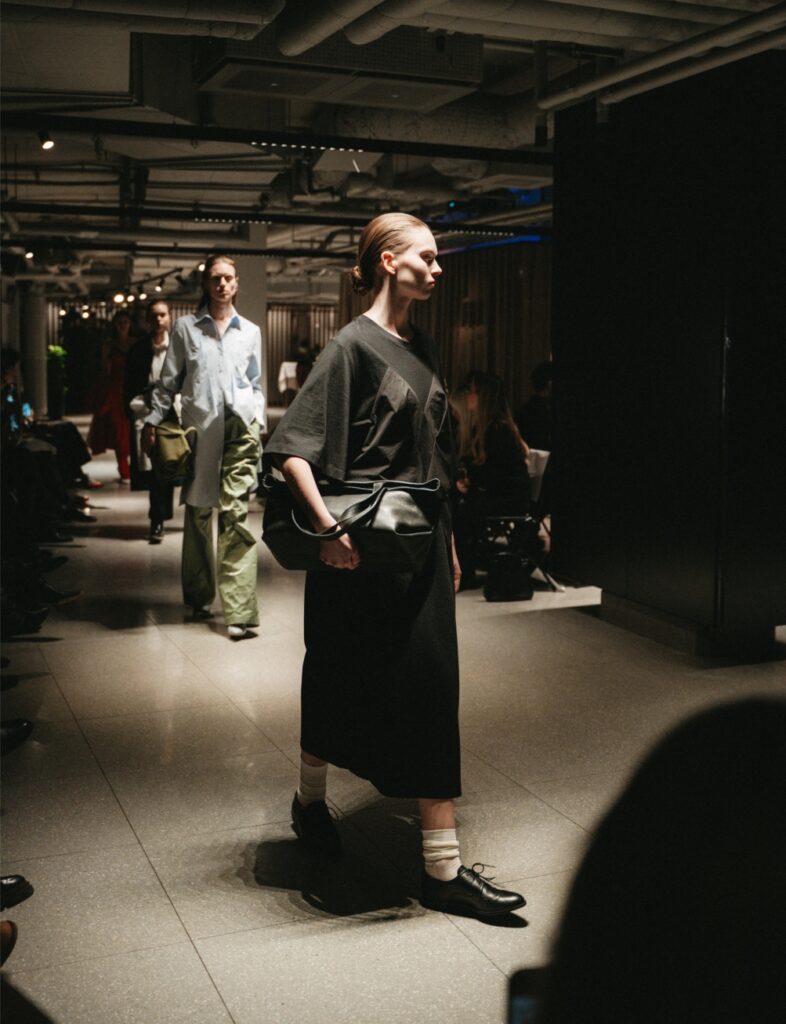
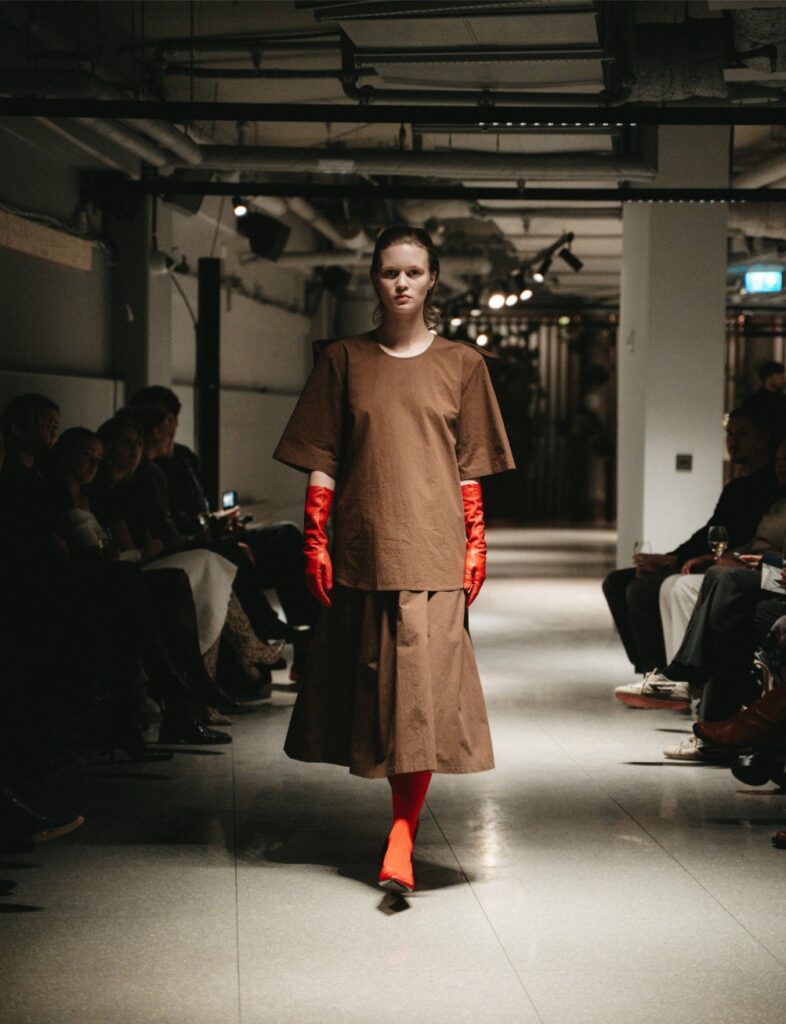
E: When looking at your collections Métier and Moment, I see two distinct yet connected worlds. Métier with its emotional lightness and organic, more nature-driven femininity, and Moment with its more structured, architectural approach.
What guided you in defining these collections as separate expressions within the brand? And how are these identities evolving as you move into the next collection – what can we expect to see?
B: The name Benjamine Cadette is built on dualities; each word holds two meanings. Benjamine can sound like a masculine name while also meaning “youngest sister.”
Cadette refers to an aristocratic soldier going to war for the first time, but in its feminine form also means “younger sister.” These layered meanings naturally shaped the structure of the brand.
Métier is the line that expresses the brand’s essence in its most vivid and raw form — where nature and my cultural roots appear most clearly. Moment refines the same sensibility and philosophy into the language of everyday life — a world that moves quietly within real moments.
Recently, Sweden’s attitude toward nature and culture has become a strong inspiration, clarifying the identities of both lines. While Métier’s flow is emotional and organic and Moment’s is structured yet alive in daily life, I see them as two breaths of one brand.
E: In what ways do your collaborations influence your creative process or your personal growth as a designer? How do you integrate the perspectives and insights of the people you work with?
B: Collaboration plays a very significant role in my creative process. My work naturally begins with observation and emotion rooted in nature, but meeting other creatives introduces new angles into that flow. Because each collaborator brings their own experiences and aesthetic language, their perspectives help me discover textures and directions I might not have seen on my own, expanding the work in a more dimensional way. When I collaborate, I don’t try to force someone’s viewpoint into my world; instead, I look for the point where our two worlds can meet naturally.
Their insights allow me to experiment without disrupting the emotional direction I value, while also pushing my personal growth as a designer. Collaborations with photographers, stylists, and artists are especially meaningful because they let me see how my design language is interpreted through other mediums, which ultimately sharpens the identity of the brand. In the end, I see collaboration as a process that both expands my creativity and deepens my understanding of who I am as a designer.
moment
moment
E: Speaking of collaborations, do you have a dream collaborator, in any field, that you feel would perfectly challenge or complement the world of Benjamine Cadette?
B: I have a lot. A lot of ideas. The biggest one is maybe some Scandinavian furniture designer who takes a lot of inspiration from nature. And then, in South Korea, they also make something called pansori, which is a traditional Korean music and dance involving storytelling. And they also wear a specific outfit when they do it. So working together with maybe a group of people who do pansori would be really cool.
So I’m quite open to a lot of different collaborations. While I was studying about Stockholm, it was difficult to find information and pictures about traditional Swedish outfits. And it’s something that we probably should get better at sharing with the world. So it’s something that he would also might be interested in collaborating with someone who works with that kind of inspiration or maybe creates those kinds of clothes.
Because I like to study, and learn about other cultures. I never thought about Sweden until I fell in love with the culture. So it was recently that I fell in love with Swedish culture.
E: As a designer, where do you draw most of your inspiration from? Does it come to you naturally, or do you actively seek it out?
B: I don’t approach nature the way a biologist might, nor do I intentionally seek out preserved national parks. Instead, I stay attentive to the nature that surrounds me in everyday life. Something familiar can suddenly appear different, and a plant I remember from childhood may grow with completely different colors and proportions here in Seattle — and these small discoveries spark my curiosity. By observing and studying these moments, I find my creative pull. My inspiration often begins raw and intense, and over time it becomes refined and distilled — much like the relationship between my two lines, Métier and Moment.
E: This will be your first fashion show in Stockholm. What do you hope the Swedish audience will experience or understand about your brand?
B: In Stockholm, I may appear as a non-native species — an unfamiliar presence that could even seem disruptive to the local ecosystem. But in nature, not all non-native species bring harm. Some enrich their surroundings with new forms of life and unexpected abundance. That is the kind of positive ‘non-native’ presence I hope to become here. I believe there are many people in Sweden who are curious, open, and eager to encounter something new. Through my designs, I hope their cultural language — the way they express themselves — can grow richer and deeper. I see this showcase as our first point of connection.
E: Where do you see your brand in five years? Are there any personal or specific aspirations you hope to fulfill as you continue to grow?
B: Looking ahead, I hope to create a space in Stockholm where artistic stimulation can be shared. I envision it not as a showroom, but as a cultural hub where creators from different fields can exchange ideas and sensibilities. I have long been moved by the pure way Swedish artists engage with nature — observing and documenting even the most modest living organisms, as Carl Larsson once did, and passing that sensibility on to the next generation through their own artistic language. They do not treat nature as something to be used but as living beings to be respected, and I deeply admire that role of the ‘messenger.’ In a culture shaped by this kind of warm philosophy, I hope to build a space where artistic dialogue can naturally unfold. This
The way of seeing and honoring life aligns closely with my own values. As I grow to understand Swedish culture, my own sensibilities expand — becoming richer and healthier, much like the diversity of nature itself. I want to share this sense of vitality as much as I can here in Sweden. And by absorbing Sweden’s attitude of respect and observation from the perspective of an ‘outsider,’ I believe my work can evolve into new areas that meet and harmonize with Swedish sensibilities. I also feel that Sweden has the openness to embrace this kind of creative energy.
moment
E: Finally, what do you hope a wearer feels when they step into one of your pieces? What is the quiet message embedded in each garment?
B: When someone steps into one of my pieces, I hope the garment doesn’t insist on its presence, but instead offers a quiet sense of alignment — gently supporting the wearer’s movement, breath, and way of being.
My work is not about transforming someone into a different person. Rather, it is about allowing what is already within them — their sensitivity, curiosity, and quiet confidence — to surface naturally.
Each piece carries a small message: that understated emotions, organic forms, and restrained beauty can be just as powerful.
I hope the wearer feels both grounded and expanded, sensing a subtle connection with themselves and with their surroundings.
In the end, my clothes are an invitation to observe, feel, and pause for a moment.
If a wearer experiences even the slightest shift in awareness, then I believe the garment has already fulfilled its purpose.
E: As it is a topic that is difficult to avoid these days, what role does sustainability play when you work on your garments, from conceptualisation to production?
B: I’m a designer who handles everything. That means I do pattern making and sewing and everything. High-end brands, what should I say? They don’t sell products to just be thrown away after a while. But when I think about what I can do with that sense of responsibility, I think I should do it from the point of view that I see the most in real life. So it’s difficult.
I design the clothes from the concept all the way until the clothing is completed. Cutting, sewing, putting the pieces together.
I’ve been very inspired by the country I’m from, South Korea. There, you have to be effective with the resources you have because it’s a small country but with a lot of people in it.
When it comes to the choice of the material, obviously choosing a material that’s as environmentally friendly as possible and also material that doesn’t leave too much when you launder and dry it. Some clothing and some materials, they will leave a lot of lint, that’s why clothing disappears over time, it’s being wasted. I feel guilty so once the garment is complete and I go into the sale, I want it to be a clothing piece that you can wear for life; 10 years from now, or 20 years from now and still have in your wardrobe, not something you buy and just throw away.
photography Viktor Tägt Ring
images courtesy of Benjamine Cadette