Shake It Out
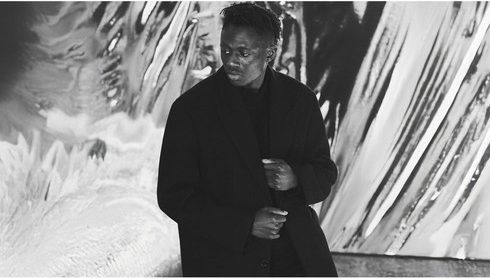
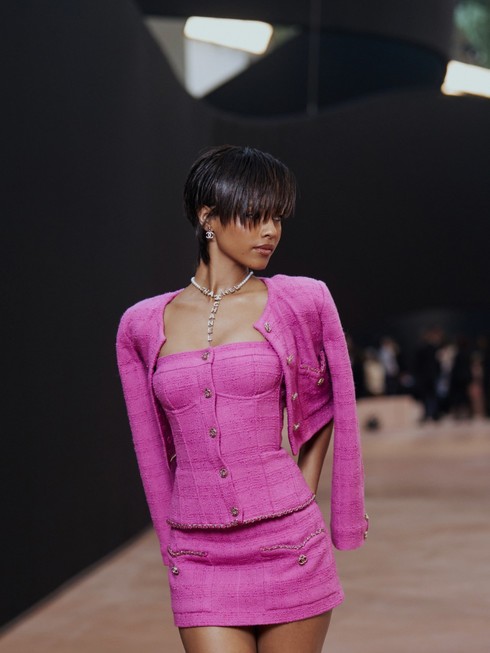
necklace Izabel Display photography Sandra Myhrberg fashion Jahwanna Berglund hair and makeup Elva Ahlbin an interview withVinchy Chan textMaya Avram While creative talent and a discerning eye are stable stakes to succeeding in fashion, strategy is equally crucial to establishing a sustainable career — and one most industry players unfortunately lack. One reason is that fashion designers are becoming increasingly individualistic, and consequently, reluctant to ask for support. This starts as early as fashion school, where educators encourage emerging talent to see themselves as bitter competitors rather than potential collaborators; it goes on to impact small-scale businesses who can’t seem to handle their admin (cult-favourites like Y/Project, Christopher Kane and The Vampire’s Wife have been forced to shut down in recent years.) garment by’s premise, therefore, is a simple yet promising one: entrust the business side of things to the startup’s co-founders, former Strategy Consultant Vinchy Chan and Operations Officer Ana Ciobanu, and focus instead on designing the ‘Icons’, the platform’s range of timeless clothing essentials. Each Icon piece is created with consideration of research data and insight, and ethically produced by garment by’s network of vetted suppliers and manufacturers in China. The result? A thoughtful collection of bespoke garments meant to last a lifetime. I caught up with Chan ahead of the spring launch of the ‘Love Shirt’, celebrating the noblest emotion of all. MA: What does your development process look like, and how does it challenge those systems? VC: One of the biggest problems of the current system is overstock. Stock is planned and produced usually a year ahead, and at the six-month mark, you need to put in orders with your sourcing and production partners, which many brands do without any insight or data. So they often overproduce and create merchandise that is killing their business. 70 per cent of designer labels’ cash gets tied up in stock they never know if they’ll be able to sell. That cost is priced in for consumers — ever wonder why a designer shirt costs £800? Imagine if we didn’t have to pay that premium. You could shave 30 to 50 per cent off the buying price, which is great for consumers in this economic downturn. Not to mention that stock is the biggest environmental polluter, with 30 per cent of overstock going to landfill. Consumers nowadays are more and more aware of those issues and the impact of their buying behaviours. That’s why we adopted an on-demand model, to empower designer labels to only produce what’s sold. We are now able to deliver the product within four weeks, but hopefully, with tech and data innovation, we will eventually be able to deliver it within two weeks. Maya Avram: This issue’s theme is ‘Alchemy of Fates,’ or how we break down conforms to build something new that realigns us with the right path. Do you feel that resonates with garment by’s mission? Vichy Chan: 100 per cent. As an outsider to fashion, I see things with a fresh perspective, including practices that don’t serve us anymore. I respect that big brands have to make sure, in this downturn, that they can protect their revenue in line with the matrixes they know are going to sell, but that is just adhering to conform. It tells us that fashion is about creativity, but also that there are many implicit rules. As a business, garment by is ready to break away from those rules and those legacy systems that don’t serve us anymore. MA: How do you find the designers you work with? VC: There’s an urgency to our mission because the whole idea was to create a business infrastructure to help designers create core collections. We targeted designers who sadly had to close down their businesses in recent years but whose respective communities are craving for their comeback. Our ultimate goal, though, is to engage a bigger pool of designers, whether it is an emergent designer or a more established designer, award-winning designers or household names. We are ready to connect. MA: How did you come to create the Icon collection? VC: The Icon collection came from market insight. We are looking into each clothing category and finding that offering gap; whether it is a product feature, a style, the wearer’s experience or the pricing. And through that data, you ensure the commerciality and practicality of the clothes before you even go into production. When we talk to designers, they really appreciate that insight because they often lack the bandwidth to think about what can sell that also intersects with what they enjoy designing. MA: Is there an active dialogue between you and the designers? How much of the relationship is a push-pull? VC: We come from a very consumer insight-driven background and try to bring that value to the designers and co-create those pieces together. Before even going to production, we make sure that we have good enough learning, and keep building upon it. After we created the first iteration of our first Icon [a lush wool and cashmere blend coat — MA], we realised the fabric we sourced didn’t meet the needs of our consumers. So we quickly iterated a second version using a new fabric because we knew there was an unmet need there. This way of working was anchored in when I worked in product innovation but lacked in fashion. When the orders came through they all fit that exact persona, which was a nice surprise, but we still have a lot to do to understand them in a more nuanced way. Our on-demand model is quite new to this target audience, and we are still on a journey to make this the norm to shop good quality, unique designer items, and scale it to more audiences that could buy with us in the future. MA: Would you say you’re on a constant learning curve? What lessons have you learnt from the Icon coat launch, and what questions are still left unanswered? VC: The most important thing we learnt from the launch was