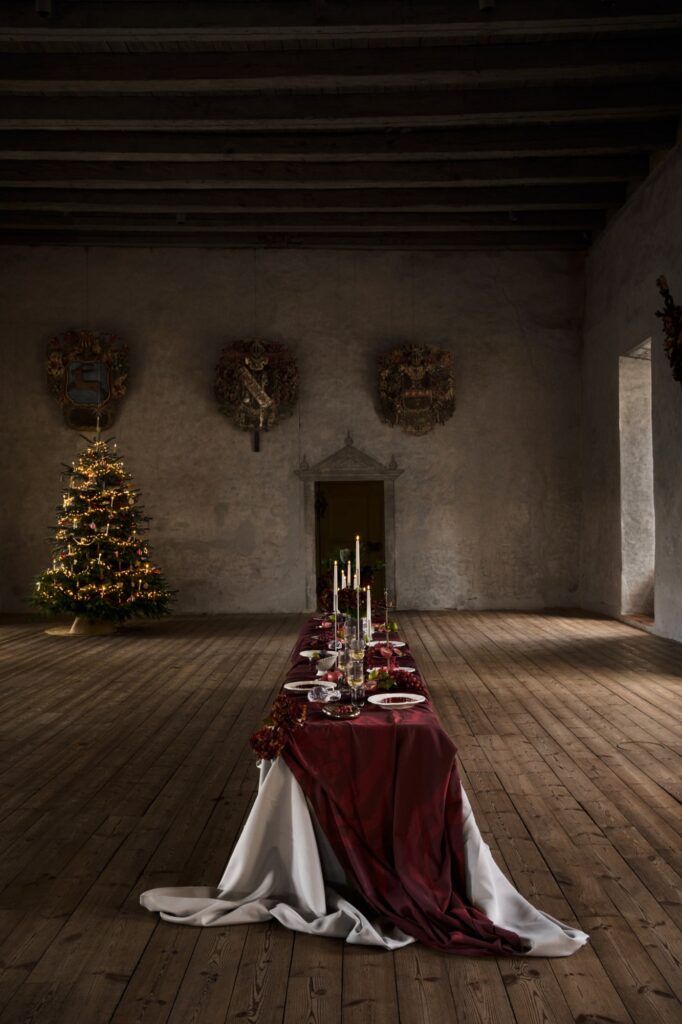
Love Letters from Svenskt Tenn
For this year’s Christmas collection, textile designer Nkuli Mlangeni-Berg brings South African craft traditions into conversation with Svenskt Tenn’s colourful world.
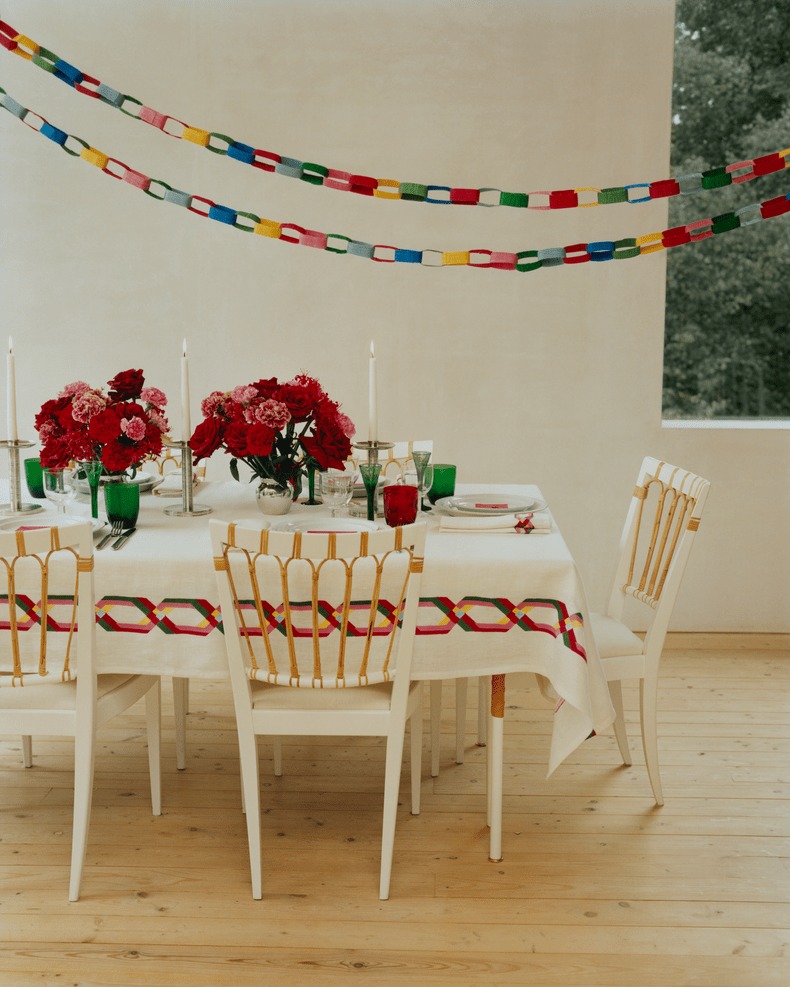
image courtesy Svenskt Tenn
The holiday season has a way of bringing us back to the people we love. Gathering around a table, sharing something delicious, finding a small gift that says what we sometimes forget to put into words. It is this last gesture that feels particularly fitting for Love Letters from Svenskt Tenn, a Christmas collection with affection woven, painted and beaded into its details.
Behind the collection is textile designer Nkuli Mlangeni-Berg, founder of the multidisciplinary studio The Ninevites. Born and raised in Kagiso, Johannesburg, and now based in Stockholm, she recently completed her master’s degree in textile design at Konstfack. Her practice centres on preserving cultural heritage, honouring African craftsmanship and giving space to underrepresented stories.
Her relationship with Svenskt Tenn began with Her(e)itage in 2023, an exhibition created with Southnord, the cultural platform championing Black and Afro Nordic artists, curators and organisations. This year marks her second collaboration with Svenskt Tenn and her first venture into Christmas decorations.
The collection’s title refers to “Zulu love letters”, or incwadi yothando: beaded ornaments traditionally used to convey symbolic messages of love and care through colour rather than words. Mlangeni-Berg has drawn on this tradition to create a series of brooches, handmade in collaboration with Imi Uwe, a craft collective in KwaZulu-Natal, South Africa.
There is something lovely about a gift that carries its own quiet message. Here, the thought behind the object becomes part of its appeal.
Throughout the collection, Mlangeni-Berg brings together references to Ndebele mural painting and Zulu beadwork, translating them into embroidery, glass baubles and brass decorations. The baubles, handblown and handpainted in Germany, echo the vivid geometric compositions traditionally painted onto Ndebele houses. Beaded details also appear on geometric brass ornaments, bringing texture and colour to their clean outlines.
For the designer, the process offered an opportunity to connect her South African roots with her life in Sweden through a shared respect for craft. She describes the result as a bridge between her two worlds and a celebration of her Ndebele heritage.
Among the most thoughtful pieces are elephant ornaments made from brass and glass beads. They reference Estrid Ericson’s familiar elephant pattern from the 1930s, while their colours and silhouettes draw on Mlangeni-Berg’s South African heritage. In isiZulu, indlovukazi, a word for a queen or queen mother, literally means “female elephant”. For Mlangeni-Berg, the ornament therefore carries a further meaning: a tribute to femininity and to the women who have contributed to the collection.
At the Strandvägen 5 store, Josef Frank’s Brazil provides the backdrop. Created during his exile in the United States between 1941 and 1946, the pattern belongs to his so called New York designs and depicts his imagined vision of the rainforest in a profusion of colour.
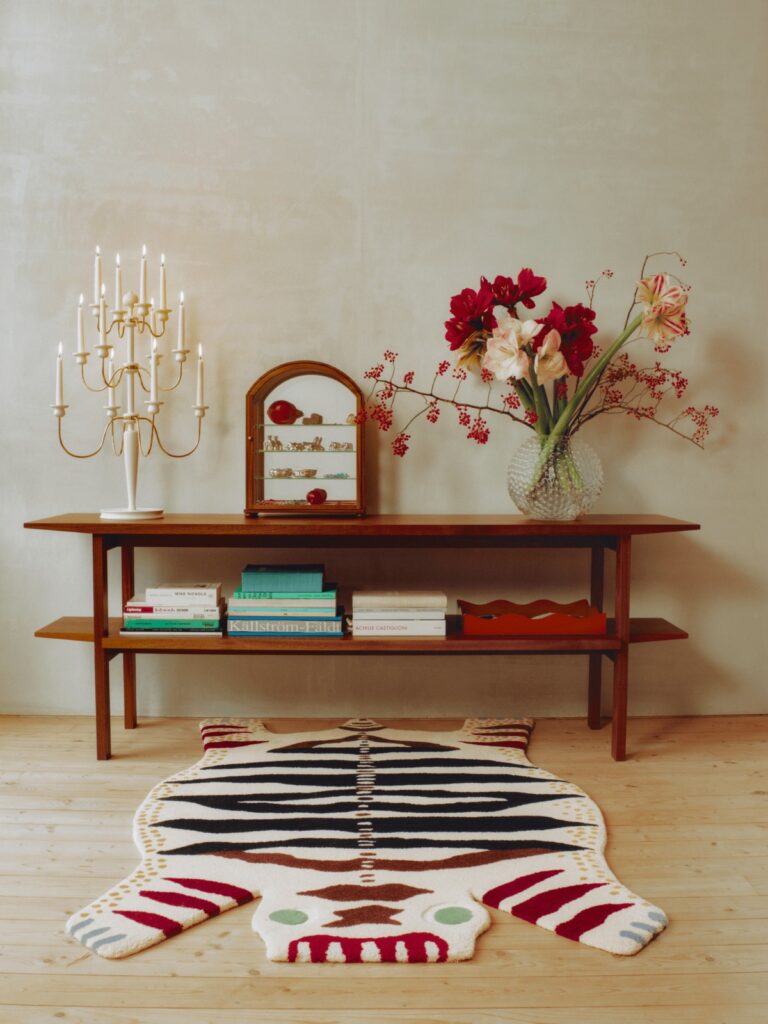
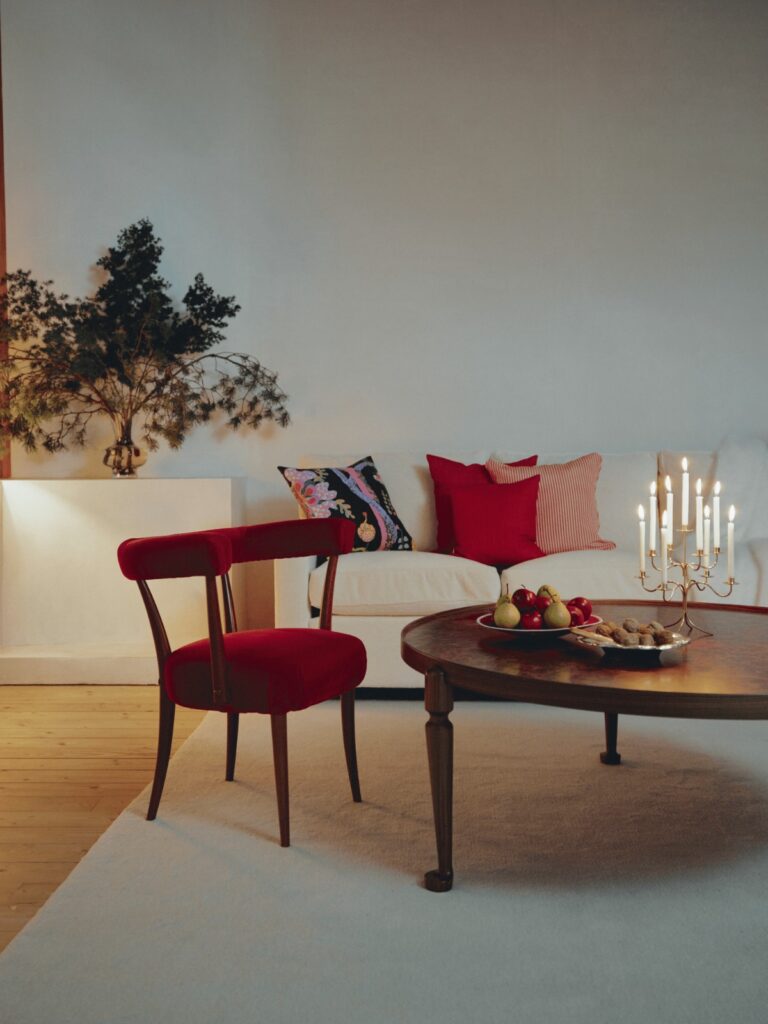
Its organic forms meet Mlangeni-Berg’s bold geometry in a Christmas setting that Head Curator Karin Södergren describes as more graphic and pared back this year, while remaining rooted in the humanistic approach to interiors developed by Ericson and Frank.
What draws me to this collection is how much there is to discover in a small decoration. A painted shape, a string of beads, an elephant carrying a story of its own. Something to bring out each December, perhaps, and eventually pass on with a little of that story attached.