Hums: Where Every Shoe Is a Character

Hums: Where Every Shoe Is a Character

Text by Natalia Muntean

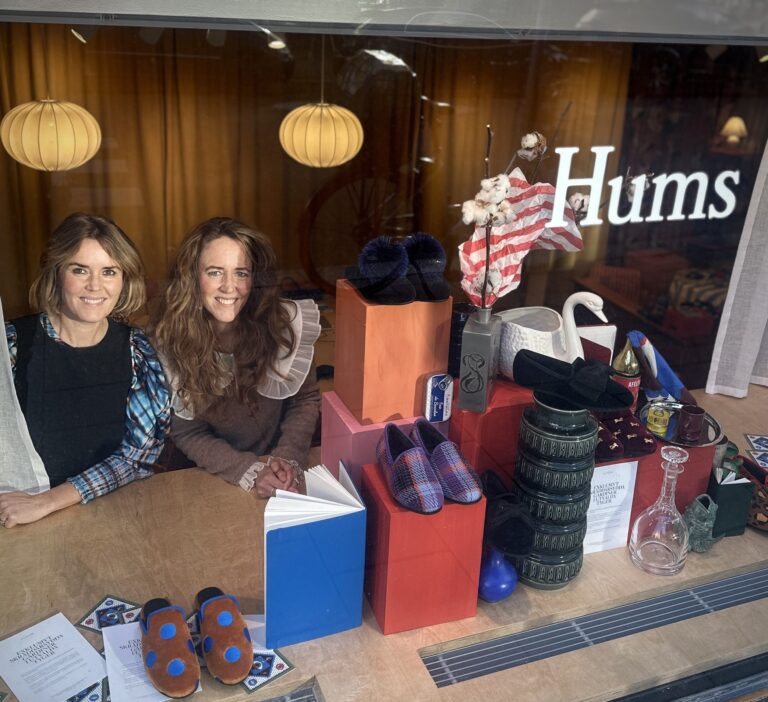
On a street in one of Stockholm’s chicest neighbourhoods, a colourful scarf hangs like a mast, announcing something out of step with the city’s sometimes strict aesthetic. Inside is Hums, founded in 2017 and run today by two sisters, Henrietta and Charlotta Nyvang, who make a much-overlooked object: slippers. Slippers for a softer world, to be more precise. Henrietta, an illustrator, creates the brand’s world, while Charlotta, an interior designer, helps keep the rest running. Together they have worked with & Other Stories, Siri Carlén, Teklan, Cathy Nordström and Mille Notti. The slippers, designed in Stockholm and made in a Spanish village full of shoe factories, come in velvet and suede, in tartan checks and bold colours, with names such as Breakfast Boss and Tassel Snoozer, and a rubber sole that lets a house slipper walk out the door.

Natalia Muntean: Where does the name Hums come from?
Henrietta Nyvang: It comes from the word “humble,” and from harmony. When you’re in harmony and you feel good, you go humming, and that’s Hums as well, having comfortable shoes on. And the logo has a tiny hat, from the saying “where you hang your hat, that’s home.”

NM: And what was the moment you decided to start?
HN: We were looking for something creative to make, and we started thinking about house shoes and slippers. In Sweden, lots of people walk around in socks, but it’s a cold country, and the floors can be very cold. Once you find a good pair of slippers, you end up wearing them all the time. There are plenty of options, but most are quite fluffy, often made from sheepskin or wool. They’re comfortable, but not especially elegant, not something you could wear with a more dressed-up outfit.

Charlotta Nyvang: Another thing we hear from customers is that the shoes make them happy. They wake up, put them on and think, ‘It’s going to be a good day.’

HN: You feel that you’re respecting yourself. We often talk about our mother because she’s a huge source of inspiration. She’s creative in the way she dresses and combines things. She doesn’t have to be dressed up in a formal way; she has a very personal style and respects herself in how she dresses. It’s a way of being kind to yourself.

NM: I think that feels even more important now, with the world as it is.
HN: Yes, the little things matter: the colours, lighting a candle, doing that little extra. We also see that people want to bring more colour into their lives, but they’re not always sure how to do it. They wonder whether things will match. Home can be a safe place to start: you can wear colourful shoes there and experiment without worrying what anyone will say.
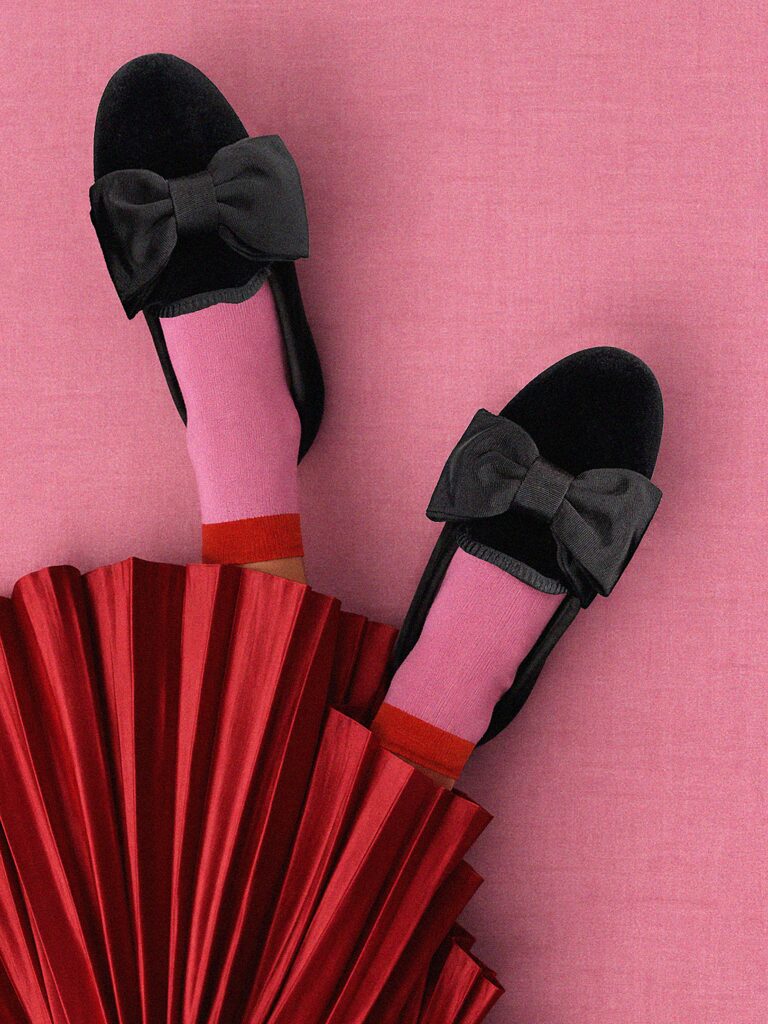
 
Take A Bow Loafer
NM: And then people start wearing them outside?
HN: Yes. Sometimes a customer comes in and says, ‘I wore them to the shop today.’ We tell them they’re absolutely allowed to because the shoes have a proper outsole.

NM: Was there a shoe you created with your mother in mind?
HN: It’s quite funny, because sometimes people ask what the inspiration is and I don’t really know. It’s not always a proper mood board. We start from things we’ve seen without realising it. But when we create shoes, we know when she’ll wear them, and she will look fantastic. She’s always top of mind: how she would dress it.

The first pair we made was the Keep an Eye Out Loafer. Men buy the single colours, dark blue and dark green, or maybe a little dot- not so adventurous. But the Keep an Eye Out sells really well for men too. People tend to look at the eye because it attracts attention.
Henrietta and Charlotta Nyvang
NM: How did Hums start?
HN: It’s been growing very organically. We started a little before 2017, developing the idea and trying out fabrics and factories, and then the proper company started in 2017.

CN: Henrietta was really into it before I was in the company. There was good momentum. We had the & Other Stories collaboration, other collaborations, and good touchpoints in different cities. Then the factory closed due to the pandemic, deliveries were delayed, and it didn’t open up properly again, so we had to rebuild and do the whole thing again. It was a restart after COVID. The product turned out even better, but it was a bit sad to lose that momentum.
NM: It’s a shame, since lockdown would have been the perfect time to sell house shoes.
HN: Yes, but customers were loyal. They said, “I can wait; bring it to me after four months.” But it still feels like a new start.
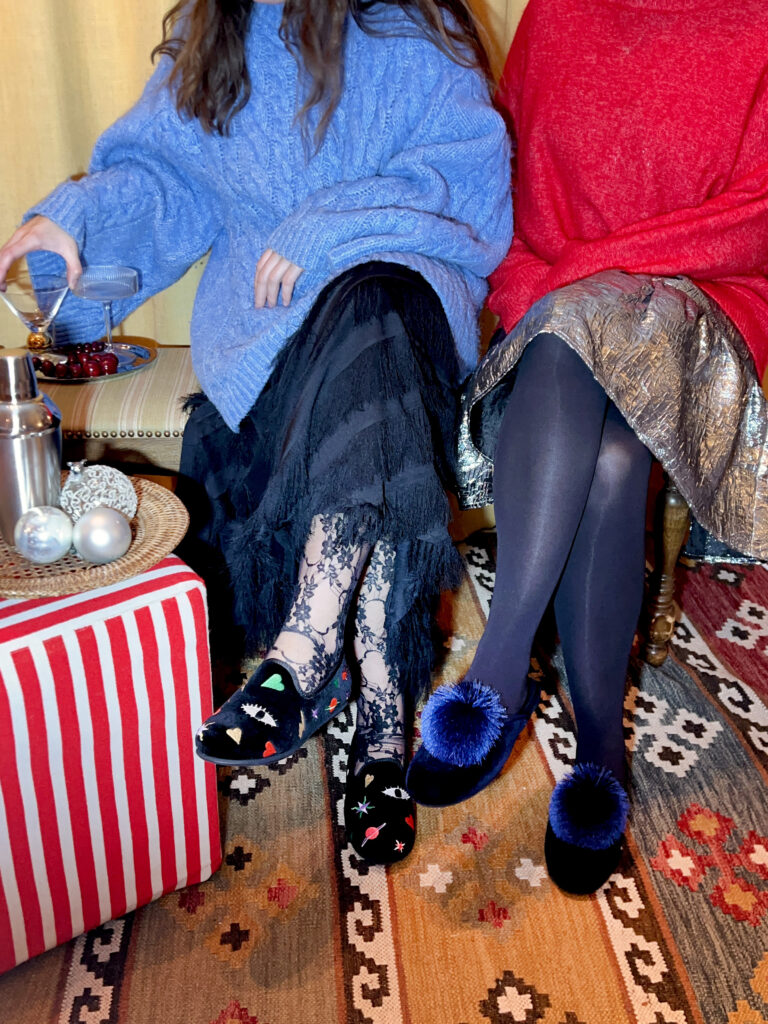
Cosmos Velvet Loafer and Midnight Slipper
NM: How do you split the roles?
CN: Henrietta is the designer and the creative. It’s her world, and she’s an illustrator. I work as an interior designer, so we juggle it, but I do parts of the back office, like orders and customer service. We work together on finance, marketing, and production. Sometimes, when we do a small collection of our own without collaborations, we’re both in the creative. And we look at the strategy together, where we should go and what we should do next.

HN: It’s the two of us, and we have other jobs. We have someone helping us in Spain with production, especially when we want to develop something new while producing other things and collaborations.

NM: What happens when you disagree?
HN: Of course we disagree. But I think we come from the same place in what we like and what we think is at the core of the business. We talk about how to line up the collection. Not everything can pop.

CN: People need a base, which is why we have a core collection. Then we try to find the new things. It’s really hard to decide how many new things to make each season. We’re still a small brand, but you want to be new and out there, and you want people to notice.

HN: That’s how the scarves came along. The shoes are our core, and we love them. We need to sell the ones we have so people get to know them before we bring in too many new things. But the brand is more than shoes. We want it to be experienced as a creative place, somewhere you can visit and see what’s happening, simply to get inspired. We had all these illustrations, so we started producing scarves in the same village in Spain, in 100% silk. We also make scarves with different artists, which we call Creative Scarves.

We made one with Josefin Tolstoy, whose work is more restrained and uses natural, earthy colours, including clay tones. Now we’ve also collaborated with Maria Sandström, who paints monkeys using crayons and cut-outs and makes monkey heads in glass. She has built a colourful, fantastic world around them, and the scarf is coming in February. All kinds of creatives can work with the scarves. There are no limits, as we don’t want to be too strict. We want to bring other good creative people into the brand.
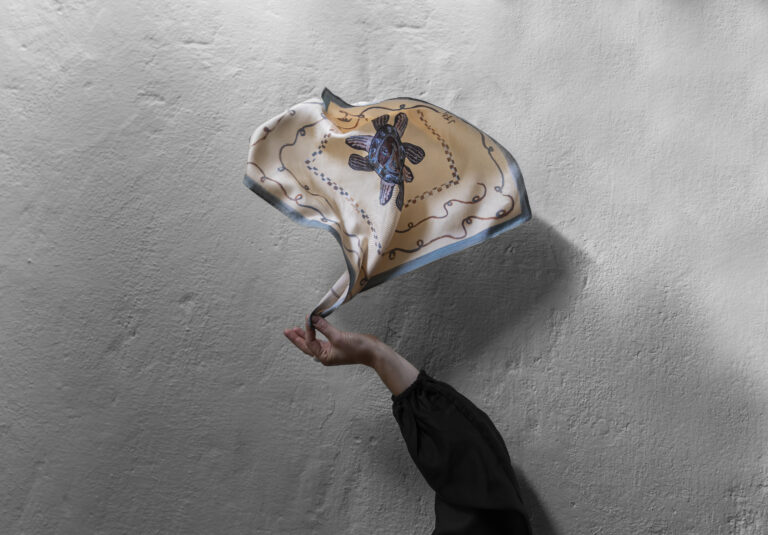
Creative Scarves Josefin Tolstoy för Hums The Horsewhisperer by Day
NM: It’s a complicated shoe, and it’s for both indoors and outdoors. How do you make it work for both, and do you design differently for each?
HN: Lots of beautiful house shoes have leather outsoles, but leather can be slippery and eventually wear out. In Sweden, you might have to take them to a shoemaker to have a new sole fitted. So we decided quite early on to use a proper rubber sole.

CN: We had a good one before, but moved to this version, which is more expensive and better suited to walking outside. It’s also easy to clean if you want to bring the shoes indoors again.

HN: As for the design, no, not really. The Mille Notti collection comes from the bedroom: the crisp sheets, the night pyjamas, the blankets. Those are more made for indoors, but still, depending on the time of year, you can wear them out. We have the tartan checks, the blue and green. You could wear those with a velvet suit, or with red socks, and dress them up for a night out. Most of them are made for both.
NM: Who is the Hums customer?

HN: It’s a really broad group. We get teenagers from the boarding schools, where students need house shoes and run between buildings. They wear a lot of Hums.

CN: We also have older women and men who live nearby. They come down, have a coffee and try the shoes. If you had to narrow it down, I would say women in their 30s to 50s, living in Östermalm. But that’s because we’re located here.

HN: It’s definitely a city person, interested in colours and feeling nice. Our customers are very loyal. People write to us and say it’s their fifth pair. Some come in and say, ‘I’ve had mine for five years and wear them every day, but now I need a new pair.’ That gives us confidence that we’re making a good product. At Christmas, we sometimes get family photos from people who have given everyone a pair of slippers.

NM: The names of the shoes are great. Breakfast Boss, Keep an Eye Out Loafer, Tassel Snoozer. How do you come up with them?

HN: It’s a lot of fun. We give them names so you don’t have to think, ‘Which shoe is this again?’ The shoes are more like characters than just shoes. They have a little personality, and we give them even more. The Breakfast Boss, for example, is the checked model; it looks like something worn by someone in charge at breakfast, making eggs sunny side up.

NM: How do you choose your collaborations?
HN: We look for colourful, creative people, and we love the person behind the work as well. Often we know them in some way. Teklan we didn’t know, and Siri Carlén we didn’t know either, but we knew of them. You feel they could work with our brand, but they have their own style, and that’s important. They’re totally free. We don’t tell them to work in particular colours. There’s no brief. You bring your inspiration and your world of colours, and then they come to us and ask, what do you think? If you’re used to making a bag, it’s a different thing to put it on a small shoe, and we can twist and turn it to make it work. But it’s creative freedom.
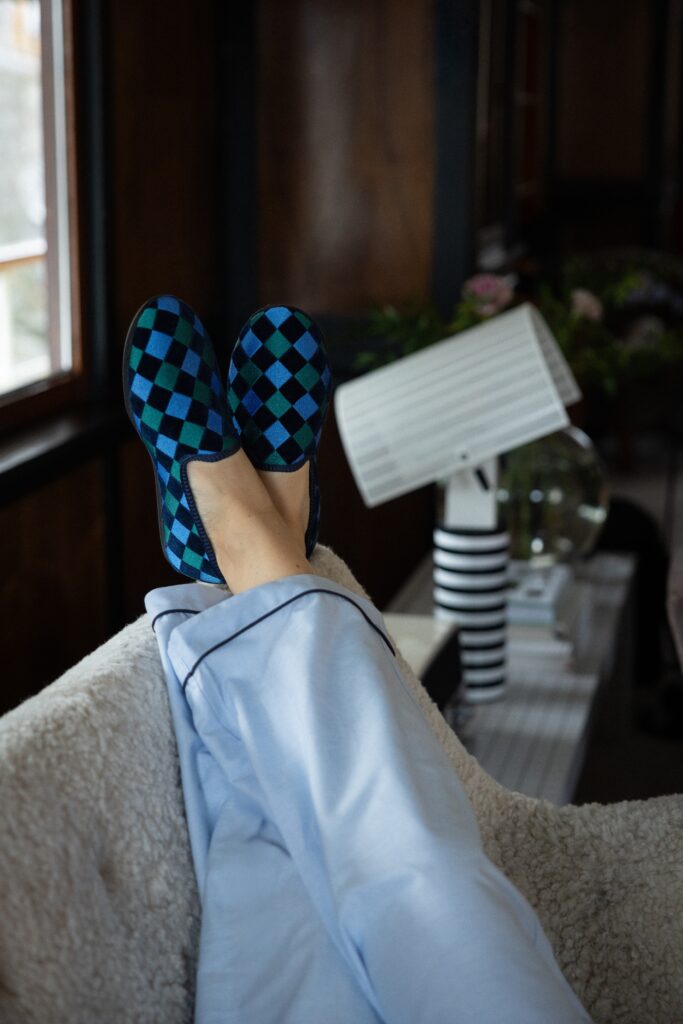
Hums x Mille Notti Breakfast Boss Loafer

Mille Notti was different. They came with their mood board and their collection and asked, can you create slippers with this in mind? So it depends on how the collaboration is set up. With single artists, we bring them the art board, and they have free rein.
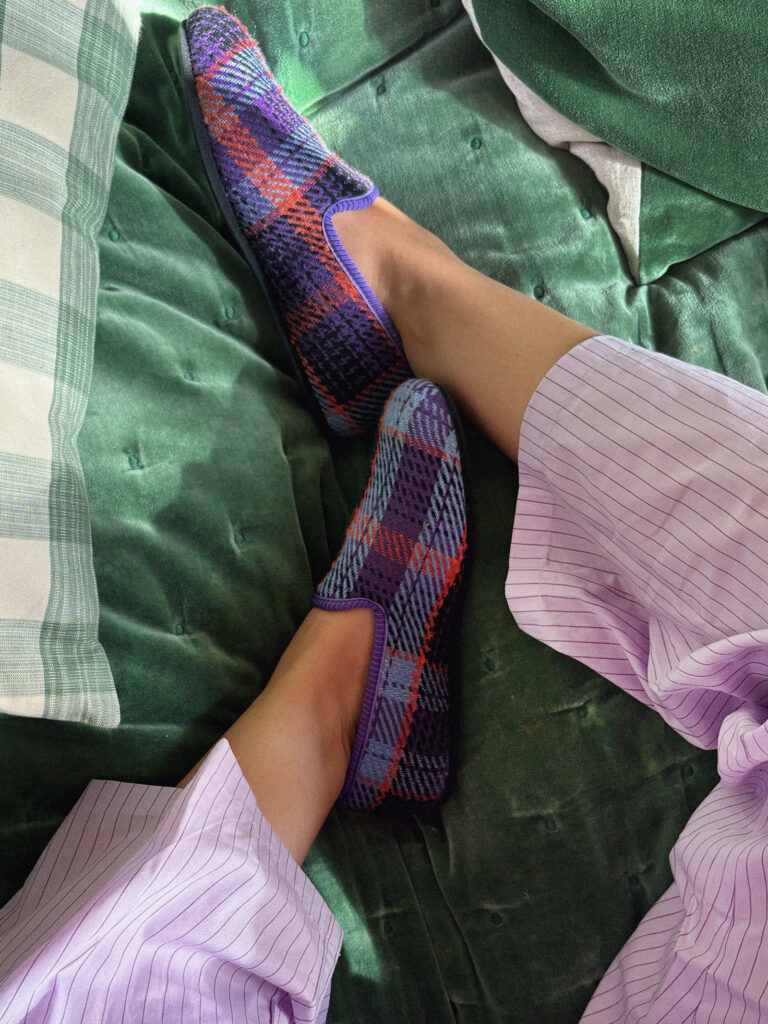
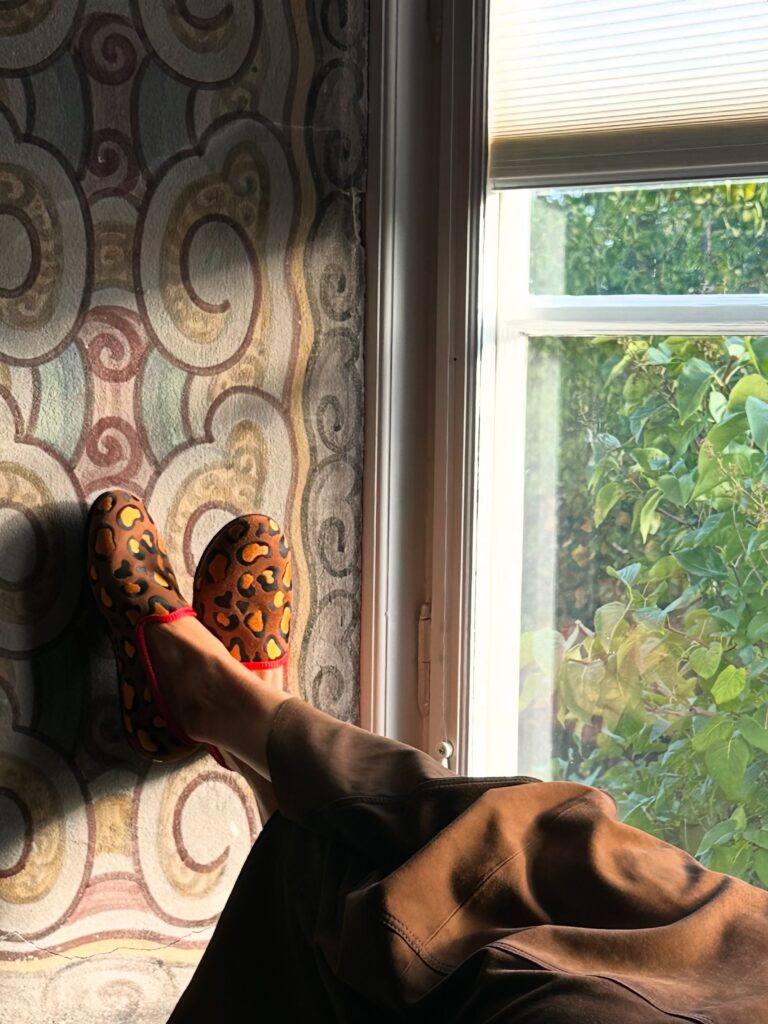
Happy Tartan Loafer
The Classic Leo Loafer
NM: What would be a dream collaboration?
HN: We love to collaborate with great Swedish artists, but it would be fun to go into another culture and see what would happen. Blanca Miró has a fantastic colourful world, both in the way she dresses and in the way she makes things. She’s super creative. I would love to see what she’d make out of the slippers. Culturally, maybe Spanish, or Mexican, or Moroccan, to see what they would do with embroidery. You can dream. I think you have to.

NM: Your latest collaboration was with Teklan; what attracted you to her as a colourist? Did she change how you think about shoes?
HN: The way she works with patterns is very optical. That’s new for me. The details and embroidery are flying on top of the velvet, and there are so many angles in it. The same goes for the ribbon that goes around the shoe. It looks different from different angles. We talked a lot about how the velvet folds. That changed something for me. She goes really deep into the colours and the textures.

CN: She’s very professional and detail-oriented. If she puts her name on something, it has to be high quality. She even helped us design the window.
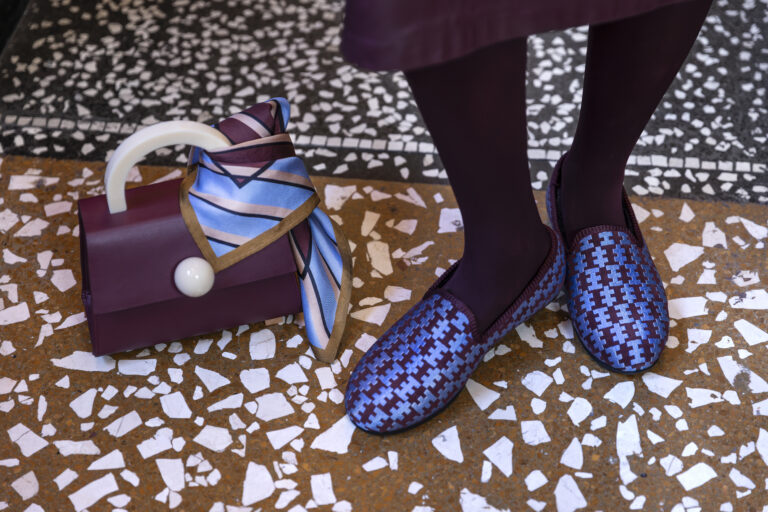
Hums by Teklan Totem Checker Loafers
NM: Speaking of collaborations: Henrietta, have one with the Swedish home-interiors brand Granit. How is it to design for a home compared to designing for a foot?
HN: It’s a big difference. You can take a shoe off, put it in your wardrobe and mix and match it. We want to make shoes that a lot of people will enjoy wearing, but the pattern size and the expression are limited. That’s why I like to combine it with a scarf, because on the scarf you can tell the whole story. You can make a personality out of a shoe, but not the whole story, because it’s such a small area. Designing for a home was totally different for me. I had never done it before. It was so much fun to bring a story into a home through colour, without making it overwhelming to look at. It went really well, and I think it turned out great. You can tell more, and you can bring in more.

NM: Would you bring your world into homes within the Hums brand?
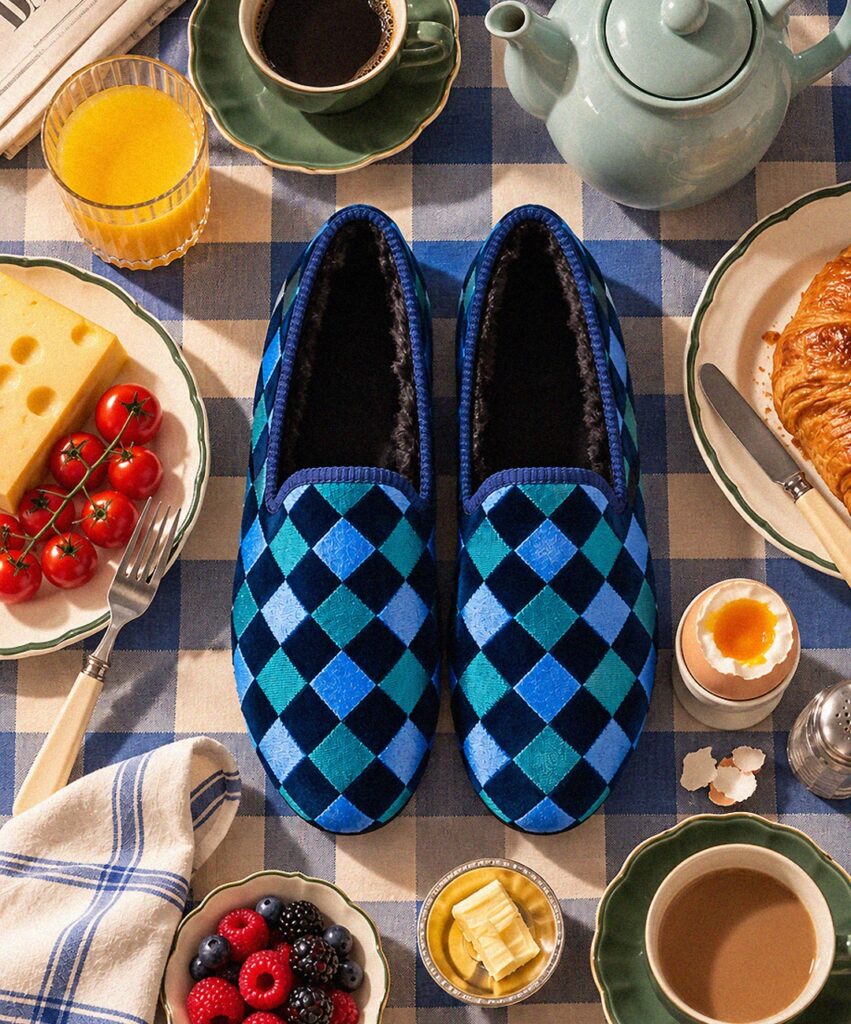
HN: We’ve had some requests. So why not? I can see our world on a pillow, on whatever. But we need to keep to the core. We have so many ideas, but we have to build a brand. We found our niche. A lot of people ask why we don’t do bags, because they love them. But there are so many companies producing bags, and the competition is hard. You need a lot of money to get into that area. Now we’re looking at a small velvet bag, in the same material as the shoe. It goes with the style we’re making for spring, so we’d make it into a small collection with a shoe, a bag, and a scarf. It’s nice to have your own little square to work in sometimes.
Breakfast Boss Loafer
NM: Where would you like to see Hums in one year?
HN: It would be so much fun to be in a bigger city, like London or Paris, and find a new crowd. We don’t necessarily need huge sales straight away; we need to be able to produce what we sell. Finding the right customers in a few new markets would already be amazing.

NM: What does “shoes for a softer world” mean to you now, compared with when you started?
CN: At first it was more just like a saying. A soft world, like having nice shoes at home. But now, with the world’s climate as it is, you have to appreciate the little things in life and the moments you have. Home is even more important than it was during the pandemic. You want a home where you feel comfortable, where you’re happy, where you have colours.

HN: That’s why colours come back, too. The idea is the same, but even stronger. Where you hang your hat, that’s where you’re home. You have small routines that give you a good start to the day, a good ending to the day. These rituals ground you. You can watch the news, but you can also light candles, and you have to be able to shift between those. And I think people are doing it more for themselves now. You used to buy a lot of clothes and bags to show others, because you wanted to look nice for others. But a lot of people now want to look nice for themselves. I want to feel happy when I put my shoes on and feel comfortable.
 
Scroll to Top