
HAYDEN PANETTIERE ON RECLAIMING HER STORY
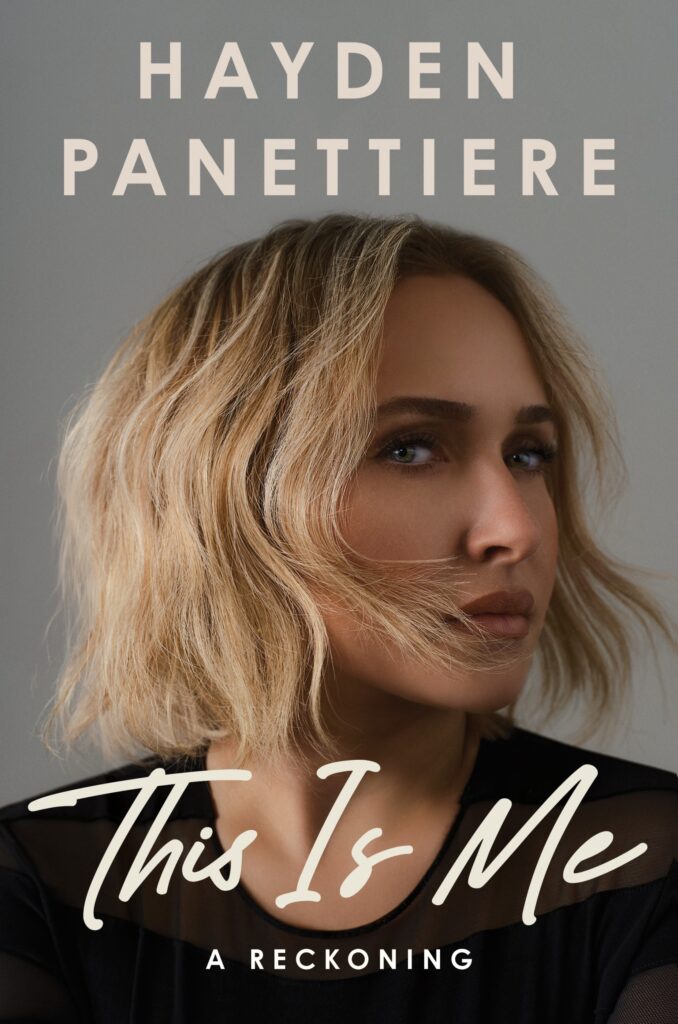
With her memoir This Is Me: A Reckoning, Hayden Panettiere steps beyond the roles and headlines that have long defined public perceptions of her life. In a candid conversation, she reflects on the courage of vulnerability, the catharsis of telling her story in her own words, and how revisiting the past became a way to connect with others. As she looks toward new creative ambitions, from writing and directing to building a wellness brand, Panettiere reveals a woman determined to move forward on her own terms.
text Ulrika Lindqvist Photography Storm Santos
Ulrika Lindqvist: What compelled you to write This is me: A reckoning at this point in your life, and what did it mean for you to revisit your story with such openness?
Hayden Panettiere: When I was first presented with the opportunity to write a memoir, my initial reaction was to say no to it… But the more that I sat with it, I realized it would give me the chance to tell my story on my terms. For so many years my life had felt like a Mad-Lib. People would speculate things about me, and would fill in the blanks with missing information. To be able to be so open and honest was cathartic and terrifying at the same time… It’s my entire life on a silver platter. Allowing yourself to be so vulnerable in such a public way isn’t easy— but ultimately, it allowed me to be able to carefully articulate what I’ve gone through. My goal was to help other people who’ve faced similar obstacles feel less alone— and the feedback I’ve received has been incredible. So many people have written to me sharing their struggles and their own stories. Reading those and knowing that I’ve somehow been able to make a difference— even in the smallest way, is everything.
UL: Memoir writing often requires a different kind of vulnerability than acting. How did you find your voice on the page?
HP: It wasn’t always easy… Some days were certainly more challenging than others… The hardest part is going back so far and really mapping out the details of everything in a way that gives grace to the other people involved, but also truly depicts what happened. I had to consult with some family members for certain details from my childhood. It’s easy to create a character but not so easy when you’re writing about yourself— it’s almost like therapy. Also, being able to write sections of it a little bit at a time was helpful. Some days flowed better than others— and of course there were those moments where I went back and re-wrote certain sections. Walking away from what you’re writing and coming back to it proved to be very helpful.
UL: You entered the public eye at a very young age and grew up under constant expectations. Did the writing process feel liberating and creatively instinctive, or was it shaped by pressure and self-consciousness as well?
HP: It was both… Writing about difficult things that I had survived was absolutely liberating— but of course there were those moments where I was extremely self-conscious and worried about what people would think. That’s the hard part about being vulnerable! You have to be brave enough to show up to battle with no armor on, and that in itself is terrifying.
UL: Were there any memoirs, novels, or writers that accompanied you while working on the book?
HP: I read several memoirs that others celebrities had written to get a feel for how they told their stories. I also had help from my editor as well as a few other people who helped with keeping my stories streamlined. It’s hard to talk about your life in a linear way, and that’s where I needed the most help.
UL: I’ve read that you’re drawn to fantasy literature. What is it about the genre that resonates with you and do you have any recommendations for us?
HP: When I was a kid my parents gifted me The Lion, the Witch, and the Wardrobe and my love for fantasy grew from there. It’s a genre that allows you to mentally escape— and is also a great way to decompress after a long day. As far as recommendations, just about anything by Sarah J. Maas is an excellent read! She’s one of my favorite writers.
UL: A memoir becomes both deeply personal and public once it leaves your hands. How are you feeling now that the book has met its readers?
HP: I’ve have been so blown away by the success of the book… It’s something you hope for, but to be #1 on Amazon and a New York Times Bestselling author is just surreal. Most importantly, the fact that I’ve been able to help people means more than anything.
UL: Looking back now, what would you want to tell your younger self?
HP: Don’t be a people pleaser, set healthy boundaries, and know that it’s all going to work out just fine!
UL: After such an introspective project, what are you hoping to move toward, creatively or personally, in 2026?
HP: I’m excited about so many things! I’d love to be more involved creatively behind the camera as well as in front of it. I’m also hoping to try my hand at directing. I’d love to create my own show— I’m actually writing a series right now! I’d additionally love to start my own wellness and lifestyle brand. I really want to lean into doing things that make ME happy— and ultimately help make this world a little bit better.
We at Odalisque are so incredibly sorry to hear about the passing of Hayden Panettiere. This interview will stay published as we want as many as possible to read her insightful thoughts and hopes for the future. We extend our deepest condolences to Haydens family and loved ones.
photography Storm Santos