"A Collective Contribution": Michael Anastassiades on His ‘After’ Series for Fritz Hansen
text Natalia Muntean
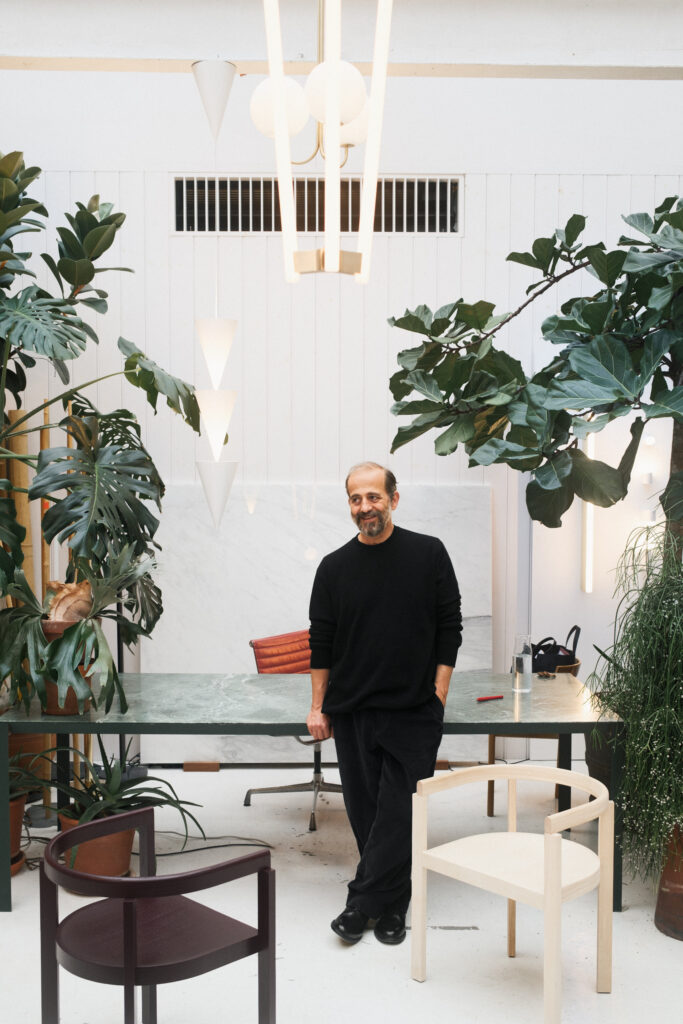
With a career spanning over two decades, Michael Anastassiades has cultivated a unique language of design, creating lights, furniture and objects characterised by a balance of improvisation with structure. Having collaborated with the world’s leading manufacturers, from Flos to B&B Italia, his work is part of permanent collections of institutions like the Museum of Modern Art and the V&A. Now, Michael Anastassiades brings his poetic, yet rigorous design language to his first large-scale furniture collaboration with Fritz Hansen.
Natalia Muntean: This is your first collaboration with Fritz Hansen. How was this experience different from your other partnerships?
Michael Anastassiades: It’s different in the sense that it’s a Danish brand. So for me, although I’ve had quite a lot of experience in collaborations on a different level with Scandinavian brands, Fritz Hansen is probably the first one of that scale in terms of industrial production. I have worked in the past, starting with Iittala, Danish Modern, or Bang & Olufsen, but this really is the first furniture collaboration on that industrial kind of level.
Every brand is different. The culture is very different when you do something in Scandinavia. The speed and the development process are very different and there seems to be a different attitude towards the sense of ownership of design. With Danish design, if you study historically, it feels like it’s a more collective contribution towards the evolution of icons. They were all modelled on different archetypes from history – a classical Greek chair, or traditional English furniture. Every time a certain typology of chair was approached by an architect, it was built on something that had happened before.
This approach has been recurring for many years; everybody was adding something, building on what came before. For me, this was a particularly attractive point when working with Fritz Hansen, understanding that sense of collective contribution was a good starting point for the dialogue about this chair.
NM: And how has this philosophy of collective contribution shaped your approach to the ‘After’ series?
MA: It has shaped it in the sense of understanding and acknowledging it, this sense of ownership. So somehow it feels a little bit more democratic. This different mindset is very much aligned with everything else I have done, especially for my brand of lighting, which is also modelled on a sense of familiarity. There is already a starting point for a conversation; you’re not there to shock people with something completely different. That approach is very much aligned with my brand, so it does work very well with the project I’ve done for Fritz Hansen.
NM: Your work often strikes a balance between simplicity and emotion. How did you find that balance in the ‘After’ chair and table?
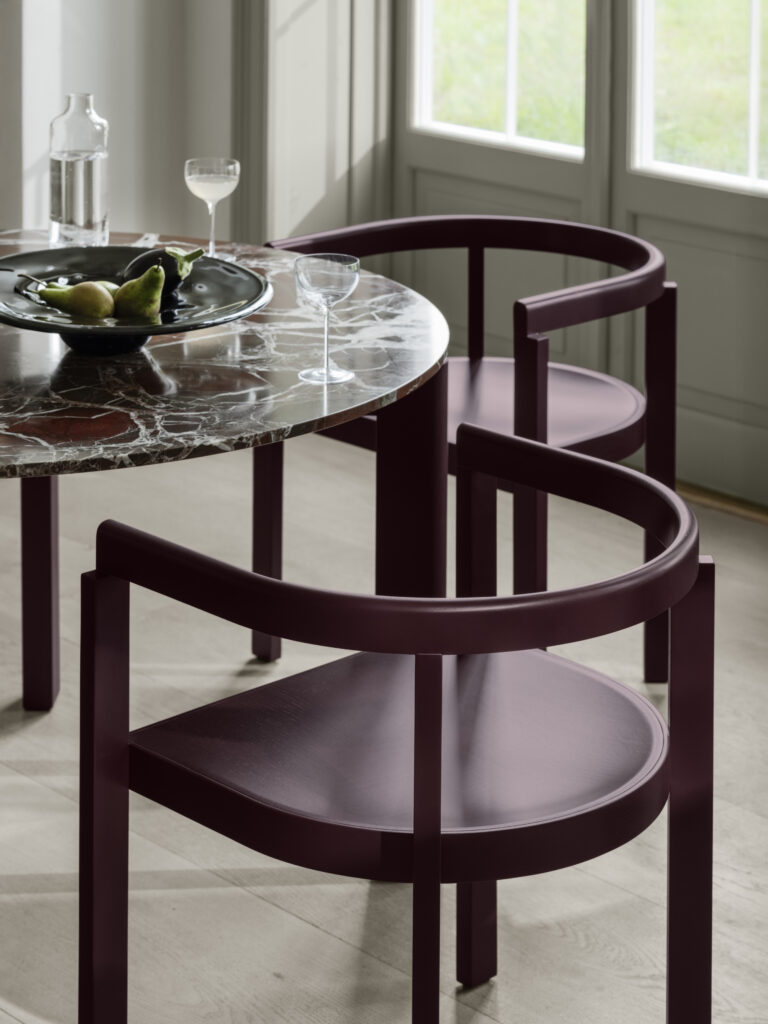
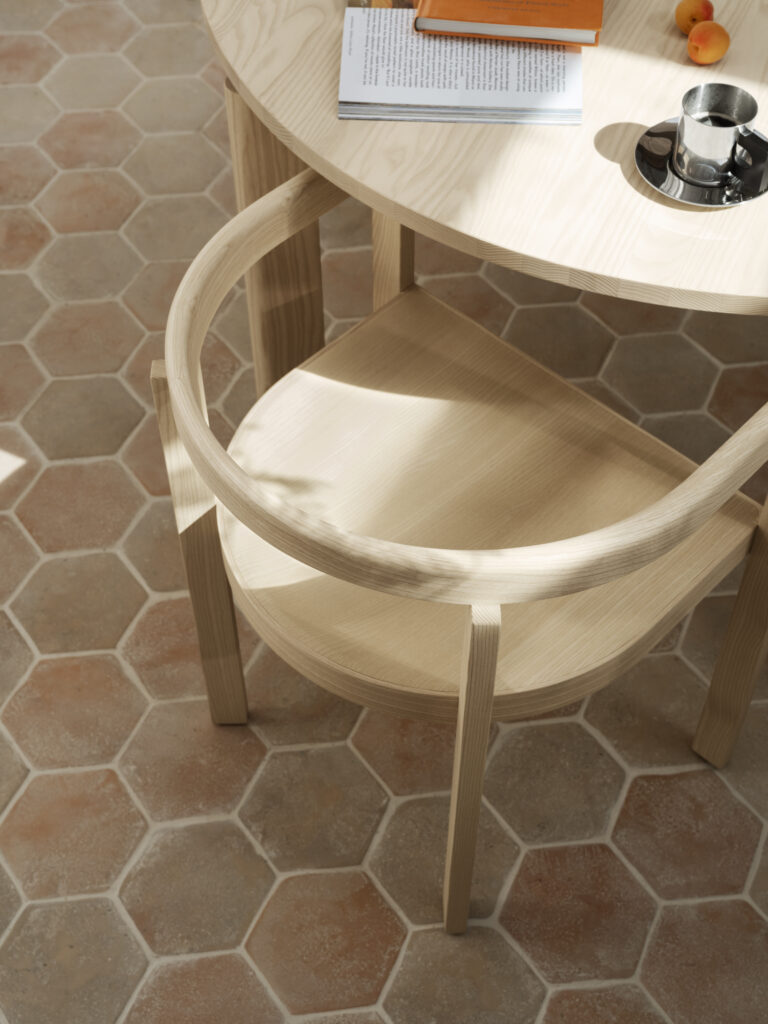
MA: I think it’s really obvious in that example because there are hardly any elements to it. Structurally, if you analyse the chair, there are four legs, an armrest which is combined with the backrest, one element that wraps around, and then there is the seat itself. Everything is so perfectly placed in its position and how they are constructed together. There’s not much you can actually remove from the design other than the essentials I have chosen to keep. That reduced approach is very much there in its simplicity.
NM: What was the biggest challenge in achieving this pure form, without compromising comfort?
MA: Well, the fact that you have to constantly revert to your original idea and vision. You have to pause now and then and look back. It’s interesting because even the very early prototypes look almost identical to what it ended up being. But the challenges have been: how do you introduce comfort? And what does comfort mean in your approach to a piece that is so strict and disciplined? The biggest challenges have been how to make these introductions in such a subtle way, not to compromise the strength of the chair in terms of its look.
NM: You’ve worked closely with the craftspeople and the creative team in a very hands-on way.
MA: The development has been over a series of workshops in Copenhagen with the design team. The conversations were very much about trying it out on the spot and making a collective decision that this makes sense. There was very much their feedback in the process and how it guided us to arrive at the final result.
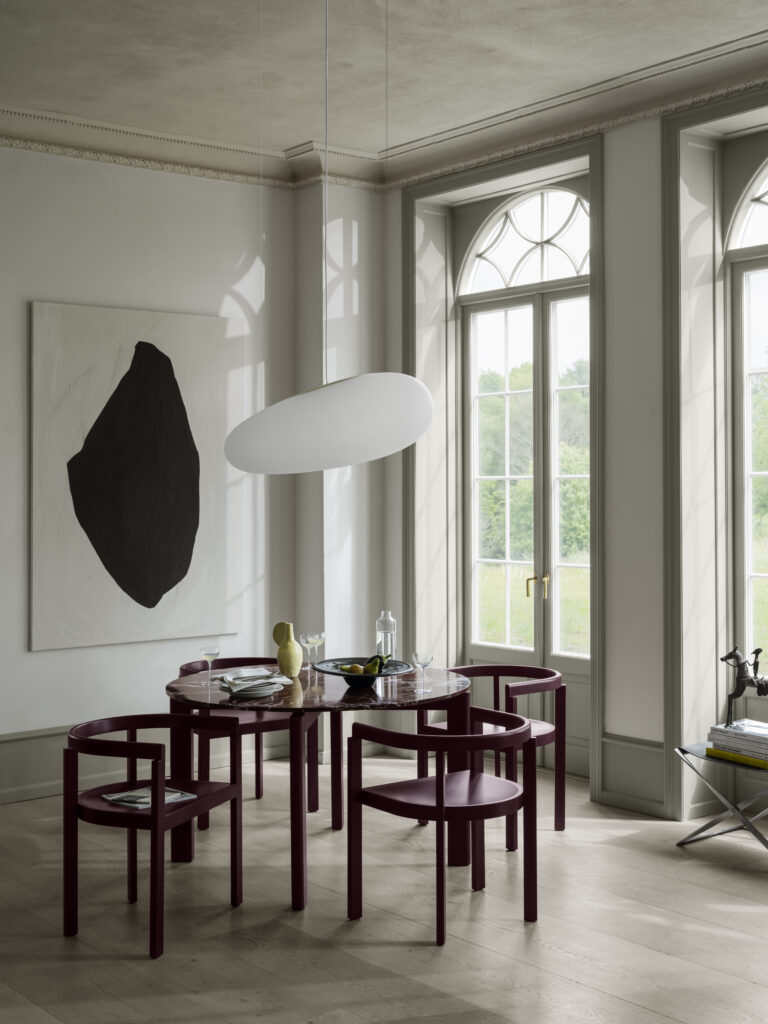
NM: Can you tell me about the material choices? There’s a contrast between the wood and the marble tops.
MA: The starting point of the ‘After’ series is really the chair itself; that is the protagonist. I wanted it to be monolithic. I wanted it to be wood for its warmth, its lightness, for all the welcoming qualities. I like the challenge of using a soft material in a very strict language.
The type of wood was very much a sustainability decision. You have to look at the cycle certain timbers have in the world in terms of their availability. We chose types that are readily available and not rare species, which also drives the cost. The choice of ash was that kind of decision.
NM: Your process has been described as both analytical and intuitive. How did that unfold for the ‘After’ series?
MA: I think you’ve got to really educate yourself. Informing yourself about the DNA of the company, their contribution to the Danish approach, and then historically looking at the history of design and the history of a chair. Understanding how anything new is positioned in this map – that takes many years of study, observation, and education. From that moment on, all that information is embedded in your process. You don’t have to constantly refer to it because you’re already informed. So when you start working, you follow a certain intuitive process, but that deep knowledge is already filtering whatever comes out.
NM: The development took nearly three years. How did time influence the final result?
MA: You have enough time to reflect on the decisions that have been taken. When you revisit something after such a stretch of time, you naturally feel confident that it makes sense to stick to the direction, or you see that you need to adapt. So it adds to the maturity of the idea.
You have to appreciate the coordination of all the different parties and elements; navigating through that is a slightly more lengthy process. When you take such a long time, you know that you have taken the right decisions and that you are confidently in a strong place.
NM: Looking back on this collaboration, what do you think ‘After’ adds to the story of Danish design?
MA: I’m hoping that I have really arrived at all these things that were intended to do. As we talked about the name, we talked about my contribution. I’m hoping that this piece is there to last for a long time, and that hopefully it can be used as a stepping stone for maybe somebody else, or even myself, to revisit in the future.
NM: What has this collaboration taught you? What are you left with after this?
MA: The experience in its own right. As I said, it’s the first collaboration with an industrial production company in Scandinavia, in Denmark, that deals with these quantities. So for me, I learned a lot through that experience, and through all the people that I’ve collaborated with. So technically, it was quite informative.
You really learn about the attention to craftsmanship and detail and how much that mattered, because these are processes that are familiar within this structure. That knowledge is actually quite precious. So for me to even have the opportunity to get in there and gain something from it, I think this is actually priceless.