Sheree Hovsepian is (still) becoming
text Natalia Muntean
photography Saskia Clarke
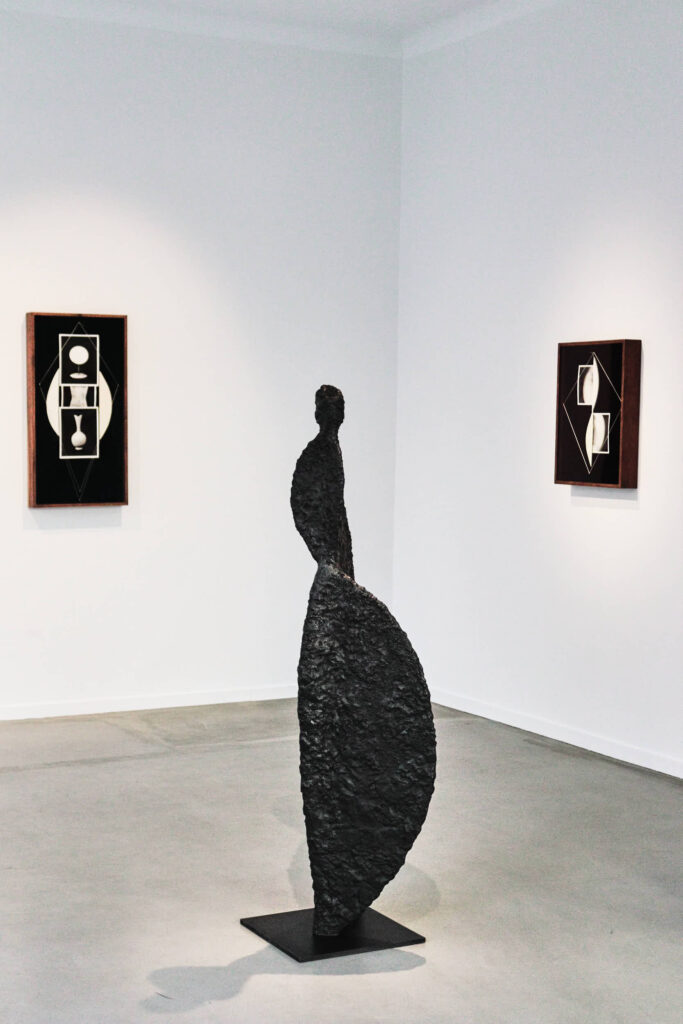
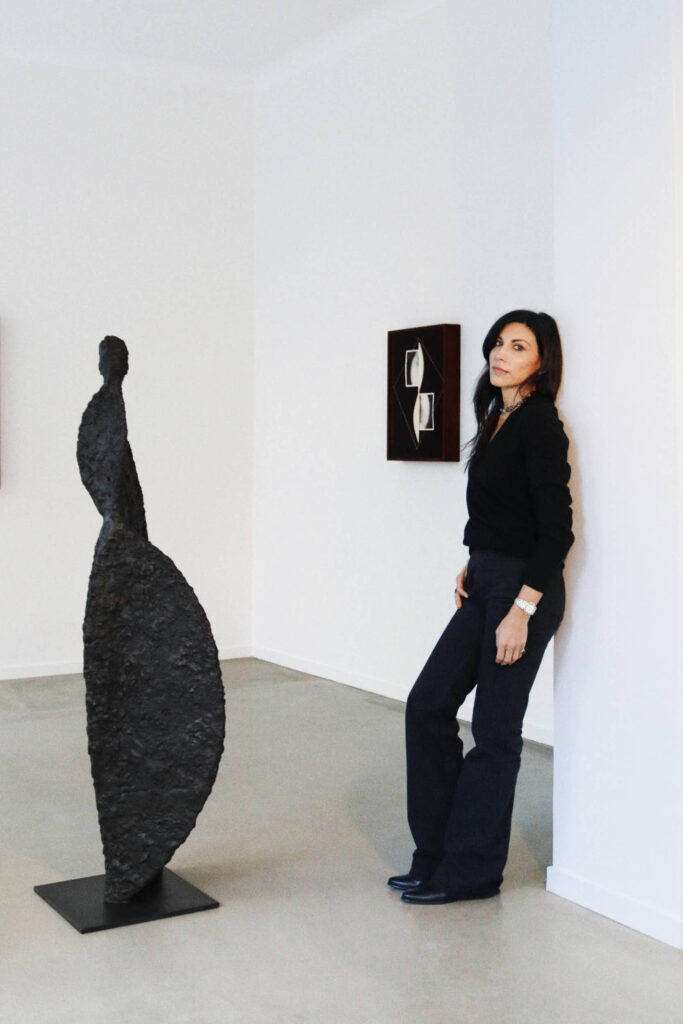
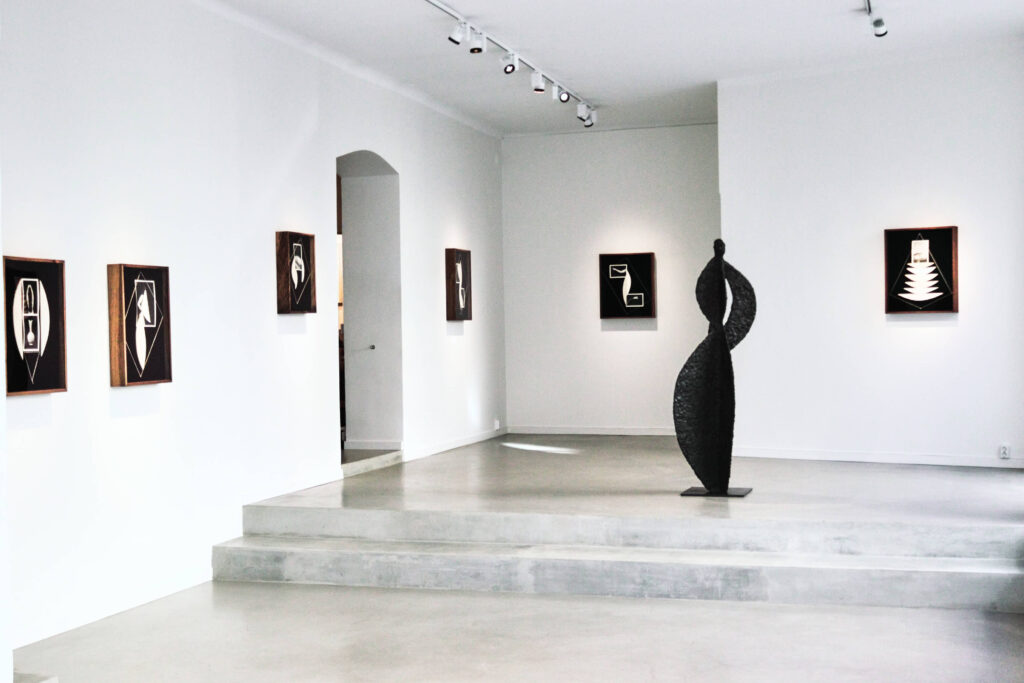
“I never considered myself a photographer,” Sheree Hovsepian tells me. The camera is just one of the tools. Photographs, hand-shaped ceramics, string, bronze, she brings them together until they become something they weren’t on their own. Becoming is Hovsepian’s first exhibition at Carling Dalenson Gallery in Stockholm, and its title names what her practice has always been about: not arrival, but the ongoing act of taking shape.
Natalia Muntean: The exhibition is called Becoming. Can you tell me a bit more about that choice and how it reflects the body of work you’re presenting?
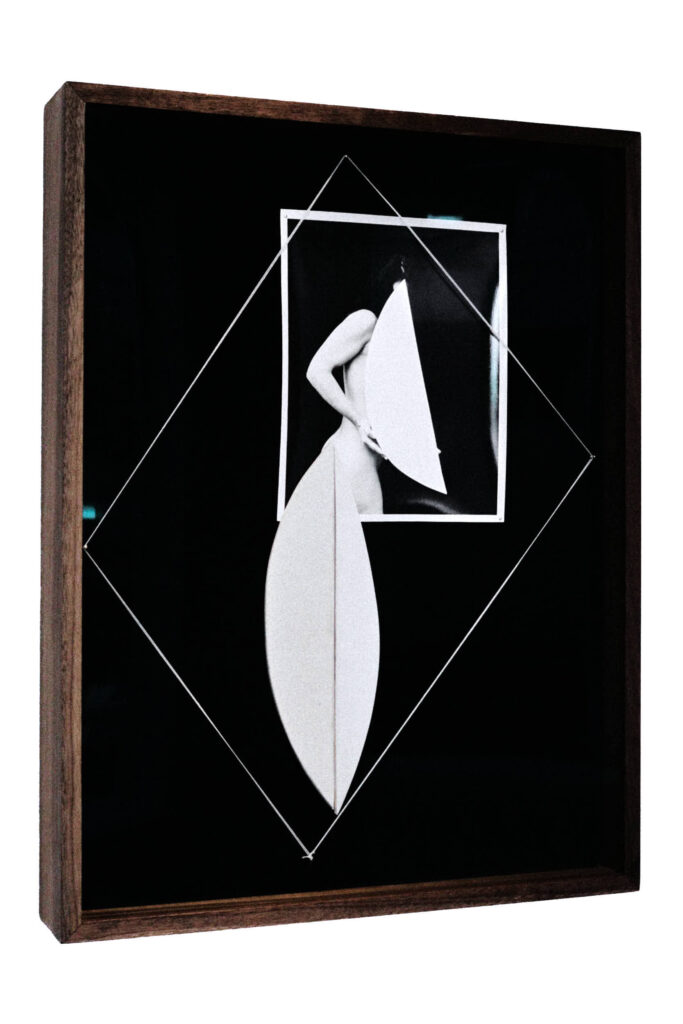
Sheree Hovsepian: It’s from a quote by Simone de Beauvoir. “One is not born, but rather becomes a woman.” That act of transition, of being in flux, of growing into something else, felt very pertinent to my work. Because of the nature of assemblage, a few things put together that become something else, and because the core of the work is very feminine, I thought it really resonated with these pieces, with the collages in particular.
NM: Did you make new work for this exhibition, or was there a selection process?
SH: All of the collages are unique, even though I reuse photographs at times. Because I’m making all of the ceramic shapes by hand, everything is different; they’re all one-of-a-kind pieces. This is from a body of work I’ve been developing for a few years. Similar work was included in the Venice Biennale four years ago. So it’s an ongoing series.The sculptures are relatively new. The first editions were made for a show I had in New York this past May. They look great in this gallery, and I’m so glad we paired them with the collages.
NM: Can you tell me a little about your process? What does a day in your studio look like? Do you go in with a plan, or do you allow yourself just to explore?
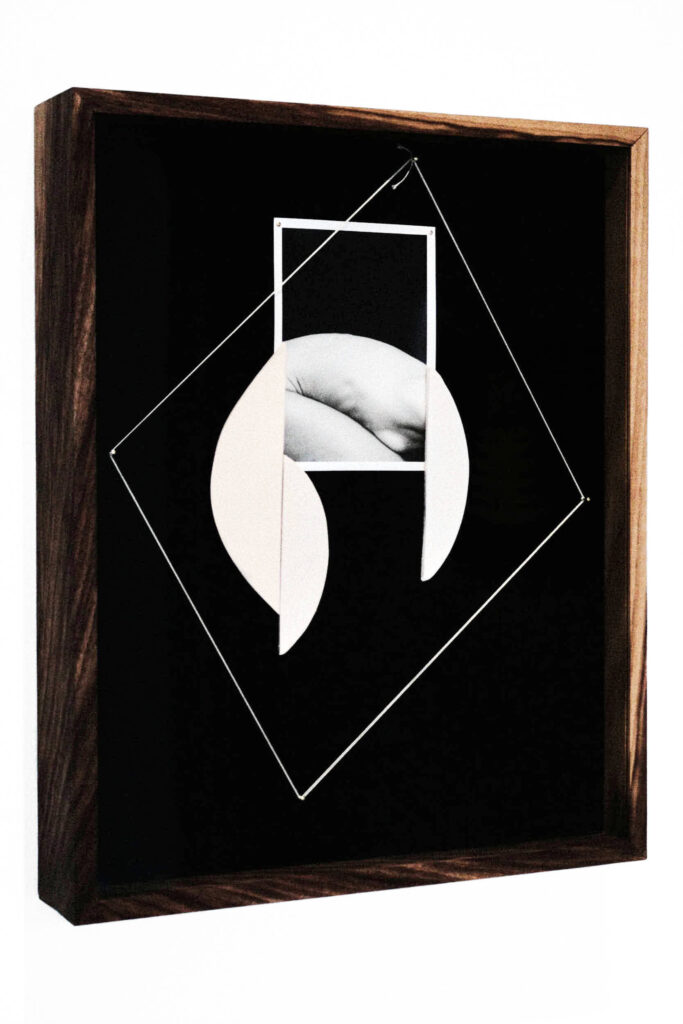
SH: Lately, I’ve been fortunate enough to be working towards shows. When I’m working on the collages, I make the different pieces separately. I use my sister as a model. When she comes to visit, I’ll shoot her in the studio and make many images of her. Then I’ll choose which ones to print and make many prints from those. With the ceramics, it’s similar. I’ll make a lot of them, bring them to the studio, and then I have my string and other materials there too. When it’s time to put everything together, it’s really about play. Very hands-on, moving things around, changing them, seeing what this looks like next to that. It’s actually quite antithetical to photography in a way, but I really love this additive process of bringing things together. For me, making the collages is a bit like the idea of an exquisite corpse: building a body, assembling a figure out of disparate parts.
NM: How did you arrive at this place in your practice, working across string, photography, ceramics and sculpture?
SH: I studied photography in college and grad school; that was my focus. But I never really considered myself a photographer in the traditional sense, someone who goes out into the world and takes pictures, which feels like a very subtractive process. My sensibility has always been more additive, more akin to painting or sculpture, because it’s about building something. Photography just became one of the tools I use. With ceramics, I was drawn to it because I love working with my hands, and I love the idea of making something that carries a residue, a residual effect of having been touched. There are also some interesting parallels between ceramics and photography: both can take an impression, both go through a chemical process, and both carry a threat of failure. You don’t know what you’re going to get. I’m talking about analogue photography, which is what I use for this work. I use silver gelatin paper specifically: the weight of it, the depth, the tonal range, the drama. I love the theatrical nature of it, the romance of photographing my sister in the studio, this kind of intimate dialogue between us that feels like a dance, a choreographed sequence.
NM: Why your sister specifically? You’re both the observer and the observed, in a way.
SH: When you’re working with a body, so many questions come into play: whose body is it, where did you find this body, what colour is it, what’s the gender? But when you’re talking about yourself, all of that falls away. You can just focus on the self, on your own subjectivity. These works are really about how I interpret life. So it makes sense to think of them as a kind of self-portrait. I use my sister because she’s physically very similar to me. It allows me to be behind the camera and in front of it at the same time. It’s also a mediated process. It’s easier to look at her in the negatives than it would be to look at myself, which I’ve tried and rejected. You’re more critical of yourself. Using her gives me a little more freedom. And I always joke that it’s the only time she actually listens to me, when I’m directing her in front of the camera. It becomes a very special time between us.
NM: You moved from Iran to the Midwest when you were very young. How has that shaped your work and the subjects you return to?
SH: I think very much, though not directly, more indirectly. Being someone in the diaspora made me very aware of my own physical presence, my physicality, the way I move through space. I grew up in the Midwest, where I lived was very homogenous, very white. There weren’t many people of colour around me when I was young, so I could always feel my difference. I think that created a hypersensitivity around my body and my presence and how I existed in that space.
NM: The half-moon shape appears throughout your work. Is that connected to your Iranian heritage?
SH: No, actually. It’s a reduced form of something I was doing earlier. I was making large photograms, which involve exposing photographic paper to light without a negative. It’s a form of drawing, in a way. I was using my arm, the length of it, the arc of the movement, like this, which naturally becomes a half-moon shape. That just became one of my symbols, one of my recurring tools. When I started working with clay, it became a reduced version of that gesture: cutting the shape out of clay. I keep returning to it because it’s become part of my language. I also love how it mimics body forms, how it can finish or extend the body, become like a limb, or a vertebra, or an element that closes off or extends a figure.
NM: And the string – how does that contrast with the weight of the other materials? What does it bring to the work?
SH: For me, string has an association with time. It reminds me of women’s work, handwork, things I used to do with my mother, like sewing, knitting, crochet. There’s also a specific memory: when I was very young, my mother had some kind of breakdown. She had a lot of trauma from leaving Iran so abruptly, something she carried her whole life. I remember going to see her in the hospital, and the doctor had suggested she take up string art, that thing people used to do where you wind string around nails and make patterns, a butterfly or a ship. I always held onto that memory. Tying the string becomes a very meditative process. And then visually, the string encloses or encapsulates the images. It becomes a framing device. I also love the contrast: the stark weight of a line against the black.
NM: When you’re creating, is it about sharing something you’ve already discovered, or is it a way of discovering something new?
SH: For me, art-making is about discovery, excavation, asking questions and pushing boundaries. I’m often making associations between things I have in my studio or see at home, thinking about how they can live together. If I put them together, what could that look like? What could it mean to a viewer? I don’t think I have a very specific agenda. It’s about building a vocabulary out of these different elements and then seeing how they can shift or change depending on how they’re combined, whether that resonates with people.
NM: Do you think about the viewer while you’re working?
SH: I do, though not obsessively. I think about how they’re looking at the pieces. I think about scale, for instance. I want people to come close. My works are often on a modest scale because I want the viewing to be intimate, personal, one-on-one. There’s a seduction in that, which I like.
NM: How do you know when a collage is finished? Do you ever go back and rework them?
SH: Very rarely. If I have a question about something, I’ll leave the studio and come back the next day, and usually right away I can tell: this works, this doesn’t, and here’s why. Fresh eyes. I’m not afraid to sit with something until I’m sure. Or to play with it again, because that’s actually one of the beauties of this work. If something isn’t quite right, you can just move things around, change the shapes, shift the photograph or adjust the string placement. Often, I can get it to sing just by making a few small changes. It’s a lot about intuition
NM: Your work has been described as an ongoing process. Is this show a snapshot of that, and is there somewhere you’re heading?
SH: Always. With the sculptures specifically, the next body of work is going to be larger scale, which is something I’m actively thinking about. With the collages, too, the newer ones incorporate paint in the background and are on linen, and I’ve added different ceramic shapes as well. Everything is always in the process of becoming something else, moving into its next iteration.
NM: Why scale? Why the need to make them bigger?
SH: Something happens when you start making sculpture, like a bug that bites you.These pieces were made to be exactly my height, so they were already a kind of self-portrait in that way. But once I saw them in space, I thought: they could go bigger. It would be incredible to see them larger, especially thinking about placing them outside, in a park, among trees, in conversation with other sculptures.And honestly, it’s also about taking up more space. As a woman, that’s something I’ve always been a little shy about. It scared me. Which is exactly why I wanted to try it.
NM: You’ve worked with so many different materials over time. How do you manage to balance them?
SH: They’ve become familiar to me now. I understand how they behave. Photography I’ve studied since I was nineteen, though it’s always changing. I grew up learning it alongside the shift to digital, so for years, there was this anxiety of constantly adapting. That’s settled down now, and I feel like I’ve been able to metabolise that. With ceramics and bronze, I also rely on the expertise of people who know those materials far better than I do, the foundry and other specialists. I find that collaboration is really valuable. I’m still someone who needs a hands-on beginning, a prototype I’ve actually touched. But maybe at some point I won’t need that, and I’ll be able to go from a drawing directly to the thing. You just have to stay malleable, stay open.I did a residency recently in my hometown of Toledo, Ohio, which is known as the glass city, partly because of its history of making automotive glass for the Detroit industry, and partly because the families who owned those glass companies endowed the museum and its world-renowned glass studio. That was a completely new medium for me. Very frustrating. Very antithetical to how I normally work. You can’t touch it while it’s being made. But I actually love that kind of challenge, because one of my core sensibilities as an artist is problem-solving. Bending your brain around new constraints is a good exercise. I now have a whole new respect for glass. It’s also surprisingly heavy.
NM: What do you think the role of artists is right now?
SH: To keep thinking about humanity, their own humanity, how we live, how we move through the world. To hold mirrors up to viewers, and to themselves. And to continue making. To continue to be an artist is actually an act of resistance. It’s not always an easy life. It can be deeply gratifying and also deeply unsatisfying, sometimes in the same week. But I think just keeping at it, just making the work, is really the role.
NM: Going back to the Simone de Beauvoir quote, is this exhibition specifically geared toward women and the process of becoming?
SH: I can only speak from my own experience, and it is about that. But I don’t like to attach a gender-specific expectation to the viewer. I’m happy for it to resonate with anyone. And the becoming? I think it’s everything, becoming a woman, becoming an artist, becoming more fully yourself.