Martin Wickström on Painting, Space and OSLO
text Natalia Muntean
Martin Wickström describes his way of working as one where you “start somewhere, and it kind of develops during.” Presented at CFHILL Gallery in Stockholm, OSLO brings together painting, literature and photographic material in an exhibition informed by Henrik Ibsen, Edvard Munch, as well as the artist’s long-standing interest in found objects. Active since the late 1970s, the Swedish painter reflects on his process, where images are sometimes held for decades before finding their place. In OSLO, references are absorbed rather than illustrated, and meaning emerges through trust in the room, the material and the passage of time.
Muntean Natalia: Why Oslo? What drew you to this title, and what kind of space does it open for the work?
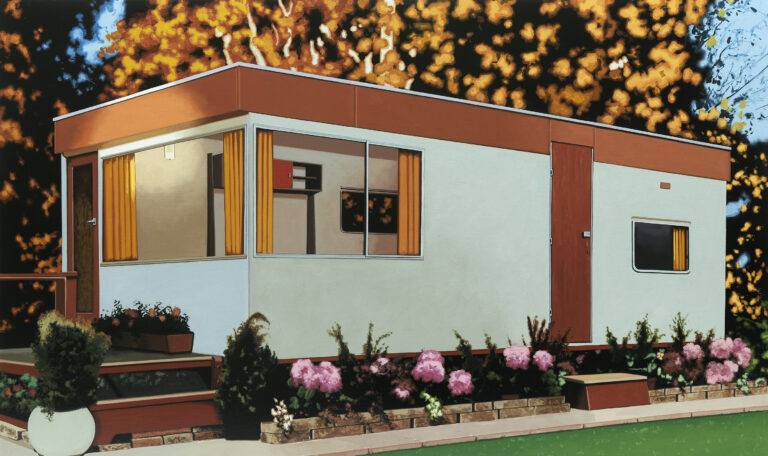
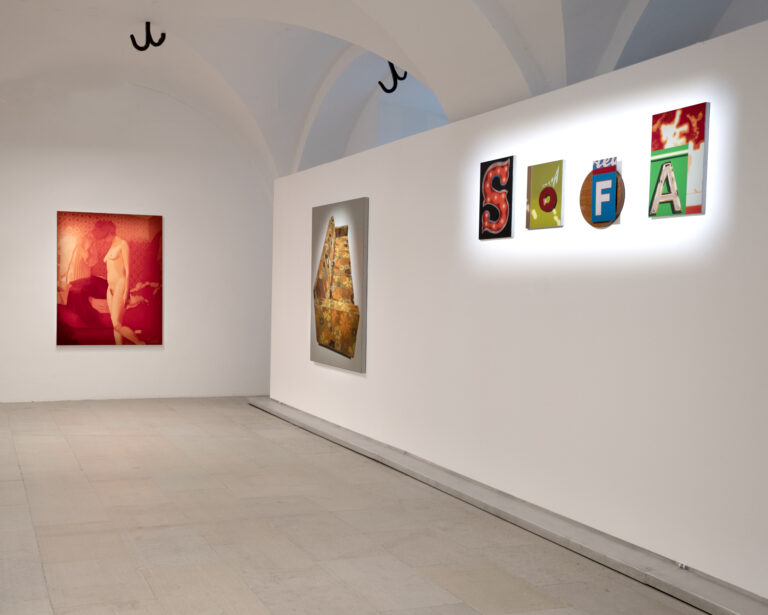
Martin Wickström: It’s normally when I do a show, I have a room space, obviously, and a deadline. But when I start working, I don’t know anything about the title or anything. I start somewhere, and it kind of develops during, so it’s kind of scary. Will it end well? I don’t know. But in this case, the theme is easier to read than it used to be. When I started, I had this painting with a big truck house. I collect a lot of pictures and images from several sources. The sofa – that one I also had for many years, kind of lying around. But this time, I started without knowing anything about Oslo, with a sofa.
The next step was my wife, Lena – that’s important. She had talked about a play she made for television in 1993, Henrik Ibsen’s Hedda Gabler. I decided to see that, and meanwhile, I started thinking about theatre plays and texts. And all of a sudden, I knew that this truck was a “Dukkehjem” (A Doll’s House), the very famous play, also by Ibsen. And then we managed to get Hedda Gabler from the archives on SVT to see it. I was totally astonished.
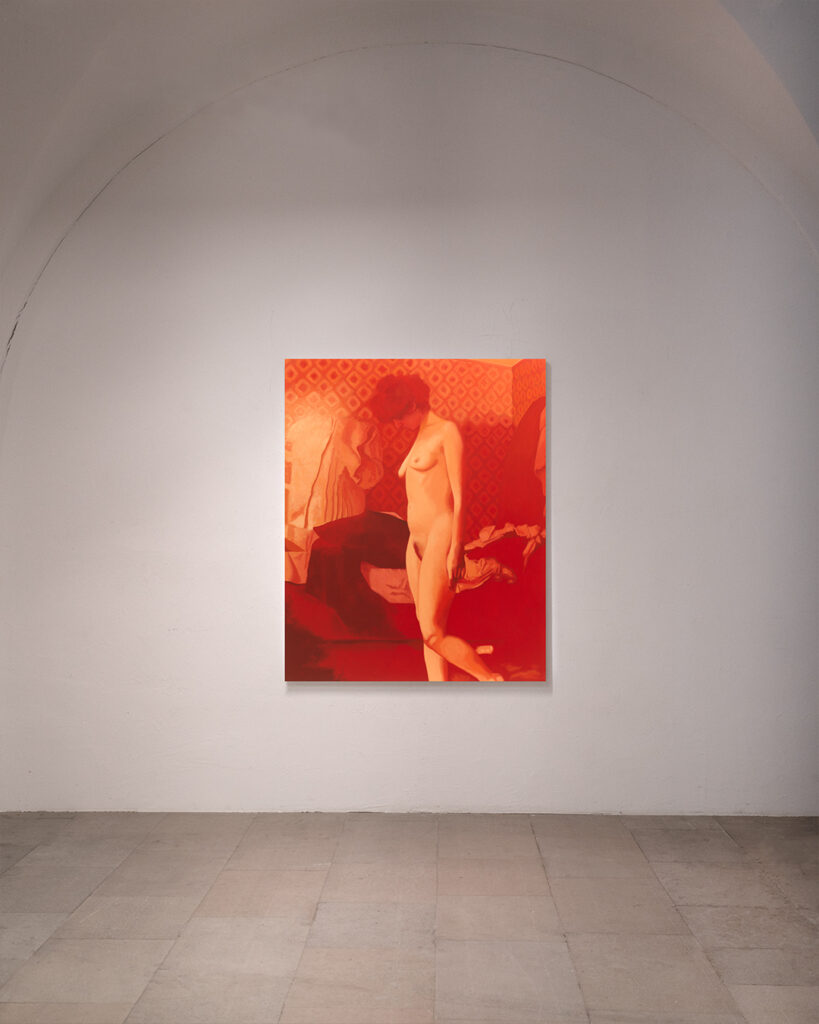
I also found a photo book by Edvard Munch. He worked a lot with photography, not in a documentary way, but experimental, introspective. One of the paintings here is based on one of his photographs. It shows Rosa, one of his models with red hair, and her sister Olga. At first, I thought it was Munch himself in the photo, but then I read about it and realised it was the two sisters.
And then I knew that this was it. It was going to be Norway in one way or another. That’s how OSLO came to be.
NM: You mentioned strong women like Hedda Gabler and Nora from A Doll’s House. Were you also thinking of the current political situation?
MW: No, it wasn’t that, but it’s even more important to reflect on it. These plays were written in the 1860s-80s and were extremely progressive stories about strong women. Nora, in the end, decides to just leave her husband and kids to start a new life; in its time, that was extremely radical and provocative.
Then there is Hedda Gabler, a strong daughter of a military colonel. She inherited duel pistols from her father, and she is almost exploding in her marriage. In the end, she kills herself. These were written 150 years ago, and all of a sudden, women’s history is going down again fast. It’s frightening, and it makes it even more important to take these strong women out.
NM: What can you tell me about the use of the colour red in this exhibition?
MW: I’ve used it sometimes, but not like this. I started with this small painting of a woman with a telephone, which is cut out from a film still of Jane Fonda. That image was red from the beginning. When I finished that painting, which was the first one I did, I thought, “Wow, I really like the red,” and it also corresponded with the strong theme in the exhibition. Initially, the photos are in black and white, so I turned them into red.
NM: It sounds like you have some intentions when you start working, but there’s also a lot of play involved. Could you walk me through your creative process a little bit, and what a typical day might look like?
MW: I mean, I obviously have a lot of things collected, but I don’t really know how they fit together at first. People ask me, “How do you dare to work like that?” I’ve done it now maybe 60 times over 50 years. You start with what’s important: the space.
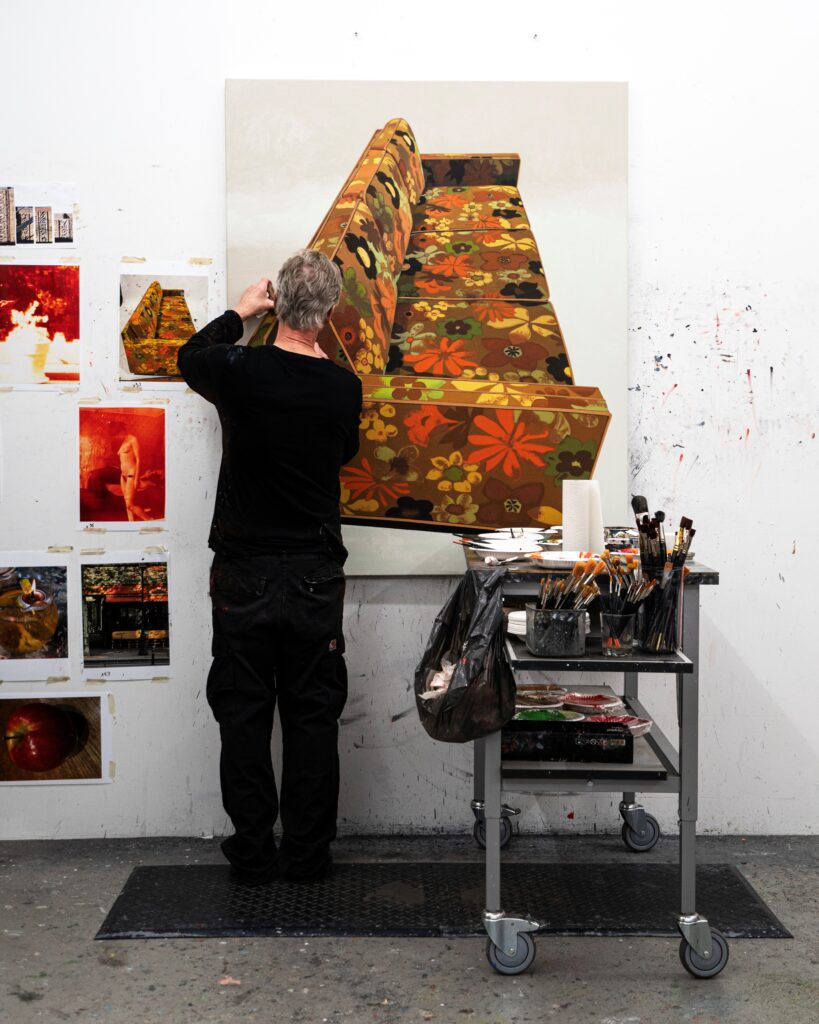
So I start with the space. I work on the computer: I virtually ‘take down’ the walls of every space I work with and then build it up again. I turn images red, change them, cut them, whatever is needed, and then I place them as miniatures, in the right scale, on the virtual walls to test how they might work together.
Of course, as you understand, I don’t have all the works ready at that point, but I can still start by saying, “Okay, I need this, and that, and that. Maybe that’s a bit too much,” and so on. I can begin to see what I need and how it might fit.
For example, I knew about the truck house painting, and that was the first one. Then I thought, if I put that one there, and the sofa painting over here, which has nothing to do with Oslo, but I named it after George Harrison’s ‘Norwegian Wood’, the Beatles classic, then it starts to connect. Even if the final exhibition doesn’t end up exactly like the computer model, I’ve learned how to read the room.
That’s my process. And when it comes to separate paintings, I also work with them digitally: I change the colours, cut things away, and then make a big photocopy. I look at the photo I made on the computer and work from that.
NM: How much do you allow yourself to discover along the way?
MW: Not much. It’s very, very seldom that, in the middle of a painting, I can say, “Oh no, this one should be blue instead.” If I’ve decided on something from the start, I don’t change my mind halfway. What I do, though, is that I follow through and do it as I decided. And then afterwards I can say, “Okay, next time I’ll do it differently.”
NM: Have you always worked like that?
MW: No, but for the last 25–30 years, I would say I’ve been working like that: I decide how to do it, and then I go through with it, even if it’s just objects and stuff. And the way I see my own work is that, yes, I see it now, of course, but the best way of seeing it for myself is to see it in 10 years.
I’ll look at an image and think, “Oh right, that one was good.” It’s impossible to really make a good judgment when it’s so close in time. But when you come back to it, or if you see the painting somewhere in a collection, you can say… Because when you see it in an image, they’re really small, but when you see it in a museum or in a private collection, you see it full size.
You can copy a film, you can copy whatever, but not a painting, not the material quality of a painting. I’m super happy if people have them as posters or on the computer to look at, but the painting is the painting, and you can never replace that. That wasn’t why I started to be a painter, because it wasn’t something you talked about in the 1980s. But today, with the times as they are, I feel really happy about that. They can make copies and fine copies. That’s what we’ve done throughout the whole history of art: copies of copies of copies.
NM: You mentioned you collect images and objects. What makes an object or an image stick with you?
MW: I can’t explain it. I worked for 18 years at a mental hospital to support myself. I was going to make an exhibition with my friend, Daniel, who died climbing the K2 mountain. We started, long before he did his climb, to count the number of nights we had been working to see how much effort we were prepared to put into being able to paint or to climb. After he died, I kept collecting one blue object for each night I worked, every one numbered and dated, and eventually I did an installation with them. I know when an image is for me. People might give me something they think is for me, but it’s often not right. I can’t describe why, but when I see it, I know. I might use it 25 years later.
NM: You talked about theatre and literature as influences for this exhibition. Could you expand on this?
MW: I met Lena 12 years ago, and I’ve seen a lot of plays. We’ve expanded our knowledge and learned from each other. I’ve learned about theatre, she’s learned about art. We see similarities in how we work.
Literature, film, theatre, everyday life, and news – that’s what affects my way of working. Books are very important to me. One book can be extremely important. One film, one image. With images, it’s often just a small corner that no one else notices.
NM: Do you also paint without pictures?
MW: Very seldom. No. Sometimes I feel that it would be great fun. Maybe I’ll do it one day. But so far, it’s more and more that I work from images. I change the image, the picture, the painting on the computer and then decide, okay, this is it. I’m going to combine these two, or this and that.
NM: How do you know when it’s ready?
MW: You feel it. It’s the same question people always ask: when is a painting finished? For me, it’s when I look at it and don’t find anything wrong. There’s a feeling. Before that feeling, I might think, “Oh, it should be a little bit whiter there,” or “I should take that part away.” Then suddenly I feel, “No, there’s nothing more to change.” That’s when it’s done.
NM: Do you work on several paintings simultaneously?
MW: Yes. I work with oil, and it has this drying period. Sometimes it’s really wet, sometimes really dry, and in between, it’s interesting to keep working when it’s slowing down. When you have several paintings going at the same time, you can say, “Okay, I’ll leave this one for tomorrow and work on that one instead.” So it’s chaotic, and it’s always very stressful.
NM: What stresses you most?
MW: The process, not the result. I worry that I won’t have enough time, that I won’t manage to get it done in time.
NM: But so far, you’ve managed. You said that the result doesn’t stress you, so the way the audience will receive it doesn’t stress you?
MW: No, and maybe that’s because I always end up not having enough time, so I don’t have time to overthink it. Maybe I do that deliberately without fully knowing it. I might think, “Oh, it would have been nice to be ready one week earlier,” but if I were ready a week before, I’d have time to think about what people would think. Now it’s always kind of last-minute, and I can’t really change anything. I don’t have the time to think about the reaction. In the moment when it’s on the wall, it’s out of my system.
NM: You have been active since the late 70s? Looking back, what do you think has changed the most in the way you work? I mean, you showed installations so much more.
MW: I actually started out as a painter. I came from this little town without art or anything, but my grandfather was an amateur painter. He worked with artists and craftsmen, and he gifted me oil paints for Christmas when I was 12 or 13. That’s when I started. When I finished my first painting, he said, “Wow, you’re good,” and I just kept going. I was a painter before I came to Stockholm. I started at art schools and so on. Then I took a detour into these strange installation works, but eventually I returned to painting.
From teaching and from seeing other artists, I’ve come to believe that you have something in you when you start. Then you go to art schools, you meet a lot of young artists, and you’re influenced. You try different things, you look at your heroes, and you do what they do. In a way, you take things from everyone. You enrich yourself with what you learn, with the people you meet, and you bring it back to who you are. It’s like a rubber band. You stretch out, and then it snaps back to something that was there in the beginning: your essence. Hopefully, I’ll have some more exhibitions, and we’ll see what happens.
NM: But are there any other formats, scales, or materials that you’d like to explore in the future?
MW: No, it’s not like I have these dreams about doing this and that now. For every painting I do, there are two more coming up on the list of things that should be done, and people ask for paintings. So I never really get that time. Maybe I should take two years off just to experiment. Sometimes I feel it would be fun, but still, you have to pay for everything. I mean, it’s a tricky thing. We’ll see. I’m getting older, maybe I’ll have the time to be an artist in that way later on.
NM: And after so many years of creating art, what do you think still keeps you engaged in your practice?
MW: It’s so much fun that it’s hard to think of anything else to do. I’m really, really enjoying every minute of it, even though I both love it and hate it, because it’s really tough. Every day is challenging, and there is always something that is really, really hard to do, and you learn something every day. So in a way, it’s both fun and maybe even necessary. I’m not sure that’s the right way to put it, but it has always been necessary for me to paint. I love it.
NM: Do you love the process or the finished painting more?
MW: What I love is the process, absolutely. At the same time, the best moment, always with a lot of stress, is when I see the back of the truck leaving with the paintings. Then it’s amazing to see the work displayed. But again, after that, it’s time for the next exhibition, so it’s just a short pause in a process that keeps on going. It’s always challenging, always tough, but I can’t stop it.
NM: Is there anything you would still like to discover in painting?
MW: I don’t know. I hope that, as I’ve tried to describe, I find it challenging in every painting. Even if my paintings, for you or for other people who’ve seen my work before, might look familiar and you think, “Okay, that’s the same, that’s easy,” it’s not. It’s always a challenge. Every painting, even if it looks kind of the same, is a new piece, and it has its own new things that you need to handle.
NM: What feeling do you hope visitors take away from Oslo?
MW: I hope they are feeling something. What I tell you now is not that important. A visitor sees it in his or her own way. Everyone has a different way of seeing based on their own experiences and the other paintings they’ve seen. I hope people get moved, touched, angry, or whatever. If there is no feeling, that’s boring.