Holly Humberstone – the danger of overthinking and vulnerability as a superpower
text Ella Nelson
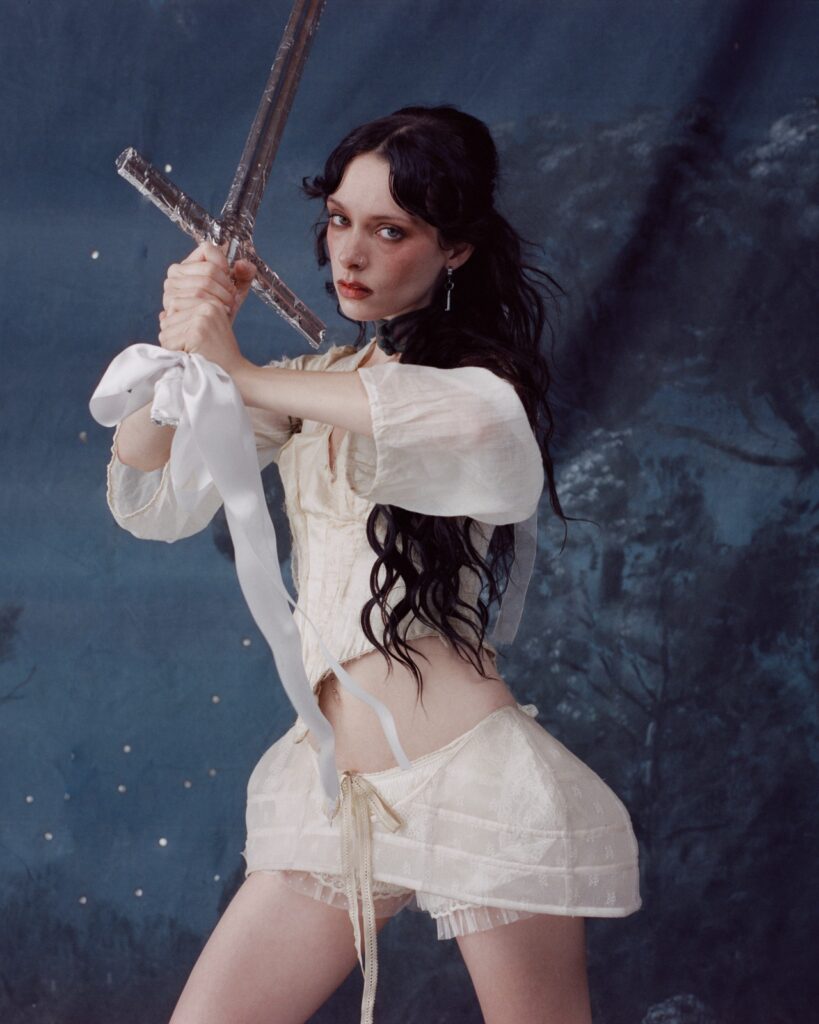
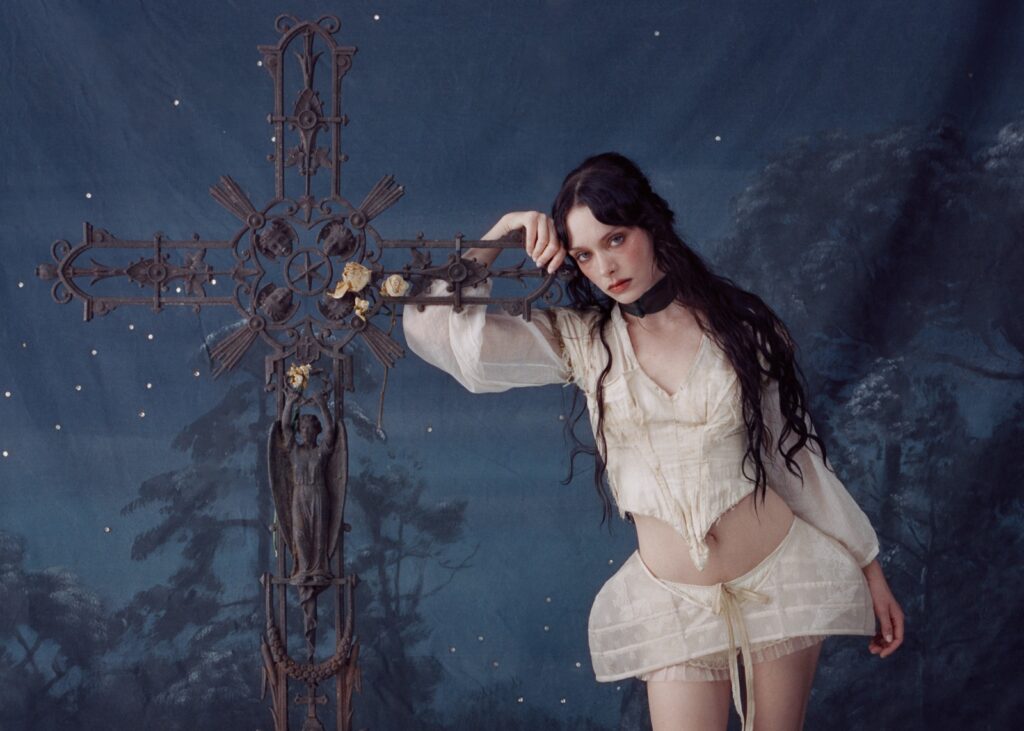
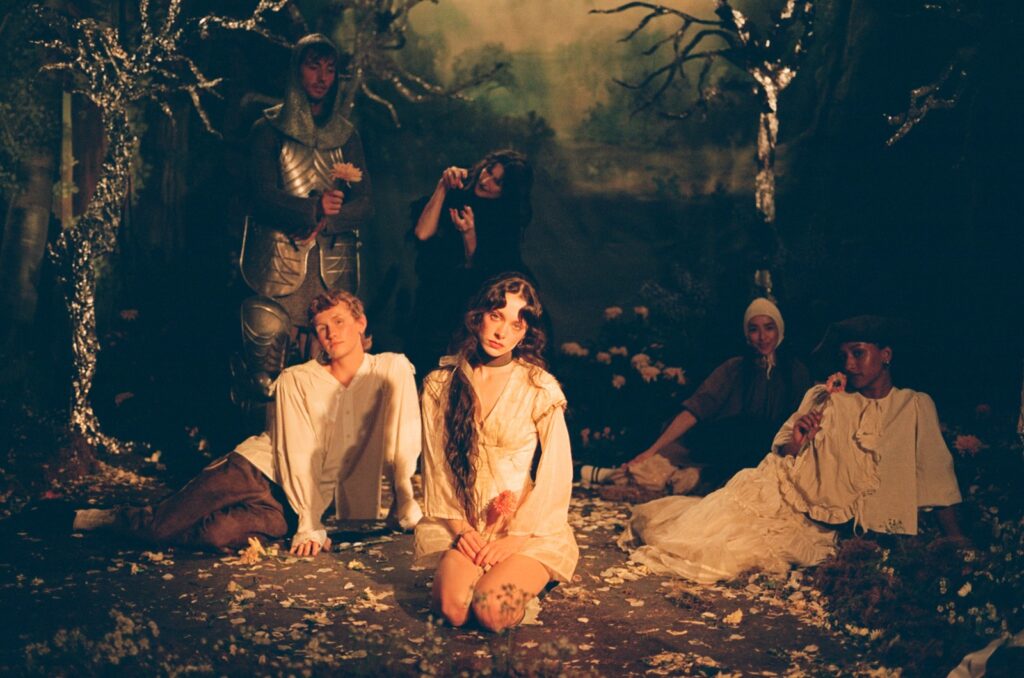
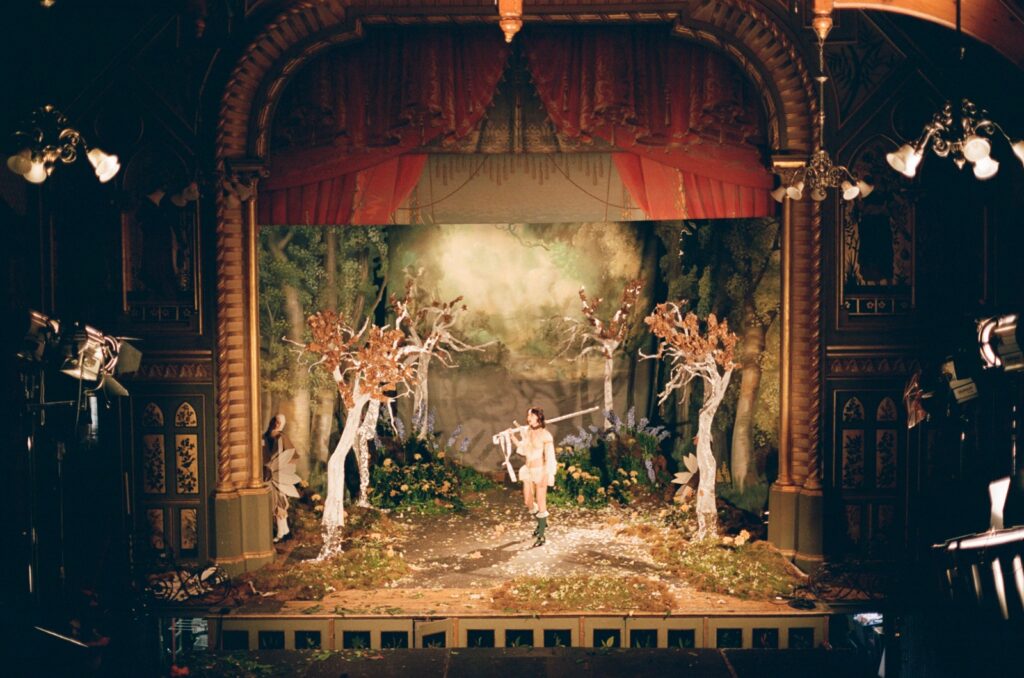
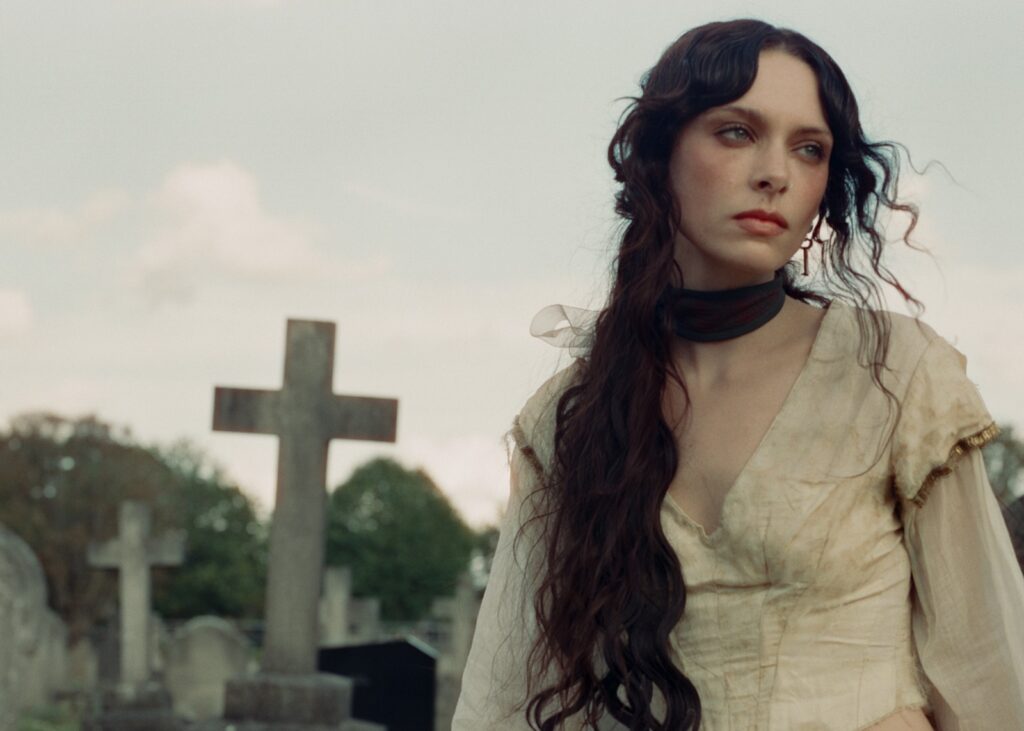
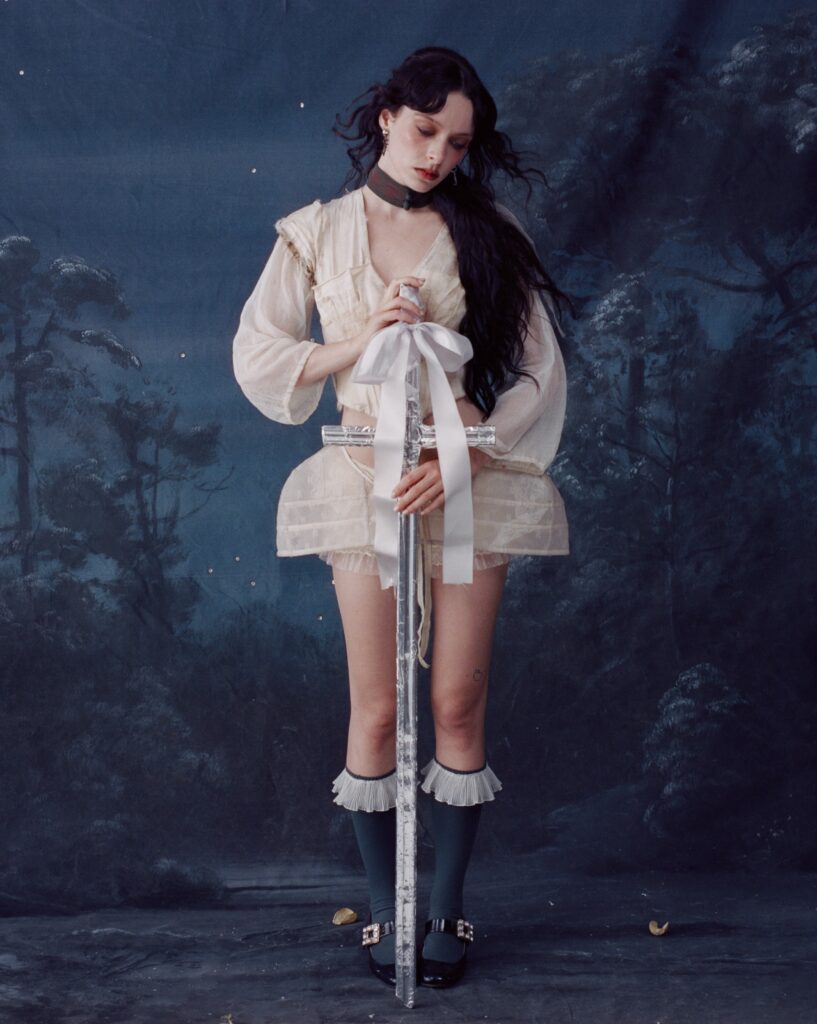
After gaining momentum just as the world was entering a global pandemic, East Midlands-born singer-songwriter Holly Humberstone has since garnered global recognition for her raw, emotionally charged songwriting and gritty yet intimate alt-pop productions. Three years on from her debut album, Humberstone still finds herself having to resist the urge to compare her journey to others, reminding herself that being human is about embracing imperfection, staying true to yourself and connecting with others. For her second studio album, Cruel World (2026), the aesthetics have gotten darker and the music more vulnerable. Inspired by the vivid imaginings of theatrical stage productions, the album unfolds within a gothic, fairytale-esque visual universe and is rooted in childhood nostalgia, exploring the trials and tribulations of navigating your twenties. With the recent release of the album’s deluxe version, Cruel World…So It Ends, Holly Humberstone reflects on what prompted her to cling to that initial spark of naive childhood confidence and the dream of becoming a pop star, and how she is embracing instinct and freedom as she enters her next creative chapter.
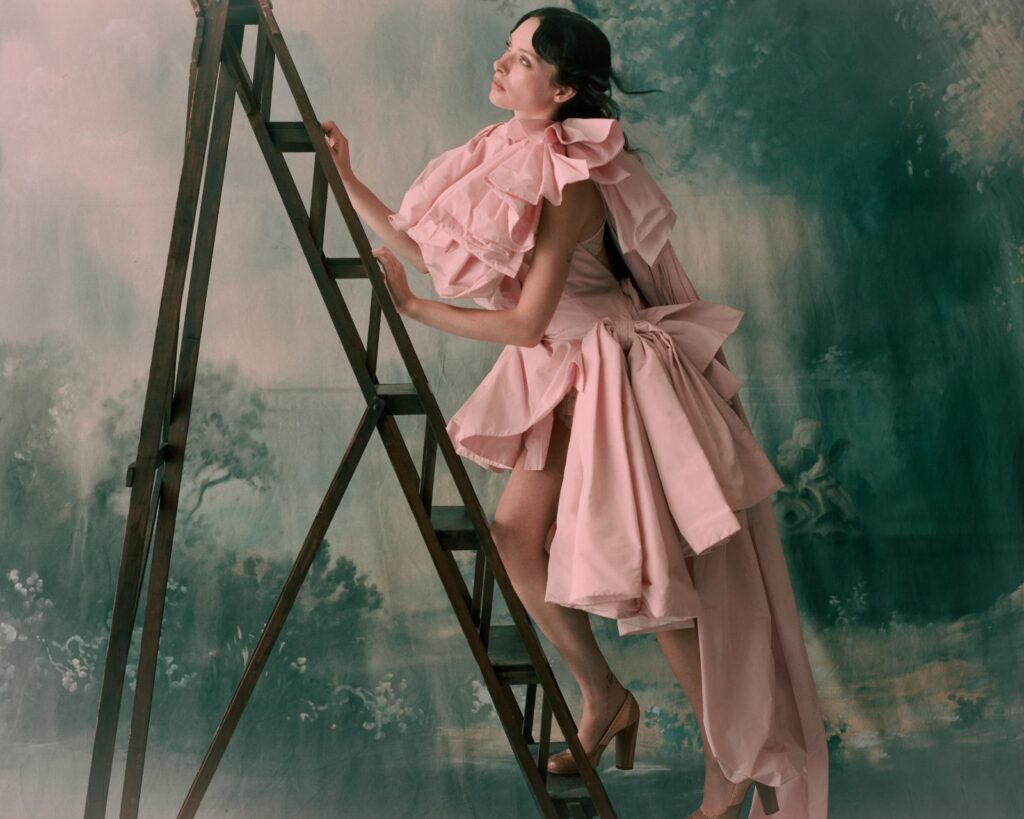
photographer Silken Weinberg
Ella Nelson: Taking it back to the beginning, what were some of your earliest musical influences, and how did you find your way into songwriting?
Holly Humberstone: Growing up, we didn’t have a TV, which I think has been an amazing thing for my sisters and I who are all doing creative things into adulthood. My parents had an incredible music taste, and I would raid their giant mound of CDs of the ones that had the prettiest cover art, take them into my room and become obsessed with all of the artists that my parents loved. I also did a lot of ballet growing up which I think taught me to be musical, but music was the thing that I really gravitated towards. I had a lot of female artists that I really loved and looked up to, like Joni Mitchell and Stevie Nicks, and then I just began writing, not thinking too much about it and never questioning it too much. When I was in high school I started to properly record my songs into GarageBand. They sounded terrible, obviously, but I would send little demos to my friends at school and they would be super encouraging. Then I uploaded a song to a website that we have in the UK called BBC Music Introducing, and somehow one of my songs got played on Radio 1. My now manager happened to be listening, and the rest is kind of history.
EN: Was there a specific point when you realized you had a real shot at pursuing music as a career?
HH: Maybe during COVID, when we were in lockdown. I started making music together with Rob Milton, who I grew up listening to and who was in a band that was pretty big around Nottinghamshire, and I started writing songs that I really, really loved, and felt really represented me. Then we went into lockdown, and I released my first EP. It was a very strange thing, because while I was at home with my family going through a global pandemic, people that I didn’t know were really connecting to these songs and they were having some kind of impact that I really didn’t expect. I went into COVID with nothing, and came out with a career where I was able to play shows. So, I think it was when I played my first headline show at a small venue here in London called Omeara, where there were a ton of strangers, that I was like ‘Who the hell are you guys? Thanks for being here, this is so cool.’
EN: Coming out of lockdown and this weird time of being isolated for so long, how did you navigate finding your sound and developing your own artistry?
HH: I think part of it is not to overthink what feels natural in the moment when you’re writing a song. Especially when being creative, it’s so easy to overthink and be your own worst enemy or get in your own way if you’re in your own head too much, thinking too hard about what the result is going to be. Whenever I feel a bit lost, I go back to all of the early influences who were inspiring me to write songs as a kid, and just try to not overthink the process too much.
EN: How do you protect your creativity from overthinking?
HH: I don’t think I ever go into the studio with any kind of agenda. I have stuff that I can refer to or music that I’m loving at the time, but if I’m trying to control the outcome, usually I’ll end up with something that sounds pastiche or something that feels less authentic than if I just let it run and let it happen naturally.
Songwriting is kind of chaotic, and you can’t really control the process. I’m at the point now where I’m going into the studio again to figure out what album three is going to sound like and, honestly, I’ve not got a clue what it’s going to be. It just needs to start, and I just need to show up to the studio, try to have an
open mind, and channel the stuff that I’m going through–let it sound like what it sounds like, and not overthink it, because I think that kills creativity.
EN: Putting out an album, and songwriting in general, can be incredibly vulnerable. Do you feel like your ability to be vulnerable or your relationship to that vulnerability has changed since putting out your debut album?
HH: Definitely. Something shifts when your safe place, and the thing you love doing most in the world, makes you feel connected to other people. Songwriting has always been something that’s mine–something that makes me feel like I can shape the world around me a little bit and romanticize my
life–and something shifts when you release that into the world. Suddenly there are expectations and more pressure, or just me questioning the process a lot more than I would when I was eight and just doing it for myself. It’s a constant battle to remind myself that the thing that people connect to in my music is the thing that comes naturally to me, which is to be vulnerable and honest, and to write authentically about stuff that I’m feeling and going through. Being able to be vulnerable and really flawed and imperfect is
definitely a superpower, but I think it’s what makes for really good music.
EN: Do you have a favorite song that you’ve written in terms of nailing that balance of connecting and representing who you are as an artist?
HH: I think definitely something from Cruel World. It’s my favorite thing that I’ve made and the project that I feel reflects who I am at my core the most. ‘To Love Somebody’ has really connected with people, and I’m really happy that it has, because I feel like that’s one of the most human songs off the whole of the album. The song is about somebody really close to me who was going through heartbreak, and me saying that ‘you’re so lucky that you’ve been able to feel this kind of spectrum of emotion’. It just means you’re human, and at the end of the day, at least you got to feel that. We’re not here for very long and all this chaos that we’re going through is just a part of being human, and if you can surrender to that, then that can be quite freeing.
EN: How would you describe the DNA of Cruel World?
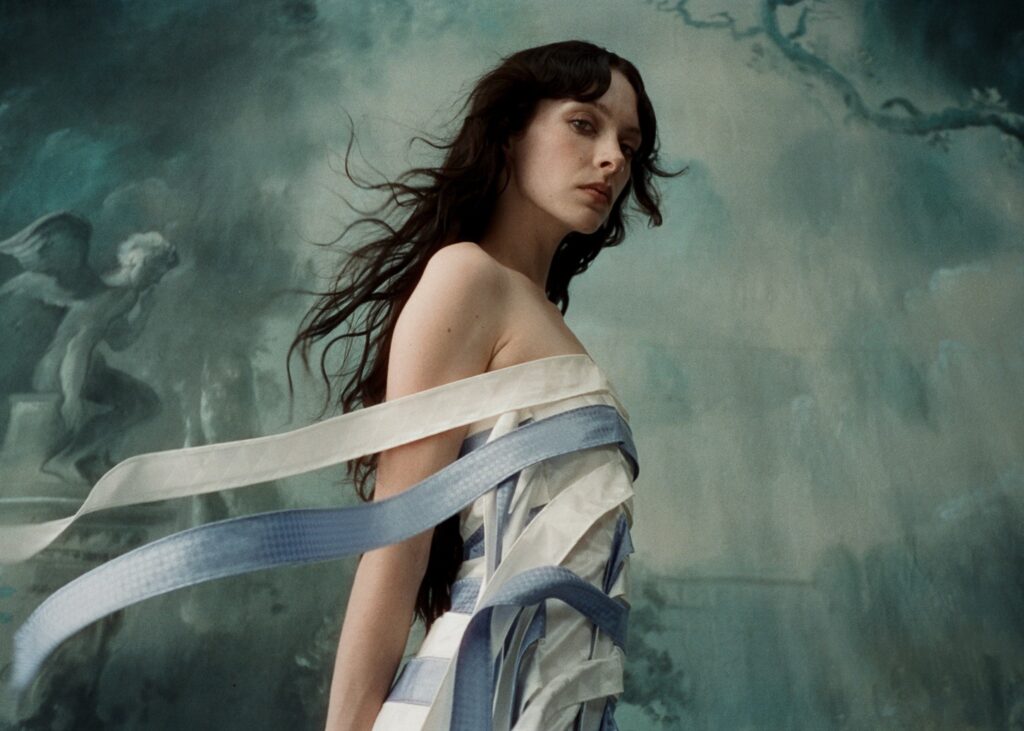
HH: For me, Cruel World feels like an escape. Music has always been my safe space where things feel familiar and I can control what is going on in my world. We live in very stressful, confusing times, and being in your 20s is scary enough without the world being as f**ked up as it is. I feel like a different person literally every day and feel like I’m having a mini-identity crisis very frequently. Cruel World created this alternate universe that I could escape into, and I really hope that’s what it is for other people as well.
EN: What was the inspiration behind the album and its visual universe?
HH: I wanted it to have an element of fantasy, and for it to feel a bit magical and whimsical. I was moving out of my childhood home whilst I was writing the album, leading me to rediscover a lot of parts of myself that I feel like I’d forgotten and lost sight of. Everything that used to inspire me as a kid is present in Cruel World, so it feels like an amalgamation of everything that makes up my DNA as well, which is why I love it so much.
EN: You’ve previously mentioned Tim Burton as an inspiration, but do you have a particular story or play that you feel is especially rooted in Cruel World?
HH: There are so many. One specific thing that I found in the back of my wardrobe was this book of Brothers Grimm fairytales. I remember getting it for Christmas one year and discovering that all these stories that had been told to us as kids were completely fake and secretly so f**ked up. But I had this weird, dark fascination with these stories and how twisted they were, and remember being fully sucked into that book for a long time, and that it really defined an era of my life.
As a kid I was also quite obsessed with alternate worlds. I loved Alice in Wonderland so much and was constantly trying to find a rabbit hole, physically, for me to fall into and escape. And The Wizard of Oz. I feel like these are stories that we’ve all grown up with, that feel really formative to watch, and are all kind of about a young girl on the cusp of adulthood who doesn’t want to confront everything that’s happening in her life and all the changes that are approaching. There’s this need to escape into a different universe that really resonated with me, and I wanted to make Cruel World feel like that, like a bit of respite from the harshness of the world that we live in.
EN: Following the April release of Cruel World, you released an EP called It’s a Real Cruel World more recently in June, with alternative versions of some of the fan favorites. What inspired you to create these versions?
HH: I think I just picked the songs that connected with people the most when I was performing them live. I felt like it was a shame to only create one version of these songs that I loved so much, and that had been such a big part of my life for the year and a half they were unreleased before the album came out. I was having so much fun with this album and was really inspired by the kind of connection that these songs were having online and at shows, that it made me want to reimagine them. I always think that, if you can take a song and strip it back and it still feels like a really strong song, that’s a sign that it’s a good song that people will connect to.
EN: How do you see these alternative versions interacting with the original tracklist of Cruel World?
HH: The production is obviously so fun, and it’s really fun figuring out how to convey the message of the lyrics with my producer. But the lyrics to me are everything–they have to be right. I take a long time to write them, so it’s really important for me that people are able to hear the lyrics and the message of the song. Also, it was summer and I was having loads of fun playing these songs with my band on stage at festivals, connecting with people, and I think the alternative versions of these songs really have that summery, uplifting, bright feeling to them that maybe isn’t there so much in the recorded versions on the album.
EN: You also just released the deluxe album Cruel World…So It Ends. How does this version build on the original tracklist, and can you speak to where it fits into your current creative chapter?
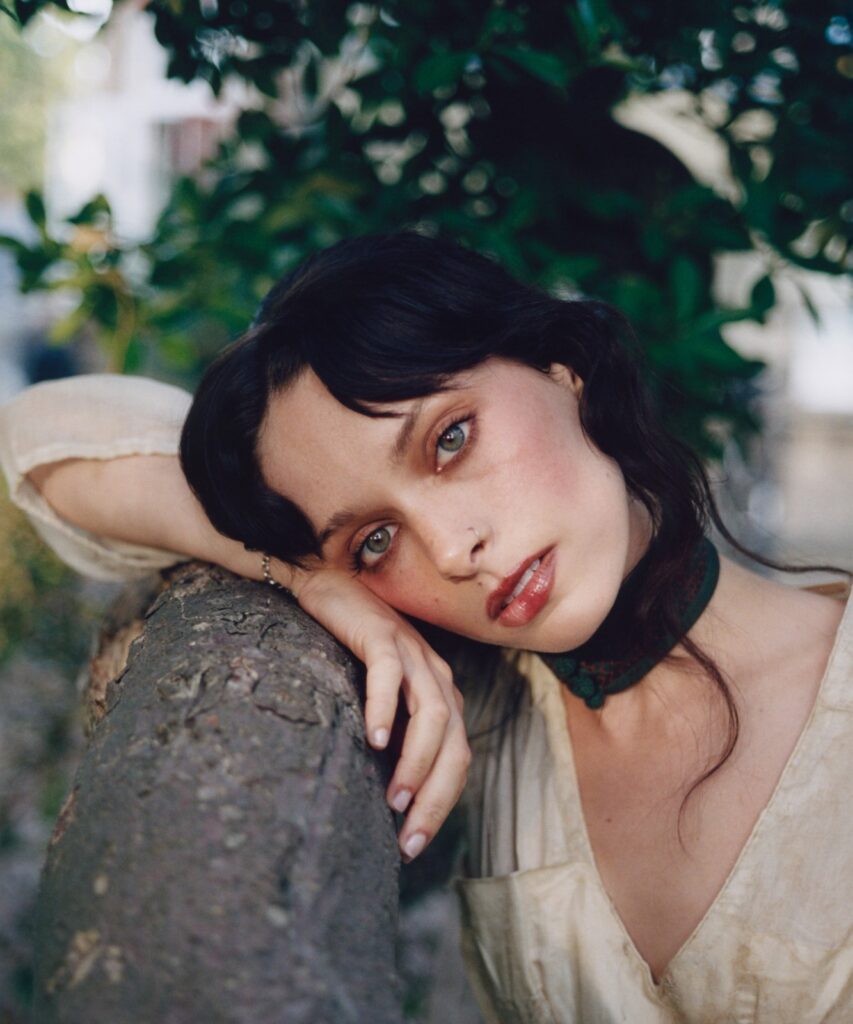
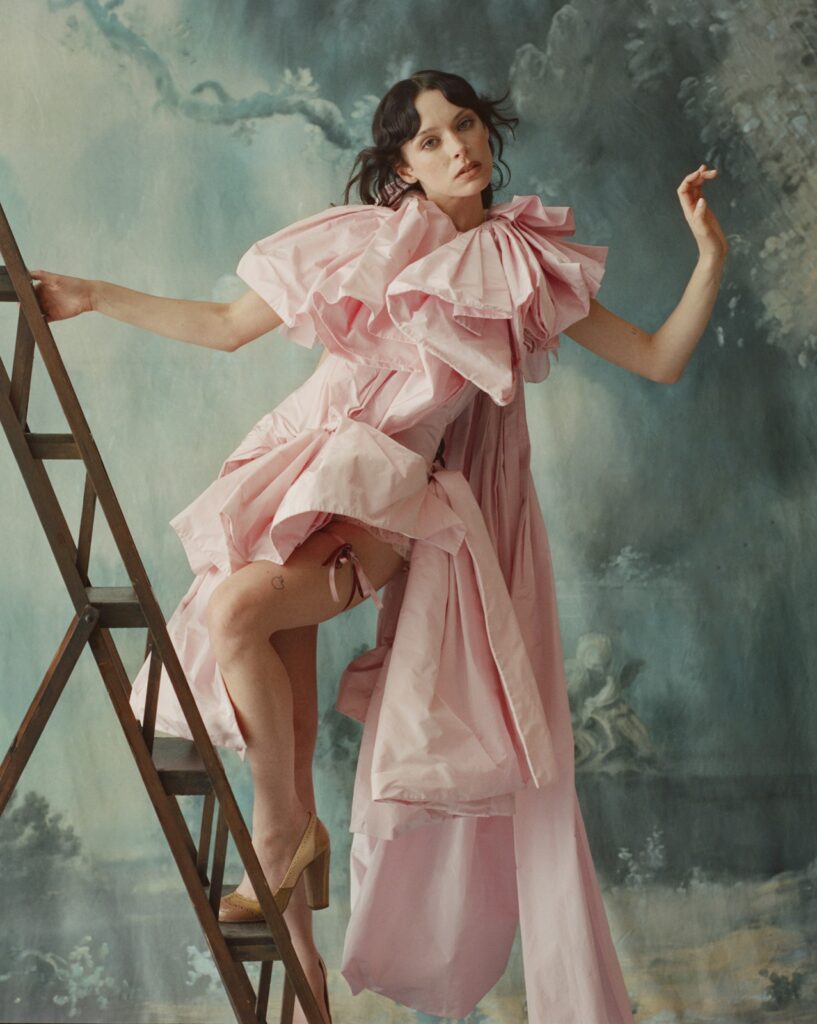
HH: The deluxe tracks, for me, have a different sound to them, and feel like an encore of Cruel World, like the closing of the book. I’d written the bulk of the original album and was like, ‘I’ve got an album here that I’m so proud of and that I’m really excited to release’, so I wrote a lot of the deluxe tracks in the afterglow of writing Cruel World. I think you can hear that there’s a bit of freedom there, but the themes from the album are still very present and, to me, these songs feel like I’m giving less of a f**k, maybe? Just going off instinct, having fun, and celebrating the album that I had been really proud of.
EN: Having kicked off the Cruel World campaign in Stockholm earlier this year, you’ll be returning in January for another show. What are you most looking forward to this time around, and how are you feeling going into it?
HH: I’m excited. This year has been quite full-on with releasing an album and touring, and I haven’t had much of a chance to slow down and reflect on everything that’s happened. I think with the shows being rescheduled for the new year, rather than rushing directly into another leg of the tour this fall, I’ve had a chance to reflect on the shows and the tour so far, take things from it, change things, and learn from the touring that I’ve done this year. Also, hear what people want as part of the setlist, reflect on which songs have been going down better and which songs feel like they’re not connecting as much.
EN: Is there a clear fan favorite in terms of the live shows?
HH: ‘To Love Somebody’ has been the opening track, and it’s been going off. It’s been so much fun to come out swinging and screaming to it, and it’s been a really powerful way to open the show. Honestly, ‘Beauty Pageant’ has really been connecting with people, too. I’ve really loved performing it, even though
it’s been my biggest challenge every night because of how vulnerable and raw the subject matter of the song is. It’s a big sing, as well, and the most technically challenging part of the show for me. But it’s really lovely to be able to go from something like ‘To Love Somebody’, where everybody’s so into it and screaming, to the other end of the spectrum with ‘Beauty Pageant’. The way the song has been received at shows has made me feel really powerful, even though it’s a really vulnerable song, and it’s made me realize that my vulnerability is actually a huge strength, and that people really connect to it.
EN: To round things off, for someone unacquainted with your catalog, which song do you feel serves as the definitive introduction to your world?
HH: I’ve gone through so many different eras, and there’s a lot of things that sonically has changed about my music over the last few years, but in the point where I’m in now, I think ‘Die Happy’ feels like a very quintessential Holly Humberstone song. It’s got all the gothic, darker elements that I love, and it’s a very visual song. I’m really proud of the lyrics and the storytelling aspect that it has, but it’s also got this big, romantic, poppy chorus that I really love to belt out. And I think the match of both of those things in the same place is what I’m trying to achieve. It’s a song that feels very me, and I’m very proud of it.