WANÅS KONST: an amusement park for art and feelings
text Natalia Muntean
photography Sandra Myhrberg
When you arrive at Wanås Sculpture Park, you are invited to use a map, but the real invitation is to wander, to see where the path leads you, what you stumble into around the next bend. The sculpture park, run by the non-profit Wanås Foundation located on the a historical estate and beech forest surrounding a medieval castle, belonging to the Wachtmeister family, who have lived here for generations. Wanås functions less like a gallery and more like what it actually is: an amusement park for art. Except the nearly 80 rides take you for an emotional spin. The permanent collection holds works by Yoko Ono, Antony Gormley, Ann Hamilton, and others, that carry you from whimsy to deeper, heavier feelings. Eduardo Navarro’s I Found a Forest at the Bottom of the Ocean (2024) sets the tone early. Navarro has used an oak tree to create a jellyfish sculpture adorned with chimes that visitors can play with sticks picked up from the ground. It is playful, whimsical, almost childlike, and engages the forest as an instrument.
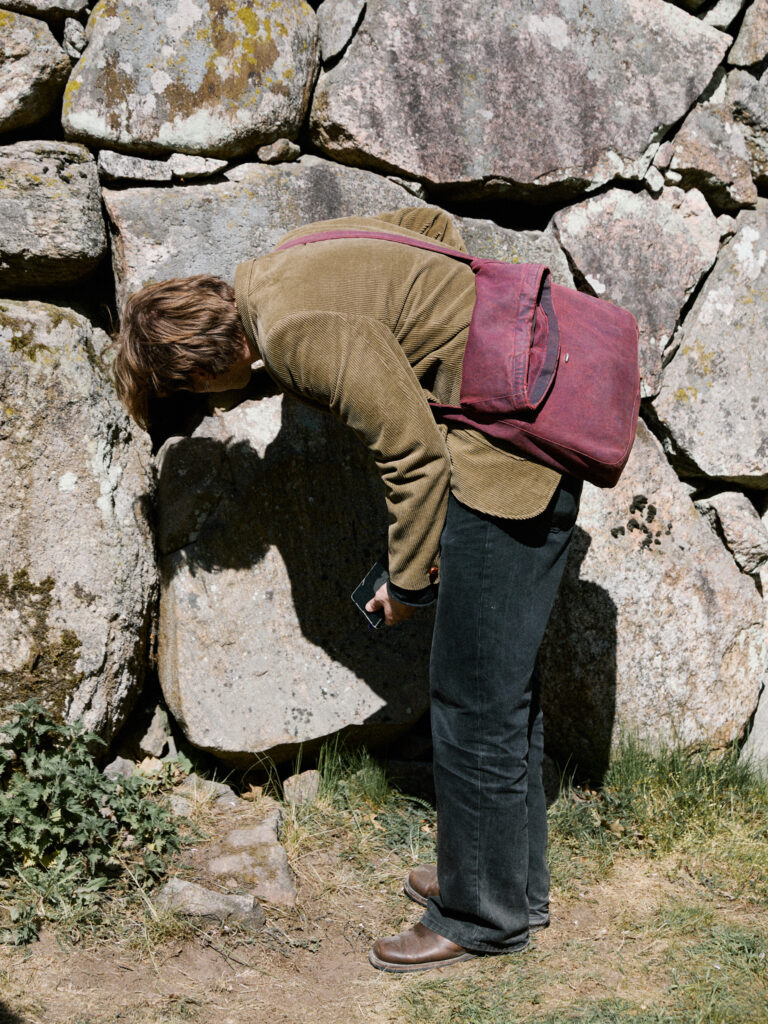
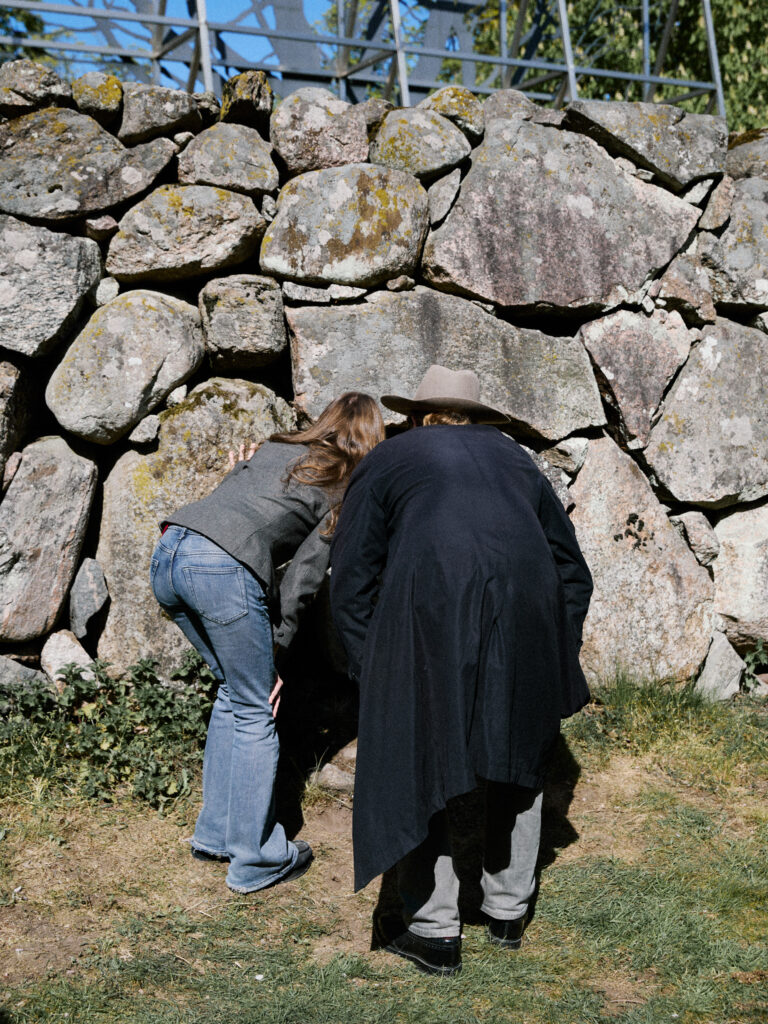
Further along, Jenny Holzer’s Wanås Wall (2002) runs as inscriptions engraved into a stone boundary wall: 260 lines of text at regular intervals across 1.8 kilometres of the park’s perimeter, drawn from her Truisms and Survival series. Lines like protect me from what I want and the future is stupid emerge from the stone so naturally that you could walk right past them without noticing. They are observations about power, vulnerability, and human contradiction carved into the landscape as if they had always been there.
Katarina Löfström’s Open Source (Cinemascope) (2018) offers a different kind of encounter. In the beech forest, the artwork mirrors trees and sunlight in a panoramic screen of moving sequins. It looks fragile, silk-like, almost tactile, and moves with the wind and the light around it, absorbing the landscape and returning it transformed.
Marina Abramović’s contribution takes the form of a totem, a pole with animal horns, speaking to the circular logic of what we take from nature and what we owe back to it.
Each year, artists from around the world are invited to create temporary works for the unique landscape. On May 9th, the park welcomed a series of new bodies of art signed by Carla Zaccagnini and Chiachio&Giannone, and a series of films created by Isabella Rossellini a while ago and found a home in the walls, by the lake, in the cafe on the Wanås premises.
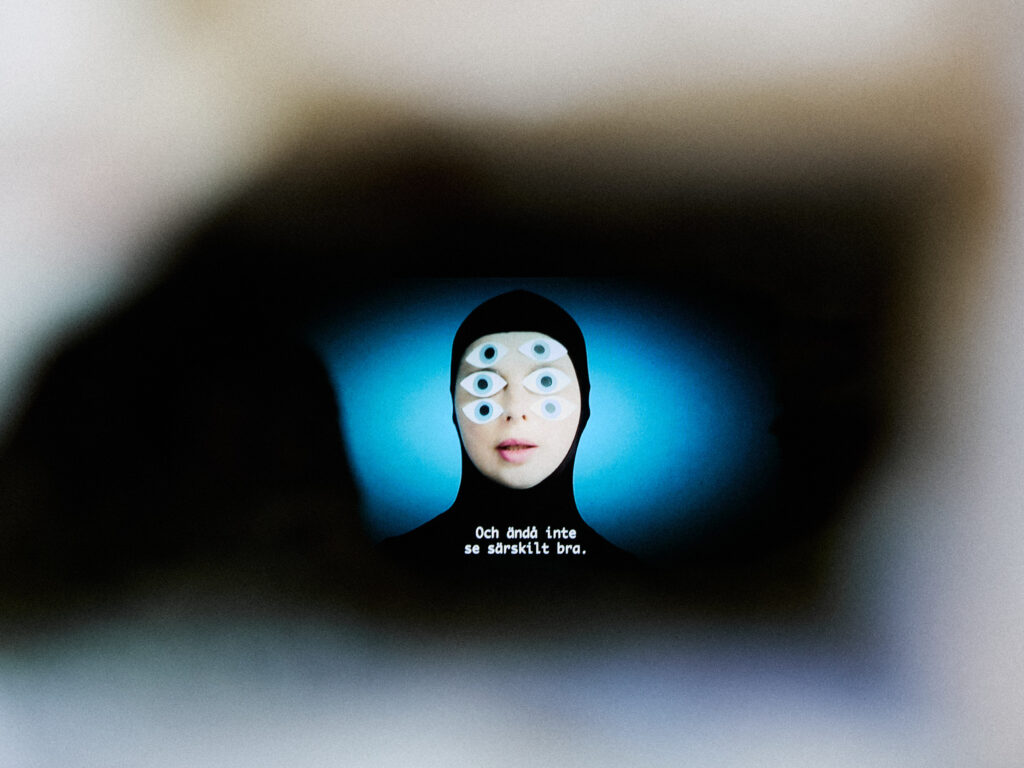
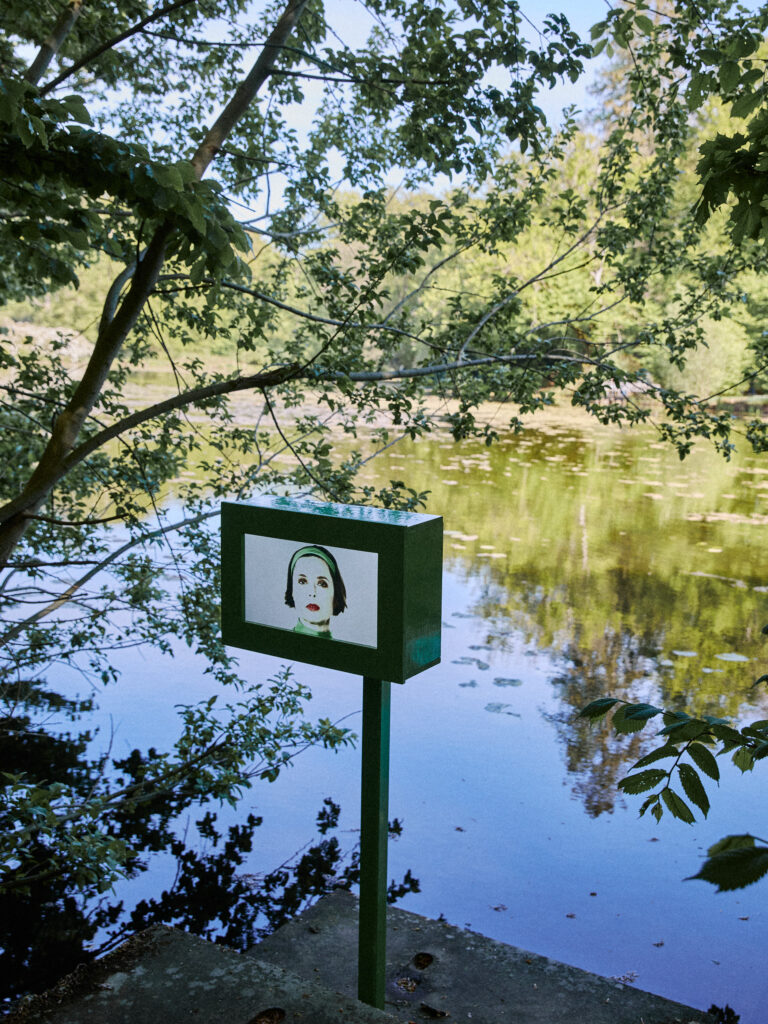
A peep show in the best sense: Isabella Rossellini’s Take (a Good Look
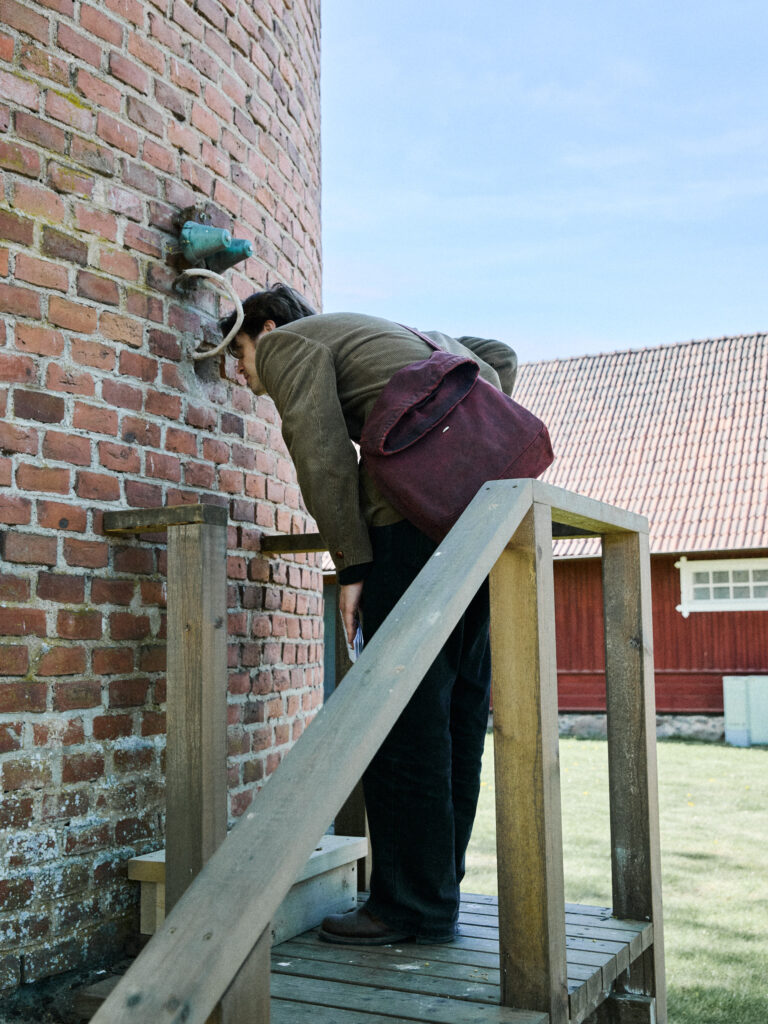
Isabella Rossellini’s short films about animal mating rituals, seduction strategies, and parenthood are being shown as an installation for the first time in the Nordic countries at Wanås. The three series span different registers: Green Porno covers the sex act itself; Seduce Me focuses on courtship and technique; Mamas addresses parenthood and how different species solve it. At Wanås, the films are scattered across the park, with screens hidden in a tree, tucked into a stone fence, set into a tower’s wall, inside the café, or on the edge of the lake. Finding them feels like a treasure hunt.
The installation was designed around the animals that actually live in the park, such as worms, bees, and flies, so that the park itself becomes a kind of collaborator. With the oldest films dating from 2008, these were written, produced and directed by Rossellini, the actress also starring in nearly 40 of them. Each screen is intimate, one-on-one, being, as the curators themselves put it, “a little like a peep show, in the best sense.”
Chiachio & Giannone: Fortune and Abundance
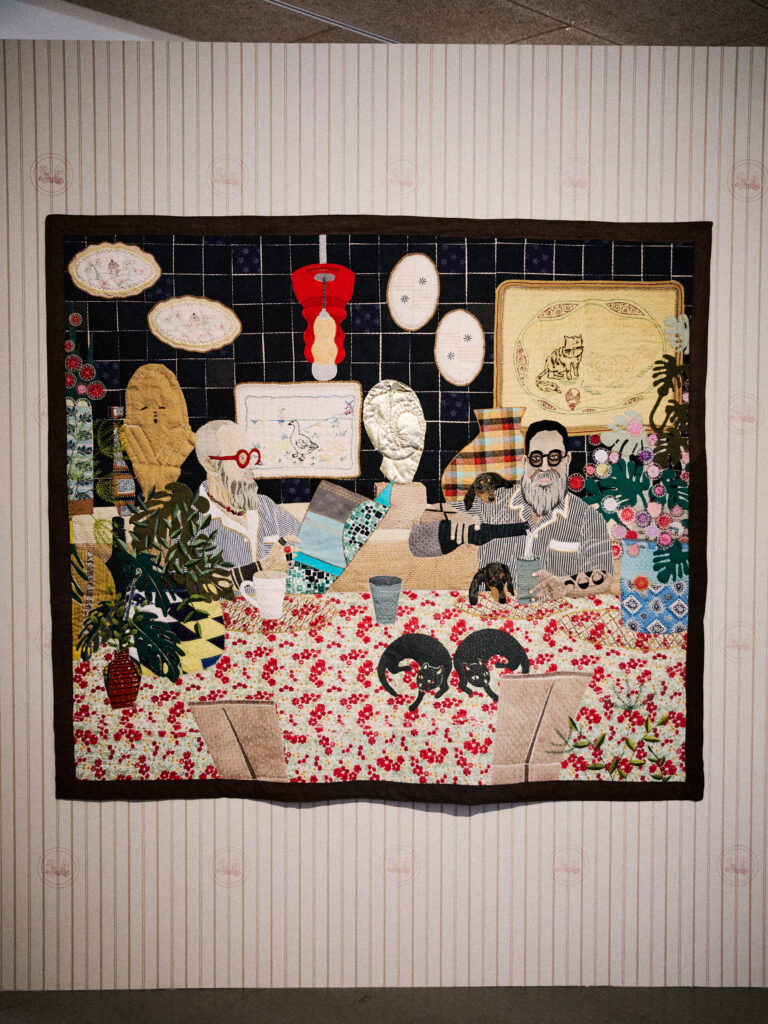
The Argentine duo Chiachio & Giannone presents their first solo exhibition in Sweden, with works displayed both indoors, in the gallery hall, and outdoors, in the sculpture park. Their practice began in painting, specifically in the management of colour, and when they transferred that craft to embroidery, they say they never felt a limit, only a new challenge. Embroidery requires a different kind of time than painting. It’s longer and demands more dialogue. “The long times of embroidery allow us to have a dialogue, disagree and move forward,” they explain. The decisions are always, in the end, Chiachio & Giannone’s, not one or the other, but both.
There is also an intention in two men working in embroidery that goes beyond technique. “Being a technique executed by us as men,” they say, “helped us to reinforce our intention to erase the boundaries between gender and task.” That erasure, between craft and fine art, between masculine and feminine, between Latin American folk tradition and the contemporary gallery, runs through everything they make.
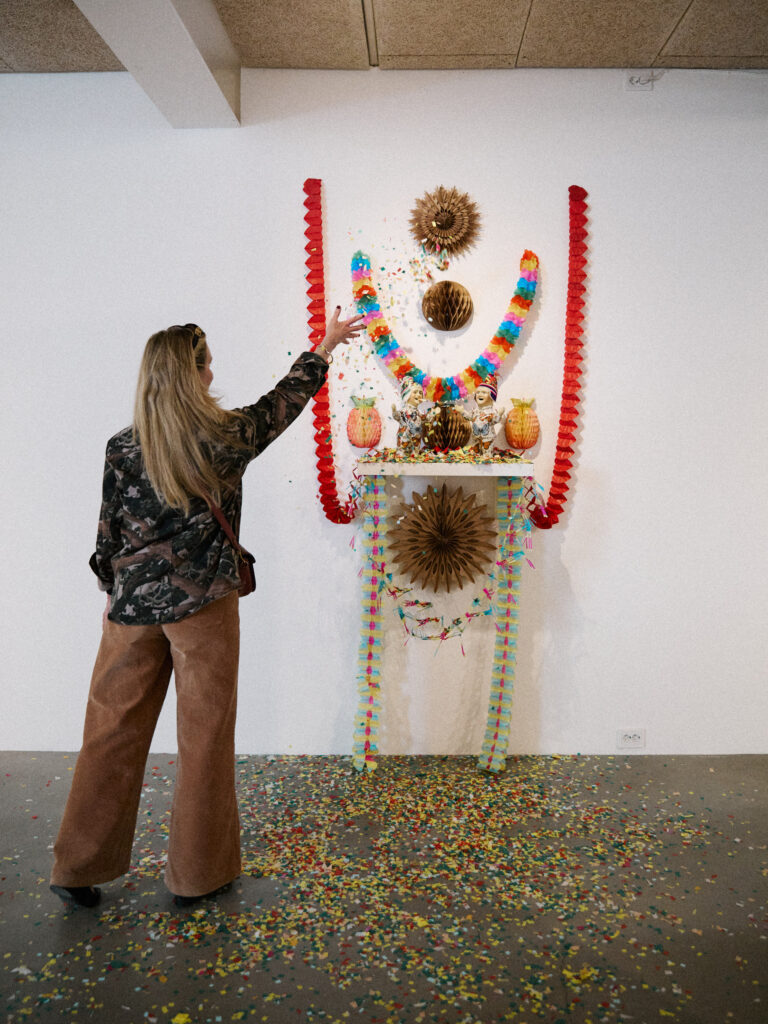
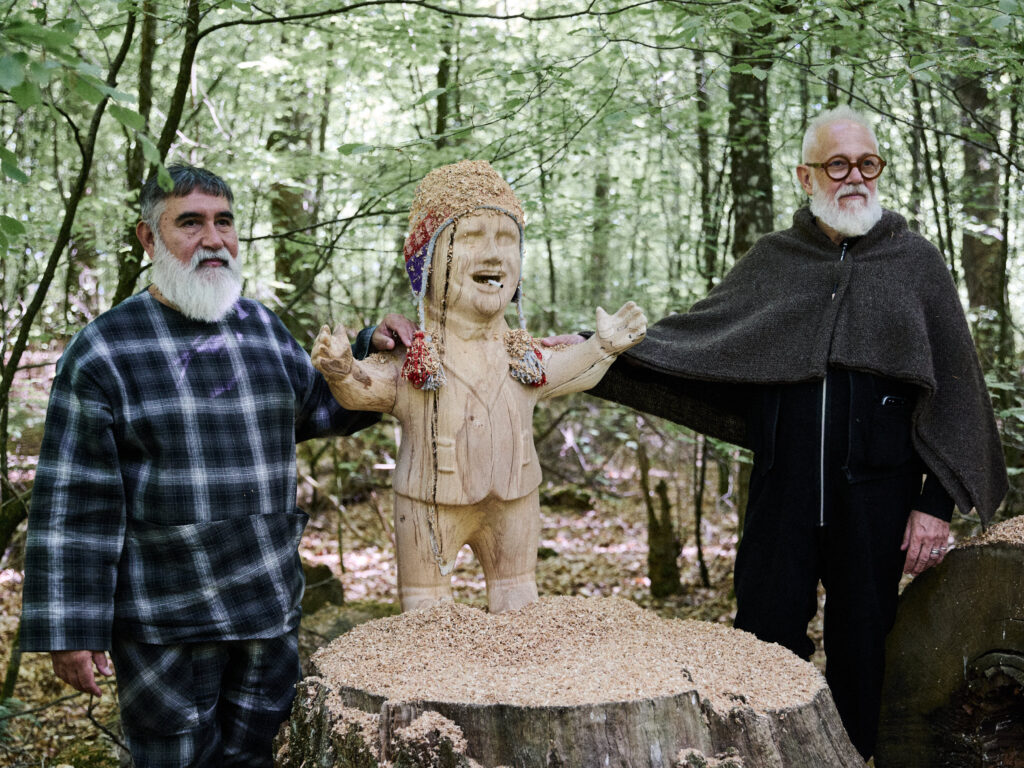
The centrepiece of the outdoor commission is Guardians of the Desires, two large Ekeko figures carved from fallen beech trees in the forest. The Ekeko is a pre-Columbian Andean figure of good fortune, and the project has been developing in their practice since approximately 2010, approached across different materials: embroidery, porcelain and now wood. The process for the Wanås Ekekos began in Buenos Aires with the scanning of a porcelain Ekeko of their own making, and was completed through high-precision milling here in Sweden.
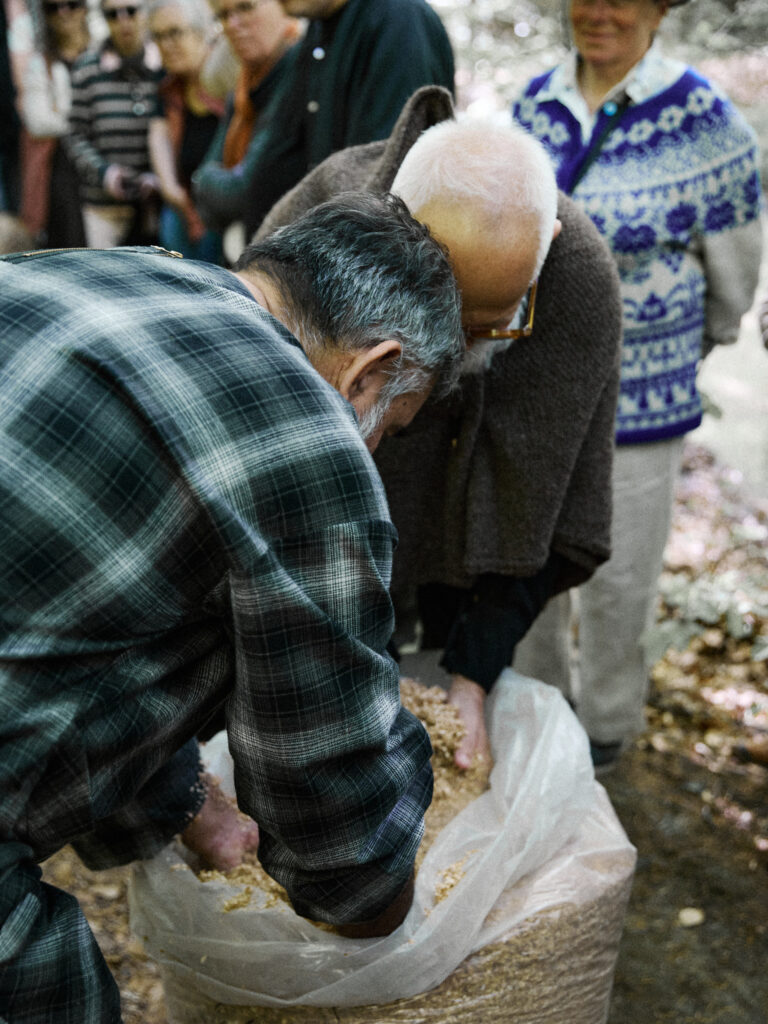
The Ekeko arrives in a home without its hat; the family dresses it, whispers their wishes and hangs miniature objects from its outstretched arms. If the Ekeko grants your wish, you owe it a cigarette every Friday. The wood shavings left over from the carving become confetti that visitors are invited to throw at them while making a wish.
Chiachio & Giannone describe their work as inseparable from where they come from: “We were born, raised, educated and live in Argentina, so we are crossed by its culture, and this is part of the DNA of our work.” Whenever they have the opportunity to show internationally, they say they want to bring that culture with them, not as local colour, but as a genuine way of producing and thinking about art from Latin America. They are already at work on a new piece commemorating Wanås Konst’s 40th anniversary, developed during a three-week on-site residency, taking in the forest, the castle, the flowers, and incorporating, as always, a collective element made with the surrounding community.
Carla Zaccagnini – Like a Sugar Lump in a Teacup
Argentinian artist, Carla Zaccagnini, was invited to work in the park’s historic pavilion, a structure originally built so that the estate’s owners could look out and relish in the fact that they lived in a castle.
Zaccagnini’s response is a periscope whose mirrors manipulate the view, making the castle disappear. A speculative exercise of some sort that asks what this landscape would look like without these architectures that depict a sense of power. The pavilion also hosts a text written in the manner of a fairy tale, drawing on memories of the estate and the pond collected from the family themselves. In the text, the owners are referred to only by their initials, interchangeable, a position more than a person, while the groundskeeper, Nieberg, is named in full. The title of the body of work comes from the image of the castle as a sugar lump: white, precious, sweet, sitting in the middle of a vast green space. Put it in tea, and it dissolves, transforms the flavour, and vanishes.
Wanås is hardly a place you can consume in a single visit, but rather you need time to digest what each new path offers. The bodies of work hidden in the park move you from register to register without warning, and that is precisely its power.