The Caterpillar and the Butterfly: Matthieu Blazy’s Masterful Reconstruction of Chanel
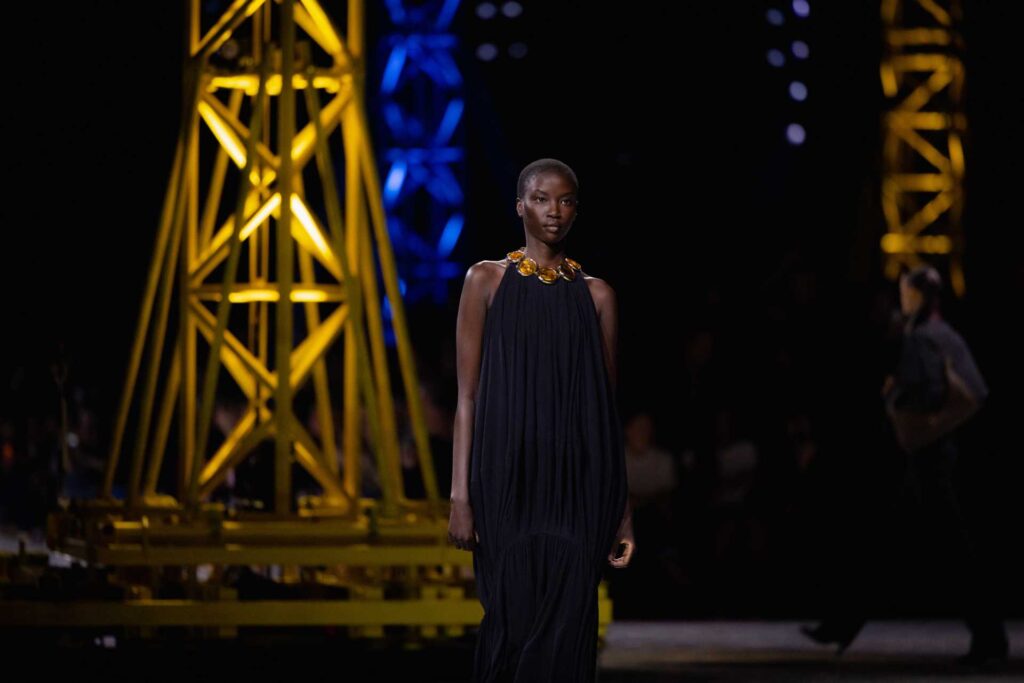
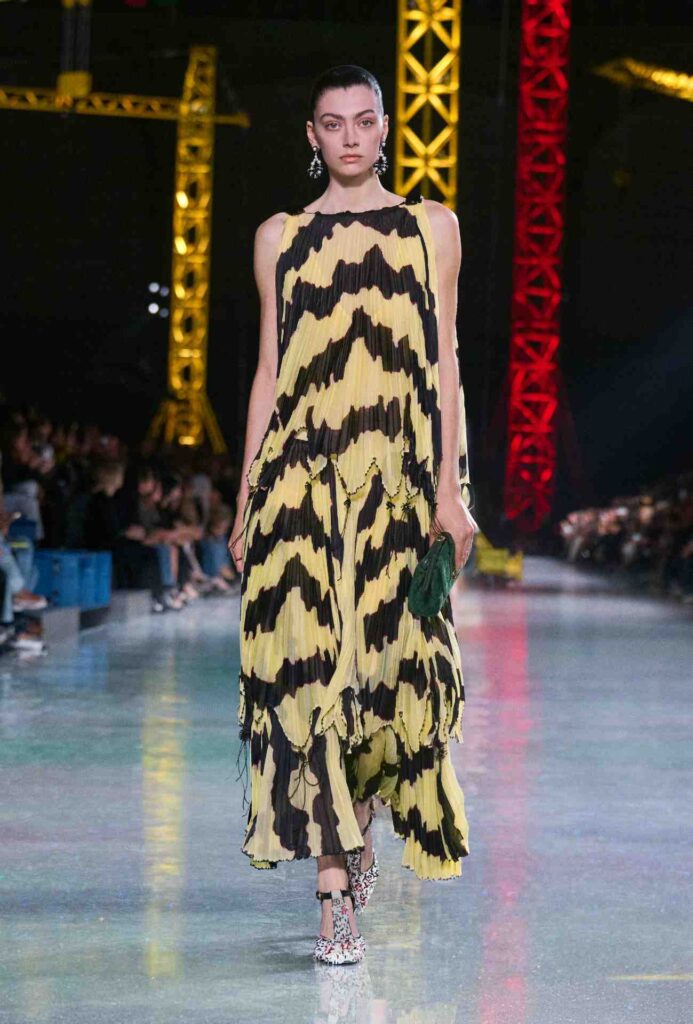
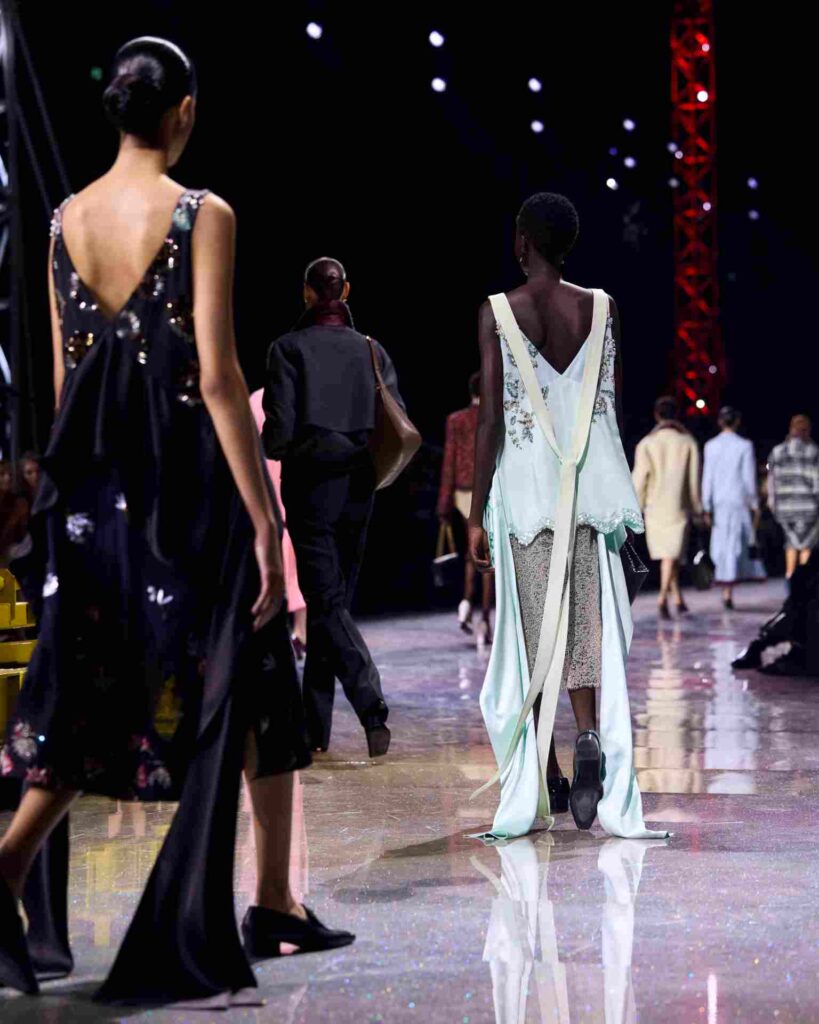
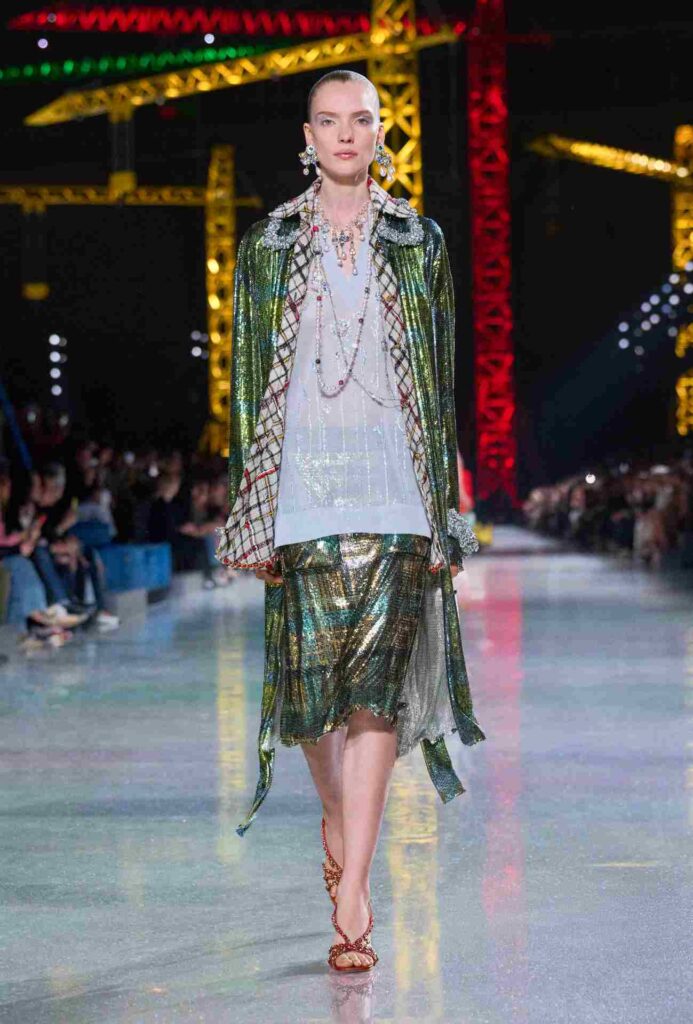
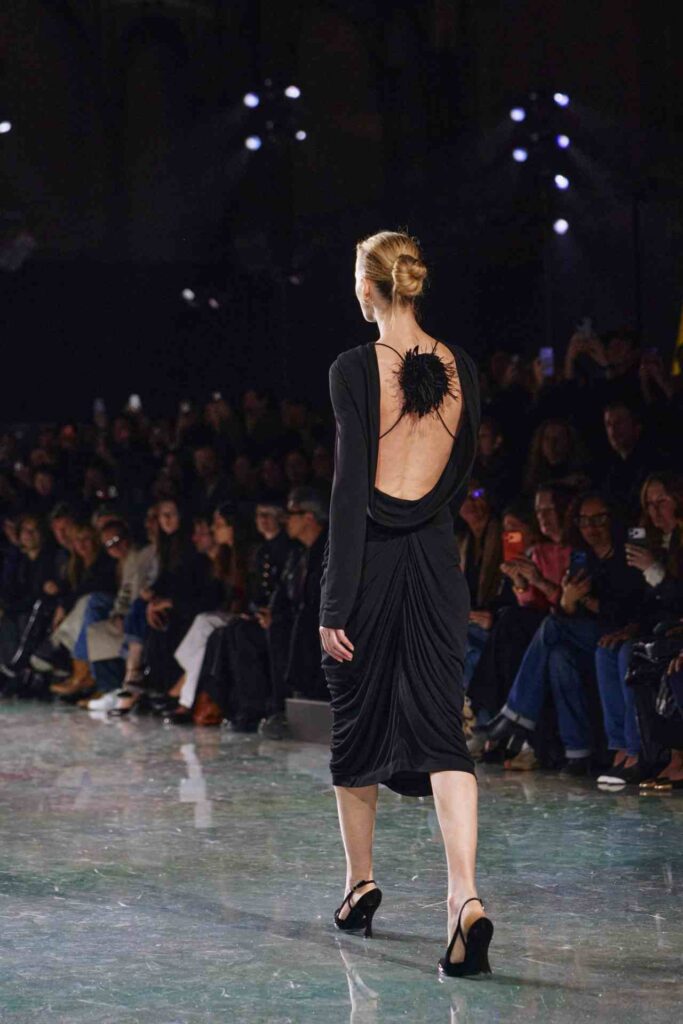
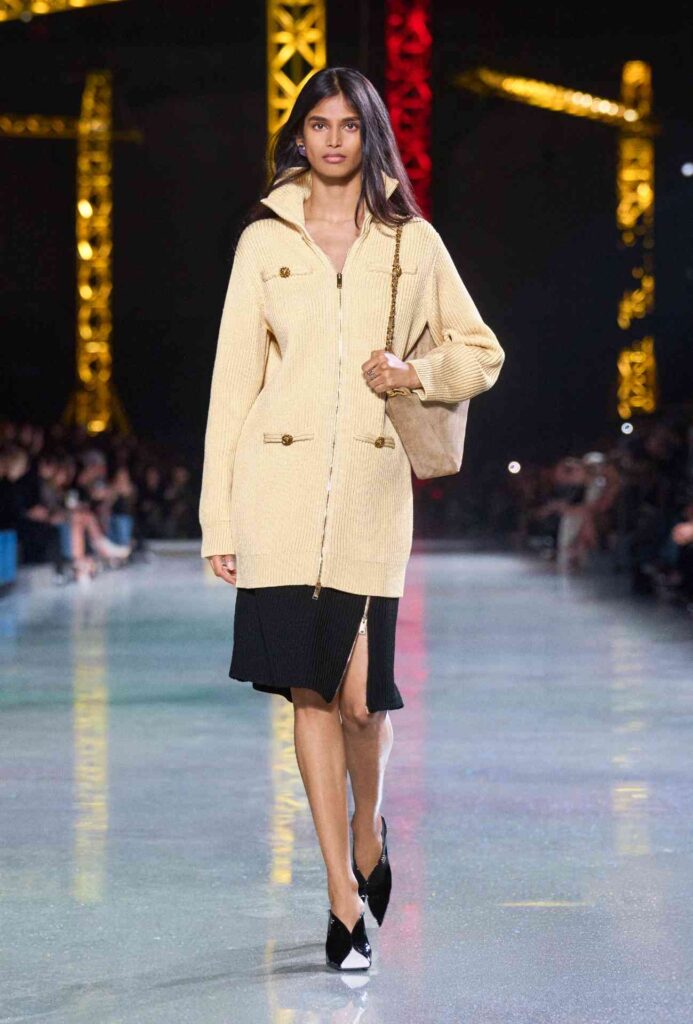
Under the glass vault of the Grand Palais, something extraordinary unfolds. The runway stretches across a shimmering holographic floor, reflecting light like liquid metal. Above it, towering construction cranes painted in bold primary colors rise into the cavernous space. The message is unmistakable: the house of Chanel is under construction. And the architect at the helm is Matthieu Blazy.
For those of us who have been waiting with bated breath, the Chanel Fall/Winter 2026 show titled La Conversation – Part Two was the moment we knew our patience had paid off. Blazy, the visionary designer who brought such tactile magic to Bottega Veneta, has arrived at Rue Cambon. And he is not here merely to preserve a monument. He is here to build a living, breathing future.
The Second Meeting
This collection marks the second meeting between Matthieu and Gabrielle “Coco” Chanel. If his debut was about laying the foundation, this season is about raising the scaffolding. Blazy dug deep into the archives, finding resonance in a quote Gabrielle Chanel gave to Le Figaro in 1955:
“Fashion is both caterpillar and butterfly. Be a caterpillar by day and a butterfly by night. There is nothing more comfortable than a caterpillar and nothing more made for love than a butterfly. We need dresses that crawl and dresses that fly. The butterfly doesn’t go to the market, and the caterpillar doesn’t go to the ball.”
This paradox, the tension between function and fantasy, the sensible and the seductive, forms the beating heart of the FW26 collection. Blazy embraces this duality, creating a canvas for women to be unapologetically themselves, whether navigating the demands of the day or taking flight into the night.
A Masterclass in Metamorphosis
The setting, the casting, the clothes, and the designer aligned in a perfect storm of creative energy.
The show opened with a trio of sporty, understated takes on the suit in merino wool and silk, grounded by backless heeled mules. It was the caterpillar: practical, comfortable, yet undeniably chic.
But as the show progressed, the metamorphosis began.
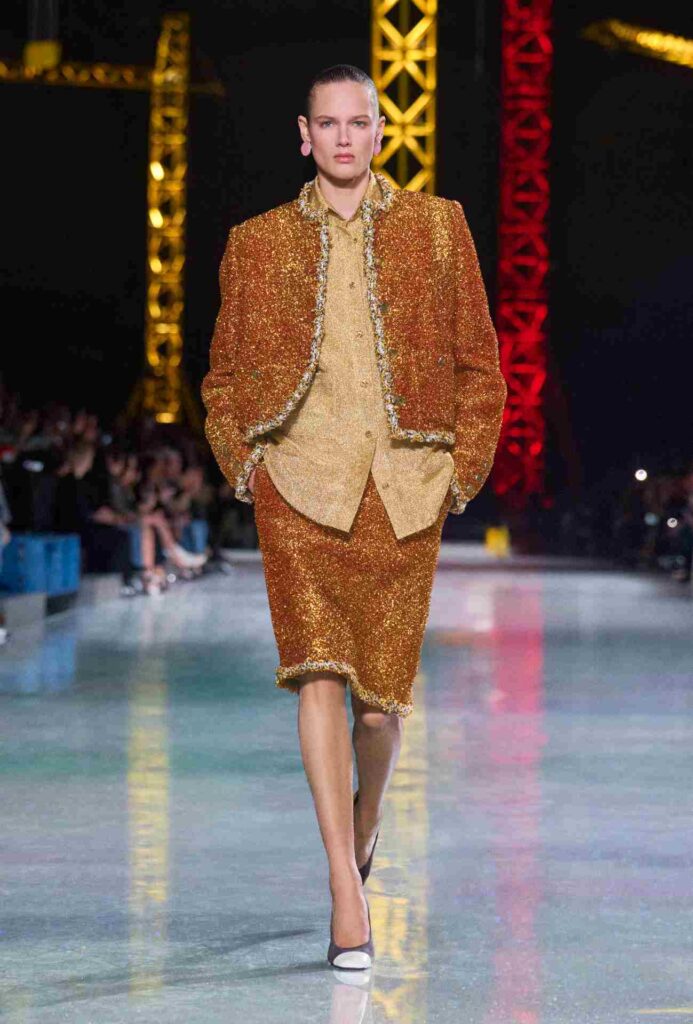
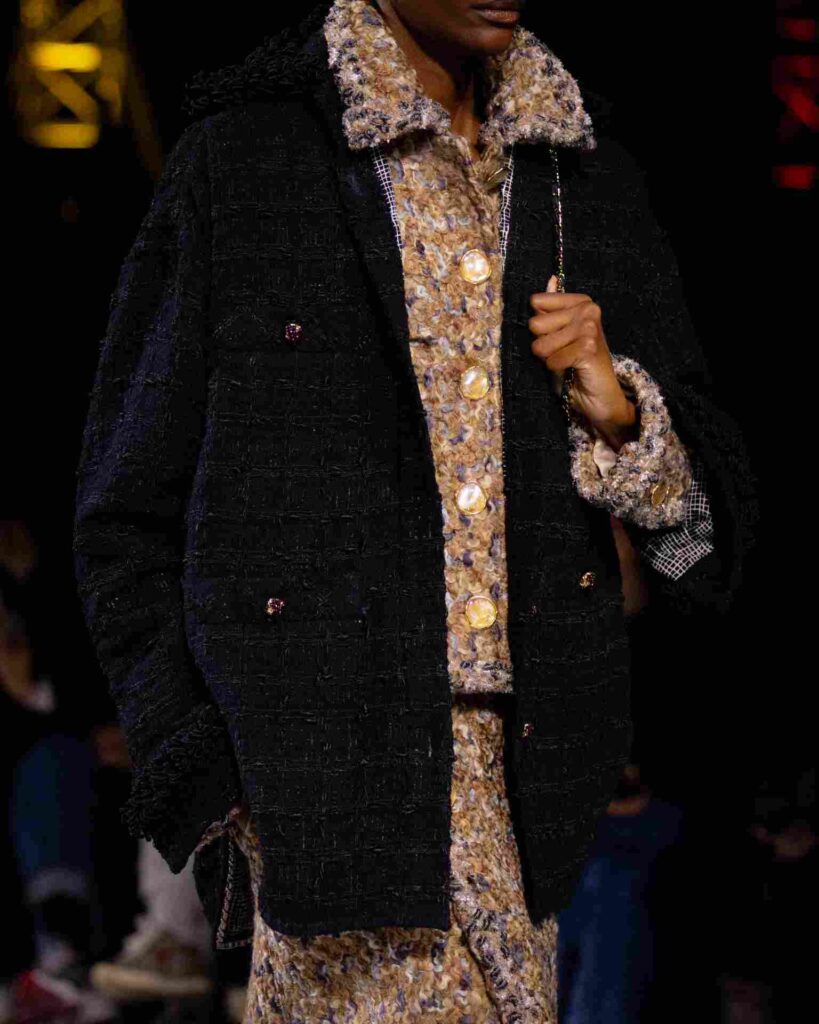
The rigid strictness of the traditional Chanel tweed suit dissolved. Blazy reimagined it through new textiles and constructions. Bouclé tweeds blended with technical fibers. Knitted suits rendered surprisingly light. Jackets drifting closer to blousons. Waistlines shifted into a drop-waist silhouette that Coco herself favored in the 1920s, bringing a fresh, relaxed energy to the runway.
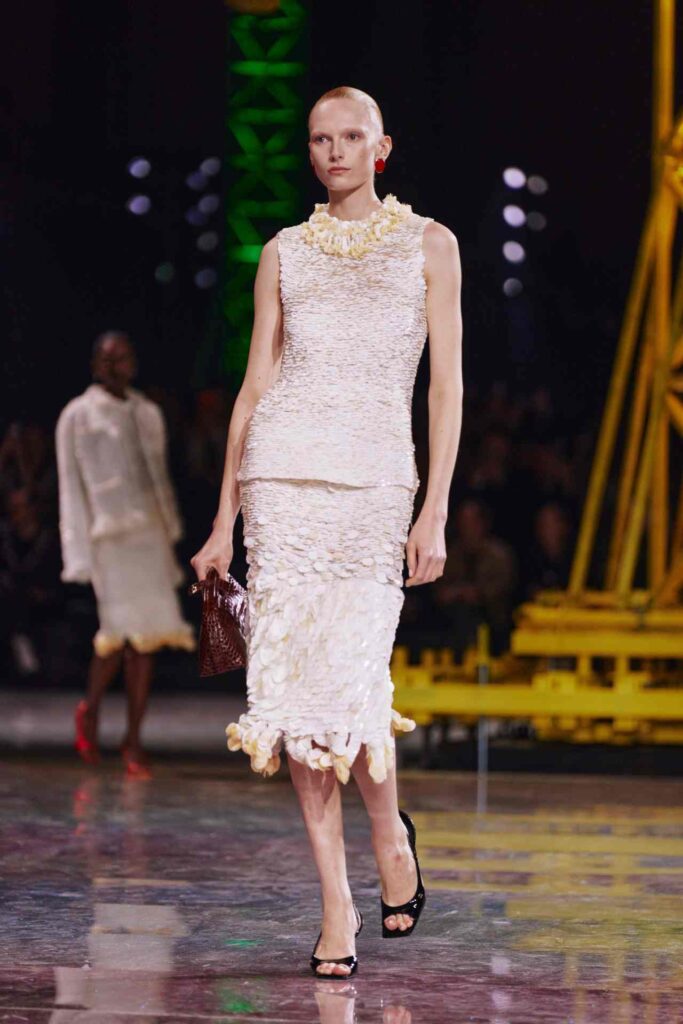
The craftsmanship on display was nothing short of breathtaking. Blazy collaborated with Chanel’s legendary métiers d’art houses: embroiderers Montex and Lesage, and feather experts Lemarié. Together they pushed the boundaries of fabrication. Black and yellow paillettes shimmered across dresses. Rubber and silk appeared on delicate cotton gauze. Suits looked as though they had been subjected to bursts of “action painting,” putting Jackson Pollock to shame.
As day turned to night, the papillon de nuit emerged.
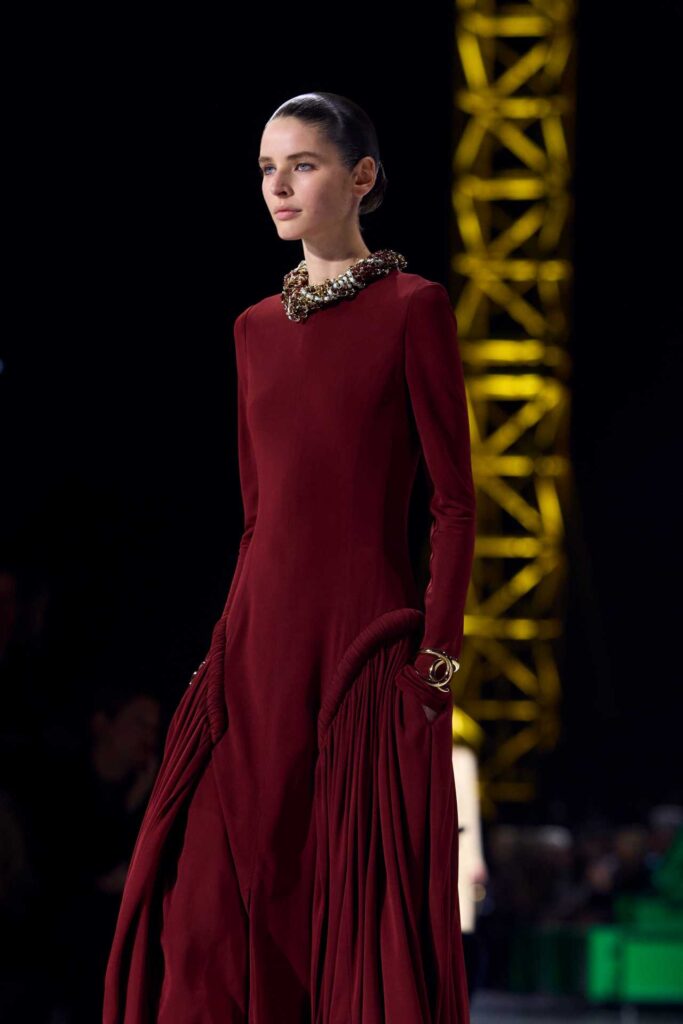
The collection shifted toward the luminous and fluid. A standout moment featured tweed printed onto chainmail, inspired by an Edwardian bag Coco Chanel once favored. The fabric shimmered with iridescent light as it floated through the Palais. Streamlined coats and dresses in sylphlike silhouettes cascaded down the runway, designed for movement and nocturnal flight.
Accessories continued this dialogue between reality and illusion. Like an iridescent Impressionist painting, the opalescent set was echoed in color-saturated enamel and resin jewelry, artificially tinted mother-of-pearl pieces, and second-skin cap-toed boots in supple pastel leathers.
The bags ranged from practical to playful. There was the essential suede flap bag featuring the divan matelassé quilting inspired by Gabrielle Chanel’s apartment sofa, and the extravagant pomegranate minaudière with its subtly poisoned iridescence.
A House at Work
What makes Blazy’s Chanel so compelling is his understanding of the women who wear it.
The casting, which included mature models such as Stéphanie Cavalli, signaled that Blazy is not selling fantasies of youthful beauty, but visions of ageless elegance. He is designing for women who live practical lives within a rarefied universe. Women who need clothes that transition effortlessly from boardroom to ballet.
The frenzy in Paris boutiques following the show is already a testament to his instinct. Editors, executives, and loyal clients alike are lining up, suggesting that Blazy may have cracked the elusive Chanel code. He has managed to create a unified aesthetic that speaks to multiple generations of clients simply through the styling of each piece.
As the neon-lit cranes inside the Grand Palais suggested, Matthieu Blazy is still building. He is lifting, reworking, and reassembling the elements that have long formed Chanel’s language. It is careful recalibration. An act of reconstruction that honors the past while confidently stepping into the future.
Matthieu, we Chanel lovers have been waiting for you.
And what a spectacular metamorphosis it is.