text Natalia Muntean
images courtesy of A Day’s March
“Things always seem to fall into place around Jan,” says Stefan Pagréus, co-founder of A Day’s March. The Swedish brand launched its second collaboration with the celebrated artist, this time centred on the dreamlike painting Skogen (The Forest).
For Pagréus, the project is as much about chance encounters and conversations as it is about clothes: “When we do these collaborations, we can tap into something bigger. Art and culture can be transformative, and fashion can share in that.”
Natalia Muntean: This is your second collaboration with Jan Håfström. How did it all start?
Stefan Pagréus: The first one really began when I passed his Mr Walker statue at Central Station. I thought it would be interesting to transform that coat into a real garment, because the painting it came from has this straight, grid-like, almost modernistic quality. I reached out to Jan, but didn’t hear back for a long time. Then one Friday night, several months later, he suddenly called and said he was interested. That was the beginning of a long discussion, which led to the first project and also to us becoming close friends.
That project had a wide scope; we touched on many aspects of his work. This time, we wanted to narrow it down and focus on just one piece: Skogen. I’ve always loved that painting. It’s beautiful and sublime, a little bizarre and dreamy at the same time. And it’s also one of his early works, not the kind of thing people usually associate with him.
NM: What was it like to revisit the painting with him after so many years?
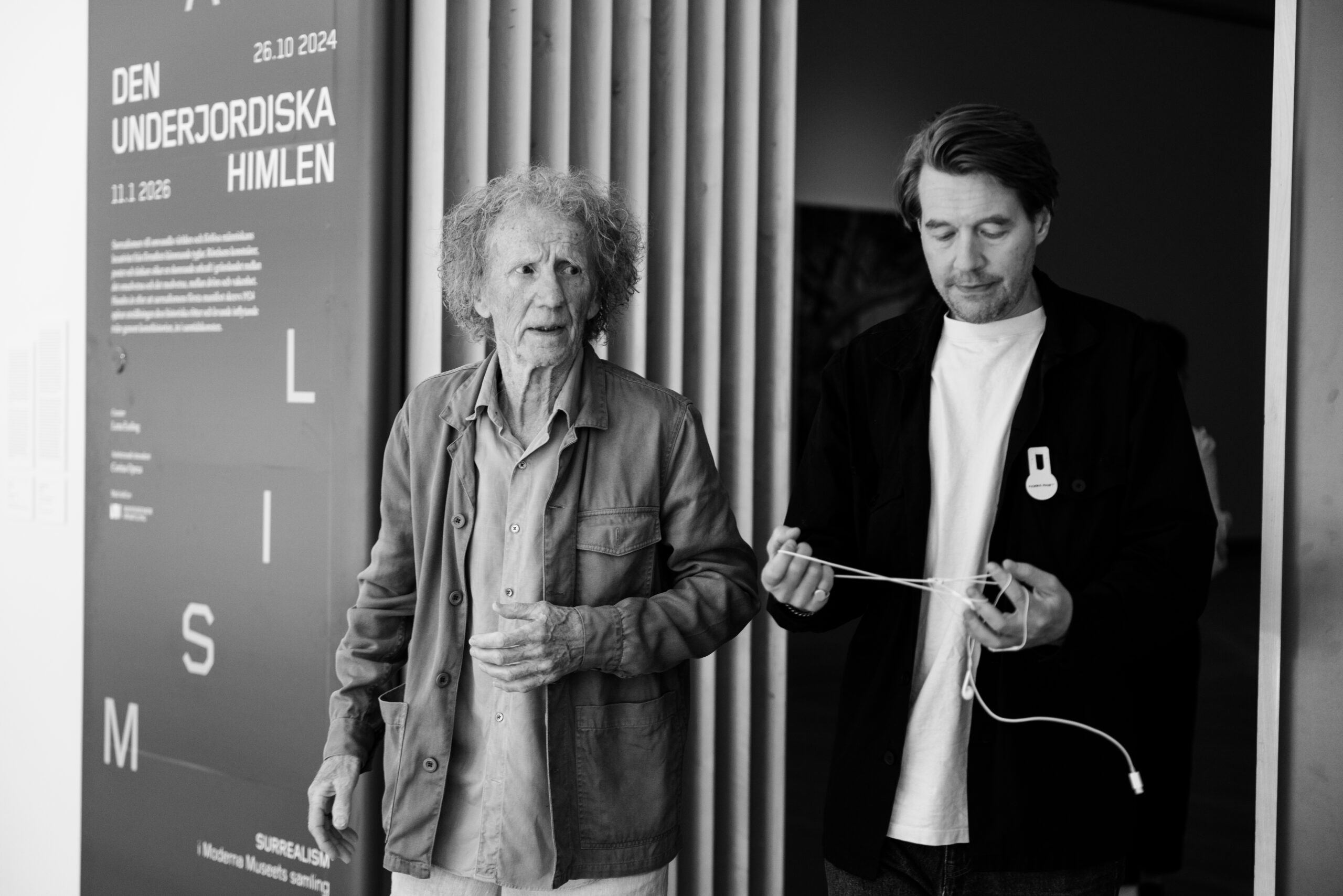
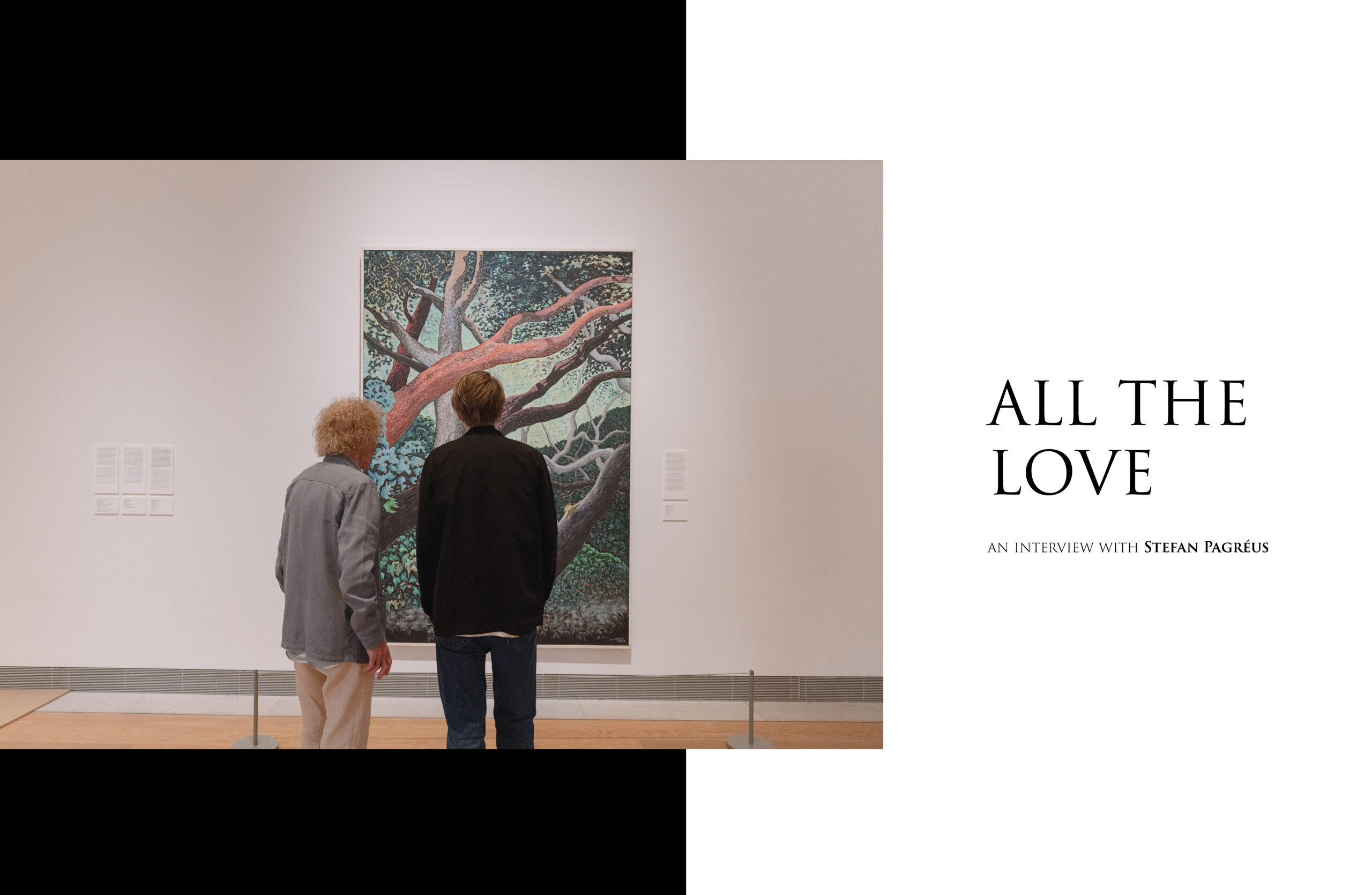
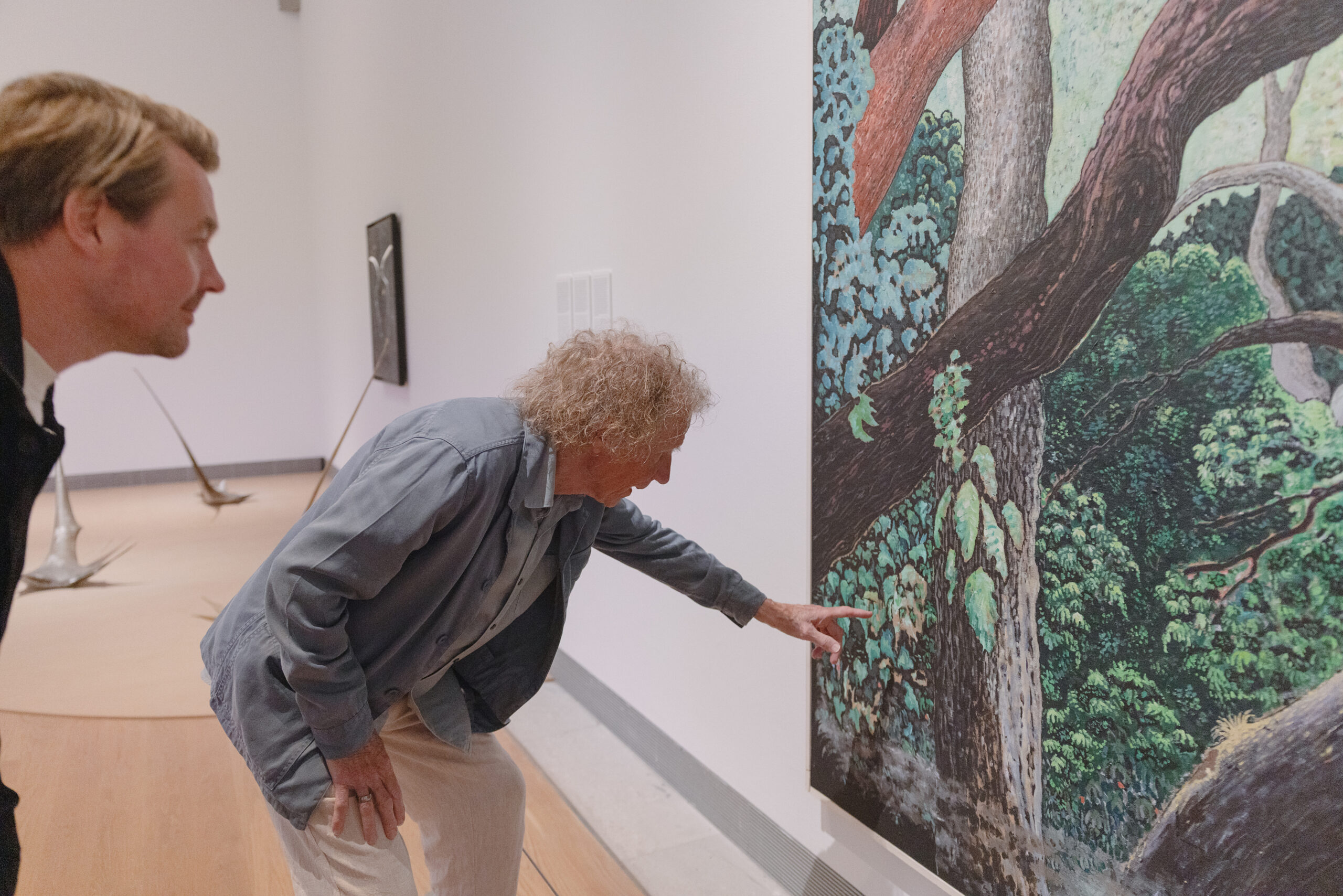
SP: It turned out to be quite a coincidence. We had already planned the project around Skogen when Moderna Museet decided to showcase it again. The painting had been in their archive since the 60s and was shown once in the 80s, but Jan hadn’t seen it for decades. So we took him there. Watching him stare at it, studying the details, was really moving. It was also a key work for him, the first painting Moderna bought, so it carried that weight as well.
NM: You’ve said Håfström makes you “doubt higher powers” because of the serendipities around him. Did this project feel destined in some way?
SP: Yes, things often just happen around him. With Mr Walker, we launched the collection on the very same day Russia invaded Ukraine. Suddenly, that character, which in his paintings is like a hero or Jesus figure, became a call to be a good force in the world. It gave the whole project another dimension. I think Skogen will also come to mean something different to what we first imagined. That’s Jan’s own attitude: let’s find out what this can be.
NM: A Day’s March has also collaborated with artists like Owe Gustafson and Lisa Larsson. What draws you to these projects?
SP: They’ve come about from different angles. Owe was actually my teacher in the 90s, and his work connects so much to our childhood in Sweden that it felt natural to do something together. With Jan, it started when I reached out after seeing the Mr Walker statue. And with Mike, my colleague Rasmus began a dialogue, and we simply gave him blank garments to use as a canvas, which he painted, distorted, and worked on by hand.
What unites them is curiosity. We’re curious about their world, and they’re curious about ours. That creates a really interesting dynamic. We don’t have strict rules; something just has to catch our eye and make us want to have a conversation. If that dialogue feels inspiring, it usually becomes a collaboration.
NM: Håfström describes Skogen as a “lost world” from his dreams. How did you translate that emotional and surreal quality into wearable designs and objects?
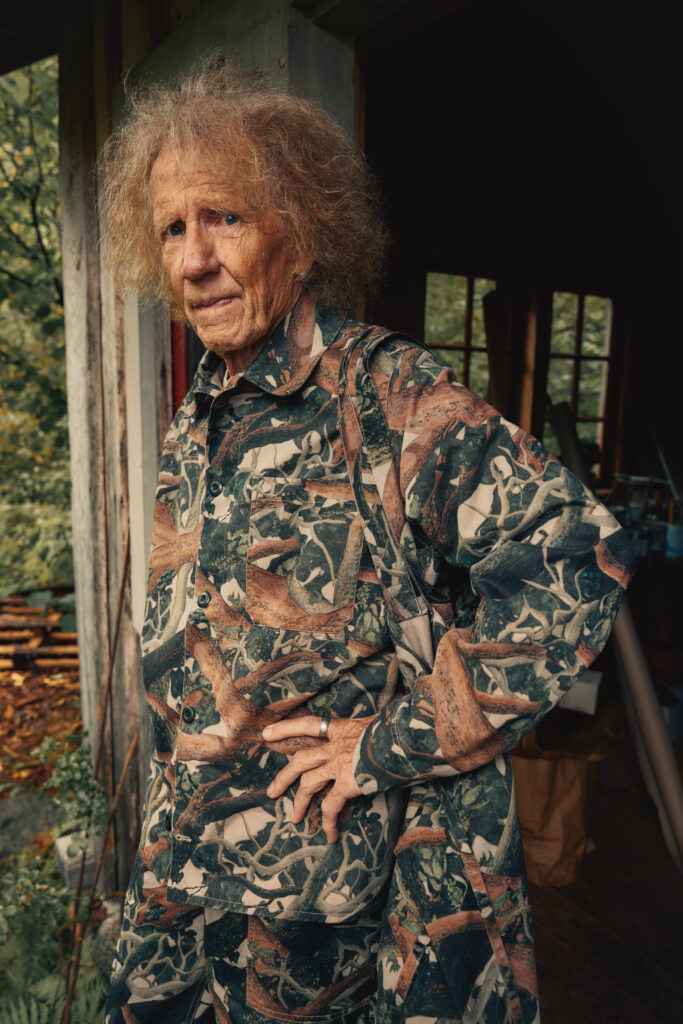
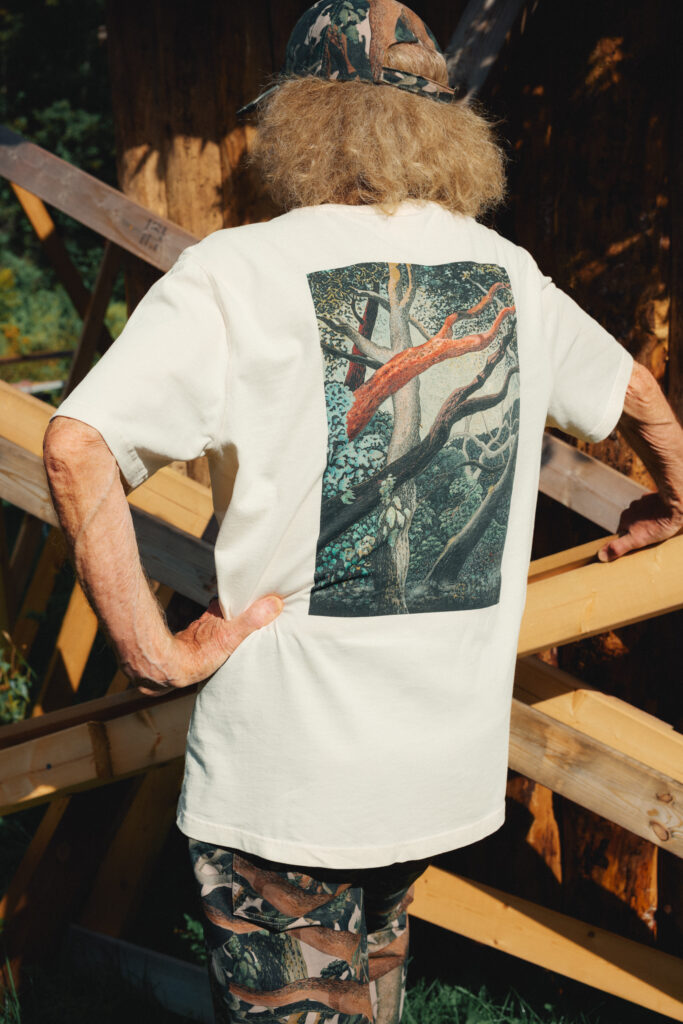
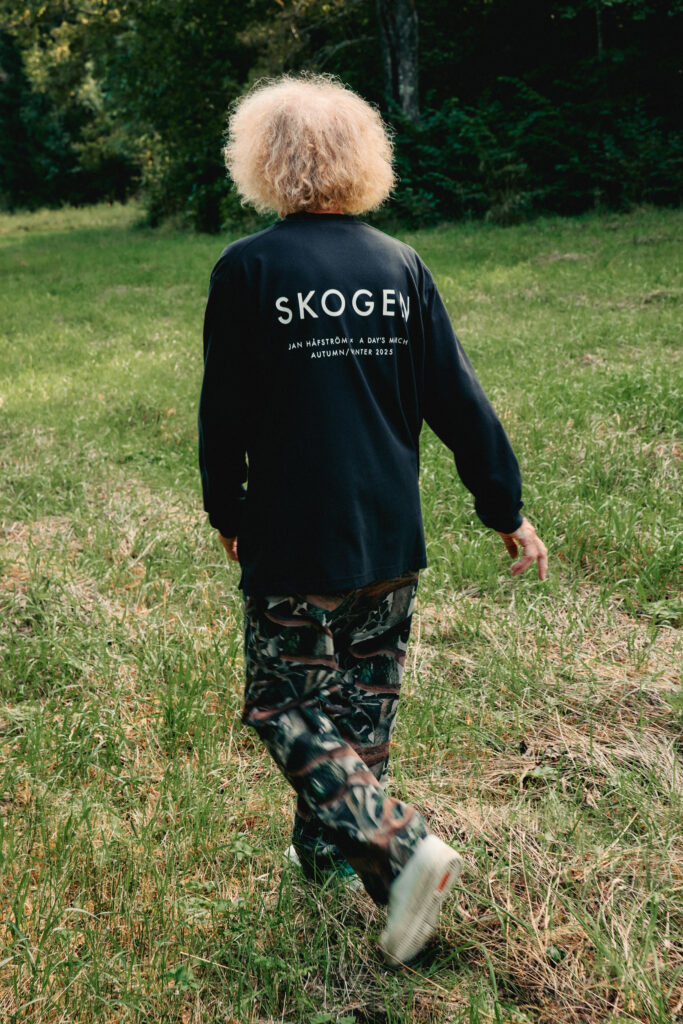
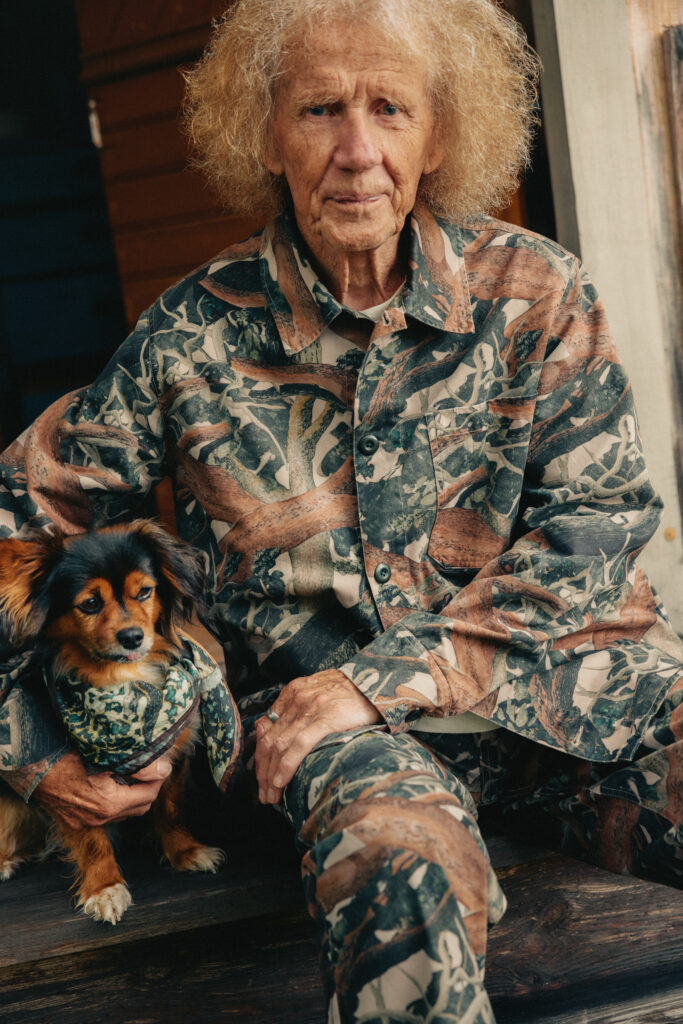
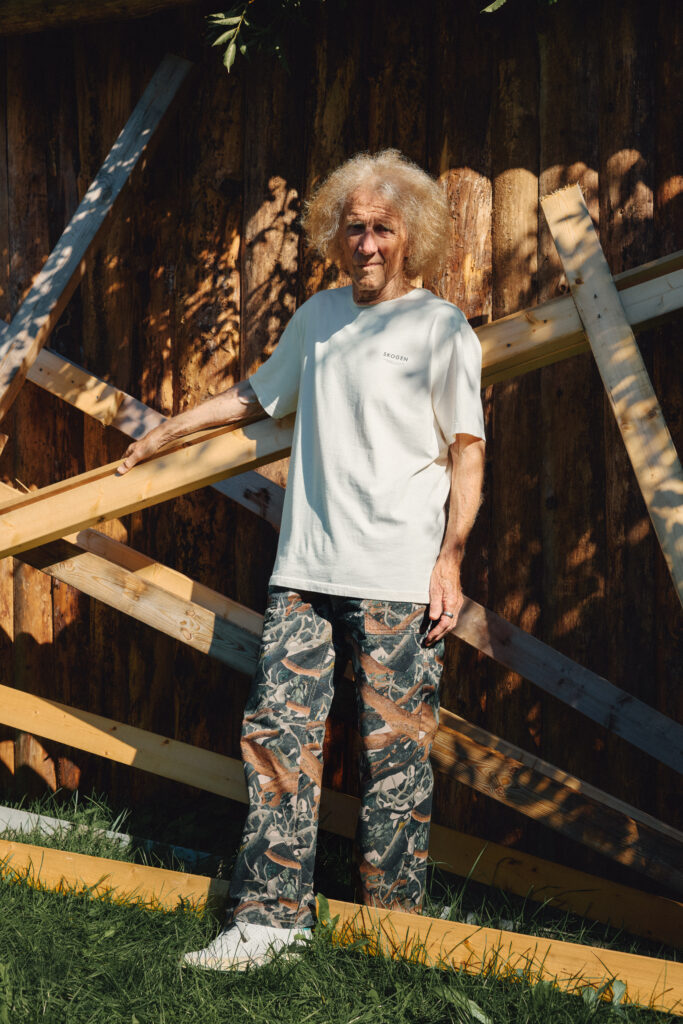
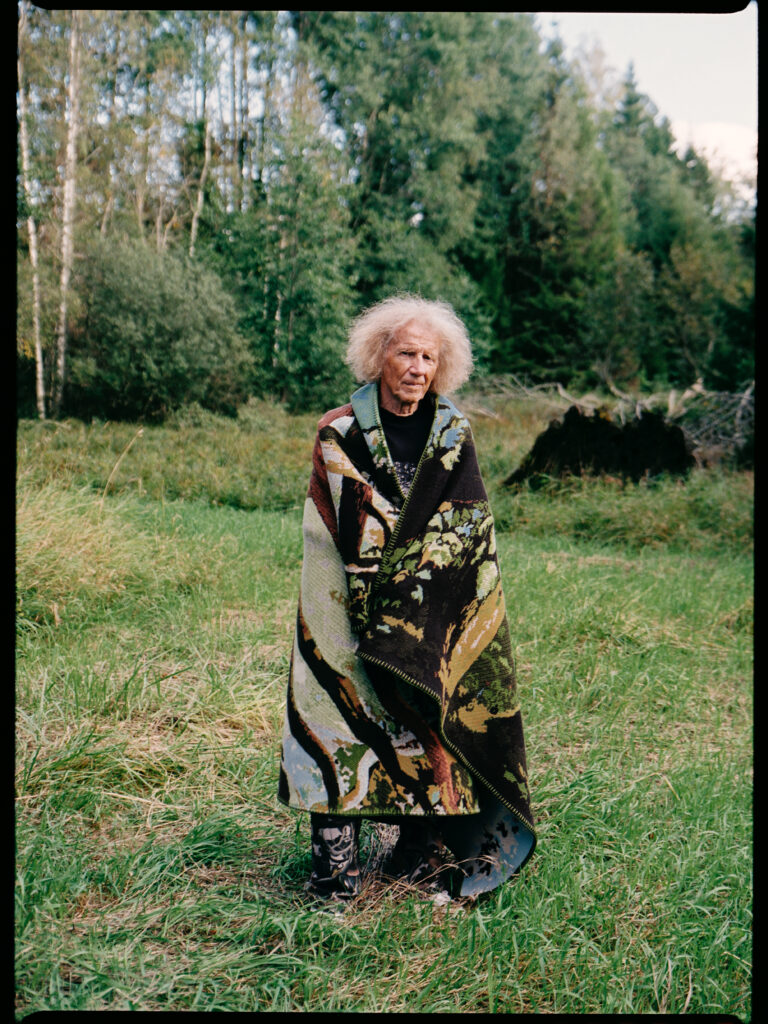
SP: In different ways. Some pieces use the image directly, like the blanket, which is almost a full recreation of the painting. In others, we zoomed in on certain details to create abstract patterns. We also built a camouflage-inspired print from its elements.
Beyond clothes, we wanted to explore other sensory dimensions. We worked with Candelize to create a scented candle that smells of the forest, flowery but also smoky, tar-like, with a campfire note. We collaborated with a Swedish axe-smith to produce a small series of hand-forged axes, which Jan then painted himself. Tools like that recur in his work, alongside figures like Christ or Robinson Crusoe, so it felt deeply connected to his world.
NM: A Day’s March is known for minimalist, functional design. How do these artistic collaborations fit?
SP: Normally, we do straightforward clothes: clean-cut, timeless, not very expressive. Collaborations like this allow us to show another layer, something more than clothes. It’s not really a break from our identity, more an expansion of it. Our everyday pieces are almost anonymous; with these projects, we get to show who we are behind the brand, our interests in art, culture, and ideas.
We also enjoy the process. With Jan, it’s always inspiring conversations. Sometimes he even digs up forgotten paintings from his studio and says, “This connects to what we’re doing.” It’s very collaborative and playful.
NM: You also work as a psychologist. Does that perspective influence your approach to fashion?
SP: Clothes can absolutely be a psychological tool. They can be self-expression, armour, or comfort. At A Day’s March, we say we make clothes for the “triumphs and troubles of everyday life.” That’s the practical side. But when we do these collaborations, we can tap into something bigger. Art and culture can be transformative, and fashion can share in that.
Nature plays into this, too. In Scandinavia, the forest is almost like a church. It’s central to who we are, and also deeply healing. There’s research about the psychological benefits of being in nature. I think Skogen speaks to that – its mysterious, dreamlike quality is also about intimacy and solitude and maybe finding comfort in both.
NM: You published a book as well. How does that connect to your other work?
SP: Yes, it’s called Tvärtom. It’s a short self-help book about common problems like anxiety, depression, stress, or relationship issues. My idea was that people often try to solve these problems in the most logical way – avoiding what makes them anxious, isolating when they’re depressed, working harder when they’re stressed. But those strategies usually make things worse. So the solution is often the opposite: to face fears, to meet friends, to slow down.
It’s very straightforward, which I think comes from my background in advertising. I wanted to make psychology accessible, not heavy. The book has been translated into Dutch and will soon be out in Spanish and German. I’ve also used it for workshops and lectures.
NM: What do you hope people take away from this new collection?
SP: I hope it introduces more people to Jan’s work. He’s one of Sweden’s greatest artists, but not always the most familiar. Presenting his art through clothing can make it accessible in another way. And for those who already know him, it’s interesting to see how his work can be reinterpreted.
If it sparks curiosity about Jan, about art, about how fashion can be something larger than fashion, then I think we’ve succeeded.
NM: What’s next for A Day’s March?
SP: We have a lot of collaborations planned. When we work with someone, we usually continue, so there will likely be more with Jan and others, too. My role now is to focus on these projects and to create more of them. They’re important not just commercially, but for us internally. They inspire us, energise us and remind us that clothing can always be more than clothing.